Author Archives: residentjudge

I hear with my little ear: Podcasts 1-7 June 2024

In Our Time (BBC) Julian the Apostate ruled between 361-363 (so only a short reign) after being proclaimed Caesar by his troops in Gaul. He was born in Constantinople and raised as a Christian after his uncle Constantine had converted to Christianity and introduced a policy of toleration of Christianity across the empire. Julian himself was attracted to Platonic philosophy and neo-Platinism which combined religious, philosophical and mythological strands and a leaning towards Greco-Roman polytheism. He was a bit of philosopher king himself, writing satires about the other Caesars, and writing a lot about himself. To bolster his legitimacy (he did, after all, challenge his cousin for the position of Emperor), he launched a series of battles in Persia, which backfired. His big mistake was not to have a succession plan when he died in battle. The three historians James Corke-Webster from Kings College London, Lea Niccolai from Cambridge and Shaun Tougher from Cardiff University note that, ironically, he united the squabbling Christians in opposition to him. It wasn’t so much that he persecuted Christians, as that he revoked the privileges that Constantine had given them. Paganism had continued throughout Constantine’s reign too, so it’s not black-and-white. Very much ripe for what-if history. (I’d forgotten that Julian was a theme in Julian Barnes’ Elizabeth Finch– my review here).

Three Million (BBC) The final episode 5.Ghosts looks at the legacy of the Bengal famine which, compared with the D-Day Landing celebrations, is decidedly low-key. Retired teacher Sailen Sarkar has been travelling throughout Bengal, interviewing the now very-old survivors, who mainly wondered why they hadn’t been asked about it before. As one of the historians who contributed to this series points out, what with the loss of Indian lives fighting for the Commonwealth, Partition and natural disasters, there was a series of mass death events in India. It was the Black Lives Matter protests in England that prompted a re-evaluation of colonial administration on the part of the British Empire, and there is now mention of the famine in a military museum in London. Doesn’t seem quite enough somehow.

Emperors of Rome Caillan Davenport features in this episode on CXI The Equestrian Order. The equites belonged to a class of Roman citizen dating back to the kingdom of Rome. The numbers of Senators was capped, so the equestrian order kept expanding. It was a conditional status- every five years at the census you had to prove that you still met the property requirement, and you could be removed for lapses in civic and moral virtue. The Equestrians portrayed themselves as being less corrupt than the Senators. The reign of Augustus was a turning point, when he gave the Equestrians a role in the civic celebrations. The number of Equestrians expanded from 5,000 to 20,000 under Augustus, and gradually a career structure emerged. Equestrians were permitted to wear a special ring, a tunic with a narrow stripe and could sit in the first 14 rows of the theatre. There was no specified meeting place for the Equestrians (unlike the Senators, who had the Senate) and so they expressed their feelings at the theatre. By the late 3rd century the role of Emperor had become open to those who were promoted through the army, and then under Constantius the number of senators was increased, thus decreasing the status of the Equestrians.

History Extra Death By Nostalgia: The curious history of a dangerous emotion This episode features Agnes Arnold-Forster, the author of Nostalgia: A History of a Dangerous Emotion. She defines nostalgia as a bitter/sweet, wistful feeling about the past. At the end of the 17th century it was seen as a medical disease, related to place, and a form of pathological homesickness. People could die of nostalgia as they starved themselves to death, and mercenary soldiers, university students and domestic servants were particularly prone to it. In the early twentieth century psychoanalysts became interested, and it shifted from a medical to a psychological problem. Nostalgia is often characterized as being working-class, backward looking (e.g. Brexit, Trump) but the Left can be nostalgic too, especially the Soviet bloc countries and people who yearn after the NHS. However, now nostalgia can be seen as a form of therapy, to make people feel better.
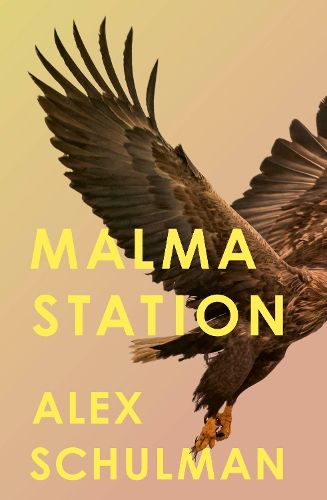
‘Malma Station’ by Alex Schulman

2024, 263 p.

Translated from the Swedish by Rachel Willson-Broyles

Spoiler alert

I can’t really talk about this book without revealing what I learned about it by the end of it, and I suspect that the confusion the reader is experiences is completely intentional on the part of the author. Told as a narrative in three alternating parts, named for their protagonists Harriet, Oskar and Yana, I found myself having to flip back to clearly distinguish the stories of the three characters because events and references kept recurring. I was starting to think that perhaps the problem was me, but having worked out what was going on by the end, I’m reassured that I understood more of it than I thought I did while reading.

There are three journeys, all heading towards Malma Station. (Any such place? I had heard of Malmo, but not Malma). It is a small station, surrounded by forest, with a lake. Our three travellers Harriet, Oskar and Yana are actually all related, but the journeys they are taking are all decades apart. Harriet, a young girl, is travelling with her father to bury her pet rabbit by the lakeside. Her mother and sister live in Malma, but Harriet has not seen them in a long time after the family fractured and the children were divided between the parents. Oskar is Harriet’s husband, decades later, and he is returning to Malma with Harriet who wants to revisit her earlier trip to Malma with her father. Oskar is frustrated by Harriet’s evasions, flightiness and infidelity, and their marriage is in tatters. Yana (whose name we later learn is an acronym for ‘You Are Not Alone’) is the daughter of Harriet and Oskar, and like her mother she too is the child of a broken relationship and she, too, lost her mother. She is travelling with a photo album that she has inherited after her father’s death, and she too is undertaking a pilgrimage to recover lost times. There is a sense of foreboding which pervades the novel as the train makes its way to Malma, but this dread is not always justified. In fact, I found the ending rather an anti-climax, albeit a disturbing one.

The circularity of the book is intentional. Mistakes and misjudgments are repeated across the generations, as children hear adult conversations that they shouldn’t, and are shuffled around like chess pieces. The book is steeped in unhappiness and families are opaque, with an edge of danger.

My library has decided that this book is a ‘saga’ on the label on the side. Even though it’s about three generations, it is not a ‘saga’ in the usual sense of the word. It’s far more intense than that, as these three generations do not so much move on and keep revolving around a hard knot of hurt and betrayal.

My rating: 7/10

Sourced from: Yarra Plenty Regional Library

Read because: I think I must have read a review of it somewhere, although I can’t find where.

I hear with my little ear: Podcasts 24-31 May 2024

Good grief- I am so behind in blogging this listening! However, I mainly do it for my own purposes, in keeping track of what I listened to and when, so I guess it doesn’t matter.

The Rest is History Episode 434 Luther: The Revolution Begins (Part 2) According to legend, one of the reasons that Luther became a monk was because of a thunderstorm. It must have been quite a storm, but perhaps another reason was to get away from his father’s ambitions that he become a lawyer. His father was not pleased, standing up to question during Luther’s induction as a monk “Was it the Devil that sent the thunderstorm?” In becoming an Augustinian monk, Luther was buying into the spiritual economy of the time i.e. getting a fast track to God. He studied theology at Wittenburg University, a university under the patronage of Frederick, the Elector of Saxony, one of the electors of the Holy Roman Emperor. Frederick wanted celebrity academics at his university, and Luther became a professor of the Bible. He ordered that a bible be printed for him without the glosses and footnotes, and began writing up theses rejecting Aristotelian philosophy and medieval theology that had dominated thinking, arguing that we should rely on The Bible Alone. Then a friar called Johann Tetzel rolled into Saxony, claiming to sell indulgences, which would allow sinful locals to shorten their stay in purgatory. This spurred Luther to have his 95 theses document printed (not nailed up onto the door) and the fight was on.

Rear Vision (ABC) Rear Vision recently had a 2 part series about the two-state solution which our Government, along with other Western governments, has been calling for more loudly since the invasion of Gaza in response to October 7. The first part The Middle East Conflict and the Two-state solution is a replay of a 2009 episode. Modern calls for a two-state solution began in 1917 where Balfour made a promise of ‘from the river to the sea’ to both Zionists and the Arabs. The Balfour Declaration was put directly into the British Mandate which gave civil and religious rights to “the others” – who just happened to be 90% of the population. There was an Arab uprising in 1936-9, leading to the Peel Commission, which recommended a two-state solution which was rejected by the Arabs – and then WW2 intervened. In 1947 Palestine was handed over to the UN, which gave more than 50% of the land to the Jews. The Declaration of Israel in 1948 led immediately to war, which eventuated with Jewish occupation of 78% of the land. The PLO was formed in 1964, and further wars in 1967 and 1973 saw the Israeli capture of the West Bank and Gaza Strip. Another uprising in the 1980s led to the realization that uprising did not mean sovereignty, and the Palestinians moved towards a two-state solution The 1993 Oslo Accord did not mention two states, and further uprisings between 2000 and 2005 marked the continuing distrust between the Palestinians and Israelis.

The second part The Two-State Solution: A Way Forward or More of the Same takes us up to 2024. Illegal settlements began in Palestinian territory in the early 1970s, as Israeli politics oscillated between Labor and Likud. Camp David came closest to a two-state solution, but all the politicians involved were lame-duck incumbents. A split opened up between the PLO and Hamas. Originally the presence of 100,000 illegal settlers was seen as the point of no return for a 2-state solution. There are now 750,000 settlers in the occupied territories and none of the big players are pushing for two states anymore: not the Republicans in US, not Hamas and not Likud. In 2005 Israel withdrew from Gaza, but it never gave up control of border crossings or property rights.

Things Fell Apart (BBC) Season 2 Episode 8: Mikki’s Hero’s Journey focuses on Mikki Willis, an independent filmmaker who has been involved, to a lesser or major extent, in all the preceding episodes of this series. His brother had died of AIDS, and Mikki blamed AZT which was, at the time, a harsh but ultimately effective treatment. He was strongly influenced by Joseph Campbell’s The Hero’s Journal, not as a piece of analysis, but as a prescription for action. He set up his documentary company after 9/11 and at first became famous through a YouTube video praising his son for choosing a Little Mermaid doll with a credit note at the toy shop (he has since taken this video down). He interviewed Judy Mikovits as part of his Plandemic documentary, he was at the Capitol during the riots, and he particularly blames Dr Anthony Fauci (who had also been involved in AZT all those years ago.

In the finale How Things Fell Apart Bonus Episode, Jon Ronson chats with fellow podcaster Adam Buxton about the making of the podcast, and how to sensitively interview people whose views of reality clash completely with your own.

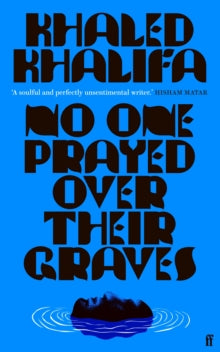
‘No-one Prayed Over Their Graves’ by Khaled Khalifa

2023 (original Arabic 2019), 399 p.

Translated by Leri Price

Sitting in the warmth, with the red leaves of the ornamental grapevine filtering the late-autumn sunlight, I finished this book feeling as if I had been on a very long journey to a strange land. It is a strange land to me: set mainly in Aleppo, Syria, this book has been translated from the Arabic and I felt the whole way through as if I was listening to a story-telling mode that is unfamiliar to me.

The book opens with a sudden, devastating flood in the village of Hosh Hannah in January 1907. Two women cling to a tree as bodies, wreckage and furniture stream past them in one of those red torrents that we are seeing all too often on the news today. One of the women, Shaha Sheikh Musa is the wife of Zakariya Bayazidi, who is absent from the village that day with his friend and adopted brother Hanna Gregoros as they are off visiting their brothel/casino ‘The Citadel’. She clutches her dead son as the water swirls around them. The other woman is Mariana Nassar, the local teacher. She sees the bodies of Hanna’s wife Josephine and her son being swept past, and those of her family, neighbours, students and family friends from other villages. As Zakariya and Hanna return to the ruined village, the flood marks for them a ‘before’ and an ‘after’, and they carry it with them for the rest of their lives. They bury the bodies, heedless of the distinction between Muslim, Christian and Jew, but they live on for decades later yearning for death to complete the cycle for them.

Just as we saw in Syria over a century later, when the country again ripped itself apart in the latest manifestation of its Civil War, Aleppo and the village of Hosh Hanna were religiously complex communities, with interpersonal links between religious groupings overlaid by deep enmity at a broader political level. Hanna had been brought into Zakariya Bayazidi’s Muslim family after his Christian family was massacred by the Ottoman Turks, and the interconnections between the families of the two men (sisters, nieces, nephews, grandchildren) continued across the novel in a series of lost chances, feuds and unconsummated love. As the twentieth century progresses and religious faultlines harden, politics and history make it harder for breaches to be healed.

I must confess that I found this book very difficult. The text is almost relentless, with only ten chapters in nearly 400 pages and no white space at all to separate one paragraph from the next. The chapters are not headed and so they feel as if they are stretching on interminably. I know little about Syrian history and the book is strangely devoid of descriptions which could help you gain a sense of place. Middle-eastern names are unfamiliar to me, and I kept getting confused between characters. The narrative moves between 1881,1903,1907, 1908, 1915, 1948 and 1951 but not strictly chronologically.

Nor is the book written in a way to help the reader. Paragraphs slip back and forward in time without warning, and the author introduces new characters almost at will and with little rationale. Big events happen abruptly. Some chapters are written in a third-person, detached tone, interspersed with italicized segments of Hanna’s autobiography, and then a story-within-a-story written by a minor character. If ever a book cried out for a family tree, it’s this one.

But, if you’re willing to persevere, the book repays the effort. Its closing pages close the circle, enclosing myriad regrets and lost opportunities. But be warned: you’ll have to work hard as a reader with this one.

My rating: 7/10

Sourced from: Yarra Plenty Regional Library

I hear with my little ear: Podcasts 16-23 May 2024

Emperors of Rome. Episode CX Anthology of Interest A triumvirate! Here Matt, Rhiannon and Caillan Davenport each have three minutes to talk about a topic of their own choice, three times over. So they discuss:

  • The unfortunate demise of Cinna the poet
  • Cicero’s reluctance to send panthers to those in need
  • The sensitive subject of baldness
  • PTSD bought on by the Carthaginian War
  • Women donning a toga
  • Claudius’ edicts and defending ‘stupidity’
  • The last of the Ptolemys
  • The hazard of regifting the world’s largest apple

I Was a Teenage Fundamentalist Episode 3: It’s the End of the World as We Know It Going back to the beginning with this podcast, Brian and Troy talk about the importance of ‘end-times’ talk in attracting them to fundamentalist pentacostalism. One of them (I’m not really clear who is who when I’m listening to this) was already primed for apocalyptic thinking because of dabbling in woo-woo thinking; the other one was already ensconced in the Assembly of God, where it was a mainstay. First there was the fear of nuclear holocaust, then when the Berlin Wall fell, it was fear of economic domination through the cashless society and the mark of The Beast as a computer chip or bar-code, and now it’s the prospect of a Muslim-Christian war. However, as they point out, the early Christians thought that they were living in the end-times too, and God didn’t turn up then either.

Being Roman (BBC) Episode 6: Love in the Borderlands Mary starts off this episode in Newcastle UK, close to Hadrian’s Wall, with a tombstone erected to Regina by her ex-owner and then husband Barates from Palmyra in Syria. Regina was a local Newcastle girl, and obviously there was slave-owning in Roman Britain although it is so late in the empire that she must have been sold into slavery rather than taken captive, as occurred earlier. When the Victorians uncovered the tombstone, they framed it as a love story where the local girl captured the heart of the foreigner, but we wonder just how much freedom Regina had. Mary finishes with a good reflection on the way that we read artefacts according to our own view of the world, but that this is not necessarily a fault- instead it’s a way of keeping questions alive in history.

The Daily The Possible Collapse of the U.S. Home Insurance System. Recorded on 15/5/24. I remember reading T. C. Boyle’s A Friend of the Earth years ago, where American society was drifting into neglect because no-one could afford insurance. I’m very much aware of how insurance is driving so much in society today: where you can build, what management policies a company has to cover their arse, the way that someone always has to be held liable. In this episode, they discuss the succession of weather ‘events’ (such dead language) that are making home insurance unsustainable when companies need to pay out more than they receive. Companies are starting to refuse to cover houses in certain areas, which has implications for future buyers who cannot get a mortgage on an uninsurable home, leading to a drop in home values. ‘The Government’ could step in (unlikely in America) but that just means that people would continue to build homes in areas prone to repeated disasters. At least after Black Saturday our government banned people building in certain areas. Interesting.

Three Million BBC Episode 4: The Tapes As part of the research for this project, a box of old cassette tapes was uncovered, recorded by Australian researcher Lance Brennan decades ago. Brennan interviewed colonial civil servants who were based in Bengal themselves, but answering to Whitehall and its demands. Britain’s attention was focussed on WW2 and they resisted declaring famine because it would divert resources from the war. Emergency food relief was provided, but ‘test work’ was required in exchange. Then, the British Govt said that it couldn’t spare the ships, and besides, other people were starving too. Even historian Max Hasting, a great fan of Churchill, admits that Churchill was racist, even by the standards of his time.

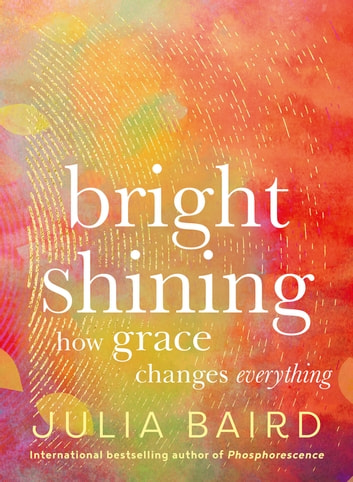
‘Bright Shining: How Grace Changes Everything’ by Julia Baird

2023, 279 p.

The first thought that comes into my mind if you say the word “grace” is the physical sense of poise, dignity and a quiet confidence. The other meanings of “grace” seem to me to have been co-opted by religion – particularly Christianity- and I’m rather less comfortable with that. In this book, Julia Baird explores the concept of “grace” in ever-widening circles: Our Souls, Ourselves in Part I; Our Circles in Part II, Our Strangers in Part III, Our Sins in Part IV and Our Senses in Part V. I think that even this structural skeleton of the book highlights its major weakness: trying to stretch the concept to cover too much. It is a digressive book, interweaving research, commentary and her own personal struggle with cancer, and I’m not sure that she completely succeeds here.

As it says on the front cover:

Grace is both mysterious and hard to define. It can be found when we create ways to find meaning and dignity in connection with each other, building on our shared humanity, being kinder, bigger, better with each other. If, in its crudest interpretation, karma is getting what you deserve, then grace is the opposite: forgiving the unforgivable, favouring the undeserving, loving the unlovable.

Which all sounds rather gooey and do-goody to me.

In Part I she does try to define “grace”, noting that it is wrapped in the everyday but still extraordinary (p. 8). Her definition which remains nebulous, comprises three elements:

  1. to be fully, thrillingly alive
  2. something undeserved
  3. the ability to see good in the other and to recognize their humanity

Part I Our Souls comprises two chapters. Chapter 1 ‘2.3 Grams’ considers the 1907 experiment of weighing a soul: the difference in weight between when someone is still alive, and when they have died. Chapter 2: Anonymous Samaritans explores the phenomenon of blood donations, and why people might do something altruistic for people they will never meet.

Part II Our Circles has four chapters, two of which are largely autobiographical. In Chapter 3 ‘Grace Inherited’ she writes of her mother, who visited women in prison, most particularly Katherine Knight who was jailed for life without parole for the horrific murder of her boyfriend. Yet her mother spoke of Knight’s gentleness. This chapter is bookended by Baird’s response to her mother’s death, sitting vigil as she died, and then the grace of a friend afterwards. Chapter 4 ‘Icarus Flew’ continues the theme of grief as she talks about the death of an ex-boyfriend in a Garuda aircrash, and the difficulty of finding a place for grief as a former girlfriend in the hierarchy of grief. Chapters 5 (‘Inhale the World’: An Ode to the Fire of Teenage Girls) and Chapter 6 (‘On Being Decent Men’) are particularly apposite as the spotlight on domestic violence has turned to changing attitudes amongst men and boys – an approach that I find rather insufficient, personally.

Part III Our Strangers is again a bit of a grab-bag. Chapter 7 ‘Other People’s Lives’ points out that we see only a sliver of other people’s reality, and that grace would extend our lens further to see the whole person. Chapter 8 ‘The Comfort of Strangers’ talks about kindness of others, especially during travelling when through unfamiliarity and language problems, we are often at the mercy of people unknown to us. Grace? or just human decency and empathy? Chapter 9 ‘The Discomfort of Estrangers’ looks at the obverse: the harassment of online warriors liberated by anonymity. In Chapter 10 ‘Restlaufzeit: In the Time We Have Left We Must Dance’ she returns to the theme of illness and the precariousness and preciousness of life, both for herself and for others.

Part IV Our Sins is the longest section of the book, and while I found this the most interesting part of the book, Chapter 11 ‘Napoleon’s Penis: What We Choose to Remember’ does not seem to fit into the other chapters, which deal more with forgiveness and justice. In Chapter 11 she discusses public memory, the role of the historian, and what we choose to remember in public figures. Moving then to forgiveness and justice, in Chapter 12 she looks at ‘When You Can’t Forgive’; the expectation that women in particular should forgive, and the potential for weaponization of forgiveness by imposing it on the victim. This is picked up again in Chapter 13 ‘The Stolen Generations: What Does Forgiveness Mean?’ where she reminds us of Scott Morrison’s exhortation that forgiveness be displayed the part of Aboriginal people. This completely ham-fisted ‘suggestion’ was brusquely rejected by indigenous people who bridled at the inappropriateness of placing an expectation of forgiveness onto another person. In Chapter 14 ‘We Will Wear You Down with Our Love’ she turns to truth-telling, and the treatment of Stan Grant by the ABC and other media commentators, especially those from the right-wing press. Chapter 15 ‘The Callus: On Restorative Justice’ refers to the callus, the fibre that knits bones together, and she looks at Restorative Justice schemes as a way of knitting together after injury, starting with the story of Debbie McGrath, who participated in one such scheme eleven years after her brother was killed by his best friend. In Chapter 16 ‘A Broken Place: People Who Have Forgiven’ she explores examples of forgiveness rooted in faith, whether it be Christianity, Islam or Judaism. While I found these interesting, I think that they would have been better framed in a discussion of forgiveness in its own right, rather than trying to squeeze them into a ‘grace’ framework.

Part V ‘Our Senses’ is only short. Chapter 17 ‘Fever Dreams’ again refers to her experience of cancer, and her determination to be “fully, thrillingly alive”. In Chapter 18, the last of the book, she returns to the idea of ‘grace’, referencing the hymn Amazing Grace, from which she has taken the title.

As you can see, this book wanders off down a number of different pathways, all of which are enjoyable enough to follow, but which do not cohere into a rounded whole. Which is ironic really, as one of the definitions of ‘grace’ that she cites in the book is that given by Marilynne Robinson who described grace as an ethical “understanding of the wholeness of a situation”. This is the definition which most resonated with me, and the one to which I (unsuccessfully, I’m afraid) aspire.

My rating: 7.5/10

Read because: It was on the shelf.

I hear with my little ear: Podcasts 8-15th May 2024

History Extra The Bloomsbury Group: everything you wanted to know. Good heavens, this was released in January! The Bloomsbury Group started as an ‘at home’ at 46 Gordon Square Bloomsbury, amongst people who wanted to live differently. Vanessa (Bell) and Virginia (Woolf) Stephen were at the heart of it. They then moved to Kensington, and young men from Cambridge would come for cocoa after 10.00 p.m. The group included Lytton Strachey, Toby Stephen, Duncan Grant (with the beautiful voice, who nearly everyone was in love with at some stage), J. Maynard Keynes, Clive Bell, Saxon Sydney-Turner, Roger Fry. Leonard Woolf differed from the rest in that he did not come from a privileged background. The group moved from the sitting room into public debate, although they did not share a unified political position. There were all sorts of triangles, especially revolving around the homosexual Duncan Grant, who nonetheless had a child with Vanessa Bell. The group, most definitely an elite, nonetheless moved into the centre of English life in the fields of economics, literature and art.

You’re Dead to Me (BBC) Simón Bolívar I’ve been interested in Simón Bolívar for some time, and so I was interested in this rather irreverent podcast featuring Dr Francisco Eissa-Barroso and comedian Katie Green, who really knew more about Latin American history than she let on. Simón Bolívar, or ‘The Liberator’ as he was known, was responsible for the overthrowing of Spanish colonialism in six countries, but he himself distrusted democracy. He was born in Venezuela to a very rich plantation-owning family. In 1799 he joined the militia, went to Madrid and married a woman who died of yellow fever soon after they returned to Venezuela. He visited post-Revolutionary Paris where he was both impressed and repelled by Napoleon, and he committed himself to independence from Spain. His first attempt was when Caracas declared itself independent from Spain in an attempt to avoid being taken over by Napoleonic France. Along with Miranda, who he had met in exile in London, he headed a rebellion, but an ill-timed earthquake seemed to be God’s punishment and the rebellion collapsed, Miranda fled and Bolívar was captured. His second attempt was a three month campaign, marked by atrocities on both sides, but after making himself dictator (in the Roman sense of a dictator for emergency times), he was overthrown in a counter-revolution. He was almost killed by an assassin, but the assassin killed the wrong man. and Bolívar then decided on a third attempt, planning to attack New Granada instead and invade Caracas from there. He was successful, and Peru and Bolivia became independent nations too. He drafted the Bolivian Constitution, which had some liberal elements but some pretty illiberal ones too- like being able to name his successor. He met Manuela, whom he loved but did not marry because he had sworn not to remarry after the death of his first wife. Manuela saved him from a second assassination attempt. But by 1830 everything was falling apart, the various nations seceded and went their own way, and he died. Nonetheless, he has been used as a unifying political myth, especially by Chavez.

The Rest is History Luther: The Man Who Changed the World (Part I) is the first of a five part series. Obviously Tom and Dominic are becoming fans of the long-form podcast over several episodes. But let’s face it: Luther did shake things up. But would there have been a Reformation even if there were no Martin Luther? Luther himself was born in an outpost of religious thought, the son of a pugilistic, upwardly-mobile ex-miner from a smelting plant. Martin was the pious, educated eldest son growing up in apocalyptic times, with Islam on the march. He was a brilliant student, but there was nothing to suggest the influence he would have later on. The First Reformation had occurred in the 11th century when the medieval church divided the world into two realms: the early and the Church. The clergy became professional Christians, Latin was introduced into the mass, and the scheme of indulgences was established. Huss, a precursor to Luther, had proclaimed that the Bible was the ultimate source of authority, and ended up arrested and burned in 1414.

All of Us: Homegrown

Usually on the second Saturday of every month, I go to the cinema with my Unitarian Universalist fellowship. But this month, there weren’t any movies that seemed appealing showing at the right time, so I decided to go to a concert where one of my Unitarian friends and her husband were singing. The group is called ‘All of Us’, conducted by Stephen Sharpe and they were excellent.

The program ‘Homegrown’ reflected the fact that all of the pieces that they performed were written either by locals, choir members or friends. People are just so talented: I’m in awe of them. There were two beautiful, and complementary songs about war. In the first, ‘One of Us’ conductor Stephen Sharpe took Paul Keating and Don Watson’s words at the funeral service for the Unknown Soldier . The second, with words and music by Bruce Watson, was called ‘The War Without a Name’ and it marked the loss of life in the Frontier Wars that it has taken us so long to recognize as a war, instead of anodyne phrases like ‘dispersal’ and ‘clearing the area’. There was a song that paid tribute to the joy of owning 72 Derwent pencils as a child (I only ever had 36), and another that captured so well the ‘Ennui’ of lockdown. Bruce Watson’s other song ‘Love is’ took the words of Corinthians 13, and it was beautifully rendered by the choristers each taking a stanza in turn. The concert was beautifully accompanied by cello, violin, guitar and piano.

The concert was held at Montsalvat, the artists’ colony out at Eltham, and it felt very special to have all the composers either up there performing on the stage, or else in the audience. It was really good- and even better knowing that it was so local. What riches our community holds!

I hear with my little ear: Podcasts 1-7 May 2024

History Extra An Obscenity Trial That Shocked Victorian Britain tells the story of Annie Besant and her friend and partner-in-crime Charles Bradlaugh who published a book Fruits of Philosophy by American writer Charles Knowlton about conception and contraception. Annie Besant had married a minister at the age of 18, but the marriage was unhappy and she left him. Her husband retained custody of one of her two children. She became a needleworker and went to Bethnal Green where she met Charles Bradlaugh, a dissenting minister. He was 40 and she was 26. In 1876 he encouraged her to speak publicly about contraception (something that women rarely did) to the National Secular Society. When the bookseller of Fruits of Philosophy was arrested and fined, she wanted to be arrested for publishing it as well, as a test case. She represented herself in a highly publicized case. The jury found the book obscene, but Besant and Bradlaugh were found not guilty. Meanwhile, her former husband sued for custody of her other child. She was involved with the Fabians, Home Rule and she championed the cause of the Match Girls. She went to India and became involved in Theosophy, which led her to renounce her books, smashing the plates so that they couldn’t be republished. Given that US politicians are invoking the Comstock Act of 1873 to prevent the sale of abortion drugs today, it’s a throw-back to the days when selling and publishing information about contraception was illegal.

Lives Less Ordinary (BBC) My Grandmother Walked the Rabbit Proof Fence Australians are familiar with the story of the young indigenous girls who walked the Rabbit Proof fence after being stolen from their families, but I’m not sure how widely their story spread internationally. So it’s important that the BBC has picked up this story. What I didn’t realize is that -shamefully- the story spread across three generations, right up to recent events. Doris Pilkington, who wrote the book (which I reviewed here) has now died, and the story is being taken up by Maria Pilkington, her daughter, who herself had to resist attempts to have her own child taken from her. A sobering corrective to the idea that all this was long ago and long past.

The Rest is History. Episode 432 Titanic: The Survivors (Part 6). And so I finally come to the end of this 6-part series- surely the longest that Tom and Dominic have done so far. They talk about the aftermath of the sinking and the rescue by the Cunard ship ‘Carpathian’. They point out that gender was more important than class: 74% of women and 52.3% of children survived, but only 20% of men survived. They suggest that the death rate was so high in second class because of the values of deference and not wanting to make a fuss. At first the London newspapers said that few had died. The port cities of Southampton and Liverpool were particularly affected because so many of the crew came from those cities. People wanted someone to blame, and Ismay was the man, as was reflected in James Cameron’s film, but as a later inquiry headed by Lord Mersey found, the Titanic adhered to what was “standard practice” at the time. But very soon the sinking was cast in a proud, jingoistic, heroic mode. Many suffered from survivors’ guilt. The first film was made just four weeks after the sinking, starring an actress who had actually been on the boat. The 1955 book A Night to Remember by Walter Lord was written from interviews, but Lord didn’t actually take notes. Then of course there is the James Cameron film, which has immortalized the sinking for a new generation. The sinking took place two years before WWI, and has come to represent a cliched metaphor of gathering disaster. The Bishop of Winchester blamed greed and capitalism, and Winston Churchill used it as an excuse to have a slap at lady teachers (of all people). A good series.

Being Roman (BBC) Episode 5 Battling Bureaucrats tells the story of Apolinarius of Panopolis who is an obsequious, pedantic middle-ranking bureaucrat in Egypt, who is freaking out because Emperor Diocletian is going to visit, and nothing is ready. He wrote 12 letters over two weeks in which he threatened, cajoled and upbraided traders and other bureaucrats, but he was essentially impotent as everyone was covering their own arse. One of the demands he was making was for marble columns from Aswan and he did manage to get those. They were used in constructing baths, but they ended up in a church where they stand today.

‘So Late in the Day’ by Claire Keegan

2023, 47 p.

Claire Keegan is a very, very good short story writer. Within less than fifty pages she can create a whole world and characters that you respond to – and in this case, with increasing wariness and dislike. It’s a short story, so spelling out the plot would eviscerate it completely, so I’m not going to even try. The most I can do is tell you that it is set on a sunny Friday morning in Dublin, and Cathal is at work even though the date was, or should have been, an important one.

I’m glad that she changed the title that she had originally chosen for this book, which I’m not going to tell you either. You can read it at the end of the book after your quick afternoon’s read of the whole thing. By changing the title, she allows you as a reader to come to your own opinions about the characters, instead of having it framed for you from the start.

But Faber takes us for mugs. This $20.00 hardback could be read in an hour for a rapid reader. It appeared in the New Yorker magazine in February 2022, as have other of her stories. I guess that Faber are cashing in while they can, but I can’t help feeling a bit ripped off. I’m glad I got it from the library instead.

My rating: 9/10

Sourced from: Yarra Plenty Regional Library