
Monthly Archives: September 2025

I hear with my little ear: Podcasts 16-23 August 2025

The Rest is History Episode 583 The Lion, the Priest and the Parlourmaids: A 1930s Sex Scandal The story of Harold Davidson, the Rector of Stiffkey (sometimes pronounced ‘stuckey’ for some insane English reason) challenges you as a listener to either judge him with the obloquy he deserves, or to take a more ‘charitable’ view of him as a naive man mis-cast into the clerical profession, who had been framed and punished unjustly. He was a Church of England minister who took an intense interest in young girls of easy virtue, and he became known as the ‘Prostitutes’ Padre’. He ended up being defrocked, after the Bishop of Norwich launched proceedings against him for immorality. His courtcase revealed multiple occasions of pestering, but there was only one main witness against him. Always a frustrated stage-performer, he spent the rest of his life as a Blackpool showman trying to raise the money to appeal his case, ending up being mauled by a lion as part of the sideshow. Tom and Dominic become a little silly during this episode, but it does lend itself to farce.

History’s Heroes. I must admit that I’m a bit wary of any podcast that proclaims to deal with ‘heroes’, but I was interested in the story of NZ plastic surgeon Harold Gillies, the subject of Saving Face with Harold Gillies, a two-part episode. Born in New Zealand, he trained and lived in England, and when World War I broke out, he went to the front where he worked on men who had suffered the appalling facial injuries, many of which were sustained when raising their heads above the trenches. World War I changed the nature of war: 300 men in 1914 were equivalent to 60,000 in Napoleon’s time. On the front, he recognized the importance of the work of dentists, who were better at facial reconstruction than doctors were, He pioneered the use of the ‘flap’, where skin from one part of the body was reattached to other parts of the body over a long series of surgeries (although looking at the Wikipedia entry, I don’t know that the results of the flap were much better than the original surgery). In fact, the results are so poor that perhaps Harold Gillies could be considered by the The Human Subject podcast, which looks at some of the barbarities that were carried out in the name of science. After the war, he moved into cosmetic surgery and gender reassignment surgery – indeed he carried out among the first female-male and male-female surgeries. The second episode features interviews with his son and grandson, who query somewhat the heroic status awarded to Harold Gillies, while still maintaining pride in their connection to him.

El Hilo. I’ve been appalled looking at the prison regime introduced to El Salvador by Nayib Bukele, and this 6-part series does a really good dive (if very critical) into Bukele and his policies. I’m listening to it in Spanish, and reading the Spanish transcript. However, it is possible to get an English translation of each episode here. Episode 1: Someone Like Bukule (link is to the English translation) goes to his childhood as the grandson of Palestinian immigrants, and the son of a politically engaged businessman and commentator. His political career started off with a mayoral position in Nuevo Cuscatlán, before moving on to become the mayor of San Salvador. Episode 2 Move Fast and Break Things (Muévete rápido, rompe cosas) (I don’t think there’s an English transcript) follows his career as he becomes the President, breaking the hold of the Left on the presidency by presenting himself as an outsider to the political system (even though he had been involved in mayoral politics). Despite making many populist promises during the campaign, then warns of “bitter medicine” required to solve the economic and social problems of El Salvador.

Global Roaming (ABC) And blow me down if Geraldine and Hamish don’t devote this week’s episode to Nayib Bukele as well. Meet the ‘World’s Coolest Dictator’ features an interview with Vera Bergengruen who is one of the few Western journalists to have interviewed Bukele for a TIME profile. She emphasizes Bukele’s ‘poster child’ status amongst other Latin American countries moving to the right, and his stratospheric popularity, even among families that have a family member incarcerated in his terrible prison system. Good, but it lacks the depth of the El Hilo series (only to be expected as this is a single half-hour episode compared with six one-hour episodes)

Missing in the Amazon (Guardian) Episode 5: The Fightback. In Lula da Silva’s first presidency, there had been a 50% reduction in deforestation. When he returned to the presidency in 2023, it was the closest election result in Brazilian history. After Bolsonaro had given carte blanche to illegal operations in the Amazon, Lula reactivated the special forces to apprehend the mining barges and illegal fishing. However, poverty, the size of the Amazon and organized crime mean that there are low sentences and big money. Pelado was a mid-level commander in an operation conducted by Ruben Villar (there are different versions of his name) AKA ‘Colombia’, a warlord withh strong political connections. Will he ever face court? (update as of 22/7/25- The Federal Court of Amazonas has accepted the prosecutors’ case against ‘Colombia’ ) Episode 6: The Frontline In June 2025 Dom’s book How to Save the Amazon was published. Ironically, despite Lula, it is just as dangerous today and if Dom and Bruno embarked on the same expedition, there would probably be the same result. His friend Betto thinks that Lula has squandered the opportunity to confront organized crime, while others are more optimistic, hoping that Lula wins the next election in 2026.
Off again

Of for a little trip to Vietnam, where I will meet up with Dean, Jesse and the granddaughters. Once again, you can join me at https://landofincreasingsunshine.wordpress.com/

See you on the other side.

I hear with my little ear: Podcasts 8-15 August 2025

Missing in the Amazon (Guardian) Episode 3: The protector and the poacher looks at Bruno Pereira, the indigenous expert who was killed along with Dom Phillips on the Javari river in western Brazil. Pereira was born in the city, but was recruited to work with the forest people. When he was dismissed from FUNAI (National Indigenous People Foundation) , an indigenous rights foundation, he worked with EVU, established by his colleague Betto (?) and they patrolled the river, destroying the boats of illegal miners and poachers. One of those poachers was Pelado (Amarildo da Costa de Oliveira) who had been part of the settler colonization of indigenous areas that was encouraged by the military dictatorship in the 1960s until they were evicted from Indigenous areas in the 1980s. Seething with resentment, and emboldened by Bolsonaro’s anti-Indigenous policies, Pelado lived in a river-side village, where Dom and Bruno were shot. Episode 4: The Ambush is a first-person account by Dom Phillips’ colleague at the Guardian, Tom Phillips (similar name, no relation) who was one of the people who searched the Javari river for the missing men. From the police interviews with Pelado and his brother Oseney da Costa de Oliveira, we learn that the men were ambushed and shot at Pelado’s village, with their bodies moved several times to hide them from discovery.

Rear Vision (ABC) The Rise of Vladimir Putin Putin has been in power for 25 years and has moulded himself to the times. He came to power promising order after the orgy of corruption by the oligarchs in the wake of the dissolution of the USSR, then when economically things picked up with oil exports etc. he oversaw a prosperous economy. But in the last few years he has been a war president, defining himself as anti-Europe, anti-woke, anti-liberal. He has, however, always been popular, with his approval ratings (to the extent that you could trust them) not dropping below 60%. Although he initially had the support of the anti-oligarch middle class, many people felt that they had been sold a pup with his power-swap with Medvedev, he has maintained authority and popularity. The current situation is a consequence of the end of the Cold War, but instead the West is moving more towards Russian ideas, with the rise of the hard right across the world. The episode features Arkady OstrovskyRussian editor for The Economist magazine, Ivan Nechepurenkojournalist with the Moscow bureau of the New York Times and Joshua Keating, staff writer at Slate magazine.

Witness History St Teresa of Avila’s severed hand Well, when you dig up a body and it hasn’t decomposed, of course you’ll chop off its hand as a relic. Especially if it’s the hand of St Teresa of Avila. Somehow it ended up in a convent in Ronda, where it stayed until General Franco took it and kept it in his bedchamber “looking after it” during the war and then asking to keep it until the end of his reign. The sisters of the convent didn’t get it back until 1976. It was on display in its special case, with rings on the fingers. I visited Ronda back in July 2018 but I didn’t know about this relic: I visited a church there, but obviously the wrong one. In Feb 2024 the four remaining sisters were advertising for other Carmelite nuns to come there because it was in danger of closing – I wonder if it did? It seems to still be going.

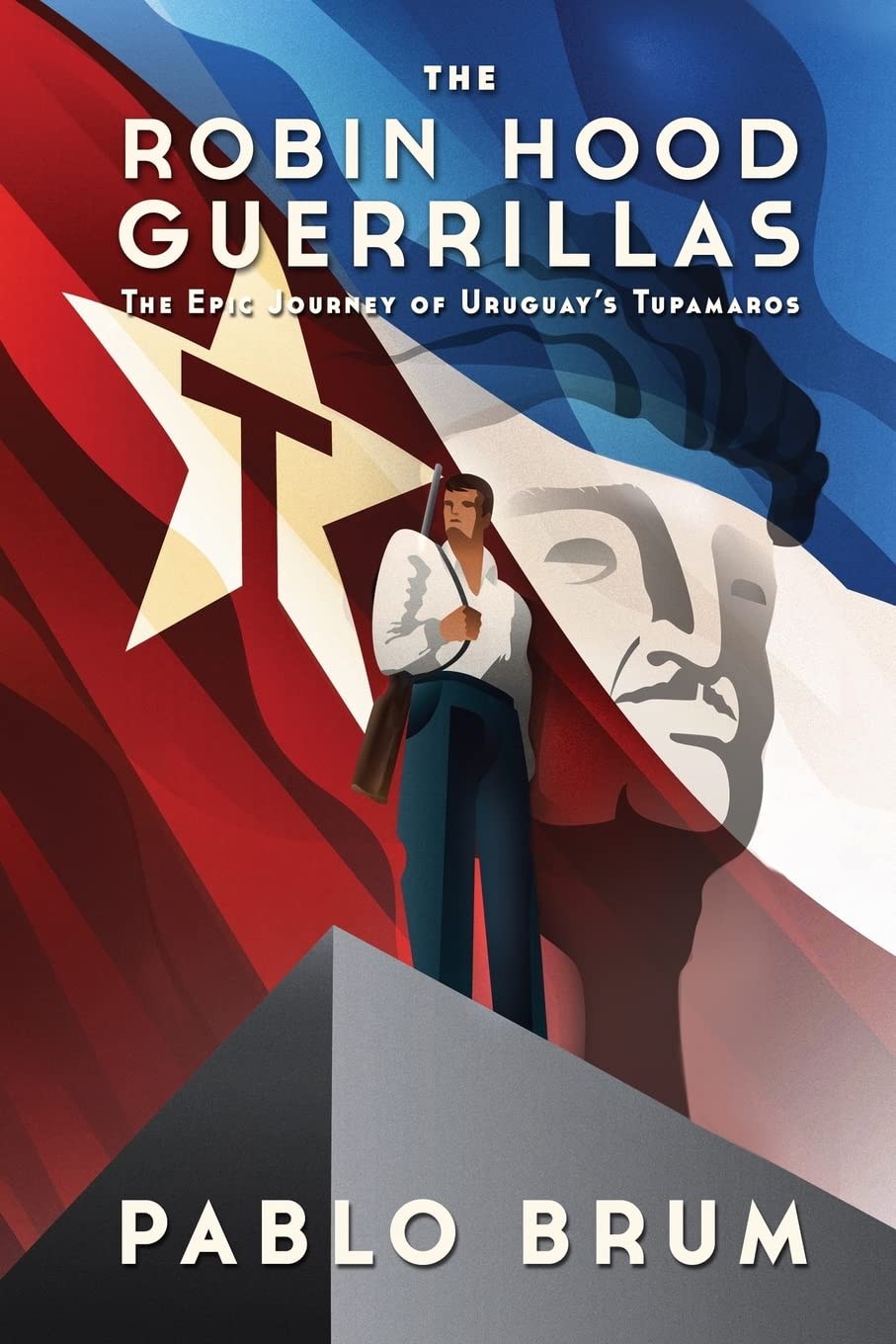
‘The Robin Hood Guerillas: The Epic Journey of Uruguay’s Tupamaros’ by Pablo Brum

2014, 402 p.

I’ve been dipping into books about Uruguay- a place I’ve never been- and about Jose (‘Pepe’) Mujica, the ex-President of Uruguay who died recently. I haven’t been able to find many English-language books about the Tupamaros, especially recent ones, and this book, written in 2014, seemed to be as recent as I was going to find. I know little about the historiography of Latin America, and Uruguay in particular, or the author (who was/is an American international security analyst – whatever that is) so I can only take the book on its own terms. To my admittedly untrained eye, the book seemed to be fairly even-handed, and easily read by a newcomer to the area, although an index for the huge range of characters would have been useful.

So the Tupamaros- what a strange name. This Marxist-Leninist urban guerilla group took its name from Tupac Amaru II, the leader of a failed Andean rebellion against the Spanish in Peru, who was executed in 1781. The group, more properly known as Movimiento de Liberación Nacional – Tupamaros, MLN-T formed in the early 1960s, and one of their first acts was to steal weapons and ammunition from the Tiro Suizo, a shooting range in Colonia, Uruguay. The weapons, supplemented by stolen police uniforms, enabled them to conduct a range of audacious hold-ups and kidnappings which earned them the sobriquet ‘The Robin Hood Guerillas’. Their mode was ‘armed propaganda’ which combined the mostly harmless brandishing of weapons with a healthy (if somewhat tedious) dose of ideology and propaganda to which they subjected their victims. At first there was, indeed, a Robin Hood element, when they combined social justice and retribution against corruption in their criminal activities, often undertaken both as a form of armed propaganda and in order to procure more weapons, ammunition and money to conduct further raids.

Despite admiration of both the Cuban and Chinese revolutions, and the sympathy the leaders had for the agricultural workers (particularly by Raul Sendic and Jose Mujica) it was decided that they would eschew the examples of other peasant-based revolutions and instead undertaken urban guerilla action. This was largely a result of geography: as a small, flat country there were none of the mountain hideaways that guerillas could melt into, and at times when both Brazil and Argentina had right-wing governments, they could not count on fleeing over the border.

At first, they seemed to have widespread, if often tacit support. They could call on doctors to repair their injuries, and lawyers, bank officials, government employees and others enabled them to infiltrate and provide intelligence about their targets. Brum reveals a grudging admiration for the audacity of their raids, and their sheer ingenuity and logistical planning of escapes when the police rounded them up. Their escapes- especially when 100 prisoners tunnelled out of the Punta Carretas – made them seem invincible (in much the same way, unfortunately, as the drug cartels in South America have seemed inthe past).

Brum spends some time on Alejandro Otero, the police commissioner with formidable MLN-hunting skills, who in a Javier/Jean Valjean type of struggle with the Tupumaros, exhibited a mixture of fixation and grudging admiration, as did the Tupumaros with him.

But over time, as more of the original Tupamaros were arrested or fled into exile, the movement became more violent. They lost support when their kidnap hostages were murdered, rather than set free after a few months, and in many ways their actions prompted the takeover of the military, albeit with the acquiescence of the civil authorities. The murder of rural labourer, Pascasio Baez, by lethal injection of penothal also cost them support.

Once popular support leached away from them, and the grip of the military hardened, the Tupumaros disappeared from the headlines. But Brum follows them into their imprisonment, divided into groups of three, held in prisons with varying degrees of cruelty.

I gather that Brum makes some contested points in this book. He argues that it was not certain-indeed, he leans towards refuting- that U.S. government official Dan Mitrione, who was murdered in 1970, actually trained the police in torture methods. He suggests that during 1972 and 1985, when the nine most prominent Tupamaros were imprisoned, and moved from one military base to another, the Tupamaros themselves sent out feelers to the very military that was imprisoning them, to see if they could work together.

He finishes his book with a ‘where-are-they-now’ survey, current as of 2014. Raul Sendic, the icon of the Tupamaros, suffered appalling facial injuries in a shoot-out, and died in 1989. Some, like Jorge Zabalaz and Mauricio Rosencof retained their radicalism. Brum is bemused, and amused, by the popularity of Jose Mujica that saw him become no less than President. As he points out, a surprising number of the players in the 1970s still had sons involved in politics fifty years later.

Brum criticizes the barbarity on both sides- on the part of the Tupamaros who drifted away from the somewhat romantic (and romanticized) view of the Robin Hood guerilla, and on the part of the military who honed their cruelty on the nine Tupamaros leaders under their control. Despite the audacity and logistic brilliance of their early exploits, Brum’s linking of them with their ideological descendants like the Californian Symbionese Liberation Army who kidnapped Patty Hearst, or the Weather Underground, or the urban guerilla Rote Armee Fraktion in Germany, or the Italian Brigate Rosse is rather chilling. He closes his book with the observation that, despite Mujica’s proclamation that he “fought for a fatherland for all”

…many individuals were left behind in shootings, executions, and torture chambers: civilians, insurgents, policemen, and soldiers. For them there really was no more fatherland.

I enjoyed this book, although I was mystified by the curious insertions of #### and ++++++ to denote endnotes, as well as nearly 600 footnotes throughout the text. It was supportive of a reader with little knowledge, and he established the major characters sufficiently clearly that you could trace them throughout the narrative, although they threatened to be swamped by so many minor characters mentioned in person. Jose Mujica, whom I admire, once said

I am still a Tupumaro. I never stopped being one. A Tupumaro is someone who rebels against injustice.

After reading this book, I think I understand a little better what he meant.

My rating: 8/10

Sourced from: purchased Kindle book