
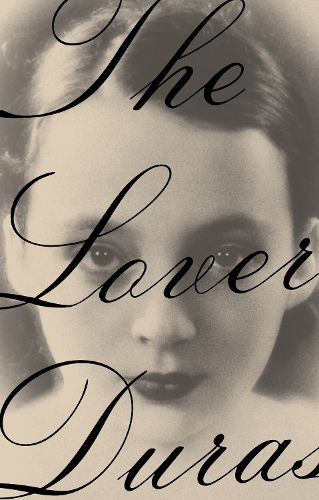
One of the very best things about belonging to a book group is when you go along, thinking that a book is a bit mediocre, and you leave having been introduced to a swathe of subtleties and themes that you just hadn’t thought of before. This is what happened with me at the Ivanhoe Reading Circles’ discussion of Marguerite Duras’ The Lover.
The Lover starts and ends with the reflections of a 70 year old woman, which was the age that Marguerite Duras was when she wrote the book. Although she later distanced herself from the book, claiming that it was a “pile of shit” that she wrote while she was drunk, it closely follows the contours of her own life and could probably best be classed as fictionalized memoir. It is set in Indo-China, then under French rule, in the late 1920s. Both the title and much of the narrative revolve around an affair she conducted with a man twelve years older than her, when she was aged only fifteen. It is a consensual relationship, although she treats her lover with a rather patronizing pity, knowing that as a Chinese man he cannot hope to marry her as a white woman. The 70 year old narrator claims that the girl (who alternates between ‘she’ and ‘I’) is no victim here; that she is hungry for the physical act and that she gains confidence and status through the affair. She does not love him, or at least she claims this, but he is humiliated by the relationship, and later confesses that he has always loved her. I found myself thinking of Nabakov’s Lolita written from Dolores’ point of view, (acknowledging that Dolores was younger, and Humbert was older), in this case without the lens of paedophilia and in this case further complicated by issues of class and colour.
The title and the reputation of the book rest on the affair, but that is only part of the story and on the second reading I found myself even more aware of the other aspects of the novel. The girl is white, her family being French in a French colony. Her mother is a widowed schoolteacher and the family is poor after her father’s death and following the disastrous financial purchase of a ‘concession’ in the rural countryside. The girl’s mother, who suffers from bouts of mental illness, is nonchalant and even complicit in her daughter’s affair with this rich Chinese older man (although twelve years is not an excessive age difference, and in France then and now the age of consent is 15). He gives her money, and the family needs it, especially as her older brother is siphoning money from his own family to feed his opium addiction. Her hatred of her older brother is sustained throughout her life, especially when her younger (but still 2 years older) brother dies.
The book is not easy to read. Many times she returns to the image of the girl on a ferry crossing the Mekong River, dressed in a faded silk dress with a belt belonging to her brother, gold lame shoes and a pink-brown fedora. This is how her lover first saw her, and this is how the 70 year old her sees herself looking back. The narrative is shattered, switching repeatedly between first and third person, interspersed with flashbacks and flashforwards. There is a flatness of tone throughout, as if the book were being narrated at a distance in a monotone.
I’m pleased that I read it a second time. I realized on second reading that the repetition and fragmentary nature of the narrative was not going to resolve itself miraculously at the end, and I slowed down to savour it more. Her affair – or whatever you would call it- as a 15 year old, her childhood in French Indo-China, her yearning to write, the paradox of ‘pleasure unto death’, memory and madness are themes that she returned to again and again in her writing. She might have decried it as a pile of shit, but it’s not.
My rating: on second reading 9/10
Read because: Ivanhoe Reading Circle selection
Sourced from: purchased e-book.
Other reviews: Anthony Macris in The Conversation
 The Resident Judge of Port Phillip