
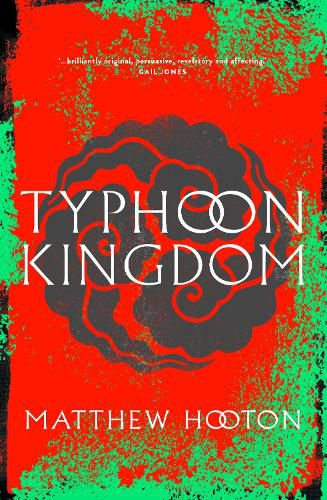
In my quick and rather shallow dive into Korean literature to accompany my visit there in April 2025, I feel as if I have come full circle with this book. Matthew Hooton’s Typhoon Kingdom is written in two parts, separated by 290 years. The first section is set in 1652 when Dutch accountant van Persie is shipwrecked on Jeju Island en route to a trading post in Japan. Six other sailors survived too, and were sent to the Emperor in Seoul. Van Persie is captured too and taken to a shaman, who slashes his tongue (not permanently) before he is handed over to a fisherman Hae-Jo who is charged with taking him to the Emperor Hyojong of Josean to join the other six sailors. Before embarking on the journey, his wounds are tended by one of the diving women of Jeju Island, and he carries this vision of his healer with him, as he is forced to place his fate in the hands of Hae-Jo as they traverse the kingdom on route to the emperor. The present tense narrative is told by three narrators: Van Persie, Hae-Jo and Emperor Hyojong himself.
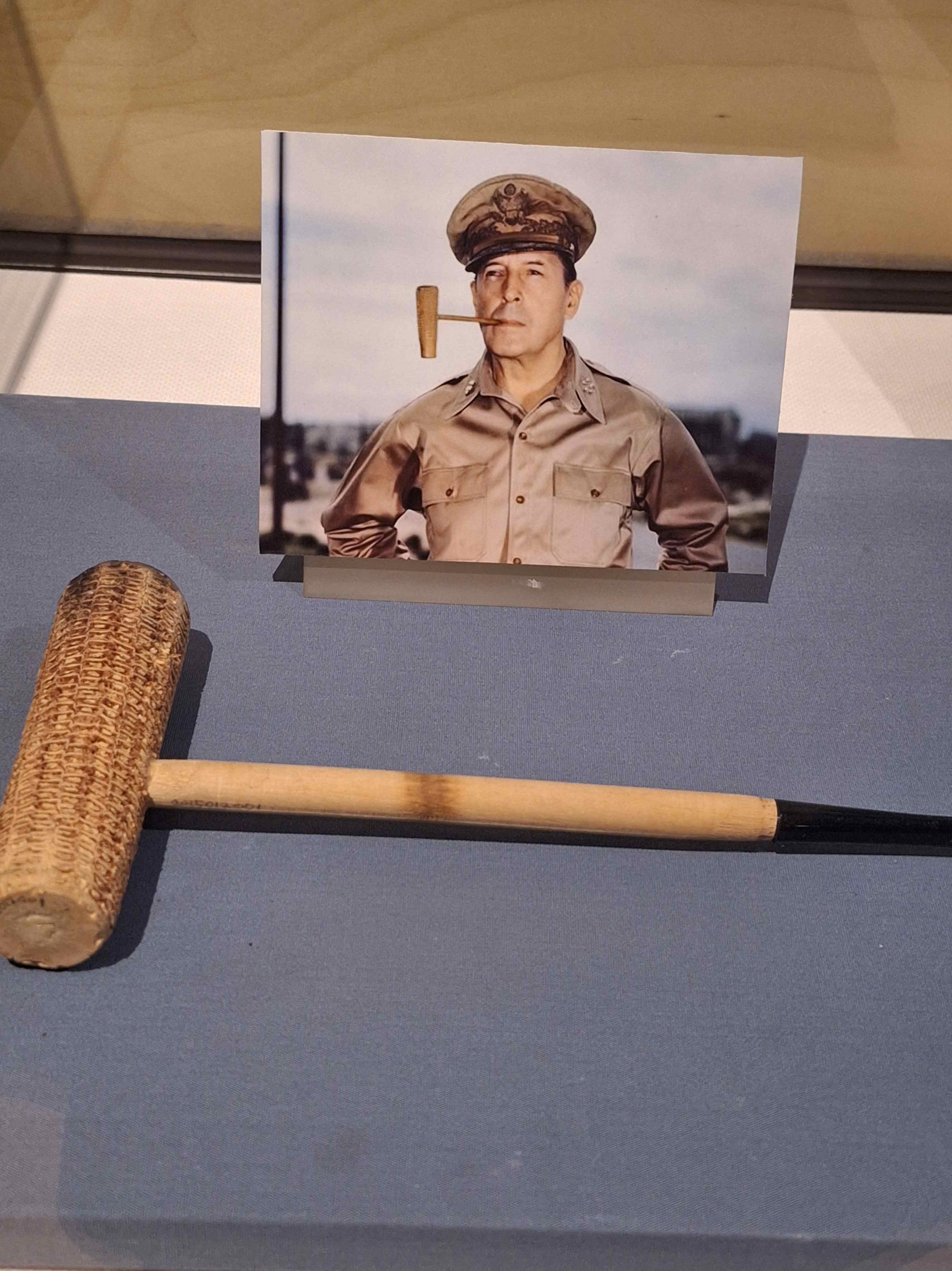
The second part of the book is set in 1942, and it too is told by three narrators in the present tense. One is General Macarthur, impatient to take the fight to Korea after being forced to withdraw by his American commanders( I saw one of his corncob pipes in the Seoul War Memorial- I didn’t realize that it was ACTUALLY a corncob!)
The other two narrators are Yoo-jin, a young woman who uses her healing skills to treat a young villager with blue eyes, Won-je, who has joined the resistance to the Japanese occupation. Yoo-jin is captured by the Japanese (who have already been in control of Korea for the past 30 years), who use ‘insurgent’ women as ‘comfort women’ for the Japanese troops. In the chaos of the immediate post-war period, as Yoo-jin travels south to return home, Won-je continues to look for this woman healer.
Now, as it happens, two of the Korean books I read dealt with several of these themes. In Simon Winchester’s Korea: A Walk Through the Land of Miracles, he traverses South Korea following in the footsteps of Hendrick Hamel, the shipwrecked Dutch sailor, on whom the character of Van Persie is based. The Mermaid from Jeju dealt with the insurgency against the Japanese which then transformed into an insurgency against the post-war Nationalist soldiers, many of whom had fought with the Japanese previously. Yoo-jin’s family has come from Jeju Island, and it is there that she had learned her healing skills from generations of healers in her family.
Hooten’s depiction of the life of the comfort women was confronting and well-written. I was slightly surprised that a man was writing about the comfort women’s experiences, and I was impressed that he captured so well the rawness and physical pain of rough and unwanted sex. The abandonment of the ‘comfort women’ after the Japanese surrender led only to more danger as men’s allegiances shifted through self-interest and opportunity.
I found the second part of the book more – what to say? engaging, compelling, affecting- than the first and I wondered if the first part of the book was even necessary, given its distance from the events in the second part. But on second thought, there is a slight narrative link between the two section, and the events are a mirror-image of each other. In both, there is a woman who heals and in both there is a search to find the healer again; one narrative heads up towards Pyongyang, the other heads south back to Jeju Island. This is probably of more structural, rather than narrative, interest and perhaps added an extra dimension to the book. However, I felt that the second section was the stronger, and could have easily stood alone. It was certainly better written than The Mermaid from Jeju, although I found the consciously literary opening paragraph of many of the chapters a little too performative. That’s a small quibble: otherwise the narrative was well handled, the pace moved well and the landscape was rendered carefully.
It makes even more aware, though, of the complexity of the strained relationship between Korea and Japan, two countries that we tend to conflate as ‘Asia’ but which have a long and bloodied history.
My rating: 9/10
Sourced from: e-book from Yarra Plenty Regional Libary
Read because: I visited South Korea.
Other reviews: Lisa from ANZLitLovers enjoyed it (her review here) and Rohan Wilson reviewed it here.
 The Resident Judge of Port Phillip