
Spoiler-ish
Had I been watching this on television, I would have thrown the remote at the television when the closing credits scrolled down the screen. As I read it in its a lengthy book form, I found myself beseeching Charles Dickens to come back and show how to tie up a complex story with a definite ending (send the main characters to Australia, drown them, send the car over the cliff- anything that finishes the story off!)
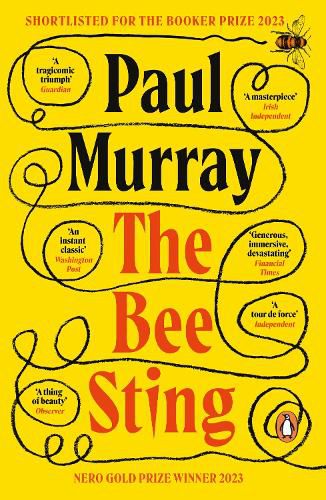
I had heard that this book was about a car-yard closing down, which did not seem a particularly promising premise for a book. Indeed, it is about a family-owned car-yard closing down, but it’s also about the implications on the family – Dickie, Imelda, Cass and PJ- as their financial situation tightens.
It’s set in Ireland, but it took me quite a while to shake off the sense that it was an American story instead. Certainly, there are mentions of the Magdalen convent in the middle of the town that nobody talks about, and the weather is often wet, but I still didn’t have a strong sense of its Irishness. Perhaps the car-yard, which seems a particularly American phenomenon, led me astray.
Dickie and Imelda married about 20 years ago, largely on the rebound from the death of Dickie’s brother, the local football hero Frank. Frank and Imelda had been engaged to be married, and after his death, Dickie and Imelda both sought solace from grief in each other’s arms. Dickie had long been slated to take over the family car-sales yard from his father Maurice, after completing a degree at Trinity College in Dublin. But other events had intervened, and so we find Dickie and Imelda, living in what had been the large family home on a large tract of land, deeply indebted and with the car yard in trouble. Their daughter, Cass, is in her final year of school, trying to work out her place with her friend Eileen and her own sexuality as she, too, goes to Trinity College. Their son PJ spends much of his time online, where he is being taken beyond his depth.
The story moves around, concentrating on different characters in turn, some written by a detached narrator, others told as a stream-of-consciousness where thoughts and verbal utterances are intertwined. As with all families, there are the family stories but here they are unpacked and challenged as the spotlight shifts from person to person, and through flashbacks and back-story. Each of the characters is being lured by a different way of being, and there is an underlying pessimism about the outside world with its physical and emotional violence. Sex in the book is largely sordid, either physically or emotionally, and there are many near misses as events could have taken an even more calamitous turn.
The book is fairly heavy-handed in its preaching on climate change and societal collapse, although it does play a part in the plot. It does add to the ‘going to hell in a handbasket’ vibe of the whole book.
The action speeds up at the end of the book, with increasingly short chapters told from different characters’ perspectives until the narrative is a series of short paragraphs, as all the characters converge on one spot. But what happened? I think that perhaps, there was no near-miss here.
I enjoyed the book, although particularly in the first third I felt an oppressive sense of dread and doom every time I picked it up again. Despite the underlying pessimism of the book, and the unrelieved bleakness, Murray had filled out his characters enough for you to care about them as fellow humans, with whom we share vulnerabilities and thwarted dreams. My son said that it was the best book he read last year: I wouldn’t go that far, but I could barely put it down the further into it I went. So for me, not the best, but pretty damned good.
My rating: 8.5/10
Read because: Ivanhoe Reading Circle selection- and then I couldn’t attend the meeting because of COVID!!
Sourced from: Ladyhawke Books, Ivanhoe.
 The Resident Judge of Port Phillip