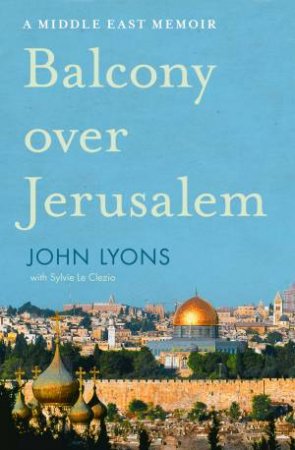
This book, co-written with his wife Sylvie Le Clezio in 2017 was another amongst the selection of books handed to Australian MPs by a number of prominent local writers. It is a memoir of the six years that Lyons spent based in Jerusalem as Middle East correspondent for the Australian, not a newspaper that I read often. He has worked for most of the media groups in Australia: Murdoch with the Australian, the Sydney Morning Herald and now for the ABC as their Global Affairs Editor. I must say that I will now watch his reports from the Middle East in the wake of October 7 with added interest because, not only does this book deal with the swirling constellation of Middle East politics between 2009 and 2015, but also it highlights the heavy influence of the Israel lobby in Australia in shaping the news for an Australian and Jewish/Australian audience to reflect an even harder line here than in Israel.
The book is named for the large balcony in their apartment that overlooked a vista which encapsulated Palestinian/Israel history: Old City of Jerusalem, modern Jerusalem, the headquarters of the United Nations, and the concrete wall that separates Israel from the occupied West Bank. In front of their balcony was the ‘peace park’, where six days of the week Israelis would place their picnic baskets on the upper parts of the park, and the Palestinians would picnic on the lower parts. Except for Friday evenings, when on the sound of a siren announcing Shabbat, Israelis would leave the park and walk home for their Shabbat dinners. On cue, the Palestinians would appear carrying plates of kebabs and tabouli and move to the higher parts until, on Saturday evening, the Israelis returned, taking up their place on the top of the hill, and the Palestinians would move back down again.
In his opening chapter he declares that
As for my own perspective, I approach reporting of Israel from a ‘pro-journalist’ stance. I’m neither ‘pro-Palestinian’ nor ‘pro-Israel’. My home is in Australia, on the other side of the world. To use an old Australian saying, I don’t have a dog in this fight. (p. 12)
This is not, however, the conclusion that he comes to by the end of the book, which has documented the pervasiveness of Israel control, particularly in the West Bank, and trenchantly criticized the role of Benjamin Netanyahu in particular for making a two-state solution impossible. In spite of Israeli finessing to obscure the fact by withholding and withdrawing Palestinian residency status in the West Bank, the demographic tipping-point between Israelis and Palestinians has been reached: during Lyons’ stay the number of Palestinians in Israel, the West Bank and Gaza equalled (or, depending on your sources, passed) the number of Jews in Israel and the West Bank. As he sees it, in coming years, there will be tragic consequences of this policy.
This tragedy now seems inevitable. Almost 3 million people in the West Bank cannot be denied all civil rights for more than 50 years without dire consequences and almost two million people in Gaza cannot be locked forever in the world’s largest open-air prison. One day many of those five million people will rise up. (p. 357)
As Middle East correspondent generally, his brief extended to countries beyond Israel. He was there to witness the Arab Spring uprisings and subsequent crackdowns in various countries and the political permutations in Iran, Egypt, Libya, Lebanon and Syria. His conclusion was that the Arab Spring failed because the step between dictatorship and democracy was too large, especially without the in-between establishment of independent institutions like police forces and civil services (p.355).
However, his major emphasis is on Israel, and the politics that have shaped the United States response, which flies in the face of world opinion which is gradually hardening against Israel (and, I would suggest, has hardened even further in the last year). He writes honestly and persuasively about the power of the Israeli-lobby group, particularly the AIJAC (Australia/Israel & Jewish Affairs Council) headed by Colin Rubenstein, in pressuring the Australian media and targetting particular journalists (including him) in their reporting. He writes about its influence on politicians, especially through the generous ‘study’ tours that are provided to MPs – several of whom have attended on multiple trips hosted by Melbourne property developer Albert Dadon- which give a one-sided view of the Israeli/Palestinian situation. He particularly focuses on Labor politicians- Rudd, Carr, Gillard- because of the mismatch between party policy, the views of party members, and Government policy- and the way that Israeli policy became caught up in the leadership ructions during the first decade of the 21st century. He highlights the importance of language used in reporting- for example, whether East Jerusalem is described as ‘occupied’ or not and whether ‘occupied’ has a capital ‘O’ or lower case ‘o’; or whether SBS should use the word ‘disputed’ territories.
As might be expected, this book was criticized by politicians and commentators who take a different line to him. But, as he says
…those who’d read my reports over these six years could have been confident that they were reading facts, not propaganda….That, in the end, is what journalists should do: report what’s in front of them. Then it’s over to the politicians and the public to decide what they do with that information. But without facts, they cannot know what they are dealing with (p.356)
Having read this book, and knowing his own personal and professional opinion, casts a different light on his dispassionate, fact-based reporting for the ABC, reporting that saw him named Journalist of the Year at the 2024 Kennedy Awards. On the one hand, it fills me with admiration that he’s even able to report so calmly and authoritatively. On the other hand, though, I’m now aware of the editorial pressure and careful vetting that would have gone into his reports- and no doubt, for this book. It stands the test of eight years well, especially the last 18 months, and is a sobering analysis of not just the ‘facts’ of Israeli/Palestinian conflict day after day, but the political and public relations filter that screens and shapes what we receive as readers and viewers- and our responsibility to question it.
My rating: 8/10
Sourced from: Yarra Plenty Regional Library
Read because: it was one of the 5 books given to MPs, but I have had it on reserve at the library for months previously.
The Rest is Politics (US edition) With Trump’s pardoning of the January 6 rioters, it’s even more important than ever to resist his re-branding of the Capitol riots as a “day of love”. Anthony Scaramucci (who I don’t think I like very much) and the BBC’s correspondent Katty Kay are running a series, similar to the one they did on the 2016 election, How Trump Won the White House eight years after the event. In this present series, they are looking at the 2020 election which was won by Joe Biden, and which led to January 6 2021. Episode 1: Trump’s Insurrection: The Collapse of his Presidency looks at the circumstances that led to Trump’s defeat when a year earlier he looked invincible. First there was COVID, which Trump downplayed at first, delaying for 6 weeks which let to a million deaths. (A million!) Trump was a natural conspiracy theory fueller, and like a crazy uncle, he embraced the idea of bleach. Then there was the death of George Floyd which led to huge mobs of protestors on both sides, at a time when people were supposed to be isolating. In the midst of the riots Trump was sent to a “safe room” which led to accusations of being a scaredy-cat, which he countered by his walk to St John’s Chapel flanked by the military and bearing a bible. His instinct was to order police and troops to shoot at protestors- something to bear in mind as we head into his second presidency. Trump began calling for the elections to be delayed, but this didn’t happen. After the election Pelosi formed a secret committee to investigate possible scenarios where Trump would cause problems, and January 6th was identified as a problematic date then. After an initial flush of votes for Trump, the postal votes began to be tallied and Trump’s lead disappeared. Nonetheless, he went out in the early morning and claimed victory prematurely.
The History Listen The ABC is recycling its programs over the summer break, and this episode on John Friedrich Friedrich the Fraud was originally aired on 9 December 2023. From the ABC website “the former head of the Victorian Division of National Safety Council of Australia, was also once called Australia’s greatest conman. Back in the 1980s, he famously made $293 million of investors’ money disappear. When his fraud was uncovered, he went missing himself for sixteen days, prompting a nationwide manhunt and a media storm that reported both facts and the fictions.” In my mind, the controversy over Friedrich and the National Safety Council all gets mixed up with the mess that Victoria was in at the time. It seems incredible that Friedrich had this whole constructed persona that saw him able to apply for huge amounts of money fraudulently – and yet no-one can say where the money actually went.
Global Roaming I nearly always listen to Global Roaming each week, but I don’t usually record it here because most of the episodes are too current and ephemeral for me to want to recall them later. But over the summer break, Geraldine Doogue and Hamish Macdonald have been hosting a 6-part series AUKUS Investigated which leaves me thinking that we have been absolutely sold a pup that sees us paying US to beef up its submarine capacity for submarines that they could easily withhold from us because they find that they need them themselves. Episode 1 investigates how AUKUS came about – who spoke to who, what the true motivation was for going nuclear and whether the total secrecy around the deal was justified. (I can’t believe that a nuclear submarine is going to remain ‘invisible’ forever, which gets rid of that argument). Episode 2 Bang for Buck? explores what the scheme involves, what the key challenges are to making it work, and we get some cold hard facts about what it is really going to cost us. Episode 3: The China Question addresses the elephant in the room, which is that this whole thing is actually about China. Episode 4: The 51st American State? asks whether we are getting the short end of the stick with this deal, and sacrificing our sovereignty to boot (my answer- yes. We’re opening up for two big army bases on our soil just like Pine Gap) Episode 5: Radioactive Ripples what happens to the waste that will remain dangerous for generations of Australians to come? Is this just the introduction of Australia as nuclear dump for the rest of the AUKUS partnership? I bet the nuclear industry is salivating over this. Episode 6: Premier Peter Malinauskas is very enthusiastic about AUKUS, as he should be given that in theory the submarines will be built there. While I agree that we should have sovereign ship building capacity (just like we should have sovereign pharmaceutical-manafucturing capacity, too) I think that we should bite the bullet, devote more money to defence, and go it alone. This is a really good series, which raises lots of questions.
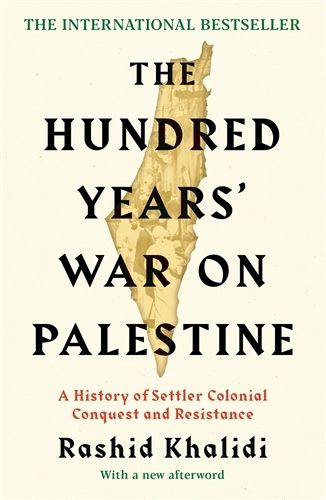
Before Christmas, a number of Australian writers put together a bundle on books on the Israeli/Palestinian conflict, parcelled them up and gave them to Australian politicians for their summer reading. The books were endorsed by both Australia Palestine Advocacy Network (APAN) and the Jewish Council of Australia (JCA), and sent with a letter signed by more than 50 writers including Tim Winton, Michelle de Kretser, Charlotte Wood, Benjamin Law, Anna Funder, Trent Dalton and Hannah Kent. This book, written by historian and Arab scholar Rashid Khalidi, was one of the five books chosen, with other titles by John Lyons, Ilan Pappé, Kate Thompson, and Sara Haddad. Apparently, the parcel was opened by the staff of Liberal politican Dave Sharma, who re-packaged them and returned them to sender. It is his loss, but it is our loss too, as a voting public dependent on the knowledge and mindset of our politicians.
In the Afterword, written in April 2024 and post-October 7, Khalidi summarizes the thesis of the book, which he feels has been validated by current events:
…events in Palestine since 1917 resulted essentially from a multi-stage war waged on the indigenous Palestinian population by various great powers allied with the Zionist movement- a movement that was both settler colonialist and nationalist, and that aimed to replace the Palestinian people in their ancestral homeland. These powers later allied with the Israeli nation-state that grew out of that movement. Throughout this hundred years’ war, the Palestinians have fiercely resisted the usurpation of their country. … It is not a age-old struggle between Arabs and Jews, it has not been going on since time immemorial, and it is not simply a conflict between two national groups, two peoples. It is a recent product of the iruption of imperialism into the Middle East; the rise of modern nation-state nationalisms, both Arab and Jewish; of the necessarily violence European-style settler-colonial methods employed by the Zionist movement to “transform Palestine into the land of Israel”… and of Palestinian resistance, both non-violent and violent, to these methods. Moreover, this war has never been just between Zionism and Israel on one side and the Palestinians on the other, with the latter occasionally supported by Arab and other actors. It has always involved the massive intervention of the greatest powers of the age on the side of the Zionist movement and Israel: Britain until World War II, and the United States and others since then….Given these facts, in this war between colonizer and colonized, oppressor and oppressed there has been nothing remotely approaching equivalence between the two sides, but instead a vast imbalance in favour of Zionism and Israel. (p. 256, 257)
Khalidi divides his book into six declarations of war against Palestine, not all of which involved actual troops on the ground. The First Declaration of War 1917-1939 goes through the lead-up to the Balfour Declaration of 1917, which emerged from the philosemitic desire to ‘return’ the Hebrews to their biblical homeland (a sentiment which still animates Evangelical Christians today), and a rather more pragmatic desire to stop Jewish emigration to Britain. The people of Palestine had had their expectations raised for the possibility of Arab independence and self determination, promised by the British in 1916. But now they were to be ruled under British governance in the 1922 Mandate for Palestine, which incorporated the text of the Balfour Declaration verbatim, and amplified its commitments. It allowed for the creation of a Zionist administration parallel to that of the British mandatory government, tasked with exercising many of the functions of the sovereign state for the Jewish part of the population. However, as war threatened in 1939, there was a shift in London’s policy away from Zionism because Britain needed the support of Islamic countries in fighting the war. The United States took up the role of providing diplomatic cover and arms to Israel instead- a stance that it has maintained to this day.
The Second Declaration of War 1947-1948 describes the immediate aftermath of the Nakba, willed by the Zionist state-in-waiting, and caused by foreign interference and fierce inter-Arab rivalries (p. 58). The Zionist movement had mobilized American politicians and public opinion, prompted further by widespread horror at the Holocaust. The Palestinians
entered this fateful contest woefully unprepared both politically and militarily, and with fragmented and dispersed leadership. Moreover, they had little external support except from the deeply divided and unstable Arab states, still under the influence of the old colonial powers, and which had poor and largely illiterate populations. This was in stark contrast to the international standing and the strong, modern para-state built up by the Zionist movement over several decades. (p.70)
The Third Declaration of War in 1967- or the Six Day War- was prompted by the rise of militant Palestinian commando groups within the context of what has been called “the Arab Cold War”, where Egypt led a coalition of radical Arab nationalist regimes opposed to the conservative Saudi Arabia bloc. After a lightning first strike by the Israeli airforce, which destroyed most Egyptian, Syrian and Jordanian warplanes on the ground, the Israeli forces decisively defeated the Egyptian and Jordanian armies, and occupied the Gaza Strip, the Sinai Peninsula, the West Bank and Arab East Jerusalem. This defeat was followed by U.N. Security Council Resolution 242, drafted by the British permanent representative but actually crafted by the United States, which allowed for expanded Israeli boundaries on grounds of security (a stance that we are seeing played out on all sides of Israel today), walking away from the more limited boundaries in the 1949 agreement. It led to the rise of Fatah, founded in 1959 by a group of Palestinian engineers, teachers and other professionals, headed by Yasser Arafat. To co-opt and control this rising tide of Palestinian nationalism, the Arab League founded the PLO in 1964 , under Egypt’s leadership, but it was soon taken over by Fatah. By 1979 the Egyptians signed the Camp David agreement with the PLO. It’s interesting that Jimmy Carter who orchestrated the Camp David Accords initially called for a homeland for the Palestinians, but was pressured by Begin’s government, Sadat and local Jewish interests to abandon this push for a comprehensive settlement.
The Fourth Declaration of War was Israel’s invasion of Lebanon in 1982 which, although it bombed Lebanon, had as its primary focus the Palestinians living there and the larger goal of changing the situation inside Palestine. Israel wanted to destroy the PLO in Lebanon and to weaken the Palestinian situation in West Bank, Gaza and East Jerusalem so that they could be annexed. The United States lent support to Israel, and the Arab regimes succumbed to American pressure by doing nothing practical to help the PLO beyond declaring their support. The PLO found itself isolated, largely because of the PLO’s own heavy handedness which led to the loss of support amongst Lebanese citizens who were caught up in the war. As a result, the PLO agreed to withdraw from Beirut. Even though the US government promised to protect Palestinian refugees remaining in Lebanon, the international forces supervising the evacuation withdrew as the last ship left. Massacres at the Sabra and Shatila refugee camps ensued. The lasting results of this 1982 war were the rise of Hezbollah (or Hizballah) and the first significant shift in opinions about Israel in the international media, and negative perceptions in America and Europe.
The Fifth Declaration of War took place between 1987 and 1995, sparked by the first intifada which started in Gazan refugee camps in December 1987. In response, Israel’s “iron fist” policy provided further vision of violence and brutality, leading to a further erosion of support in the West. Spontaneous and bottom-up, like the 1936-9 revolt, it was local and flexible, and Khalidi considers it “an outstanding example of popular resistance against oppression and [it] can be considered as being the first unmitigated victory for the Palestinians in the long colonial war that began in 1917” (p.174) But the PLO leadership in exile in Tunisia tried to dominate this grassroots movement from a distance, and did not take advantage of the Palestinian presence at the United Nations. In 1988 the PLO issued the Palestinian Declaration of Independence which formally abandoned the PLO’s claim to the entireity of Palestine, accepted the principles of partition, a two-state solution and a peaceful resolution to the conflict. It accepted SC 242 and SC338 as the basis for a peace conference, but it didn’t go anywhere. The PLO did not understand the significance of Camp David, or the implications of the decline of USSR. During the Gulf War in 1990-91, the PLO supported Iraq, which made it a pariah amongst the other Arab states. At peace talks in Madrid in 1991 the PLO acquiesced to the Israeli insistence that there be no independent Palestinian representation, and Israeli control over what topics could be discussed. Further attempts in 1992 were stymied by the tension between the PLO based in Tunisia, and Palestinians from the Occupied Territories. However in 1993 a secret track of negotiations resulted in the Declaration of Principle between Israel and the PLO that was signed on the White House lawn in September 1993. With this Declaration, Israel recognized the PLO (but importantly, NOT Palestine- just the PLO) and the PLO recognized the State of Israel. At the Oslo I accords the Palestinian negotiators were out of their depth, and signed up to what Khalidi characterizes as
a highly restricted form of self-rule in a fragment of the Occupied Territories, and without control of land, water, borders, or much else (p. 200)
An Interim Agreement on the West Bank and the Gaza Strip, or Oslo II, completed this ruinous work by dividing both regions into a patchwork of areas A B and C, with over 60% of the territory Area C under complete, direct and unfettered Israeli control. Khalidi believes that this was a trap, because Israel was able to control PLO movements and held all the power. The PLO was made responsible for security for Israel and the US continued to provide most of the diplomatic muscle.
The Sixth Declaration of War between 2000 and 2014 saw the establishment of roads, permits and checkpoints within the fragmented West Bank. Hamas had been established in 1987, promoting itself as a more militant Islamist alternative to the PLO, and claiming again the whole of Palestine, not just the occupied area. Hamas emerged out of the Muslim Brotherhood, and at first Israel was happy to indulge it as a way of splitting the Palestinian national movement. The Second Intifada erupted in 2000, caused by the worsening situation for Palestinians after Oslo and the intense rivalry between the PLO and Hamas, but prompted by Sharon’s visit to the Haram al-Sharif (Temple Mount). Violence soon escalated, and Hamas and Islamic Jihad suicide bombers attacked inside Israel. As the body responsible for security, the PLO suppressed the Hamas attacks, leading to further enmity between the two groups. It was a setback for the Palestinian cause, and Israeli troops re-occupied. In 2005 Arafat died, and was replaced by Mahmoud Abbas. There were further Israeli ground offensives in 2008-9, 2012 and 2014 and regular Israeli incursions into Palestinian areas of the West Bank and East Jerusalem. At the parliamentary elections in January 2006, Hamas ran candidates, emphasizing reform and changes. Hamas gained control of the Legislative Assembly, but both Israel and the Us rejected any Hamas participation in a Palestinian Authority government. Hamas violated the rules of war by using imprecise missiles shot from Gaza into civilian areas in Israel. In response, Israel’s third attack on Gaza in 2014 followed the Dahiya doctrine that the sources of missiles were not to be considered as villages, but as military bases, against which disproportionate force, damage and destruction could be applied.
I’ve gone into this much detail because firstly, I needed to summarize it for my own purposes, and secondly because the Israeli/Palestinian conflict seems to be just one continuous, undifferentiated war. In his conclusion, Khalidi talks about three approaches which can expand the way in which the reality in Palestine can be understood. The first is to compare it with other settler-colonial experiences e.g. Native Americans, South Africans, (Australian indigenous peoples, although he doesn’t mention it) or the Irish. Of course, it is hard to establish this colonial nature, given the Biblical dimension of Zionism, particularly in America where terms like “colonial”, “settler” and “pioneer” have particular resonance. The second lens involves focusing on the gross imbalance of power between Israel and the Palestinians, a characteristic of all colonial encounters. Khalidi rejects the ‘David vs Goliath’ characterization of the conflict, where Israel wants peace but claims that “there is no partner for peace”. Instead, he points out that the Zionist movement and the state of Israel have always had the big battalions on their side (Britain before 1939, US and Soviet support 1947-8; France and Britain in the 1950s and 1060s, and unlimited US support from the 1970s to today). The third, and perhaps most important lens, is that of inequality. There is a contradiction in modern Zionism in that a modern, democratic Zionism has an illiberal and discriminatory essence against the Palestinians. Under Trump the United States became the mouthpiece of the most extreme government in Israel’s history. Khalidi argues that any future negotiations must reject the formula of United States control of the process, and that henceforth the US must be treated as Israel’s partner. He suggests that in the future, China and India may have more say, and that Europe and Russia, which are both geographically closer to the Middle East than America is, may play a larger role.
Khalidi is not just a commentator: he and his family have been participants in the events that he describes here. As a member of the Palestinian educated elite, he includes first-person narratives and his own recollections of events. In this regard, the book is quite similar to Raja Shehadeh’s We Could Have Been Friends My Father and I (my review here). However, this book is more analytical than Shehadeh’s in his division of six separate declarations of wars as a framing structure, and less shaped by his own family history. Khalidi himself was involved in creating the proposal for a Palestinian Interim Self-Governing Authority (PISGA) in 1992, elected by the Palestinian residents of the West Bank, Jerusalem, the Gaza Strip and those displaced and deported by Israel. It did not proceed at the time because it challenged the exclusive Jewish right to the entirety of Israel, and was further hampered by the tepid response of the PLO leadership at the time. Who knows- perhaps its time will come yet, and Khalidi would be a good midwife. He sees shortcomings on both sides: he is critical of Hamas’ actions against citizens, and even more critical of the PLO’s internal politicking and compromised position after the Oslo Accords.
Moreover, he is conscious of Jewish sensibilities- though he does not share them- as well. He argues that any future resolution of the conflict will necessarily and inevitably fail unless it is based on the principle of equality. However, he recognizes that the Israeli attachment to inequality as far as Palestinians are concerned is rooted in a real history of insecurity and persecution, and that Palestinians too need to be weaned from the delusion that Jewish Israelis are not a “real” people with national rights.
While it is true that Zionism has transmuted the Jewish religion and the historic peoplehood of the Jews into something quite different- a modern nationalism- this does not erase the fact that Israeli Jews today consider themselves a people with a sense of national belonging in Palestine, which they think of as the Land of Israel, no matter how this transmutation came about. Palestinians, too, today consider themselves a people with national links to what is indeed their ancestral homeland, for reasons that are as arbitrary and as conjunctural as those that led to Zionism, as arbitrary as any of the reasons that led to the emergence of scores of modern national movements. … While the fundamentally colonial nature of the Palestinian-Israel encounter must be acknowledged, there are now two peoples in Palestine, irrespective of how they came into being, and the conflict between them cannot be resolved as long as the national existence of each is denied by the other. Their mutual acceptance can only be based on complete equality of rights, including national rights, notwithstanding the crucial historical differences between the two. (p.247)
This is a dense, but well-written book. It moves chronologically, but its six-part structure gives shape to what could otherwise be a long list of battles and political moves. For me, it highlights the century-long process of larger powers dictating the Palestinian destiny – as indeed, the recent ceasefire negotiations illustrate yet again with the prominence of outside powers- but also the absolute necessity for an equitable solution if this conflict is ever to come to an end.
How to spend a national day that makes you feel uncomfortable? As one of the 6,286,894 people who voted ‘Yes’ to the Voice referendum, and who was bitterly disappointed with the result, I wanted to show my ongoing support. But how to do it on a day which is contested and argued over, year after year?
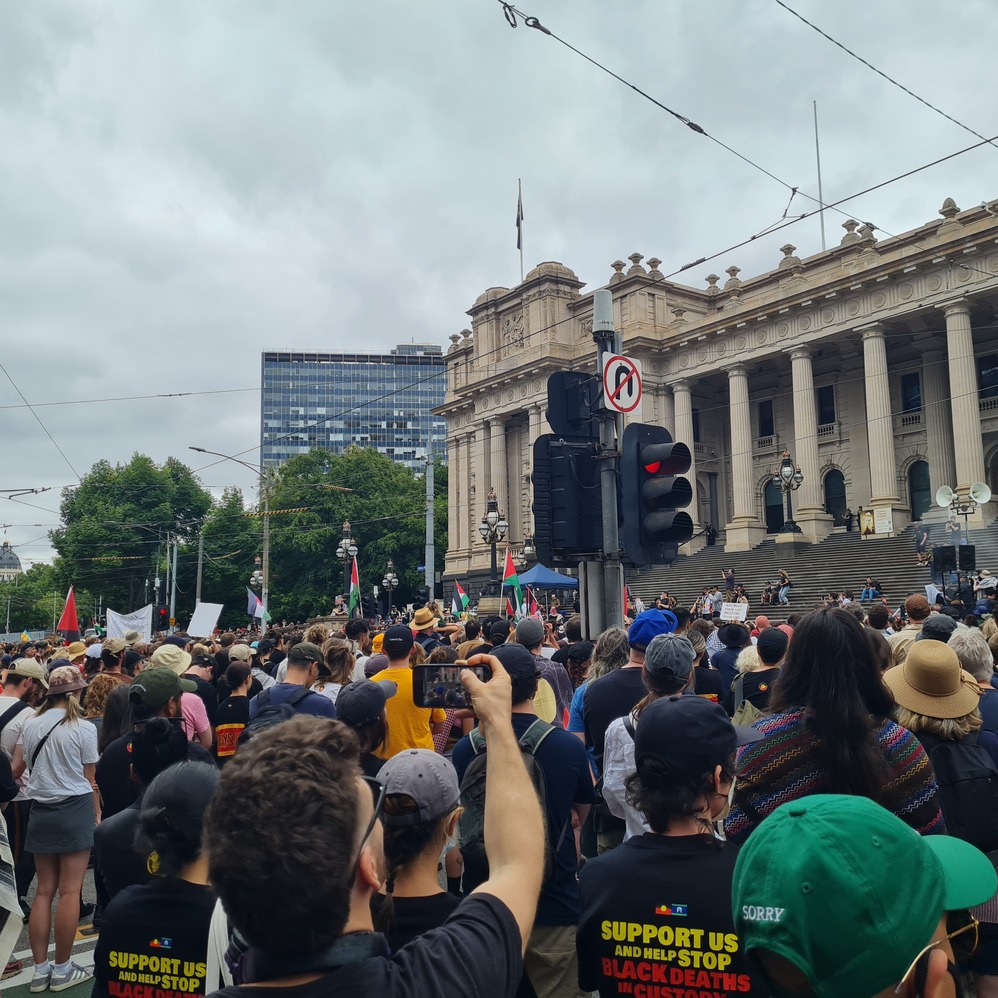
I decided to go into the Melbourne rally. This is the first time I have been to this rally, which has been held for about the last ten years, on the steps of Parliament House (although the first Day of Mourning was staged in Sydney in 1938). A sartorial question: would it be right to wear my ‘Yes’ t-shirt? Or is that just a reminder of past failure? I decided not to, although I had it rolled up in my bag, and as it turned out there were very few ‘Yes’ t-shirts on display, so it stayed in the bag. Perhaps it’s time for a new t-shirt.
We arrived at about 10.10 a.m. and it had just started. There were many, many speeches- of which I thought Gary Foley’s was the best- and after more than an hour there was no sign that the march was about to move off. Standing for an hour is hard on 69 and 75 year old legs, and so we decided to leave.
There were a lot of people there, especially a lot of young people which is encouraging. So often I go to protests and it’s full of white-haired people like myself. And I don’t think that I’ve ever seen such an array of tattoos.
The march had many attendees and flags from the regular Palestinian march. Had I been an organizer, I would have felt that the rally had been hijacked somewhat by Palestinian speeches that took up too much time. Yes, I know the links between settler colonialism in Australia and Palestine. Yes, I know that most of the people there would support both causes, as I do. But I felt that the Palestinian speeches, at such length, on a day and at a function organized by the indigenous community, did not show respect. But that’s not my call to make, I guess.
So how then to mark Survival Day? I decided to listen to the testimony from the Yoorrook Justice Commission. I’ve been meaning to do this for ages, and today seemed the perfect opportunity. You can find the testimony on YouTube as well as on the Commission website. It’s long, and it is a courtcase but the testimony is informative and informed with both indigenous and non-indigenous witnesses. I was particularly interested in the Land, sky and waters hearings in March 2024. As a LaTrobe graduate, I opted first for the panel on 26th March featuring Associate Professor Katherine Ellinghaus, Emeritus Professor Richard Broome (my PhD supervisor) and Professor Julie Andrews from La Trobe and Dr Bill Pascoe from the University of Melbourne. On 27th March there’s Professor Marcia Langton, Jim Berg, Professor Henry Reynolds and Uncle Robbie Thorpe (Djuran Bunjilinee) and on 28th March, Aunty Jill Gallagher, Aunty Vicki Couzens and Suzannah Henty.
There’s hours of watching, listening and learning ahead of me, and for me that’s the best way I can think of marking the day.
The Daily (New York Times) The Life and Legacy of Jimmy Carter Peter Baker, chief White House correspondent for The New York Times, had written an obituary for Jimmy Carter years ago, but now finally, he had to use it. Carter served only one term, and every president since him has sworn NOT to be another Jimmy Carter. Carter came to power promising never to tell a lie (surely sometimes a President would HAVE to lie, wouldn’t he?- still a ‘he’) which, after Nixon, was a big promise. His presidency was marked by what is now known as the “malaise speech”, which in a way foreshadowed Trump’s Nightmare in America speech, except that Carter placed the problem in the American people themselves, rather than an unspecified “they” which Trump draws upon as a source of grievance. Carter worked tremendously hard to get the Camp David accords, and he tried the same approach during the Iran hostage crisis, but to no avail- in fact it backfired because the Iranians deliberately withheld the hostages until an hour after the inauguration of Reagan, so as to deny Carter any credit. Actually, the Iran hostage crisis was prompted by the admission of the Shah of Iran into America for cancer treatment which Carter didn’t want to do, fearing exactly what came to pass: that the diplomats at the Embassy were in danger. Carter, then and now, was such a contrast to Trump.
Reveal Buried Secrets: Americas Indian Boarding Schools Part I and Part II This is a two-part program, which originally aired in October 2022, and was produced by Reveal. In the early 1990s, a handyman was working on the basement heating at Red Cloud Indian School, a Catholic school on the Pine Ridge Reservation in South Dakota. He reported that he saw small skeletons interred in a tunnel. He told his supervisor but no-one else other than his wife at the time, but he was haunted by what he saw. In 2022 he urged school officials to search the basements. . In the past the American Federal Government contracted out to the Catholic Church the task of “killing the Indian and saving the man”, as was done here in Australia in many mission schools conducted by church denominations. The Catholic Church was given Native American land that had been granted by treaty, thus increasing the Church’s land holdings while destroying Native American culture through forced assimilation. In the second part of the series, an archival search is undertaken to investigate who these bodies at Pine Ridge might belong to, but the Bureau of Indian Catholic Missions still has control over archival access, arguing that records are ‘sacramental’ and when records are made available, they are heavily redacted on account of ‘privacy’ issues. The Catholic Church today denies that it was particularly complicit in this forced assimilation, arguing that all churches were involved, but it is impossible to ignore that there is 400 years of Catholic Indian Boarding School history in US. The Pope made an apology in Canada, but the process is only beginning in US. I found it amazing that the history of these boarding schools reaches right back to Chief Red Cloud, the Ghost Dancers, and the Battle of Wounded Knee. As far as the bodies are concerned: former students argued that there could not have been bodies there, and certainly scans and imaging have found no trace of them there.
The Rest is History Fancy being able to squeeze a two-part program out of the topic of Beards! Episode 491: History’s Greatest Beards: From Egyptian Queens to Medieval Conquerers. Neither Dominic nor Tom wear beards, but in this episode they go back to Sumer and Egypt where warriors were designated by their beards, compared with clean-shaven men who were priests or scholars, and closer to God. This warrior/religious distinction has remained for some time. In Egypt, Kings had an each-way-bet and wore false beards, something which was very convenient for Queen Hatshepsut as Pharoah. In the Jewish tradition, beards denote purity, and Mohammed is assumed to have a beard. It was the clean-shaven Alexander the Great who broke the mould of bearded warrior. In Rome, beards were caught up in a culture war, where the traditionalists wore beards, compared with the Grecophiles who were clean-shaven. Scipio Africanas was the first to shave daily, and unkempt beards were seen as plebian. Despite his love of Greece, Hadrian introduced the beard again, perhaps as a sign that the Empire was under pressure. Emperor Constantine reverted to clean-shaven, again, perhaps as a sign that the empire was at peace. It’s not clear whether Jesus wore a beard or not. Early depictions show him as both bearded and clean-shaven at the same time, as a symbol perhaps of his man/god nature. Gregory VII ruled that monks and priests should be clean shaven. In Part II Episode 492: The War on Beards from Peter the Great to John Lennon takes us into more recent history, starting with a reminder that shaving was in itself a rather dangerous enterprise, as a cut could become septic. Over time, beards lost their religious overtones and came to be seen as a sign of healthy, virility and an abundance of semen. Shakespeare’s men (and his witches, too) had beards, but by the 18th century men were clean shaven again. Peter the Great wanted his Boyars clean-shaven, and he instituted a tax on beards as a means of Europeanizing his court, and breaking the power of the Patriarchs. The invention of Sheffield steel meant than men could shave themselves, and in 1903 Gillette blades were sold. The Victorians had beards, the Edwardians didn’t. Between the First and Second World Wars, beards were seen as rather eccentric and freakish, and the 1940s were generally clean shaven. Beards go in and out of fashion along with the generations, so I guess that we can expect to see both cycles in our lifetime.
Dan Snow’s History Hit I know that it’s January, but by the eastern Orthodox church, it’s still Christmas so I’m finishing off Dan Snow’s series about Christmas. Folk Christmas: Yule, Solstice and Ancient English Traditions takes us to the New Forest, where he talks with local historian Richard Reeves to talk about how local peasants used the forest during winter, a time of shortages and darkness. He then talks with folklore historian Vikki Bramshaw, to discover what midwinter legends were brought over with the Anglo-Saxon invasion, the origins of the Yule log as a way of stopping evil coming down the chimney, the God Woden flying across the land for 12 nights picking up souls, and the integration of folk tales about the Holy King and the Oak King to incorporate Father Christmas, who used to be dressed in green.
The final episode in this series Charles Dickens’ Christmas joins us up with London-born tour guide David Charnick who takes us to what was the Marshalsea Prison, where Dickens’ father was imprisoned for debt. It hadn’t occurred to me that this was because people were a flight risk, and most imprisonments were only of a short duration until the debtor could lean on family to help with their finances. Dickens’ father was there for only three months, so Little Dorritt is a bit of an anomaly. They go to the George Inn, London’s last coaching inn, and go along the Thames where mudlarkers still search for treasure, although in Dickens’ time it was more likely that they would be scavenging for ‘pure’ (i.e. dog turds) for use in leather manufacturing. They go to the lanes around Bengal Court where Ebenezer Scrooge would have had his counting house, which would have been deserted at night and a good place to be haunted by Christmas ghosts.
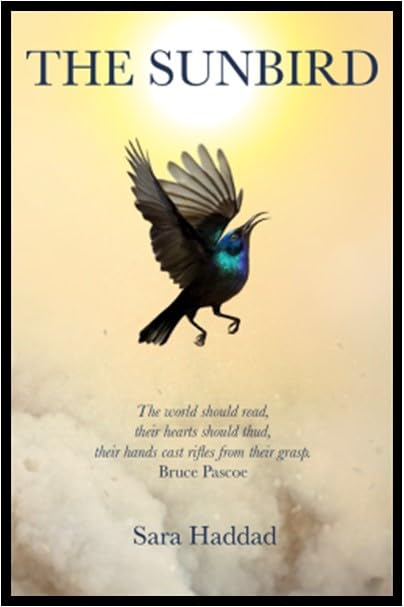
This is a small book of only 112 pages. It focuses on the one character, Nabila, over two separate time periods. The first is when Nabila is a five-and-a-half year old in her village in Palestine, eager to go to school: the second is set in Australia in December 2023 when Nabila is now in her eighties, living alone in a small house in Sydney surrounded by her pot plants. The child Nabila had only just learned to write her name when the bombs dropped on her village, and she and her family were forced to shelter under the olive trees as the air raids continued, before being forced to move on. The older Nabila now goes weekly to the pro-Palestinian protests that take place each Sunday in the capital cities. The story is told simply, with short sentences and a focus on the human.
In her Addendum, Haddad cites Noam Chomsky who wrote in On Palestine in 2015:
The last paradox is that the tale of Palestine from the beginning until today is a simple story of colonialism and dispossession, yet the world treats it as a multifaceted and complex story – hard to understand and even harder to solve
In her preface, she reveals that she wrote this book because so many of her conversations about Palestine ended with progressive friends and acquaintances saying “it’s complicated” before changing the subject. As someone who had grown up in a Lebanese pro-Palestinian family, it’s not complicated at all. The whole Israeli/Palestinian conflict can be played out within the life of one fictional person. There are old people alive today who themselves experienced the Nakbah: it’s not an age-old conflict whose origins are lost to time. She has used clear language, she says, “because the language of liberation is inherently simple: honest, transparent, direct”.
The story itself is simple, but in her addendum she places it within the history of the conflict, starting in the 1880s, going through to the present day, updated further to September 2024. She does not specifically reference October 7, seeing instead that current events are part of the continuing Nakbah that affects people- real, living people, each with their own lives of dignity and identity- individually.
This book can be easily read in one setting. It is named for the Palestine Sunbird, which was named as Palestine’s national bird in 2015, and an enduring symbol of resistance. Haddad places her book within this tradition.
My rating: 8/10
Sourced from: purchased e-book
Read because: it was one of the books distributed to Australian parliamentarians by a number of Australian authors as summer time reading
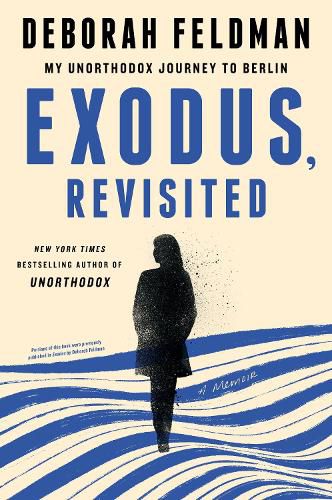
I read this fairly soon after finishing Deborah Feldman’s Unorthodox, written in 2009 which I reviewed here. It is an updating and enlargement of her second memoir Exodus, which was published in 2014 (which I have not read). She could, in no way, be accused of having an ‘unexamined life’ as it has served as the grist for all her writing output to now (in English, at least). I wonder how many memoirs she has left in her: I’m not sure that her life is significant enough to merit three memoirs.
But here we are in 2021, and she’s writing again. The last part of Unorthodox felt rushed, as she bolted towards her present day in 2009. In this book she slows down, and backtracks to describe the process of leaving her marriage and attending college to take her place in the ‘outside’ world. It was difficult for her, and much of the early part of the book involves her tracing through her insecurities and difficulties in establishing a new identity, separate from her family. She does not ever feel properly ‘American’, having been raised in a community with a different language and starkly different lifestyle and religious practices. In order to share custody of her son Isaac, she still needs to live close to her ex-husband Eli, so she exists in an in-between space, separated but still tethered to her previous life through her son. Once her divorce is granted, she can shift further away from New York, still sharing custody of her son, whom she still wants to embrace his own Jewish identity, but without all the rules and prohibitions that curtailed her own life.
It is because she has shared custody that she can carve out large periods of time to travel overseas to Europe, where her American identity is reinforced, but she herself feels more at home. Part of this is the vicarious trauma that she felt she absorbed from her beloved grandmother, who was a concentration camp survivor. She embarks on a bit of a ‘Who Do You Think You Are’ genealogical search, visiting places important to her grandmother’s life, a genre of writing that doesn’t particularly appeal to me, I’m afraid. Nor is the writing is as tight in this follow-up, and her use of adjectives is particularly cloying.
After a succession of relationships with European men (particularly German men), it is as if she is deliberately putting her hand into the flame by being drawn to Germany, the source of the Holocaust. She seeks out anti-semitism and is outraged when she finds it, and is judgmental of societies which she feels have not condemned it sufficiently.
I must admit that at this point, her book runs into present-day politics that did not exist when she wrote it. She follows closely a court-case against an offensively tattooed neo-Nazi whom she saw in her local swimming pool who receives a lenient sentence under Germany’s anti-Nazi laws. She is only satisfied when the court case is appealed by the state prosecution all the way up through the court system until the man is finally jailed (albeit for a short period of time). While she is no Zionist (in fact, she bridled against the theocracy in Israel that prohibited everywhere the consumption of bread during a religious festival), I wonder if she would be as critical of Germany today given what I see as its determination not to condemn Israel’s actions in Gaza. The rise and possible coming to power of AfD perhaps vindicates her consciousness of latent antisemitism : on the other hand, perhaps Germany’s determination to make antisemitism unacceptable has itself given rise to AfD? It’s complicated, and I think that her own attitudes towards Germany and Germans are complicated, and somewhat distorted, too.
It says much about the stringency of the rules of the Satmar community that she leaves her family so completely, even though they are living in the same city. Her determination to pay homage to her grandmother’s experience takes her to the other side of the world, but she seems to have made no effort to see her grandmother again, even from a distance. Is she even still alive? Perhaps she knows that any attempt at contact is futile.
Even more than the first book, this one is very, very different from the Netflix program. She must be quite sure that her ex-husband, Eli, isn’t of a suing disposition because he is not at all the driven, possessive man depicted in the series. On the contrary, he accepted shared custody, and seems to have been a perfectly competent and engaged father. Certainly, she could say that Unorthodox is only based on her life, and that the producers went off on a frolic of their own at the end (something that they admit to in the accompanying Netflix documentary), but the series is unfair and just plain wrong about her ex-husband’s actions and attitudes. But someone seeing only the Netflix version, without reading this book, would be oblivious to that.
All in all, I think I’ve had enough of Ms. Feldman’s memoirs.
My rating: 6.5/10
Sourced from: Yarra Plenty Regional Library
Read because: I enjoyed Unorthodox and wanted to know what happened next.
Constitutional Clarion. Religion and Constitution Strictly speaking, this isn’t a podcast but a YouTube video, but given that the presenter, constitutional lawyer Anne Twomey is just sitting in front of a bookshelf with the occasional image popping up beside her, it may as well be. Unfortunately it’s chopped up with advertisements, which is very annoying. But the content itself really is excellent, giving a constitutional historian’s views on current events. For this Christmas episode, she admits that she had to scratch around to find any link between Christmas and the constitution- although she did find one link with wartime legislation banning Christmas and Easter advertising that did end up in court. She then broadens her survey to look at the role of religion in the Australian constitution more generally, starting with the NSW constitution which prohibited religious men from being elected (although not appointed, note) then going on to look at the Federal constitution. She talks about various court challenges over time, e.g. The Defence of Government Schools case against government funding of private schools, the Chaplaincy Act etc. Fascinating.
Being Roman with Mary BeardA Bag of Snails and a Glass of Wine Calidius Eroticus and Fannia Voluptas- surely spoof names!- were innkeepers described on a stone excavated in a vineyard in southern Italy, and so Mary embarks on looking at inns and eating-houses generally in Roman times. Upper class Romans wouldn’t be seen dead eating publicly, but the dangers of fires in closely-settled towns meant that poorer people ate communally. Some were just take-away shops, while others were more like restaurants, mimicking the eating habits of the higher classes. Snail stew…..mmmmm.
The Rest is History.Episode 456: Fall of the Sioux: The Massacre at Wounded Knee (Part 3) At last, the final episode of this series on Native Americans. I haven’t really enjoyed this series: partially because of their flippant attitude, and also because I haven’t ever really got into this aspect of American history. Chief Sitting Bull had been seduced into Buffalo Bill’s show, and unable to see visions in the Ghost Dance phenomenon that was sweeping through the remnant tribes, he had lost all authority. He was deeply depressed when the Swiss activist and friend (something more?) Mrs Caroline Weldon left him. Meanwhile, the Indian Agent James McLaughlin teamed up with Lieutenant Henry Bullhead, of the Indian Agency (similar to the Native Police in Australia) to arrest him at his cottage. He was shot and killed. His cabin was picked up and carted around as a fairground exhibit. Then the inevitable denouement, with the massacre at Wounded Knee, when Custer’s old regiment – all raw recruits who had never known Custer, but were imbued with all the ‘honor of the regiment’ rubbish- surrounded over three hundred Lakota people and massacred them. But as we know, this was not the end of Native Americans, millions of whom still live in America today, albeit in the poorest economic and social conditions. Heather Cox Richardson wrote a post about Wounded Knee on her Substack, as she does every December 29. She wrote a book about it: Wounded Knee: Party Politics and the Road to an American massacre and is obviously still shaken by it.
History Hit Following on from the episode about Tudor Christmas, Georgian Christmas takes up with the re-establishment of Christmas after being prohibited under the Puritans. In this episode, Dan Snow goes on a stroll around the streets of Islington and Clerkenwell with Footprints of London tour guide Rob Smith. It’s not all directly related to Christmas, but they do emphasize that a Georgian Christmas was a public-holiday event for working class people, who celebrated outside and in public. His guest being a tour guide, there’s lots of interesting little snippets including the fact that The Angel, Islington on the Monopoly Board was actually a pub- the only actual building other than railway stations on the board- and it was the last named, largely out of exhaustion.
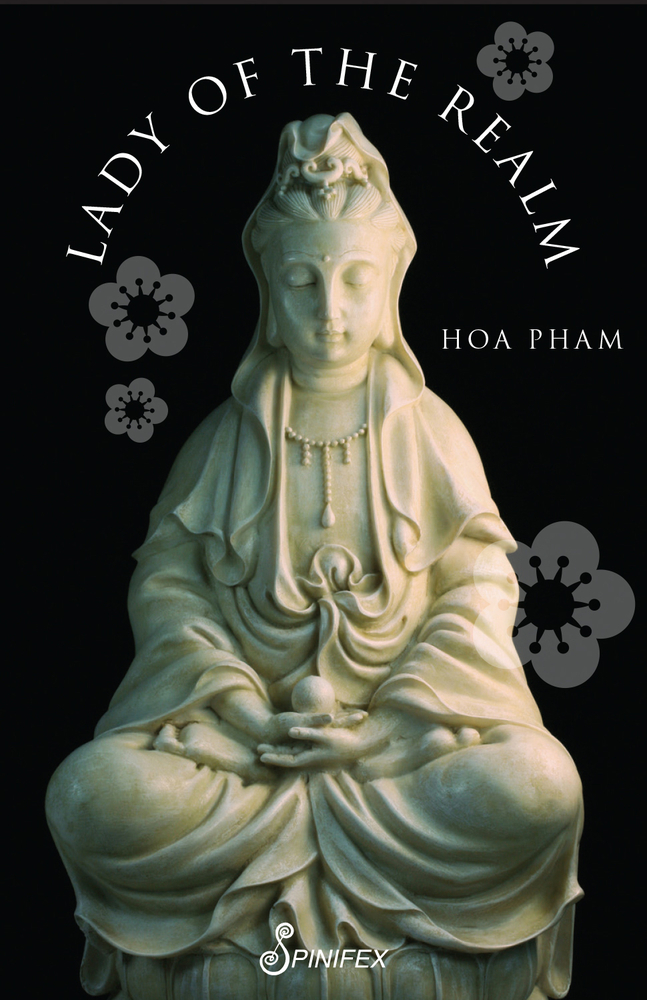
For a book that is riven through with violence, this was a very peaceful and meditative book. Told by an elderly Buddhist nun, Liên, it covers the years 1962-2009 in six chapters, most of which are headed by a epigraph from Buddhist monk and peace activist, Thích Nhất Hạnh. The book starts in 1962 in a South Vietnamese fishing village, where Liên, the granddaughter of the keeper of the shrine to Quan Ám known as ‘The Lady of the Realm’ has a nightmare about her village being ransacked and her loved ones killed. The next day, refugees arrive from a neighbouring village telling of an attack by the Viet Minh, and some time later the Viet Minh arrive at Liên’s village, murdering the men, and raping and kidnapping the women and children. Liên and her family escape into the forest.
The second chapter sees her in Saigon in 1964 at the School of Youth and Social Service, founded by Buddhist monk Thích Nhất Hạnh. She joins as a volunteer working amongst people displaced and impoverished by the American War and meets her mentor, Buddhist nun Hu’o’ng, who warns her against anger at the Viet Minh. Hu’o’ng’s commitment to peace and Buddhism comes with a heavy price.
Chapter 3 in set in South Vietnam in 1980, after the Communist victory. Buddhist monks and nuns are treated with suspicion and a state Buddhist church is established, under government control. Liên joins the flood of displaced people moving towards Ho Chi Minh city passing close to her village. Her grandmother now dead, she finds another old woman in her village, Binh, who deals with seeming impunity in the black market and people smuggling.
In the fourth chapter, set in 1991, she encounters her childhood friend Tai, who is able to tell her what happened in the village after she escaped with her family. When a new Communist cadre arrives, barking orders at the villagers, Tai seeks passage on a people-smuggling boat, and asks Liên to go with him. She refuses.
Next chapter takes us to 2007, where she joins Thích Nhất Hạnh’s Prajna Monastery, where she feels that she has come home. The final chapter, set in the monastery in 2009 sees the monastery surrounded by paid mobs who desecrate the temples and expel the monks and nuns. Under increasing repression, she finally decides to flee to Thailand, as an old woman, taking the peace of the temple and Thích Nhất Hạnh’s teachings with her.
Such an eventful life is told calmly, with a sense of detachment. It gives a completely different perspective on the Vietnam (or American) war and is a challenge to quick assumptions about people-smugglers.
My rating: 8/10
Read because: Sue from Whispering Gums reviewed it in 2017 and wrote about it in another context recently, and linked to Lisa from ANZLitLover’s site. They both read it years ago, when it was first published. I might not have been as interested then, but I am now. I’m still listening to Lachlan Peter’s podcast ‘In the Shadow of Utopia’ which is slowly making its way towards the Vietnam War, and this all seems very real to me.
Sort of Pretty Woman goes bad, but I think I’m too old for this movie. Grubby lives, grubby people- and this is supposed to be a comedy??? Certainly, there were no laughs from the sparse audience of people in the cinema who were a similar age to me. This won the Palme D’Or???
A nominee at the Golden Globes? Talk of an Oscar? Sheesh.

 The Resident Judge of Port Phillip