
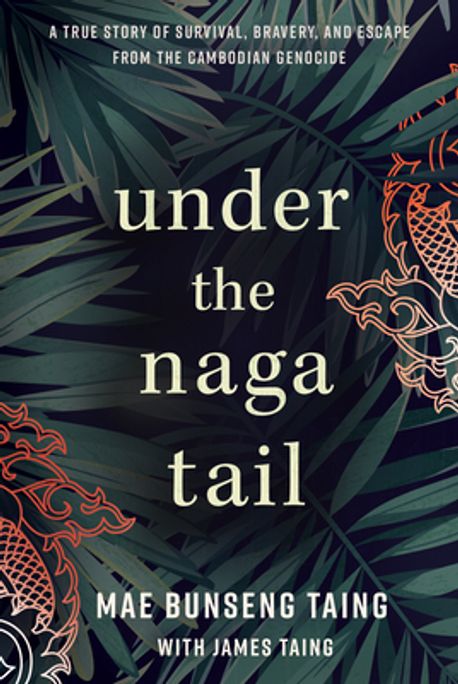
I was in Cambodia, and I wanted to read something Cambodian, but most of the fiction involved the Khmer Rouge period written by people who have escaped to Western countries. This book falls into this category too, although it is slightly different in that the narrator, Mae Bunseng Taing, is of Chinese ethnicity, living in Cambodia. I was interested to know what difference that would make. Unusually, all of Mae’s siblings survived, which is not true of many Cambodian families.
Mae was a teenager and living a fairly affluent life with his entrepreneurial family when the Khmer Rouge marched into Phnom Penh. As with other stories I have read, there was the utter bewilderment as Phnom Penh was completely emptied of people, urged (forced) to leave on the pretext that the Americans would bomb the city. He and his family were forced into the provinces to undertake agricultural work- a far cry from their trading activities in Phnom Penh previously. The family was split up as siblings were sent to different agricultural projects and communities, while his elderly and ill father was left behind in a village. They had secreted away some jewellery, so they were not completely penniless, but under the surveillance of soldiers and ‘Angkar’ operatives, they were only safe if they could merge in amongst other people. The book gives a good glimpse into the ideology that the Khmer Rouge were imposing on their countrymen, who were reduced to a form of slavery.
He finally decided to escape into the jungle, and survived several heart-stopping confrontations. With the defeat of the Khmer Rouge, he decided to cross back over into Thailand and look for his family amongst the refugee camps there. But there had been a change in Thai government policy, and now refugees were being returned to Cambodia, taken into the jungle, and left to find their own way through the explosive-laced jungles at Preah Vihear. It was an inhumane form of mine-clearing, using desperate refugees who were left screaming alone in the jungles, limbs missing, after standing on mines. Mae was, in many ways, in more danger now than he had been under the Khmer Rouge.
This, then, was a second form of Killing Fields. I found myself feeling ashamed at the kindness and the prejudice and indifference that these refugees faced, all too aware that our refugee policy some fifty years later has elements of both. The story was written down by Mae’s son James, who makes an unheralded and abrupt appearance during the narrative, and clearly Mae found his way to a Western country to start a new life.
There is a film by James Taing that you can see on You Tube here. (If you can stand the incongruent ads)
My rating: 7/10
Sourced from: purchased e-book
Read because: I was in Cambodia at the time.
 The Resident Judge of Port Phillip