Monthly Archives: August 2024

I hear with my little ear: Podcasts 1-7 July 2024

Dan Snow’s History Hit In The Opium Wars Episode 2 Dr Jeremiah Jenne, a professor of Late Imperial and Modern China, and Dan follow up on the other opium wars that followed the Treaty of Nanking. In 1856 the Chinese seized ‘The Arrow’, a ship under a British flag (although this is disputed) which led on to the Second Opium War. This time the French joined in, and once again the British won, leading to the Treaty of Aigun which forced China to legalize opium and open up to missionaries and foreign traders. This was at an anxious time for Britain: the Indian mutiny was under way, America was heading towards Civil War and Russia was circling. The emperor refused to sign the treaty, so in 1860 the British and French returned, this time looting the Imperial Summer Palace and punishing the emperor. This was in effect the end of the 19th century opium trade, which was finally ended in 1907. The wars might have been over, but they formed the bedrock of Communist Party historical narrative right up to today, pointing to a century of humiliation which only now has been overcome.

The Rest is History Luther: The World Torn Apart (Part V) Luther had lit the fire, and now it was out of control. The Peasant Wars took on Luther’s strategy of appealing to the Bible, and more zealous preachers than Luther banned music, the mass, etc. The one man who could have quashed it all, Charles V, was distracted by political events elsewhere, as the culture wars turned into massacres. Luther, leaving behind his monk’s vows, married a former nun and tried to distance himself from the violence. He owed everything to the Elector of Saxony, and he could not be part of this bloodshed, even if he had wanted to. The Reformation that he had invoked spawned atheism, secularism and individualism. What if he had never lived: would there still have been a Reformation? Tom thinks that, in this case, Luther himself did make a difference.

You’re Dead to Me (BBC) Emma of Normanby. Never heard of her, but she was actually the wife of two kings (Aethelred and Cnut – better known as Aethelred the Unready and King Canute) and mother to two more, Harthacnut and Edward the Confessor. She was of Scandinavian origin, and on her second marriage to Cnut she had to negotiate a lot of jostling for the crown between half-brothers. In the end, she got two of her sons to share the throne, although she always claimed that she was ruling too. An encomium written to bolster her position likened her to Augustus, and drew on Roman and Greek history to legitimize her influence. In the end, her son Edward the Confessor turned against her, accused her of treason and stripped her of her land, although he later relented and gave it back again. But from here on, she was sidelined by her son. Features Professor Elizabeth Tyler and comedian Jen Brister (haven’t heard of either of them)
I hear with my little ear: Podcasts 24-30 June 2024

Dan Snow’s History Hit has a two-part series on the Opium Wars, which remain an important part of the narrative of China’s current history because they exemplify a “century of humiliation” that current policies and actions are designed to compensate for. In Part one The British Empire, China and Opium Dan and Dr Jeremiah Jenne, a professor of Late Imperial and Modern China, delve into the history of the Opium trade in the British Empire, how it brought crisis to China and started a war that still impacts China’s relationship with the west today. As a major trading country with products that Europe wanted, China had maintained an aloofness and power in the trading relationship. But the Industrial Revolution and the Napoleonic Wars had led to the development of technology that eclipsed that of China, and in Europe there had been a change in attitudes towards trade itself in the 1830s and 1840s, now seeing trade as a matter of opening markets, rather than just gaining access to goods. By 1800 10-12 million Chinese people were addicted to opium, even though it was illegal. Opium smugglers wanted silver, rather than tea. The emperor sought different opinions about how to deal with the opium problem, and heard opinions that very much echo the current debate over vapes:- should they legalize, tax, or punish the trade? Viceroy of Huguang Lin Zexu was charged with enforces penalties against traders, forcing them to hand over their opium which he then publicly burned. Eliot, the British agent, ordered limited retaliation but mission creep ensued, eventuating in the Treaty of Nanking which opened up treaty ports and put Hong Kong in British hands.

The Rest is History. Luther: Showdown with the Emperor (Part 4) Martin Luther was summoned to the imperial free city of Worms by the Holy Roman Emperor, Charles V, to defend his radical beliefs. He arrived with crowds of followers. Charles V issued an edict condemning him as a heretic, but part of the arrangement for him travelling to Worms was that he was guaranteed safe passage there and back. Luther’s protector Ferdinand was starting to distance himself a bit from Luther, but he nonetheless arranged for Luther to ‘disappear’ into a castle while things calmed down. Meanwhile, Luther himself realized that he could no longer impose himself on the Reformation, and that things were moving beyond him. He began to backtrack on some of his pronouncements.

History Extra British General Elections: Everything You Wanted to Know The British elections were under way when I listened to this. The 1920s saw the emergency of the two-party system, although one of them- the Liberal party- was gone by 1931. The secret ballot changed the nature of elections (and they didn’t even mention Australia here!) and the suffrage was gradually extended (again, yeah for Australia even though they ignored the Australian example). Gladstone was the first of the mass, personality-based prime ministers, followed by Lloyd George and Churchill, although you could really only saw that Wilson’s leadership was a decisive factor in the result. The 1950s and 1960s saw the growth of opinion polls and focus groups. Britain has first-past-the-post voting.

Six Degrees of Separation: From ‘The Museum of Modern Love’ to…

When I first saw the starting book for the August Six Degrees of Separation at Booksaremyfavouriteandbest’s page, I thought “At last! A starting book that I have actually read!” The idea of this meme is that Kate suggests a starting book, then you let your ideas bounce to six other books related (however tangentially) to the starting book.

But then, when I went back to check, I haven’t read The Museum of Modern Love at all. I got mixed up between that and my nearby art gallery, Heide, which is a Museum of Modern Art.

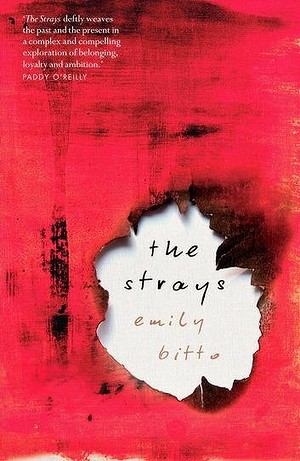
So my confusion gives me my starting book: The Strays by Emily Bitto (my review here), a fictional book which took its inspiration from John and Sunday’s life at Heide, which attracted modernist artists including Albert Tucker, Max Harris, Sidney Nolan, Barrett Reid, John Percival, the Boyds and Joy Hester to live communally in their farmhouse.

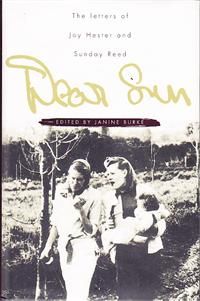
Although I read it long before I started this blog, I enjoyed Dear Sun, which was a collection of letters between Joy Hester and her friend and wealthy patron Sunday Reed from 1944 until Hester’s death in 1960. No fiction here: this is real life.

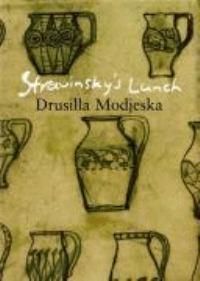
Speaking of artists, female artists Stella Bowen and Grace Cossington Smith feature in Drusilla Modjeska’s book Stravinsky’s Lunch, which I also read before I started my blog.

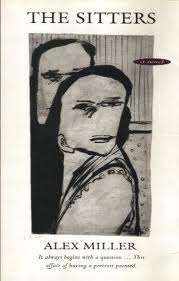
Artists need someone to sit for them, and Alex Miller explores this in his small book The Sitters. I wrote about it in my review “ostensibly it is a slight story about an elderly painter and a younger female sitter [but] the ghosts of his childhood are sitting, too. There are multiple sitters, not just one, and he is painting them present from their absence.” (My review is here)

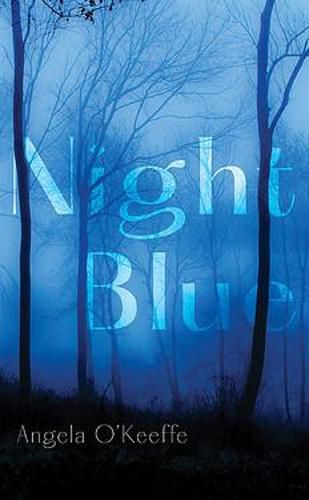
Or how about a book where the narrator is not the artist, but the work itself? That’s what Angela O’Keeffe rather bravely attempts in her book Night Blue, about Jackson Pollock’s painting ‘Blue Poles’ although I’m not sure that she actually succeeded. (My review here)

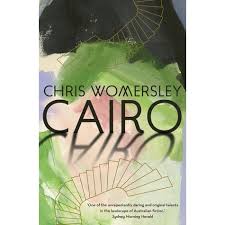
The painting in Cairo by Chris Womersley might not be one of the characters, but it certainly plays a role in the plot. Picasso’s ‘Weeping Woman’, one of the jewels of the National Gallery of Victoria’s collection, was stolen in real life in 1986, and it turns up in Womersley’s book which I just loved (as you can see in my review here).

Well, with three of these books set within 15 km of my home in Melbourne, I don’t seem to have moved very far this time!