
Dan Snow’s History Hit The Early Years of the British Empire Being brought up Australian, I tend to think of the British Empire as all that red on the maps of the world. But in its earliest days of empire, Britain (or rather, England) lagged behind the Spanish and Portuguese first of all, then the Dutch, then finally Britain at the rear. The episode features David Veevers, the author of The Great Defiance: How the World Took on the British Empire. At first, the British empire was the province of privateers, although there were connections with the crown as well. He emphasizes the fightback of the indigenous people, who kept the early colonists clinging to the coastline, unable to penetrate further and he reminds us that the East India Company was actually defeated. By the end of the 18th century, Britain had become better armed and was a stronger entity after the Act of Union. The accumulation of land was slow at first, but then continued apace.
The Rest is History: Luther: The Battle against Satan (Part 3) After questioning the idea that Luther nailed his 95 theses to the door of the cathedral, Tom and Dominic take up the story three years later, when he burns the Papal Bull in Wittenburg, precipitating a crisis. The Roman Church was asserting its authority, and Luther was defying the fundamental teaching of the church i.e. that sinners can pay for release from Purgatory. Moreover, the Ottomans were threatening Vienna at the same time. Printing had been around for 100 years, but Luther was a master of self-promotion and good at public events like book burning etc, which took place in the midst of parades of student floats and a carnivalesque atmosphere. The 95 theses were printed in German and Latin. The Holy Roman Empire was weak, with the aging Holy Roman Emperor expected to die soon, and the position of Luther’s protector Frederick of Saxony was very powerful because he would be electing the successor. Luther denied reason, philosophy and canon law- all the intellectual areas that the Church had branched into- and insisted that we go back to the Bible. Luther himself (did you know that his real name was Luder?) had his own ‘born again’ moment, and with all the bombast of the born-again, declared that others were not Christians because they had not done the personal work of believing. In October 1518 Luther was summoned to meet the Inquisitor Cardinal Thomas Cajetan in Augsberg. Ever the publicity hound, Luther walked there drawing crowds as he went. He and Cajetan had three meetings, but in the end Luther was released from his vows. Then followed a saturation-bombing of pamphlets written by Luther and on 3 January 1521 Luther was excommunicated by the new Holy Roman Emperor Charles V.
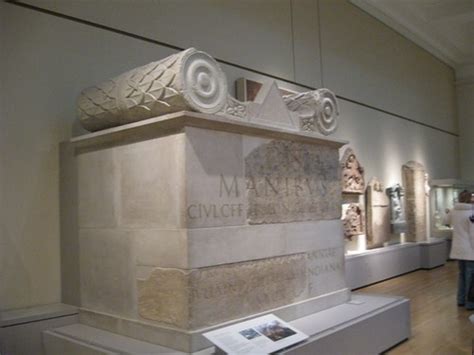
Mary Beard’s Being Roman (BBC) Episode 7: The Whistleblower takes us to Britain in 61CE and the repression of Boudicca’s revolt. Procurator (i.e. finance officer) Gaius Julius Classicianus is appalled by the harsh repression meted out by the local Governor. So he dobs on him, and advises the rebels to wait until a new Governor is sent out, and they might get bigger terms. Classicianus has a huge tomb in the British Museum
 The Resident Judge of Port Phillip