Monthly Archives: March 2024

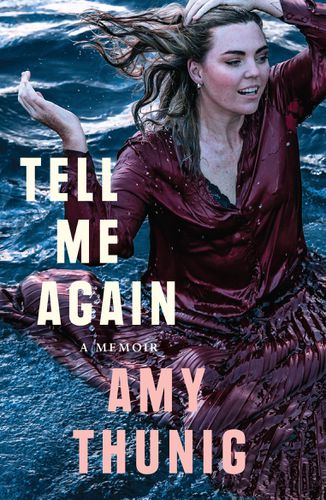
‘Tell Me Again’ by Amy Thunig

2022, 264 p.

I’m often rather amused by (dismissive of?) a memoir written by someone under 40. However, in this case Amy Thunig has packed a lot of living into her forty-odd years. She is obviously of a different generation to me: I had never heard of her, despite contributions to Buzzfeed, Sydney Review of Books, IndigenousX, The Guardian, Junkee and a lively online presence. She is a Gomeroi/Gamilaroi/Kamilaroi woman, writer and academic and this book is a series of essays on her life.

In her prologue she writes:

I often wonder about timelines and the way a Eurocentric view positions time as linear but as Indigenous peoples we are raised to understand time as circular. Within a circular understanding of life: time, energy and generations coexist. Coexistence with and within Country on lands, within waterways, and skies. Our accountability and obligations are therefore to our ancestors, and our descendants, as well as to ourselves….I do not know the simple way of saying that child-me could see and feel future-me, that our coexistance within circular time meant we conversed and encouraged one another, and as we are one and the same, I knew where I would land even though I could not see how I would journey there. Exchanges of energy and love, across time spent in the locations, encouraged by ancestors.

p.2

This circularity is reflected in her writing, which consists of a large number (28) small-ish chapters of about 4-8 pages, usually introduced by a current-day, or at least a future-me, reflection, before launching back into memoir. This gave the book the feeling of being a series of essays or writing exercises, although perhaps she does not yet have enough distance to impose onto this writing a broader, overarching theme.

It must be that future-me that brought the child Amy through a childhood and adolescence in 1980s Australia that would have defeated many other children. She was the second of four children, and both her parents struggled with drug addiction, and her father spent some time in jail. The family shifted several times although her grandparents, particularly her Pop, remained points of continuity in her life. Despite some appalling instances of racism and classism by teachers, she did well in school and maintained the appearances of an engaged after-school life of dancing, school performances and after-school jobs despite a chaotic and violent home life and poverty. This culminated in being kicked out of home in late secondary school and couch-surfing while continuing to attend classes. She did well, and attended university, moving through undergraduate, graduate and finally PhD level but always aware of the precariousness of the image she was adopting, drawing comfort from other indigenous academics in the academy.

She proudly proclaims her indigenous heritage in the reflections that launch each chapter, as she returns to, and draws strength from Country. She speaks of the influence of her ancestors, and her present-day passages mention the aunties and elders who surround her. However, the discrimination and cruelty that she experiences as a child is not voiced as racism, even though racism underlies it. As a daughter she feels the stigma attached to her parents’ drug-addiction and imprisonment, which applies to all children in similar circumstances (although the high representation of indigenous people in prison means that this would be a more common experience for indigenous children). She speaks often of the influence of her grandparents, but support from her broader extended family seems to be absent, especially when she is homeless. There does not seem to be any involvement at all of formal indigenous organizations. She is largely silent about the political aspects of her aboriginal identity, even though it clearly fundamental to her experience and story.

In one of the last chapters of the book she writes:

The journey of reconnecting with my parents was a slow and clumsy one. It began with a desire to have them there for big moments- I missed them. It involved the realisation that while they had struggles, and sometimes those struggles had hurt me, unlike other people I met when away from them, they never sought to hurt me… Reconnecting with my parents, and understanding them, were two unrelated journeys. I didn’t understand my parents, even when I started to reconnect with them. You don’t have to understand fully to begin to accept in part, and I continued to be deeply resentful for many years, believing that they actively, consciously chose drugs over me. That it was a binary and I was the lesser option.

p. 249

It was only when she was given a synthetic heroin painkiller in hospital in her twenties that she realized that using brought a sense of silence.

That was when I began to understand that the nothingness is the bliss. My parents have experienced high levels of trauma- generational and individual- and all without the supports needed to actively heal…They weren’t choosing heroin over me; they were choosing quiet over the overwhelming noise. It was then that I moved towards understanding, and my resentment began to ease a little.

p.250

Personally, I don’t know if I could overcome my resentment and I wish that she had explored this in more detail. Perhaps her adult relationship with her parents is still a work in progress, and too close to be written about yet. But to even reach this point of understanding and reconnection suggests that she is ready to write this memoir, despite still being relatively young.

My rating: 8/10

Read because: I read a review in the Saturday Paper

Sourced from: Yarra Plenty Regional Library
In case you’re looking for me…

I’m not in Melbourne any more, Toto, but I’m up in Cambodia again. You can follow my travel blog at:

https://landofincreasingsunshine.wordpress.com

I hear with my little ear: Podcasts 1-7 March 2024

I Was a Teenage Fundamentalist Episode 94 What About Certainty? with Bernard Warnick is a recent episode of this ex-vangelical podcast, no longer coyly presented by B. and T. but by Brian and Troy, who left their evangelical megachurches when they were aged in their 30s and 40s. Bernard Warnick is a retired Family Court judge, and his book that he is talking about in this episode (Illusions of Certainty: thoughts about thinking) is not about religion at all. Instead it’s about Warnick’s observations on logic and thinking, drawing on neurobiology and cognitive science. Why do we crave certainty? he asks. It’s an emotional, rather than an intellectual need, driven by subjectivity. In a post-modern world there are many truths, but he argues that we can have firm values, but you need to teach yourself and rely on yourself which requires discipline and wisdom.

The Rest is History Episode 419 Britain in 1974: Countdown to a Coup (Pt 3) So there’s Harold Wilson, Prime Minister after an election that he didn’t expect to win. He was ill, tired, drinking too much and in thrall to his private secretary and ‘political wife’ Marcia Williams (shades of Peta Credlin, anyone?) He settled with the miners, which solved the immediate problem but which led to the idealistic ‘Social Contract’ which saw 30% wage increases further fueling the cost of living. There was new spending, and new taxes on the rich (83% at the top tier, with a 98% tax on investments.) The talk in the gentlemen’s clubs was of a military overthrow and ‘getting rid of’ (i.e. killing) Marcia Williams. Wilson was accused of being a KGB agent, and there was certainly precedent for military intervention in Allende’s Chile and in Northern Ireland. The army had already been intervening in British strikes, stepping in to replace striking fire, ambulance and rubbish collection workers. On 18 September 1974 Harold Wilson called another election.

History Hit History of Gulags After the recent death of Alexei Navalny, this podcast featuring Alexander Watson, Professor of History at Goldsmiths, University of London, looks into the history of Gulags in Russia. The first mention of ‘exile’ in Russia was in 1649 under the Tsars, where revolutionaries were sent to Siberia, but here isolation and distance were left to do the job. In 1917 the Bolsheviks set up camps, and the first labour camp was set up in the 1920s. A labour camp was expected to be profitable and was governed by the inmates themselves (as distinct from German ‘extermination’ camps). Nonetheless, there was a huge death rate, estimated at being about 1/4 which is similar to the Nazi labour camps. ‘Gulag’ is actually a Soviet acronym from the 1930s. They were at their highest peak in the early 1950s when they numbered 2.5 million, and the Secret Police were involved. Many prisoners were set free under Kruschev but the structures remained. During the 1960s and 1970s the emphasis changed to psychiatric hospitals in order to achieve the same effect. Now ‘law’ is used as the enforcing mechanism.

Emperors of Rome I must have forgotten to note this one- and it was a good one too! Episode CII Clodia notes that, like other women, Clodia was only mentioned tangentially in the sources. She lived in the late republic, around the 1st Century CE. Her father was a consul, and an Optimati but she and her brother opposed their father’s politics and aligned themselves more to the Populari. In 59BCE her very conservative husband died, leaving her a widow- a position that gave women more autonomy than they had when they were married. Her name was brought into a murder trial, and Cicero acting as defence for Callus, the accused, dragged Clodia’s name into the court. She was a witness against Callus and in defending his client, Cicero suggested that she had poisoned her husband. This was payback, because Cicero hated Clodia’s brother because he had been responsible for Cicero being sent into exile. However, she survived the scandal of the courtcase, and became a businesswoman. Go Clodia.

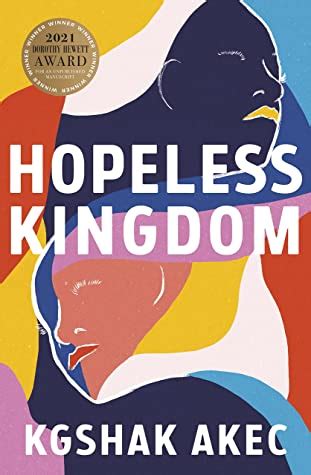
‘Hopeless Kingdom’ by Kgshak Akec

2022, 324 p.

This book won the 2020 Dorothy Hewett award for an unpublished manuscript, and as a first book, I suspect that it has a strong autobiographical element. It has a double narrative of mother and daughter, retelling the same events from their own perspective. Taresai, a Sudanese woman, has emigrated to Australia with her husband and four children, while her eldest daughter Akita is forced to take over the care of her younger siblings as it is expected an eldest daughter will do. Ironically, Taresai herself was placed in a similar situation with her siblings back in Sudan, where her education was sacrificed for that of her younger sisters, still a source of festering resentment between Taresai and the other women in her family.

To the extent that there is a ‘typical’ migrant story, this is it, but told from the “other side”. Many of the tropes are here: the shift from Sydney down to Corio, a working class suburb of regional Victorian city Geelong; the father who cannot cope with the loss of status and returns ‘home’ to Sudan; the older brother who becomes enmeshed in drug addiction, crime and mental illness; the studious daughter burdened with domestic duties and academic expectations that her family does not have the financial or intellectual capital to support; chain migration of mothers, aunts and cousins; the shared multigenerational households and the clash between traditional upbringing and the perceived ‘slackness’ of Australian parenting.

The alternating structure between mother and daughter leads to a ‘bittyness’ in the narrative, presenting it as a series of episodes told in short chapters. While I find long chapters somewhat oppressive (as in, for example, Christos Tsiolkas’ The In-Between) short chapters seem to me to be a bit of a cop-out for the writer, enabling them to avoid the responsibility for carrying the narrative. Nor am I sure that the narrative voices of the two women are clearly enough defined, a viewpoint with which Lisa at ANZLitLovers differs (see her review here), seeing the question of voice as being more as one of register. I’m not convinced: I too often had to flip back a couple of pages to see who I was reading. At times the writing in both Taresai’s and Akita’s sections is quite beautiful, and psychologically perceptive; at other times it is a bit thin and marred by small errors which should have been picked up before publication.

I was puzzled by the title Hopeless Kingdom, because the ending certainly doesn’t reflect that, with Taresei reaching a point of equanimity, and Akita breaking free. The book was short-listed for the Miles Franklin, and it certainly does present first-generation Australian experience “in any of its phases”. It is a good exploration of belonging and not belonging, mother and daughter relationships, and the migrant experience. Akec isn’t the first first-generation Australian writer to gain acclaim with her debut work – I’m thinking particularly of Alice Pung- and I’m interested to see if her next novel takes her beyond autobiographical writing.

My rating: 7/10

Sourced from: Yarra Plenty

Read because: Lisa at ANZ Litlovers review

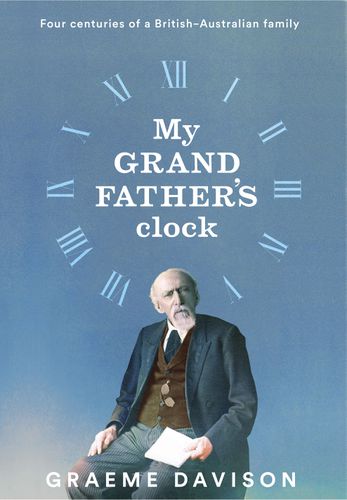
‘My Grandfather’s Clock’ by Graeme Davison

2023, 320 p. plus notes

In 2015, Graeme Davison published Lost Relations, (my review here) where this acclaimed academic historian succumbed to his family’s entreaties and waded into the waters of family history to research his mother’s family. It was not without a bit of heartburn and defensiveness, but in telling his mother’s family’s story, he also gave us a reflection on family history itself, its emotional resonances and limitations, and the wider context into which the story of individuals must be placed.

In this more recent book, he turns instead to his father’s family. He writes:

When I published ‘Lost Relations’, a history of my mother’s family, some readers asked why I wrote so little about my father. As I grew up, he discouraged interest in his family’s past, not because it was scandalous- although, as I later learned, there were buried sorrows unknown to me and perhaps to him- but because it was, at least in his eyes, so recent and undistinguished.

p. 2

Later in his life, his father changed his mind, joined the local historical society, and wrote a brief account of his life. Davison changed his mind too, although in his case his interest was piqued by a 200 year old grandfather clock that had been willed to his father by his aunt, and eventually came to him. It couldn’t have gone to a better member of the family: Davison had always loved time-telling and clockwork and indeed, in 1993 had written The Unforgiving Minute, a history of time-telling in Australia. This clock becomes a sort of talisman in this book, marking not just the generations of family that it had passed through, but also marks the changing of attitudes to work, leisure and godliness over time. There is a danger in writing a family history that, to misquote Toynbee, it just becomes one damn generation after the other, but having a concrete object like a clock serves as both metaphor and sticky-tape, connecting albeit tenuously, generations and relationships. The clock is woven into an anecdote told to Davison by his Uncle Frank, who told of visiting his Great Grandfather Thomas Davison in 1929. When the clock chimed, Thomas lift one finger and said “listen to our ancestors”.

Davison, as you will see in my review of Lost Relations, reflected deeply and at length on the nature of family vs. academic history. He has no need to do so again. He pushes the family history boundaries harder in this book, starting in the Scottish borderlands and following the story through to his own career as historian in the academy. By tracing back beyond 1750 he needs to leave behind the genealogists’ stepping stones of formal written records, and turns to tribal and kinship memories- something that required him to bring “my scepticism as well as my romanticism along for the ride” (p. 26) He could only deduce from generalized knowledge of practices of the time and documented histories of the Davisons/Davysouns/Davysons who may or may not be direct descendants. He dips into the soup of DNA testing, and is disillusioned by the suppositions and guesswork it evokes without documentary evidence. He finds a few facts, but has to resort to questions and hypotheses as the family moves back and forth across the Scotland/England border, in a

journey that would take his descendants, step by step, from a small port town to an industrial village, to a factory suburb and finally to an industrial metropolis. Eventually, a century later, they would journey to the other side of the world…Each step was a one-off response to the map of opportunity at the time, but seen over the longue durée the moves fall onto a pattern that suggests the operation of powerful unseen forces… At each step along the journey, they became a little more accustomed to the ideas and values that prepared them for the next. Many factors, invisible to us, probably influenced their outlook, including religious and political ones

p.70-71

Through the “miracle of digitisation” of the British Library’s newspaper archive, he finds his great-great-grandfather addressing a temperance meeting in a speech that could just as easily have been given by his own grandfather and father, lifelong teetotallers. The family line shifts to Birmingham, the workshop of the world, and involvement in a more active political role through workers’ societies, and then a minor manager role in a tinplate company.

It was his grandfather, John Potter Davison, who in 1912, at the age of forty-three, closed his business, said goodbye to his parents and siblings, and embarked for Australia with his wife and four children, with only twenty pounds in his pocket. He was a Methodist, a denomination that encouraged migration, and in Australia he joined other members of the Islington Chapel who had emigrated earlier. They settled in Scotia Street Ascot Vale, along with other Methodist immigrants. Still in the western suburbs, Davison’s father lived with his family in a rented four-roomed cottage in Athol Street Moonie Ponds. The young men of the family moved into apprenticeships as printers and plumbers, joined the Scouting movement and were involved in the church. As the Depression hit, the family purchased a timber cottage in Washington Street, ten minutes’ walk from Essendon station and joined the North Essendon Methodist Church. It was here that Davison’s parents Vic and Emma met, thus joining this story with that he has already told in Lost Relations. He was born a little over nine months later “born into the luckiest and most consequential generation in the history of the planet.” (p 189) 

At this point Davison moves into his own memoir, starting with his childhood home at 16 Banchory Street Essendon, purchased by his parents in 1939. He attended government schools in Aberfeldie and Essendon and in 1958 took up a studentship, with its stipend that made studentships particularly attractive to lower middle class parents whose families had no experience of university. He attended the University of Melbourne and gravitated towards the Student Christian Movement. He was one of the founders of The Melbourne Historical Journal, undertook his honours dissertation, and found himself as one of a small number of secondary teaching students released from their bond by the Education Department to become university teachers. He applied for scholarships in England, and found himself on a boat bound for England, in effect, completing the circumnavigation that his family started. The shift into memoir runs the risk of many professional memoirs that become a roll call of acquaintances’ names, and a travelogue – and although I’m interested in historians’ biographies and intellectual influences, I wonder how many other readers would be.

As well as covering a much wider 400-year timespan, this is a far more personal book than Lost Relations, and in many ways it is a more conventional genealogy-method book than the earlier one. Both books expand the circumstances of his particular ancestors into a wider context, and it is interesting that religion plays such a strong part in both strands of his family history given that it is often rather peripheral to Australian experience. He finds continuities, too, with the traditional of skilled manual work, and the moderate Labor or centrist politics. Of course, there is a limit to the interest that one might have in another person’s ancestors (and, it would seem, no limit at all for one’s own family, for some family historians). And as with Lost Relations, this is a stellar example of a master historian telling family history but drawing on much more than just documents and lineages. He finishes his book as he started it, with the clock that has accompanied his family story, joking about his own family’s eye-rolling when he, too, intoned “listen to our ancestors” on hearing the clock. Davison’s ancestors have clearly spoken to him, and through these two books we eavesdrop on the conversation.

My rating: 8.5/10

Sourced from: borrowed from my friend Patricia

I hear with my little ear: Podcasts 24-29 February 2024

The Rest is History Episode 418 Britain in 1974: The Election Crisis (Part II) In February 1974 a bus carrying servicemen was bombed, killing 12 people. This was the first IRA bombing on British soil, and during 1974 there was an IRA bombing every week in Britain. The Labour Party was disarray, led by Harold Wilson, the brilliant, suburban, Scoutmaster and said to be the Queen’s favourite PM. Although he had led the Labour Party to victory in 1964, ten years later he was tired and over it all. He was surrounded by strong characters in their own right: Tony Benn who wanted to nationalize everything and the rude and bullying Dennis Healey. Jeremy Thorpe, the pro-European leader of the Liberals was a cad, but the Liberals saw themselves as ‘nice’. Then there was the Tory Enoch Powell with his ‘Rivers of Blood’ speech, which ended up in him being sacked from the Conservative Party and now off the leash. Labour was not expected to win, but the result was that the Tories and Labour were the same, and the Liberals won 19%. The first-past-the-post system yielded 301 seats to Labour, 297 to the Tories and 14 seats to the Liberals. The Liberals refused to enter into a coalition with the Tories, which meant that Wilson became Prime Minister of a minority government.

Things Fell Apart. Episode 4 Spicy Brando tells the story of Brandon Caserta (not sure of the spelling) who as a troubled young man found himself attracted to Jordan Peterson’s ’12 Rules for Life’ which led him into involvement with militia groups and preppers, particularly when the state of Michigan imposed strict lockdown measures. His involvement with the Wolverine Watchmen found him arrested by the FBI in October 2020 over the group’s plan to kidnap Michigan Governor Gretchen Whitmer. Although Brandon himself was found not-guilty, the ringleaders were found guilty. However, Jon Ronson (and the court case) raises questions over just how serious all this trash-talk was, and whether the Wolverine Watchmen were a white supremacist group, as they had been portrayed.

Emperors of Rome Episode CIV Slavery Slavery was central to Rome’s economy and power. At first, slaves were taken in conquest and then any children born to a slave woman became a slave. There were slave markets in Rome and the owners could do anything they wanted to their slave. Historian Keith Hopkins has estimated that 25% of the population was enslaved, making Rome a ‘slave society’. It was normal for even modest households to have one or two slaves. Slaves played a variety of roles: educated slaves would act as secretaries, agricultural slaves worked on the estates, others worked on construction especially of public buildings, and the worst of all was to work in mining. With such a high proportion of the population being enslaved, there was always fear of rebellion, so slave catchers were numerous. A slave collar has been found, with a ‘note’ attached given their name and that of their owner, and instructions on how to return the absconded slave. Manumission was not uncommon . When set free, former slaves became citizens with most (but not all) the rights of a Roman citizen. When freed, they would have three names, one of which was their former owner’s. There was the potential for social mobility, but Augustus passed laws against cohabitation between a free woman and a slave. Some have said that Christianity put an end to slavery, although Rhiannon Evans notes that the Apostle Paul sent an escaped slave back to his owner. It was more that slavery become economically unviable in the later Roman Empire.

The Daily Stoic. Heather Cox Richardson on What History Teaches us about Fighting the Dark Energy of the Human Soul I’ve been listening to Heather Cox Richardson since lockdown days but I was a bit surprised to see her pop up here on the Daily Stoic. I’m not really sure that she was as much into the idea of the “dark energy of the soul” as the presenter was, but what she did talk about was that in replacing one story in history, it needs to be replaced by another story. It can be the story of a group, or of an idea. Really, they’re just chatting away. Nonetheless, it was interesting to hear her talking about history in a forum that is not devoted to history.

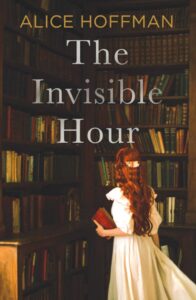
‘The Invisible Hour’ by Alice Hoffman

2023, 252p.

Spoiler alert

I’ve done it again. I borrow books by Alice Hoffman, thinking that it’s Alice Walker… and it’s not. I did that with Practical Magic and I’ve done it again with The Invisible Hour. I thought from the blurb that I was borrowing a book about a young woman and her daughter breaking away from a cult, only to find that I was reading a time travel book about Nathaniel Hawthorne, author of The Scarlet Letter. Now, I’m not opposed to time travel books, but I do feel that they are a bit of a guilty pleasure and that there’s something almost adolescent about them. For me, they are plots built on a rickety foundation that can collapse quickly if I start thinking about them too much. [Having said that, I’m really enjoying Life after Life on ABCTV- more than the book, in fact].

Ivy, a sixteen-year old girl from Boston, is estranged from her family who cannot accept her pregnancy. She runs away and joins a cult in rural Massachusetts, and the leader of the cult, Joel, takes her as his wife and, although theoretically all children belong to the community, takes a particular interest in her daughter Mia. Born into the community, Mia knows no other life than this one, controlled by Joel and his rules and punishments, where members work on the apple orchards that fund the commune and are kept in ignorance of the outside world. Ivy, yearning for the world that she has left behind but too frightened to leave the community, encourages her daughter to go to the town library, located in an old building, and staffed by conscientious and sensitive librarians who, aware of the rarity of a community child coming to a library, turn a blind eye to Mia’s theft of books. There Mia comes across The Scarlet Letter by Nathaniel Hawthorne which, curiously, has an inscription to her– Mia- in the frontispiece. She steals this book too, and becomes enamoured of its author, who died in 1864. This book, and the death of her mother Ivy, emboldens her to run away and to seek the help of the librarians. She is stalked by Joel, determined to bring her back to the community and to find a paper which he believes she has stolen.

Somehow, and don’t ask me how, this book transports her back to the 1830s where she meets Nathaniel Hawthorne and falls in love with him. He has not yet written The Scarlet Letter, and she knows that Hawthorne will marry Sophia Peabody and have children, and that although suffering writer’s block at the moment, he will become a famous author. Meanwhile, she is stalked by Joel, who manages to travel through the same time portal that she does. She is aware that she needs to distance himself from Hawthorne in order for him to fulfill the life that he does have, and the menace represented by Joel insinuates itself into both her 1830s and present-day lives.

As I said, it doesn’t bear to think too hard about the logistics of all this. In many ways, the book is a paean to the power of books and reading, and parts of it are beautifully written. I haven’t travelled much in America, but I did travel to Boston and (for my sins) Salem, and I enjoyed her descriptions of them both. It’s the sort of book that would make a good, if rather lightweight film and it’s the sort of book that might attract a ‘Womens Weekly Good Read’ sticker if such things still exist.

My rating: 7/10

Sourced from: Yarra Plenty Regional Library
Movie: The Zone of Interest

I don’t know if I’ve ever seen such an unsettling movie and one where the sound plays such an important role. Right from the electronic scream in the opening moments, the sound track and small details (like the smudge of smoke against the sky) provide all the horror that you know exists. Not a great deal happens in the movie: it’s more like watching a painting or the stage in a play. Frightening. Surely it will win an Academy Award for sound, if not for other categories as well.

My rating: 5/5 stars

I hear with my little ear: Podcasts 16- 23 February 2024

Revisionist History This episode The IT Revolution creeped me out a bit and made me angry. It’s sponsored by T-mobile for Business, so it’s no surprise that his guests, two Chief Information Offices for different enterprises (one a hospital, the other a farm-machinery franchise network) talked positively about the changes that will come about from 5G. The hospital CIO lost me when she kept insisting that patients were consumers and customers, and that they all want access and self-service. Having just tried to make an appointment for a screening test and the insistence that I create a 15 character password, I was in little mood for self-service. She lauded the idea of Artificial Intelligence listening in on a consultation between specialist and patient (oops, consumer) and automatically scheduling your follow up appointments for you. Now that’s powerlessness- not only are you a cog in their machine, but it’s not even a human controlling it! Grump.

History Extra Love and Marriage in Austen’s Era This episode features Rory Muir is the author of Love and Marriage in the Age of Jane Austen (Yale University Press, 2024). He points out that there was often a large age gap between men and women when they married (largely because men had to work to get the money in order to get married) and 12-25% of English people did not marry at all. The slur of “old maid” only applied to poor people: wealthy single people had a rich, good life. Weddings were always held in the Anglican church for legal recognition, and usually before 12.00 noon followed by a wedding breakfast. It was possible to obtain a licence from the Archbishop of Canterbury that would allow you to marry at any time of the day, in whatever place. It was necessary to be 21 years old and have parents’ permission to marry, after the Banns had been read, so this caused a surge of elopements, particularly to Gretna Green over the order, where women of 12-14 years could be married. Honeymoons were usually held at a house of a friend, and it was common for a parent or friend to accompany the honeymooning couple. If the marriage was unhappy, there were few legal protections. There were only a total of 100-odd divorces in the fifty years between 1750-1800. Couples could separate, but not re-marry.

Dan Snow’s History Hit The City of Alexandria Well blow me down, the city of Alexandria is in Egypt! I always thought it was in Greece! It was founded by Alexander the Great, and it was a planned city, complete with a sewerage system and uninhabited space, located as a key node for the Eastern/Mediterranean trade. It was said to be the first city to reach a population of a million, and was known as a liberal, multicultural city, the site of the Lighthouse of Pharos and the Library of Alexandria. With the rise of Christianity and then the Islamic conquest of Egypt, it became less tolerant. The Muslims feared attack by water, so they shifted their capital inland but Alexandria remained unique in that it was IN Egypt, but not seen AS Egypt. (So perhaps me not knowing that it was in Egypt isn’t such a sin after all). Episode features Islam Issa, Professor of English at Birmingham City University and author of ‘Alexandria: The City that Changed the World’.

The Rest is History Britain in 1974: State of Emergency (Part 1) Dominic Sandbrook, one of the presenters of this podcast, has written several books about 20th century Britain, so this series of four episodes on Britain in 1974 is right up his alley. 1974 has been claimed as the worst year in post-War British history with the collapse of the social-democratic consensus, retreat from empire (albeit without any serious consequences), deindustrialization and inflation. After the failure of the Wilson Labor government, Tory Prime Minister Edward Heath took over. Despite being a Tory, he was from a humble background, but he himself was spoiled as a child and socially insecure, having adopted a patrician accent to hide his background. He was seen as a modernizer, in the mould of Kennedy. But he faced strikes, most particularly by the miners, who had not struck since 1926. In 1973 the Heath government adopted “Stage 3” which involved limiting pay increases unless a threshold for inflation was reached, in which case wages would go up automatically. They thought the threshold would never be reached, but it was with the OPEC Oil embargo. So for the fifth time in 3 years, the government declared a state of emergency when the coal miners went on strike, imposing a 3 day working week, no heating, no television after 10.30. Much as occurred with COVID recently, the government was blamed for the measures they took. Then the IRA bombings started on the mainland. The leader of the union movement offered Heath a ‘once-off’ offer that any rise granted to the miners would not extend to other workers (I don’t know how he could promise that) but Heath refused. Eventually he called an election at the end of February 1974.

The Daily El Salvador Decimated Gangs. But at What Cost? I’ve been horrified by the photographs of shaved, skinny, humiliated prisoners and overcrowded prisons in El Salvador, but many people in El Salvador embrace these policies for the success they have brought in eliminating the gangs that made the country unliveable. In this episode, even a mother whose son was -it seems- arrested while innocent and held incommunicado for two years still accepts that her son’s life is the cost for peace in the country. There’s a series about Bukule on Radio Ambulante that I must listen to one of these days (it’s not exactly relaxing listening to a podcast in Spanish!)

Being Roman (BBC) Rome’s Got Talent This time Mary Beard takes us to a tombstone, set high up on a wall bordering a busy street. It’s a tombstone- well, a replica really- for 11 year old Sulpicius Maximus who died soon after appearing at the Roman games of 94AD in a poetry competition in front of Emperor Domitian and 7000 other people. His parents had been slaves, and Sulpicius knew that education was his ticket to social mobility. Apparently the poem that he made up on the spot (the rules of the competition) seemed to draw on a legend from the past, but perhaps it had a message for his parents (i.e. “back off, Mum and Dad”) to which his parents were completely oblivious. The original tombstone, which today stands in a museum in a disused powerstation had been incorporated into the city walls, and was only re-discovered when the Italian Nationalists blew the walls apart in 1870, revealing the pieces of the tombstone.

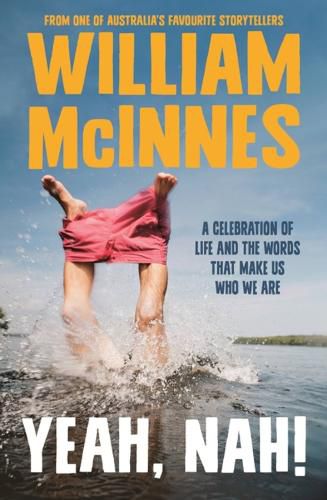
‘Yeah Nah’ by William McInnes

2023, 320 p

Well named, because this is exactly how I felt about this book. Yeah, I like to listen to William McInnes, who tells anecdotes so well in his mellow, very Australian voice. I could listen to him for hours, but when I think about it, it’s the sort of listening you do in the car, or when working around the house, when you’re not particularly paying attention. 

And so Nah, my reading time is so limited, I’m not going to live forever, and there are so many other books that I could be reading instead. I gave it 100 pages, and then decided Yeah Nah. It was too much like listening to someone rabbitting on without getting anywhere. Might be worth looking for an audiobook version, if he was narrating it.

My rating: Did not finish

Sourced from: Yarra Plenty Regional Library