Monthly Archives: January 2024

Six Degrees of Separation from Tomorrow and Tomorrow and Tomorrow to…

Not only the first Saturday in the month, but the first Saturday of 2024 as well, and so I rather belatedly turn my attention to the Six Degrees of Separation Meme hosted by Kate at BooksAreMyFavouriteandBest. She chooses the starting book- in this case, Gabrielle Zevin’s Tomorrow and tomorrow and tomorrow– and participants bounce off six titles evoked from the starting book. 
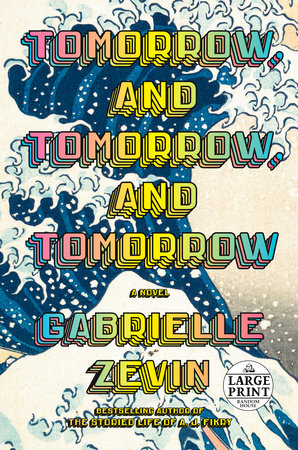
As usual, I haven’t read Kate’s starting book, and indeed have never heard of it, so on the basis of one word in the title alone, off I go.
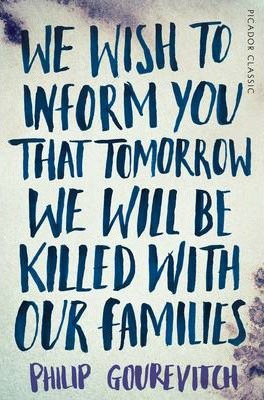
  1. Clearly the word is ‘tomorrow’ and the book that sprang to mind was Phillip Gourvitch’s We Wish to Inform You That Tomorrow We Will Be Killed With Our Families: Stories from Rwanda. As you would guess from the title, this book deals with the 1994 Rwandan genocide which saw between 500,000 and 800,000 people die in a hundred days of violence between Hutu and Tutsi ethnic groups.
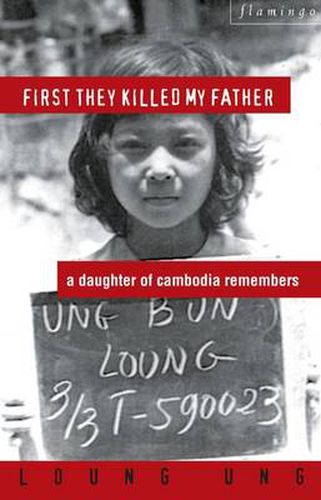
  2. A similar book, with a similar title, which I read recently was Loung Ung’s First They Killed My Father. Another genocide, but this time in Cambodia, where Pol Pot and his Kymer Rouge forces systematically murdered between 1.5 and 3 million Cambodian citizens (my review here)
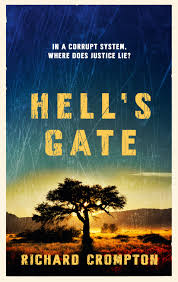
  3. I’ve visited both Rwanda and Cambodia, and their memorial sites, and moving away from the genocide theme (slightly- though let’s not mention the Mau Mau) let’s go to Kenya instead which I have also visited. Although its name might seem to fit into the genocide theme, Richard Crompton’s Hells Gate is actually a detective novel set in Hell’s Gate National Park at Lake Naivasha, not far from Nairobi. (My review here).
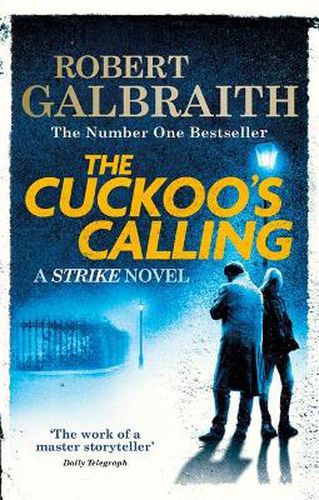
  4. I’m not usually a great detective fiction aficionado, but I’ve really been enjoying big fat Robert Galbraith novels. Robert Galbraith is of course the nom-de-plume for J. R. Rowling, and I can actually follow these stories and can clearly tell you “who dun it” at the end of the book. The Cuckoo’s Calling was the first in the series about the murder of a high-end fashion model, and in it Galbraith establishes her detectives Comoran Strike and his secretary/sidekick Robyn. (My review here).
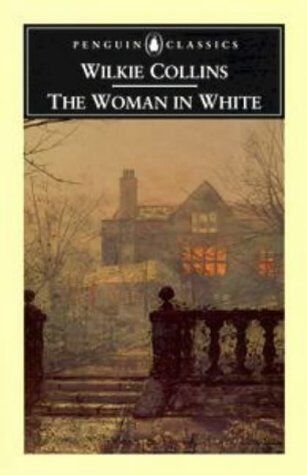
  5. And back to the original and one of the best of detective novels with Wilkie Collins’ The Woman in White, published in book form in 1860. It’s long too, and rather convoluted with lots of convenient coincidences, but a thoroughly enjoyable read. (My review here)
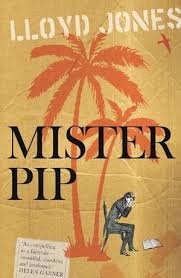
  6. Wilkie Collins was good friends with Charles Dickens and although I could have chosen any number of Dickens’ novels, I’ve gone with a spin-off in Lloyd Jones’ Mr Pip. Mr Watts, the last white man living in Bougainville after its descent into civil war in 1990 introduces his school children to Dickens’ ‘Great Expectations’, which also happens to be one of my favourite books. (My review here)

None of which has anything to do with video games, which I gather is one of the themes in the original Tomorrow and Tomorrow and Tomorrow starting book. But I guess that’s where Six Degrees of Separation can take you….

‘First they killed my father: a daughter of Cambodia remembers’ by Loung Ung

2001, 336 p.

As you might know, some months ago I travelled to Cambodia and am likely to repeat the trip a few times more over the next few years. First They Killed My Father is one of the books that tops the ‘Books You Must Read Before Travelling to Cambodia’ lists, but I felt rather reluctant to read it. In my mind Cambodia was defined by two things: Pol Pot and Angkor Wat, but I want it to be more than that. And yet, having now been there, the influence of both is inescapable. They don’t necessarily define Cambodia, but they have shaped it.

Loung Ung was five years old when the Khmer Rouge swept into Phnom Penh. They were wealthy and of Chinese descent: her mother was ‘full Chinese’ and tall, with almond shaped eyes and a straight Western nose. Her father, part Chinese, part Cambodian, she describes as having “black curly hair, a wide nose, full lips and a round face” with “eyes shaped like a full moon.” Her father originally worked for the Cambodian Royal Secret Service under Prince Sihanouk, and then as a major in the military police under Lon Nol. We don’t actually learn what he did in either of these jobs, but it did afford them an upper-middle class lifestyle in Phnom Penh. She was raised to distance herself somewhat from Cambodia: in the mornings she studied French, in the afternoons Chinese and at night Khmer, and her parents spoke about Cambodian customs as being something “other”.

Not that any of this helped when the Khmer Rouge evacuated the city completely, under the pretense that the US was about to bomb the city, and that they could return in three days. Her mother soon realizes the reality, with her offering money notes to her daughter to use as toilet paper. The family is shifted from location to location, siblings are sent to jobs in different places, and her parents are acutely aware of hiding their middle class origins and pretend that they and their children are peasants. Her parents had reason to fear. I found that one of the most chilling sights in the Tuol Sleng Prison (Security Prison 21), which I visited, was the sight of children, arrested along with their parents, who were questioned and later killed. It was fear of being arrested as a family that led her parents to send their daughters away to fend for themselves. Yet somehow, miraculously, some (but not all) members of the family find their way back to each other when the madness comes to an end. With the family in tatters, she and her brother travel to Vietnam, then use a people smuggler to go to Thailand where they end up in the Lam Sing Refugee Camp, waiting to be taken in by another country. Did her brother’s conversion to Christianity help?- possibly, and she and her brother are granted residency in Vermont.

The book is written in the present tense, and it moves chronologically in a methodical way, with each chapter headed by a date. It purports to be a child’s-eye view, but of course it is being written by an adult. The book has been criticized in Cambodia for inaccuracies, her obliviousness to her privilege, implausibilities and the racism she displays against the ‘base people’ in emphasizing her Chinese origins. You can read several critiques at Kymer Institute – in fact, it’s well worth doing so. Certainly I noticed her disdain of peasants and Cambodians generally, but as for the rest of the criticism- I don’t know enough. I read it partially as a way of trying (unsuccessfully) to understand the Khmer Rouge and how and why they took power with so little apparent resistance. Exhaustion from war and exposure to unyielding and ideologically-driven violence have much to do with it, I suspect. Reading this book while in the country, I enjoyed the descriptions of Phnom Penh (albeit at fifty years remove) and gave context to my ambivalent visit to Tuol Sleng Prison. I’m still looking for books about Cambodia that, while not blithely ignoring the Khmer Rouge years, are not defined by them.

My rating: Hard to say – 7???

Read because: I was there. E-book.