
During the last week of November I was involved in letterboxing and gaining signatures on a petition regarding the freeway going through nearby Watsonia. So plenty of time to listen to podcasts!
The Rest is History Episode 385 The Fall of the Aztecs: The Woman Who Changed the World. So we left Cortez being sent off to Mexico, although Velazquez had a change of heart at the last minute, and rescinded his orders. Cortez ignored that, and went anyway. He was armed with lots of instructions but no instruction to colonize. He immediately went beyond his instructions and took up with Alvorado, one of the many armed entrepreneurs who were in the region at the time. Christianity did matter, and there were lots of legal niceties like reading El Requerimiento – a formality which supposedly gave the Spanish legal cover to proceed , but the main reason they were there was for gold. At the start, Cortez was insecure and fearful of his fellow sailors, especially Alvorado, and others who were still loyal for Velazquez back in Cuba. They came upon Aguilar, who had been shipwrecked there years earlier, and who spoke the Mayan language. His fluency in Mayan was particularly useful when Cortez took up with La Malinche, who had been sold into Mayan slavery and spoke both Mayan and Nahuatl (i.e. Aztec) languages. The Mayans acknowledged God and the Spanish King, and sent the adventurers onto the next village, along with slave girls including La Malinche who provided the crucial chain in the language from Nahuatl to Maya to Spanish. Was she traitor, victim or manipulator? There was no evidence that the Aztecs thought that they were Gods. Cortez decided to disobey his orders by going inland, and supposedly, Malinche must have told him that he would be safe. Before doing so, he founded a town on the coast, and gave themselves legal coverage by starting a town council. He sent treasure off to the King to butter him up, accompanied by Valaquez’s men (to get them out of the way). He didn’t burn his ships, instead he beached them and headed inland.
Conversations (ABC) I am a bird nerd, and I get very excited when one of the grandchildren identifies a magpie or rainbow lorikeet on the BackYard Birds Poster I have on the wall. And backyard birds are featured in Wily cockatoos, bin chickens and spangled drongos, where Darryl Jones talks about urban birds and his book Getting To Know the Birds in Your Neighbourhood. He extols the intelligence of crows and magpies and generally talks about the bird life that you’re likely to find in the backyard or nearby.
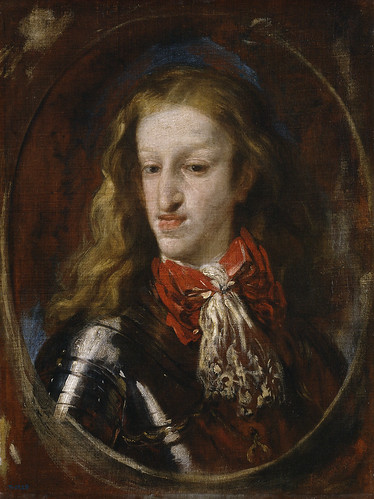
History Hit Habsburg Inbreeding with Dr Adam Rutherford. I can remember being fascinated at school when I learned about the Hapsburg Chin, an inherited characteristic that rendered one of the Hapsburg kings/emperors (King Charles II of Spain) unable to eat. And after listening to geneticist Dr Adam Rutherford, that wasn’t half of the health problems that were inherited through interbreeding in the family which resulted in a genetic density even stronger than a brother/sister pairing. As Rutherford points out, mathematically we are all inbred to a certain extent because although we each have 1 trillion ancestors over the last 1000 years (more than have ever lived), some people appear several times on our family tree. All those Who do you think you are? programs that trace everyone back to Charlemagne reflect this presence of common ancestors.
History Listen (ABC) I’ve listened to two of the three part series Dusted: The Human Cost of Mining in Australia, presented by Van Badham, whom I had only seen on television- she’s good on radio too. Part 1 Gold focusses on Bendigo and the prevalence of silicosis as a result of quartz mining which became increasingly important once the alluvial gold was exhausted. At the time, there was no clear distinction between ‘miners phthisis’ and TB, although now we know that silicosis makes the sufferer more susceptible to TB. In 1906 there was a link drawn between the use of machine drills and silicosis, but the miners themselves resisted using the water drills that reduced the danger because of water shortages, use of contaminated water, and the fact that it slowed down their work when they were paid on results. The fear that mines would be closed resulted in an acquiescence to the continued rate of silicosis among miners. Part 2 Coal emphasizes that the Australian coal industry already knew the dangers of coal dust from the experience of coal mining in England, and the unionism in coal mines kept the issue at the forefront. However, the coal companies fought hard to question the dangers of ‘black lung’.
History Extra We held a Thanksgiving dinner with friends, so it seemed appropriate that I listen to a podcast about Thanksgiving. Thanksgiving: everything you wanted to know features an interview with historian Rachel Herrmann who distinguished between the original Thanksgiving in 1621 and its manifestation as a national holiday in 1863. The original Plymouth colonists had nearly starved after their provisions spoiled on board ship, and there had been a 50% death rate during the first winter. The next season they managed to eke out enough food to hold a harvest festival, at which some of the men fired off their guns, as you do. This attracted the local tribes who, on seeing the meagre fare, brought in deer and wild birds to share with them. There were about ten years of relative peace between the colonists and tribes (with whom they signed a treaty) but this was ruptured with the Great Migration when the ships just kept coming. Sounds familiar. The second manifestation of Thanksgiving was in 1863 when Abraham Lincoln declared it a national holiday, after years and years of lobbying by magazine editor Sarah Josepha Hale. However, it was largely rejected by the Southern states, who saw it as a Yankee invention until the 1920s and Jim Crow legislation assured white supremacy – then they could embrace it.
Emperors of Rome Podcast Episode XCVIII – Caesar’s Gallic War discusses the books that Caesar himself wrote about the wars he waged between 58 and 50 BC. ‘Gaul’ consisted of present-day France, bits of Switzerland, Belgium and Netherlands. He actually wrote 7 volumes, but we don’t know if they were published year-by-year, or whether they were all published at the end. In either case, it gives us a rare glimpse into the mind of the commander of a war. They are written in the third person which perhaps sounds a bit arrogant, or maybe it was because in a predominantly oral culture they would be read aloud, and Caesar didn’t want people to impersonate him when reading if he used the first person. Episode XCIX – Q and A IV was a question and answer session. The questions I most enjoyed were: Was Livia the scheming sociopath that Robert Graves portrayed? (Their answer: there is evidence in the sources that she was, but the sources themselves were hostile. Stepmothers nearly always get a bad rap). How did the Romans picture the shape of their empire? (Their answer: they did have maps, but we have lost them and only have textual descriptions of the empire. It sounds as if their maps were more like those RACV strip maps you used to be able to get, highlighting towns and geographical features rather than being accurate in scale). What were Roman naming conventions? (Their answer: really complex but for women they would use a variation of the father’s name and give the same name to several sisters. Even though women married, their allegiances and identities were still tied up with their father’s family). Would Donald Trump make a good Roman Emperor? (Their answer- even though they were reluctant to give it- no, he would be bad because he is unpredictable and he goes through too many staff).
Expanding Eyes Podcast It’s too hard to listen to Homer’s Iliad through You Tube episodes, so I have succumbed to an audio version from my library which uses the W H D Rouse “plain English” translation. I feel as if I am cheating a bit, but it works well as an audio. Anyway, I’m up to Episode 50 in Mike Dolzani’s Expanding Eyes series Episode 50: The Tide of Battle Turns, The Achaeans driven back to their own defensive walls, a Second Assembly called to deal with this. which pretty much sums it up. He is moving to Book 9, but first he backtracks to books 7 and 8 . In describing the battles (at length), Homer goes a bit historical on his readers because he describes big shields and long arrows, which were no longer in use – although perhaps this is because he was harking back to the golden age of Greek power. In Book 8 Zeus decided that he needed to start to honour his promise to Thetis to help the Trojans (at least for a while), and knowing that the other gods would criticize him, he calls a meeting of the gods and tells them that he’s the boss. There is a long retreat and the Achaean are backed up against their own boats with the Trojans surrounding them. In Book 9 Agamennon is in tears over the situation and decides to throw in the towel – so we see his weak leadership yet again- but Diomedes stands up again, and he and Nestor suggest going to Achilles to try to encourage him again to join the battle for the Achaeans. Agamennon overeggs the pudding with the offer of sweeteners if Achilles will just came back and fight for them, and he sends off Achilles’ friends as envoys to talk to him.
 The Resident Judge of Port Phillip