Monthly Archives: December 2023

I hear with my little ear: Podcasts 17-24 December 2023

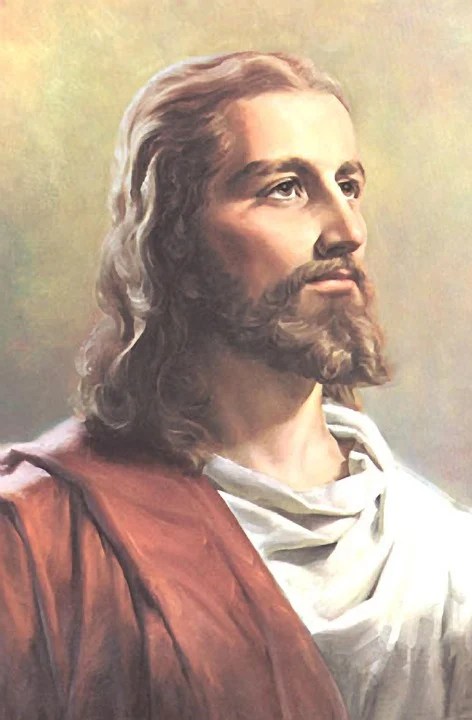
History in the Bible. Good grief- so much preparation for such a short service at my Unitarian fellowship In. Episode 2.25 The Quest for the Historical Jesus. I thought that this was going to be about the quest itself, but instead it was about three different waves of analysis of the historical Jesus. The First Wave was in the 18th century when Reimarus, a contemporary of Voltaire, anonymously published 10 years after his death, an analysis of the historical Jesus which depicted him as a fanatical revolutionary and highlighted the differences between different factions of disciples. F. C. Baur took up this interest in factions in the mid 1800s, distinguishing between the pro-Jewish faction of Peter and James, versus the pro-Gentile faction of Paul. After this first wave, there was a period when theologians like Albert Schweitzer and Rudolf Bultmann decided that the Quest was useless anyway. In the Second Wave, after WWII, there began a systematic search for authenticity in the bible, which meant excluding everything that was Jewish and everything that was Christian. Walter Bauer argued that Jesus’ message had been corrupted by a warring Christian community from the start. When the Dead Sea Scrolls were discovered in the 1940s, the diversity of belief among factions was demonstrated. The principle of Embarrassment arose- i.e. if what Jesus said was likely to be embarrassing to either Jews or Christians, then it was probably authentic. The Third Wave in the 1970s featured theologians like N. T. Wright, Ed Sanders and J.G.D. Dunne – and these were international scholars, not solely German ones as in the First and Second Waves. They looked at books outside the canon, and sought to place Jesus within the Jewish context. They rejected the Embarrassment Principle, arguing instead that whatever was authentic must be consisted with 1st century Judea (which is the way that I lean).

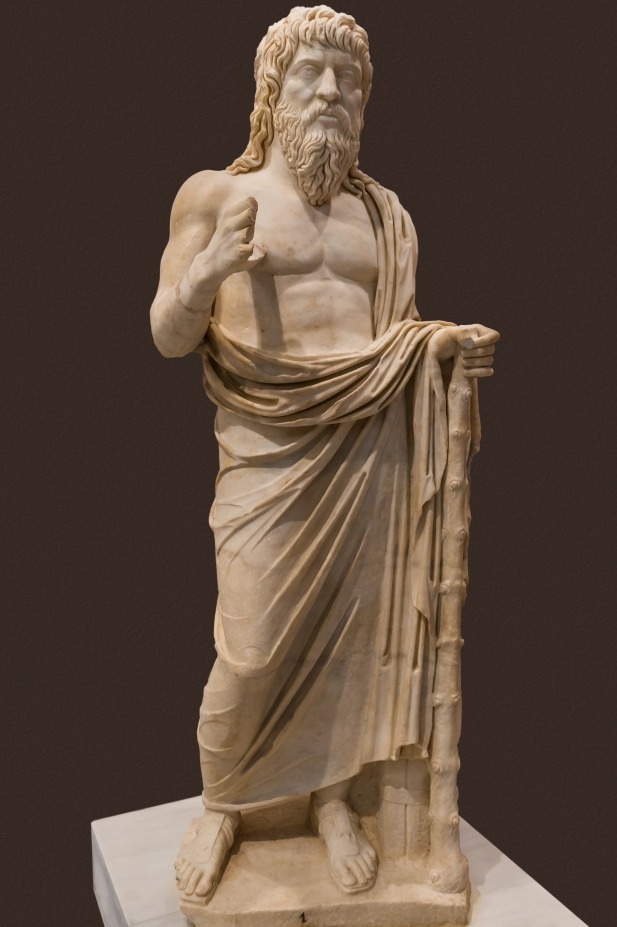
The Secret History of Western Esotericism. Good grief. How did I end up here? Looking for more on Apollonius of Tyana, that’s how. Episode 65: Graeme Miles on Apollonius of Tyana features Graeme Miles a lecturer in classics and researches Greek literature (especially of the Roman Era) and philosophy (especially the Platonic tradition). At the time of this podcast, he was at the University of Tasmania. He looks at the life of Apollonius and Philostratus’ biography of him written in the time of Julia Domna. This is a very learned podcast, with many references to other philosophical figures- and it was a bit beyond me, to be honest.

The Ancients Jesus of Nazareth. You know that point in preparing for writing an essay or thesis when suddenly you’re not reading anything new anymore- well I have finally reached that point. However, if you wanted a one-episode summary of the current state of play in looking at the historical Jesus, this episode featuring Dr Helen Bond, a Professor of Christian Origins at the University of Edinburgh, might be useful (except for her annoying giggle every time she is asked a question). Things I hadn’t thought of before: Matthew’s gospel looks at Kings, Wise Men etc., emphasizing the link with King David where as Luke looks at low status people. Jesus had 12 Disciples, even though he had many more adherents than just 12, but the number reflects the Twelve Tribes of Israel.

History Hit Napoleon Part 2: The Commander features military historian Dr Zack White who is rather conflicted about Napoleon as a Commander. Napoleon interpreted maps well; he physically touched (not in a sexual way) his men and yet he was cavalier with their lives in his quest for victory. He didn’t invent the corps system, but he used it well. His enemies soon learned that the best way to fight Napoleon was not to fight him. As not only military commander, but also ruler of France, he thought about what he wanted from a battle. He was a good commander, but poor negotiator. His skills remained the same, but he himself changed over time. Increasingly he began using his men as battering rams, losing huge numbers, and calling on his imperial guard to act as shock troops. He was a “come on” commander rather than a “go on” commander. Dr. White identified five traits that made Napoleon a great commander: 1. choosing good marshalls 2. use of the corps system 3. his opponents didn’t know how to deal with him 4. he had a Machiavellian mind 5. his ability to inspire (manipulate?) his men. [None of these traits were demonstrated in the Ridley Scott film, by the way]. His actions changed world history through prompting the fall of the Holy Roman Empire after Austerlitz, and changing the balance in the Americas through the Louisiana Purchase.

The Rest is History. Continuing on with Ep. 388 The Fall of the Aztecs: The Festival of Blood (Part 5) takes up with Cortez dividing his troops and heading off to confront Pánfilo de Narváez, who has been sent by the governor of Cuba, taking along Montezuma as a hostage. He confronted and defeated de Narváez, taking his troops (who were more a band of mercenaries than regular troops) and heading back with his vastly enlarged group to Tenochtitlan, increasingly aware of the sullenness of the people as he was moving through. On arrival, his lieutenant Pedro de Alvarado told him of a massacre that had erupted after Cortez’ departure, and now Cortez and his additional men embarked on a new battle on the eve of one of the most hallowed Aztec festivals. Montezuma was brought out to address the Mexica, but by now he had lost all authority with the people, and now that he was of no use to Cortez, they killed him. It’s interesting to speculate why the Mexica even allowed them to come back- was it a trap?

Literature and History Podcast Episode 10 Homer’s Gods deals with books 9-16. He starts off with giving a summary of the books, which saves you the effort of reading it yourself (although I found this really useful after listening to summarize). He then goes on to discuss Homer’s gods. The gods of the Pantheon moved in and out of favour with readers at different times, but Zeus was always the most important. Zeus was the superintendent, but the other gods demonstrate the wicked, perverse sides that the gods could display. They had preferences, rather than being subject to laws. Much of books 9-16 involves the to-and-fro of battle, as if they were wearing a rut in to the earth. The presenter, Doug Metzger, backtracks to give us the origins of the war, even though this merits only a line or two in the Iliad itself. It was started by Eris, the goddess of discord who asked Paris to judge who was the most beautiful between Athena, Aphrodite and Hera, all for the prize of a golden apple. When Paris went for Aphrodite (who bribed him with the offer of Helen, the most beautiful woman in the world), that instantly put Athena and Hera onto the Aegean’s side. Whatever we might think of Homer’s Gods now, other Greek philosophers weren’t too impressed with them back then either: Xenophanes was a critic, and Plato thought that the Iliad should be censored because of the bad values it promoted.
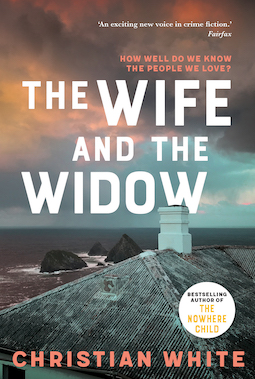
‘The Wife and the Widow’ by Christian White

2020, 384 p.

Spoiler alert

This book won the Ned Kelly Award for Crime Fiction 2020 but given that crime fiction is not one of my preferred genres, it escaped my notice completely. Anticipating by the front cover a Shetland-esque novel, I was surprised to find that it was set in Australia, on a fictional island off the Victorian coast. The island is home to Abby, the “wife” of the title who lives there all year, as the population swells and dwindles with the holiday seasons. Her husband Ray is a handyman, and they live with their two children in an old house that Ray rarely uses his handyman skills to improve. She has a job in the small local supermarket which doesn’t provide enough income during the off-season, and she has embarked on the rather odd hobby of taxidermy in her garage, fed by the supply of roadkill.

The “widow” of the title is Kate, who is perplexed to find that her doctor husband has concocted an elaborate hoax to convince her that he has attended an international conference. Instead, his body is found at their holiday house on the island. Kate and her father-in-law, with whom she has a strained relationship- travel to the island to try to make sense of his death.

The narrative switches between the two women, both of whom find themselves having to re-evaluate what they thought was the truth about their husbands. I can’t say anymore- there is a really clever twist that had me stopping mid-paragraph, then flicking back to see if I had misread. I very rarely re-read books, but I am tempted to read this one to see how he did it. The writing of place is so evocative that you can easily picture the island in your mind, and his rendering of the emotions of the two women is deft and confident. But the twist is the absolute highlight and alone makes the book well worth reading.

My rating: 9/10

Sourced from: CAE bookgroups.

I hear with my little ear: Podcasts 9-16 December 2023

Emperors of Rome Podcast. This is their hundredth episode and to celebrate it was taped in front of a live audience here in Melbourne on 8th August 2-18 (It’s taken me a while to find these podcasts!). Episode C The Death of Caesar points out that it wasn’t just Brutus, Cassius and Decimus acting alone- instead there were about 60 co-conspirators. They chose this particular time because Caesar was just about to go off to the Parthian War. The involvement of Brutus may have been particularly poignant for JC “et tu, Brutus?” because Brutus was rumoured to be Caesar’s illegitimate son.

BBC Radio Being Roman with Mary Beard. I just love Mary Beard. I wondered at first whether I was hearing the soundtrack to a television program, but no, it seems that these have been produced for BBC Radio. Episode 1 Loving an Emperor looks at the letters between Fronto and Marcus Aurelius between 161-181 CE, when Marcus was still a young man. To our reading they are blatantly homoerotic, but who knows how they read at the time.

Let’s Talk Religion Yes, at the time I listened to this I was still preparing for my Christmas service at Melbourne Unitarian Universalist Fellowship. I heard this as a podcast, but it’s also a YouTube video The Pagan Jesus? Apollonius of Tyana. Apollonius is often used to argue against Jesus, although they are both historical figures. Most of the information about Apollonius comes from a 3rd century biography written by Philostratus, and there are letters of doubtful authenticity. Difficult to say anything historical about him- it’s easier to talk about the mythical Apollonius, as depicted in Philostratus’ work. He was a wonder-working sage, a Neo-Pythagorean, following an itinerant lifestyle with a focus on numbers. It is said that his mother was visited by the god Proteus when she conceived, and his birth was surrounded by swans (like Apollo’s birth), accompanied by a thunderclap. He went to India and studied with the Brahmins, then returned to the West where he was known as a Sage. He travelled throughout Anatolia and Egypt, performing miracles and raising people from the dead. He rejected animal sacrifice, and may have seen God as a unitary, transcendant being. He was tried before the courts, but disappeared before he was sentenced. Philostratus’ biography of him was written in the 3rd century, possibly as a response to the gospels to show that Jesus wasn’t so special.

Pythagorus and his Weird Religious Cult looks at the ancient mathematician, and the emergence of a neo-Pythagorean lifestyle at the turn of BCE/CE when men would adopt vegetarianism and wear simple, ragged, smelly clothes. Pythagorus himself had an interest in numbers, music and the cosmology of the spheres.

The Rest is History Continuing on with Cortez: Episode 4: The Fall of the Aztecs: Prisoners of Montezuma. Aztec society was a Bronze Age society, similar in technology to the Sumerians, but their city was huge, with over one million inhabitants, well maintained and new (compared with European cities at the time). Who is exploiting who here? Why didn’t the Aztecs just kill them all. Matthew Restall, who wrote When Montezuma Met Cortés: The True Story of the Meeting that Changed History suggests that Montezuma was planning to sacrifice them for display, but then the 18 other Spanish ships arrived to apprehend Cortez for disobeying his orders. Cortez decided to split his troops, with 80 to go off with Montezuma to confront Spain, and the rest of the troops to stay there.

Very Short Introductions This podcast has short interviews with the authors of books in the ‘Very Short Introduction to…’ series. I had just finished reading Marina Warner’s rather dense book From the Beast to the Blonde so I though I’d listen to this episode Fairy Tale- The Very Short Introductions Podcast Episode 20. She explains what a fairy tale is better here than she did in her lengthy book i.e. that anything can happen; it faces difficult themes like cannibalism, incest and jealousy, and it has a happy ending.

History Hit History Hit is responding to the interest in Napoleon prompted by Ridley Scott’s recent film with a short series on Napoleon. Episode 1: Napoleon The Early Years . The episode features biographer Andrew Roberts. He points out that Napolean was not of humble birth- he was from an aristocratic family which could prove its nobility for at least 250 years. His family was impoverished, but it was not nothing. Corsica had been purchased from Genoa in 1768 (the year of Napoleon’s birth) so its French identity was not well-established, and Napoleon himself was conflicted over his Frenchness as a young man. He received a free education from the French military academy, and was a great reader and good mathematician. He was 20 years old when the French Revolution began. He made a name for himself in the battle of Toulon, which is shown in the movie.

Theology in the Raw. Who would have thunk that I’d be listening to THIS? Hosted by Preston Sprinkle (is that even a real name?), it’s unapologetically Christian in its emphasis. The Scandal of Christmas is a four-part series leading up to Christmas and he starts Ep#927 The Scandal of Christmas Part I with Dr. Craig Keener talking about Luke 1-2, the politics and sociological scandal of Christ’s birth, his earthly vocation , the location of Christ’s birth, Matthew 1-2 (and the differences between Luke and Matthew), the problem of genealogies, and much, much more. The guest is rather discursive and sounds rather nervous. He starts by talking about other angelic visitations to announce births e.g. to Zechariah and Elizabeth. Caesar Augustus seems to be setting the agenda, but it was really God (hmmm). Most Galileans were immigrants to Judaea, some first generation others six generations on. It is said that Jesus was born in a cave where animals were kept, attached to a house. When Emperor Hadrian went through Judaea in 135CE deliberately placing pagan sites on Christian ones, he placed one on this cave, so it’s probably the authentic site according to legend. It could have been as much as two years before the Magi turned up, so Joseph, Mary and Jesus may have been in Bethlehem for some time. Nazareth only had a few hundred people, and it was more conservative, especially Upper Galilee. Aramaic was spoken but lower Galilee (where Jesus came from) was more multicultural. It is believed that Jesus spoke Aramaic, but he may have been able to speak Greek as well. Joseph was a ‘hand worker’ – probably he didn’t specialize, but did all sorts of construction. 70-90% of Galilee was agricultural, so as an artisan, Joseph may have had slightly higher status, but could not be said to be ‘high status’. If we only had Matthew’s gospel, we wouldn’t have realized that Jesus came from Nazareth. After Jesus’ birth they went to Jerusalem (about six miles) then returned to Bethlehem before going home to Nazareth. Herod acted like Pharoah did, killing babies to shore up his own power, and the wise men were pagans. There is no historical evidence of the Slaughter of the Innocents, but it’s consistent with his personality. Both Matthew and Luke go through Jesus’ genealogies, but Luke goes back to Adam, while Matthew lists Jesus’ ancestors and there is little overlap between the two genealogies after David.

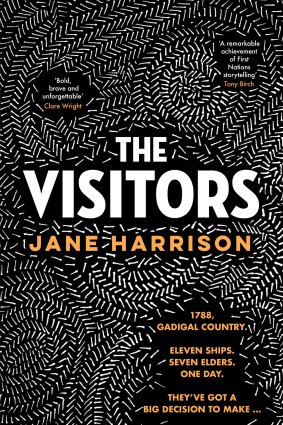
‘The Visitors’ by Jane Harrison

2023, 290 p.

Sometimes it seems that a work written first as a play really struggles to transcend its stage origins. This is the case with Jane Harrison’s The Visitors which imagines the response of local tribes to the arrival of the First Fleet in January 1788. The author, herself of Muruwari descent, ventures where non-Indigenous authors might hesitate to tread and Tony Birch’s blurb embraces it as “a remarkable achievement of First Nations storytelling”.

The book starts with seventeen-year old Lawrence who first notices the nowee on the horizon, its white sails billowing in the wind. His Uncles decide that Elder Gary should be notified, as it is his turn to host the next seasonal meeting of Elders. It is decided that the meeting should be held on the neighbouring Gordon’s land, which strategically overlooks the waters of Sydney Cove. The word goes out to seven mobs who send their Elders to discuss this second appearance of nowees, the first having arrived with Captain Cook eighteen years earlier. Cook departed: surely these ones will, too. Reminiscent of the interminable collection of adventurers in Lord of the Rings, the Elders are gathered in, chapter by chapter, with each given a back-story.

But these Elders, all with non-indigenous names (Lawrence, Gary, Gordon, Joseph, Nathaniel, Walter and Albert) arrive in business-suits, upending our time-frame as readers, and many of their back-stories are Oprah-esque in their relationship detail and more than a little imbued with 21st century values. The dialogue is presented in script form. The ships- eleven by now- show few signs of moving on, and the Elders joined by young Lawrence himself, need to decide how to respond. To fight or to welcome? In a Twelve Angry Men-esque scenario, Elder Walter, gradually convinces the other Elders that they cannot know why the visitors are here, and that they may bring things- like an axe that he found- that will improve their lives. We all know how this is going to end. Young Lawrence, who had disobeyed instructions to paddle out to investigate for himself, is sneezing and unwell and we know that these ‘visitors’ were here to stay.

I think that I would have preferred to see this on the stage, rather than on the page. Apparently the author did a lot of research in converting it to a novel, and the research feels very didactic at times and clags up the narrative. It’s an interesting concept of decentering the First Fleet story- and ‘what ifs’ are my guilty secret as a historian- and while playing with timespans through suits and names, it foregrounds the social complexity and agency of the watchers on the shore. I just wish that the author didn’t feel that she had to ‘educate’ me.

My rating: 6/10

Sourced from: Yarra Plenty Regional Library

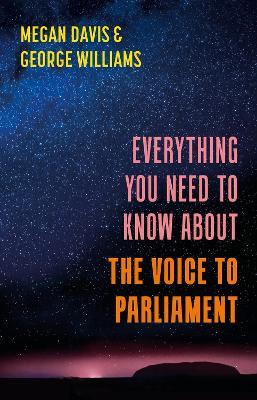
‘Everything you need to know about The Voice’ by Megan Davis and George Williams

2023, 224 p.

I started reading this before the referendum, and then after the referendum I was too discouraged and flat to finish it. By the time that I broached it again, it was already history – and a history that I believe we will come to regret.

I thought that I was relatively well-informed about the constitution, referendums and The Voice, but I certainly learned things that I didn’t know before. Chapter 1 ‘Making the Constitution’ starts back with the 1901 constitution and the constitutional process that produced it. It explains that Section 127 about counting aboriginal natives (repealed in 1967) was inserted to stop Western Australia and Queensland from using their large Aboriginal populations to gain extra seats in Parliament and higher funding from federal tax revenue. I was aware that the Constitution is silent about many things that we assume would be constitutional e.g. electoral systems, Prime Ministers, parties- in fact, the preamble doesn’t even mention Western Australia because they weren’t sure to join in Federation! But I hadn’t realized that women’s suffrage was not part of the Constitution but was instead legislated under The Commonwealth Franchise Act of 1902 (does that mean that it could be legislated away in a Handmaid’s Tale scenario, I wonder?) Although unable to vote on the Constitution except in South Australia and Western Australia, the womens suffrage movement at the time trusted the promises that female suffrage would be legislated after the Constitution had been passed. As has been pointed out since, had voters demanded the same level of detail in 1901 as they did in 2023, the federal constitution would not have been passed.

Chapter 2 ‘The 1967 Referendum’ looks more closely at the Referendum which white Australians have basked in ever since. It reminds the reader that there was a second referendum held on that day that proposed to break the numerical 2:1 nexus of members in the House of Representatives to the numbers of Senators. It was this second proposal that attracted the most debate. There was overwhelming support for the Aboriginal question, with the ‘for and against’ compulsory booklet containing only arguments for change. Federal law required the ‘against’ case to be written by the parliamentarians who had voted against the change- and not one parliamentarian did so. But the electoral question was soundly defeated; the aboriginal question passed strongly. When Prime Minister Holt left to travel overseas the following day (shades of Albanese heading off OS straight away too?), instead of celebrating the victory on the indigenous question, he labelled it a “victory for prejudice and misrepresentation”. The Sunday Herald recorded the Yes vote on Aboriginals in small type, with a huge headline ‘AUSTRALIA SAYS NO ON NEXUS’.

Chapter 3 ‘A New Era?’ is a rather depressing rundown of events after the high point of the 1967 referendum, and the string of bodies that have been created by governments to consider a treaty or legislation for national land rights. The ‘decade of reconciliation’ commenced in 1991 but after the Native Title Act of 1993, the Indigenous Land Corporation and a Social Justice package created by the Keating government in the wake of Mabo, things stalled. The Howard Government responded to the Wik Decision by the Native Title Amendment Act of 1998 that would pour ‘bucket-loads of extinguishment’ on native title while the Hindmarsh Island Bridge Act 1997 ruled that the Heritage Protection Act applied everywhere except the Hindmarsh Island bridge area- the area in contention. The chapter reproduces the Howard/Les Murray preamble to the Constitution, then the second version written with Democrats Senator Aden Ridgeway that was eventually put a referendum in 1999. The preamble was prefaced by a clause that it had no legal effect, and both versions avoided the term ‘custodianship’ that Indigenous groups wanted. The referendum result was worse for the preamble than for the republic.

Chapter 4 ‘The Journey to Recognition’ looks at the apology, and new attempts to have a preamble – something that indigenous people did not want. Gillard established an Expert Panel to report on options for Indigenous constitutional recognition which made recommendations and wordings but which was put on the backburner because by early 2012 the political environment was not conducive to bipartisan support, and it was feared that a referendum might fail due to low levels of community awareness. At the 2013 federal election, each of the major parties expressed strong support for recognizing Aboriginal people in the Constitution, but when the Indigenous Affairs Strategy led to cuts and disestablishment of programs and activities, there was a backlash to the ‘Recognize’ campaign that specifically rejected a minimalist approach of preambular recognition alone. From the Kirribilli meeting with the Prime Minister and the Opposition leader in July 2015 it was made clear that any reform must involve substantive changes to the Australian constitution and that a preamble would not go far enough and would not be acceptable.

This was reinforced by the Referendum Council, established by Turnbull in late 2015 which asked the question “what is meaningful recognition to you?” The answer, from 12 Regional Dialogues was a constitutionally protected Voice to Parliament. Chapter 5 ‘The Referendum Council and Uluru process’ goes through in detail the consultation carried out, and the resulting Uluru statement. Turnbull’s rapid rejection on receiving the Uluru statement rehearsed the arguments that would later be used in the ‘No’ case (although he himself championed Yes by the time the Referendum came around).

Chapter 6 ‘Voice, Treaty, Truth’ goes through the reasons for the sequence. I must say that I have wondered why Truth-telling came last (although I am less optimistic now that it would make any difference to many white Australians anyway). This chapter points out that there was concern that the energy for grasping the opportunity of constitutional power might be exhausted by a truth-telling process, and that there is no treaty process in the world that required a truth-telling process first. Many communities wanted truth-telling at their pace, at the local level, rather than being compelled to tell your stories without any guarantee of good faith from the listeners.

The chapter ‘The Voice’ brings us up to the election of Anthony Albanese, and his commitment to the Uluru Statement in full (something that I suspect is shakier now). It goes through the Referendum Working Group proposal, which already had the ‘detail’ that the No side called for. The chapter then goes through the myths and misconceptions promulgated by the No case.

The final chapter ‘The Voice Referendum’ has an optimistic tone that – as we now know- was misplaced. It includes a list of the 44 referendums brought before the Australian people and their results. With a final national Yes vote of 39.9% the Voice ended up being one of the least supported proposals ever put forward (although there were 8 that were even less successful). Interestingly, the rejection of the preamble which recognized Aboriginal and Torres Strait Islanders as “the nation’s first people” in 1999 with 39.3% was very close to the Voice result of 39.9%. Does this reflect the hard-baked resistance of white Australia? To be honest, I can’t remember how I voted in that referendum: I suspect that because the preamble was a Howard proposal, I would have opposed it. Nor can I remember how I voted in relation to the Republic: I suspect ‘Yes’ (and today I would even more strongly support the Parliamentary-selected model that was proposed then).

My response to this book was strongly influenced by my sadness at the final result and the misplaced hope that it reflects. Co-written by constitutional experts Megan Davis and George Williams, both were active participants in the campaign, and it needs to be read with that in mind. It is a very clearly written, informative book that gives a clear narrative of the road to the Voice referendum. If only the final destination had been different.

I hear with my little ear: Podcasts 1-8 December 2023

Conversations (ABC) Academic Kylie Moore-Gilbert was imprisoned for 804 days in an Iranian prison after being arrested at the airport as she was leaving a conference. In Kylie Moore-Gilbert’s freedom fight she talks about her long period of imprisonment, initially in solitary confinement, and then in a series of women’s prisons. She conveyed so well the crushing nothingness of solitary confinement, and her bewilderment at not being able to speak the language and feeling completely cut off from the outside world. The bravery of some of her fellow prisoners in reaching out to her is amazing, as it put all of them in great danger.

The Rest Is History Episode 386 The Fall of the Aztecs 3: The City of Gold. Backtracking a bit, Dominic and Tom reiterate that we really don’t know what Malinche’s role is all this. She hated the Atzecs, and certainly historian Camilla Townsend plays up her agency. We can’t trust the Spanish diaries because everything is written to protect their own actions. Because they’re “cos-playing the Greeks and Romans”, everything is filtered through a classical lens. Certainly Cortez has no idea what he’s facing- is he brave, or crazy? On his trip inland he crosses over the borders of the Tlaxcalans who, unusually among the surrounding tribes, did not pay tribute to Montezuma. They attacked Cortez but his revenge attack at night was violent and ultimately effective. He’s in effect marketing his power here, and after three weeks the Tlaxcalans welcome him into their city where they wine and dine them. The Tlaxcalans recruit the Spaniards, rather than the other way around, and together they go off to sack the Tlaxcalan’s enemies the Cholulas, then they turn towards Mexico. They stop above the valley, marvelling at the city which dwarfs Seville. They are getting mixed messages from the Aztecs: they give them presents but then say that Montezuma is too busy to see them. On 8 November the Spaniards clatter along the causeway with the Tlaxcalan’s (Montezuma’s enemies) and are met by Montezuma himself. It’s implausible that Montezuma would have just given in – this is probably Spanish rationalization after the event. Montezuma puts them up, although there’s no mention of what happened to all the Tlaxcalans. The Spanish really don’t know whether they’re guests or prisoners.

History in the Bible. I’m preparing for the Christmas service at our Unitarian Universalist fellowship, where I’ll be considering the historical context in which the nativity story takes place. I’ve been listening to my Rome podcasts for some years now (as you know) and so I’ve been looking at King Herod and the political situation in Judea for my presentation. In 2.19 What Have the Romans Ever Done for Us? Australian podcaster Garry Stevens looks at the context into which Jesus was born. King Herod the Great died in 4BC, which is a bit inconvenient for numbering the years supposedly from the birth of Christ (BC/AD in the old nomenclature). For the past 60 years the Romans had dominated the Mediterranean, introducing Greek culture and social systems. The elimination of pirates by Pompey meant that ship transport could become more important, thus drawing Judea into the Roman economic system. Under the patronage of the Romans, Herod the Great supplanted the squabbling Maccabean rulers in 37 BCE to construct a kingdom about the same size as the old kingdoms of Israel and Judah, together with territories in Syria that had never been part of the old Hebrew remit. Thus, the subjects were both Gentile and Jewish. The Romans were pious, and because they recognized that their own Pantheon was borrowed, they accepted the presence of other religions. However, they would not tolerate human sacrifice, insurrection or the suspicion of private (as distinct from public) assemblies – all of which the early Christians challenged (at least symbolically), I guess. At the time of St Paul, the Roman Empire numbered about 50-60 million people, 4-5 million of which were Jews. About 1/2 million of these Jews (or 10% of the total population) of these lived in Judea. As a point of comparison about 7 million live in Israel today. The Romans gave an overarching political structure, but the Jews had their own structures beneath them. It was a theocratic rule. The temple, which Herod reconstructed, was more like a clubhouse than a synagogue, acting as a place of communal meeting and teaching. Prayer was not a feature of Judaism until medieval times.

This was interesting, so I went back to Episode 2.17 Recovering the Bible Up until about 1850 there had not really been much progress in biblical revelation since medieval times. The archeological jigsaw had been reassembled, but there had been no new discoveries of manuscripts. But then came a slew of discoveries: Tischendorf’s discovery of the mid-4th century Codex Sinaiticus at a Syrian monastery at Mt Sinai in 1844; Ethiopian parabiblical books in the 1880s, then the Books of Peter in a monk’s grave bringing a whole new testimony of Christian diversity in the early years. In 1947 the Dead Sea Scrolls were discovered in 12 caves near Qumran in the West Bank – whole scrolls, not just fragments. Discoveries were on hold during the Arab-Israel War, and the last cave wasn’t explored until 2017. The scrolls comprised Old Testament Books, para-biblical texts and sectarian (probably Essene) texts, all Jewish rather than New Testament. The scrolls are significant for their quantity (1000); their antiquity from the early roman empire; and for their contribution to a new aspect of Judaism.

Episode 2.18 Modern Debates: Scandal of the Dead Sea Scrolls looks at the 40-year blockage of access by Catholic conservatives, who sat on the discoveries and would not allow other researchers to see them. The scrolls were discovered in Qumran Cave when it is was under Jordanian rule. Jordan instituted an international panel and sent the scrolls to the Rockefeller museum in Jerusalem. As Edmund Wilson reported in the New Yorker in 1955, when controversy arose over interpretation and authorship, the cabal on the panel battened down the hatches and stopped publishing, took the scrolls to Paris and refused access to all other researchers. In 1969 the Jordanian government became impatient with the delay, but after the Israeli war, renewed support was offered to Robert De Vaux, one of the original discovers. Publication continued at a glacial pace until in 1991 Huntington Library published its microfilms, finally pushing the cabal to release their own. Once they were published, it showed that Jesus was just one of many messianic figures at the time.

History Extra 1950s Britain: Everything you wanted to know. This episode features Alwyn Turner. I was born in the 50s but am only really aware of the 1960s onwards. This podcast argues that all the changes that blossomed in the 1960s (Carnaby Street, Beatles etc) were budding during the 1950s. During that decade the average age of the population was in the 30s, but their politicians were all old men with an average age in the 70s. Food rationing continued until the 1950s but the English diet was beginning to change with Elizabeth David beginning to publish her cookbooks which drew on European food tastes. The Goons started in 1951 and were a real marker between the ‘youth’ who loved them and the older generation who didn’t find them funny at all (Hmm. I don’t find them funny either). It was a decade of low unemployment, the introduction of the NHS, slum clearance and the introduction of new technology (TV, fridges, washing machines). With the Suez Crisis, Britain realized that now US was calling the shots, and that UK didn’t control their own foreign policy any more.

99% Invisible Long Strange Tape is about the history of the cassette tape. Who would have thunk you could have a whole podcast episode on cassettes? Well, Marc Masters has a whole book about cassettes called High Bias. In this episode he talks about the group The Grateful Dead, whose live shows were different every time, thereby attracting a whole cadre of taping fans who would swap tapes of the shows among themselves. At first they smuggled in reel-to-reel recorders, but once cassettes came along and the Grateful Dead realized they couldn’t stop people taping, they embraced it. Although cassettes have been largely superseded today, they are still popular in U.S. prisons. Visitors are allowed to bring in see-through cassettes, but not CDs because CDs could be broken and fashioned into weapons. (Ironically, you’re allowed to bring in a can of ring-pull tuna- as if THAT couldn’t be made a weapon). Streaming is starting to be allowed, but only songs with a PG rating. How sickening- a 14 year old can be imprisoned for life without parole, but as a 40 year old he can only download PG songs.

On a Bright Hillside in Paradise

2023, 320 p

For many years the idea of having convict descendants was something to be ashamed of, but not anymore. ‘A convict in the family’ is now almost a badge of pride, although as the Founders and Survivors project on Van Diemen’s Land convict records has shown, the life histories of people transported to Tasmania were not necessarily the optimistic stories of redemption and upward progress that we might like to imagine. Annette Higgs’ book On a Bright Hillside in Paradise, set in 1874 takes a more clear-eyed view of Tasmanian rural life, where ‘collisions’ with the indigenous people and the ‘convict stain’ were still within living memory. Based on her own family history, this is the story of three generations of the Hatton family, eking out a precarious living on a small land holding on the west coast of Tasmania, in a place rather ironically called ‘Paradise’.

Into this ‘Paradise’ come two Christian Brethren preachers, a trope more familiar in American rural stories than Australian ones, who convert members of the Hatton family to varying degrees, along with many others from the Paradise community, in a mixture of faith, curiosity, lack of other excitement and life disappointment.

The story is told from five different perspectives. It starts with Grandmother Eliza whose convict father married her off to a fellow convict who was violent to her and fathered multiple children upon her. She now sits in the corner of her adult daughter’s house, watching the family, and she is full of stories and secrets from the past. We move to the oldest son, Jack, who is converted by the preachers, and stays on the family farm. Susannah is Eliza’s daughter and Jack’s mother, drained by her many children and too much sadness and death. Her son Jack’s brother Eddie, takes up the story, but he is the one who strikes out on his own, after falling out with his brother. Their sister Echo rounds out the book, sharing her brother Jack’s faith but still close to her brother Eddie.

Not much actually happens in the book. There is an ongoing rivalry with the Dunstan boys; the indigenous Coleman boys hold knowledge of older ways; there is a tragic accident and subsequent guilt; there are births and deaths. Small things are part of big things. The same events are told in each section, adding a little more detail each time, widening out each time and through another perspective to have other significances. These are the stories that are handed on through families, shaping later generations’ sense of family history.

Higgs captured well the sameness and the precariousness of farming life, and the narrowness of vision under the wide expanse of sky, mountain and bush. She has obviously done her research well, and it rings true. I did keep expecting something to happen more suddenly and randomly, but instead this is a slow unspooling of small events into a bigger meaning, with individuals placed against a wider backdrop of ‘history’. It is beautifully written, with a slow, even pace but I found myself anticipating a jolt that never came.

My rating: 7.5/10

Sourced from: Yarra Plenty Regional Library

Movie: Napoleon

I didn’t think much of this. Plenty of battlescenes, but it was a pretty thin exploration of Napoleon’s character. There must have been more to him than this rutting dog, trying to impregnate Josephine. There must have been something that inspired enough loyalty in his troops and among the population to accept his return for the hundred days. The whole thing felt thin. And it just seemed wrong having them speak English.

My score: 3/5 stars

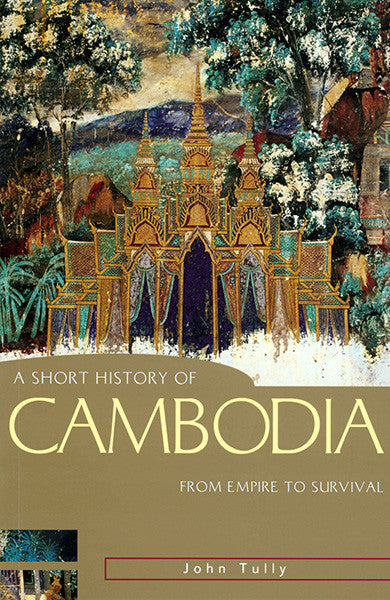
‘A Short History of Cambodia: From Empire to Survival’ by John Tully

2005, 268 p.

As I was visiting Cambodia, I wanted a short survey history of the country and this book, part of a series of ‘Short History of Asia’ series fitted the bill. John Tully was a professor at Victoria University (now retired), and as well as writing labour history, he also has written on Indo-China generally and Cambodia in particular. It’s a very accessible book, without footnotes but a reading list at the back. It was good start for a reader who wanted the whole sweep of Cambodian history, not just the Pol Pot era which tends to define our idea of Cambodia. He covers 2000 years, from the state of Funan, which predated Angkor right up to 2005, when the book was published.

Chapter 1 ‘The People and their Environment’ starts off with a geographical description of Cambodia, emphasizing its flatness in the middle and the huge Lake Tonlé Sap, the largest freshwater lake in Southeast Asia, and the Mekong River which breaks up into tributaries at Phnom Penh before flowing into the Mekong Delta in Vietnam.

I found Chapter 2 ‘Cambodia before Angkor’ fascinating. There was settlement of hunter-gatherers from the Stone Age onwards, and the Kymer-Mon people settled around 3000 BCE after migrating from the north. By the first century CE there was the Funan civilization, a literate, Indianized society which relied on the trade routes stretching from Persia to China. It was followed by the rise of Chenla, which may have been two principalities- Chenla-of-the-Land and Chenla-of-the-Water. The people spoke an archaic form of the Cambodian language, and they were the ancestors of the modern Kymers. It was king Jayavarman II who decided to shift his centre of power from the Mekong up to the Siem Reap region north of Lake Tonlé Sap.

Chapter 3 goes through the shift to Angkor, and the monumental legacy at Angkor Wat. He discusses how the temples were built, and the sheer manpower that it must have taken to construct them. He goes on to discuss what we know about the common people of Angkor from the inscriptions on the monuments, which detail punishments and provide information about the social structure, clothing and slavery. I thought that he did a really good job here in making Angkor a living, vibrant, populated culture, something which can be forgotten when you’re looking at ruins. He enters into the debate over water, and the contribution of ecological factors to the decision to move back to the Mekong quatre-bras region, although as he points out Angkor Wat was not abandoned as such. He emphasizes the arrival of Teravada Buddhism, displacing the earlier Sivaism and Mahayana Buddhism.

Chapter 4 ‘From Angkor’s End to the French Protectorate’ sees 1431, and the Siamese sacking and burning of Angkor, as a turning point. The Siamese in Thailand to the west (The Tiger) and the Vietnamese to the east (the Crocodile) both threatened to absorb the weakened kingdom completely. By the late 18th century, a Dark Age had descended on the country. The time of grand monument building was over. The road and canal system fell into disrepair, and village life predominated. Siam and Vietnam didn’t want to confront each other directly, so they used Cambodia as a buffer. Although there was a period of relative peace under King Ang Duang who set up his palace at Udong, increasing rivalry between the French (who had colonies in Vietnam) and the British (who had influence in Thailand) saw Duang’s oldest son, Prince Norodom, turn to the French for support in 1863.

The French protectorate lasted between 1863 and 1953 (Chapter 5). The treaty signed by Prince Norodom on 11 August 1863 gave France the right to station warships at the Quatre Bras (Phnom Penh), gave privileges to the Catholic Church, and granted free trade to the French throughout the region. The French embarked on a program of reform including the creation of private property in land, the abolition of slavery, cuts to royal spending, and legal and administrative restructure. I hadn’t really thought about the implications of the fall of France to Germany in 1940. The French Indochina Governor-General Admiral Jean Decoux supported Vichy and set up concentration camps, introduced the fascist salute and the goose-step and ritualized chanting of Petain’s name. He readily agreed to Japanese requests to station troops throughout IndoChina. Norodom Sihanouk came to the throne in 1941 as a baby-faced 19 year old. After the war, France granted some autonomy to Cambodia, but still maintained control over the military and foreign relations, finance and communications. There were elections and the start of political parties, and a constitution was ratified in May 1947. There was a coup in 1952, probably fomented by Sihanouk – Tully really doesn’t like Sihanouk- who assumed power directly and dissolved the democratically elected government.

Chapter 6 ‘Sihanouk, Star of the Cambodian Stage 1953-1970’ looks at Sihanouk more closely. Sihanouk likened Cambodia to an ant under the feet of two fighting elephants- the U.S. and the Soviet Union. He maintained neutrality- or perhaps it was more a matter of playing on both sides- and needed to maintain his own position at home while preserving the integrity of his borders. In 1955 he abdicated in favour of his father, and became more directly involved in politics. He introduced the idea of the Sangkum, a merger of political parties, into a one-party state which set the tone for politics for the next 15 years (and perhaps is still visible in Cambodia’s politics today too). When his father died, he allowed himself to be ‘persuaded’ to become head of state, introducing a form of ‘totalitarian democracy’. He spent heavily on education and health, introduced a series of 5-year plans and state construction. Although he tried to repress the Cambodian communists, his foreign policy moved sharply to the Left, moving away from U.S. support and towards China and Russia.

A brief five years as a republic, in Ch. 7 ‘The Doomed Republic 1970-1975’ saw a coup against Sihanouk, probably tacitly supported by the CIA. Sihanouk joined hands with his former Kymer Rouge enemies to removed the ‘usurpers’. Prime Minister Lon Nol was crooked and second-rate, but he served at various times as both prime minister and president (and later Field Marshall as well). By this time, Nixon had initiated an invasion under Operation Shoemaker, which included massive bombing, napalm and atrocities against civilians particularly (but not exclusively) by Vietnamese troops. Fighting continued, and the Kymers Rouges (Tully uses both in the plural) guerillas took Phnom Penh.

Then followed ‘Pol Pot’s Savage Utopia’ between 1975-1979 (Chapter 8). What I like about Tully’s book is that this four-year period, which so dominates our perception of Cambodia, is just part -albeit a horrific one- of Cambodia’s history. By highlighting the war and disruption prior to 1975, Tully goes some way to explaining why the Kymers Rouges were able to take power: the society and economy had been traumatized by five years of war. Prince Sihanouk became the figurehead of the new regime, although it was made clear to him that he was only a figurehead. The chapter is only 30 pages in length, but Tully captures well the madness and cruelty of the regime. The irony is that it was Vietnam, the traditional enemy, that put an end to ‘Democratic Kampuchea’, rescuing Cambodia from the nightmare.

Chapter 9 ‘Painful Transition: The People’s Republic of Kampuchea’ looks at politics since 1979. Here Sihanouk’s fear of being an ant under elephant feet was realized. The West had such a fear of Vietnam and China, that they continued to recognize the Pol Pot government despite knowledge of what had occurred during their regime. Over time, attitudes towards China thawed, and Vietnam was no longer seen as an expansionary communist regime. How slippery is Sihanouk! Now that Pol Pot was no longer embraced by the West, he started distancing himself from him. We see in this chapter the increasing presence of Hun Sen.

The final chapter ‘Towards an Uncertain Future’ starts with the 1993 elections, overseen by the United Nations Transitional Authority in Cambodia. Sihanouk tried to put himself as the head of a coalition government, acting of president of a council of ministers and commander-in-chief of the armed forces. However, he had to settle for returning to the throne as King Sihanouk, playing a ceremonial role in a regime dominated by Hun Sen, who had emerged as the undisputed strongman.. At the time of writing (2005) 50% of Cambodia’s budget came from overseas aid, corruption was rife, there was an AIDS/HIV pandemic, and a burgeoning ecological crisis. Although wanting to avoid being a Cassandra or an oracle, his conclusion was not particularly hopeful:

Looking back over the past quarter of a century (let alone the earlier Dark Age that beset Cambodia in the first half of the 19th century) it is difficult to imagine that anything worse could befall the Khmers. Cambodia has staggered from crisis to crisis since 1970 and in the absence of a developed civil society there is little check on the arrogance of government and the corruption of the administration. With entrenched rulers primarily interested in their own power and wealth, there seems little prospect of change in the future.

End of chapter 10 – (e-book)

I found this book really useful. It gave me the wide span of history that I wanted, and it was pitched at the right level for someone unfamiliar with the history. It had maps, and a list of acronyms, and it managed the balance between international and internal politics, and the day-to-day experience.

My rating: 8.5

Sourced from: purchased e-book

I hear with my little ear: Podcasts 25-30 November 2023

During the last week of November I was involved in letterboxing and gaining signatures on a petition regarding the freeway going through nearby Watsonia. So plenty of time to listen to podcasts!

The Rest is History Episode 385 The Fall of the Aztecs: The Woman Who Changed the World. So we left Cortez being sent off to Mexico, although Velazquez had a change of heart at the last minute, and rescinded his orders. Cortez ignored that, and went anyway. He was armed with lots of instructions but no instruction to colonize. He immediately went beyond his instructions and took up with Alvorado, one of the many armed entrepreneurs who were in the region at the time. Christianity did matter, and there were lots of legal niceties like reading El Requerimiento – a formality which supposedly gave the Spanish legal cover to proceed , but the main reason they were there was for gold. At the start, Cortez was insecure and fearful of his fellow sailors, especially Alvorado, and others who were still loyal for Velazquez back in Cuba. They came upon Aguilar, who had been shipwrecked there years earlier, and who spoke the Mayan language. His fluency in Mayan was particularly useful when Cortez took up with La Malinche, who had been sold into Mayan slavery and spoke both Mayan and Nahuatl (i.e. Aztec) languages. The Mayans acknowledged God and the Spanish King, and sent the adventurers onto the next village, along with slave girls including La Malinche who provided the crucial chain in the language from Nahuatl to Maya to Spanish. Was she traitor, victim or manipulator? There was no evidence that the Aztecs thought that they were Gods. Cortez decided to disobey his orders by going inland, and supposedly, Malinche must have told him that he would be safe. Before doing so, he founded a town on the coast, and gave themselves legal coverage by starting a town council. He sent treasure off to the King to butter him up, accompanied by Valaquez’s men (to get them out of the way). He didn’t burn his ships, instead he beached them and headed inland.

Conversations (ABC) I am a bird nerd, and I get very excited when one of the grandchildren identifies a magpie or rainbow lorikeet on the BackYard Birds Poster I have on the wall. And backyard birds are featured in Wily cockatoos, bin chickens and spangled drongos, where Darryl Jones talks about urban birds and his book Getting To Know the Birds in Your Neighbourhood. He extols the intelligence of crows and magpies and generally talks about the bird life that you’re likely to find in the backyard or nearby.

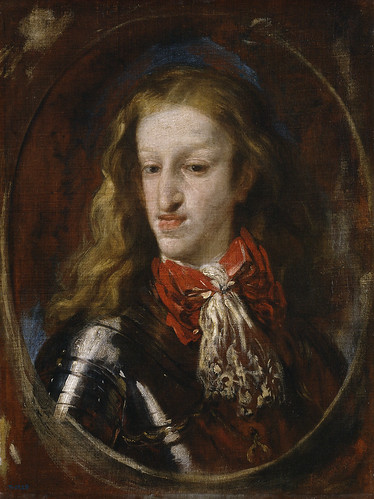
History Hit Habsburg Inbreeding with Dr Adam Rutherford. I can remember being fascinated at school when I learned about the Hapsburg Chin, an inherited characteristic that rendered one of the Hapsburg kings/emperors (King Charles II of Spain) unable to eat. And after listening to geneticist Dr Adam Rutherford, that wasn’t half of the health problems that were inherited through interbreeding in the family which resulted in a genetic density even stronger than a brother/sister pairing. As Rutherford points out, mathematically we are all inbred to a certain extent because although we each have 1 trillion ancestors over the last 1000 years (more than have ever lived), some people appear several times on our family tree. All those Who do you think you are? programs that trace everyone back to Charlemagne reflect this presence of common ancestors.

History Listen (ABC) I’ve listened to two of the three part series Dusted: The Human Cost of Mining in Australia, presented by Van Badham, whom I had only seen on television- she’s good on radio too. Part 1 Gold focusses on Bendigo and the prevalence of silicosis as a result of quartz mining which became increasingly important once the alluvial gold was exhausted. At the time, there was no clear distinction between ‘miners phthisis’ and TB, although now we know that silicosis makes the sufferer more susceptible to TB. In 1906 there was a link drawn between the use of machine drills and silicosis, but the miners themselves resisted using the water drills that reduced the danger because of water shortages, use of contaminated water, and the fact that it slowed down their work when they were paid on results. The fear that mines would be closed resulted in an acquiescence to the continued rate of silicosis among miners. Part 2 Coal emphasizes that the Australian coal industry already knew the dangers of coal dust from the experience of coal mining in England, and the unionism in coal mines kept the issue at the forefront. However, the coal companies fought hard to question the dangers of ‘black lung’.

History Extra We held a Thanksgiving dinner with friends, so it seemed appropriate that I listen to a podcast about Thanksgiving. Thanksgiving: everything you wanted to know features an interview with historian Rachel Herrmann who distinguished between the original Thanksgiving in 1621 and its manifestation as a national holiday in 1863. The original Plymouth colonists had nearly starved after their provisions spoiled on board ship, and there had been a 50% death rate during the first winter. The next season they managed to eke out enough food to hold a harvest festival, at which some of the men fired off their guns, as you do. This attracted the local tribes who, on seeing the meagre fare, brought in deer and wild birds to share with them. There were about ten years of relative peace between the colonists and tribes (with whom they signed a treaty) but this was ruptured with the Great Migration when the ships just kept coming. Sounds familiar. The second manifestation of Thanksgiving was in 1863 when Abraham Lincoln declared it a national holiday, after years and years of lobbying by magazine editor Sarah Josepha Hale. However, it was largely rejected by the Southern states, who saw it as a Yankee invention until the 1920s and Jim Crow legislation assured white supremacy – then they could embrace it.

Emperors of Rome Podcast Episode XCVIII – Caesar’s Gallic War discusses the books that Caesar himself wrote about the wars he waged between 58 and 50 BC. ‘Gaul’ consisted of present-day France, bits of Switzerland, Belgium and Netherlands. He actually wrote 7 volumes, but we don’t know if they were published year-by-year, or whether they were all published at the end. In either case, it gives us a rare glimpse into the mind of the commander of a war. They are written in the third person which perhaps sounds a bit arrogant, or maybe it was because in a predominantly oral culture they would be read aloud, and Caesar didn’t want people to impersonate him when reading if he used the first person. Episode XCIX – Q and A IV was a question and answer session. The questions I most enjoyed were: Was Livia the scheming sociopath that Robert Graves portrayed? (Their answer: there is evidence in the sources that she was, but the sources themselves were hostile. Stepmothers nearly always get a bad rap). How did the Romans picture the shape of their empire? (Their answer: they did have maps, but we have lost them and only have textual descriptions of the empire. It sounds as if their maps were more like those RACV strip maps you used to be able to get, highlighting towns and geographical features rather than being accurate in scale). What were Roman naming conventions? (Their answer: really complex but for women they would use a variation of the father’s name and give the same name to several sisters. Even though women married, their allegiances and identities were still tied up with their father’s family). Would Donald Trump make a good Roman Emperor? (Their answer- even though they were reluctant to give it- no, he would be bad because he is unpredictable and he goes through too many staff).

Expanding Eyes Podcast It’s too hard to listen to Homer’s Iliad through You Tube episodes, so I have succumbed to an audio version from my library which uses the W H D Rouse “plain English” translation. I feel as if I am cheating a bit, but it works well as an audio. Anyway, I’m up to Episode 50 in Mike Dolzani’s Expanding Eyes series Episode 50: The Tide of Battle Turns, The Achaeans driven back to their own defensive walls, a Second Assembly called to deal with this. which pretty much sums it up. He is moving to Book 9, but first he backtracks to books 7 and 8 . In describing the battles (at length), Homer goes a bit historical on his readers because he describes big shields and long arrows, which were no longer in use – although perhaps this is because he was harking back to the golden age of Greek power. In Book 8 Zeus decided that he needed to start to honour his promise to Thetis to help the Trojans (at least for a while), and knowing that the other gods would criticize him, he calls a meeting of the gods and tells them that he’s the boss. There is a long retreat and the Achaean are backed up against their own boats with the Trojans surrounding them. In Book 9 Agamennon is in tears over the situation and decides to throw in the towel – so we see his weak leadership yet again- but Diomedes stands up again, and he and Nestor suggest going to Achilles to try to encourage him again to join the battle for the Achaeans. Agamennon overeggs the pudding with the offer of sweeteners if Achilles will just came back and fight for them, and he sends off Achilles’ friends as envoys to talk to him.