
Some rather belated podcast listening reports.
Reflecting History Episode 12 The Social War- The Tyranny of Deterioration. This is the final of the three-parter on the Social War, which has drawn heavily on Philip Matyszak’s work. He focuses on Marius- the quintessential politician, who appeared to be populist but behind the scenes was a great underminer, and Sulla, respected by patricians but also ruthless. Marius and Salpicius fomented riots, which gave them the excuse to take over, but Sulla saw Marius’ actions as unconstitutional and turned his troops towards Rome, took the city easily and established himself as dictator. It’s hard to tell whether this was opportunism, or from a deep sense of honour. Cinna was elected consul, but as soon as Sulla left to fight Mithridates, he brought Marius back and together they embarked on revenge against Sulla’s supporters. But then Marius died, so the showdown between Marius and Sulla never occurred. Sulla joined forced with the young Pompey and his private army and Crassus with his wealth. In 82 BCE the Social Wars finally came to an end when Sulla marched on Rome and revived the role of Dictator which had been in abeyance for 120 years and killed 5000 people on the proscription list to wipe out any opposition (and take their wealth while he was at it). But the underlying issues never went away, and now there was a precedent for violence if your own private army was big enough. Overall there was a loss of faith in the system- so perhaps this can be seen as the end of the Roman Republic.
History Extra Great Reputations Oliver Cromwell. I’m on a bit of an Oliver Cromwell kick at the moment. This episode features Ronald Hutton (author of The Making of Oliver Cromwell 2021) and Mark Stoyle, who has worked on the English Civil Wars. I couldn’t really distinguish between the two guests’ voices, but one of them described Cromwell as a ‘puritan Jihadist’, whose religious zeal and desire to keep up with the radical fringe of the movement – especially the army- kept pushing him on. The Battle of Marston Moor in 1644 was a turning point in his career, although one of the historians suggested that the Parliamentary forces probably would have won without him. Cromwell took a huge army to Ireland, where they undertook two huge massacres, although there is only inconclusive evidence that the battle of Siege of Drogheda was the bloodbath that myth claims it to be- he certainly killed soldiers, but maybe not all the women and children. He was not trusted by his contemporaries because his zealotry always outpaced that of the nation. Even the Puritans were worried about his radicalization. His regime crashed six months after his death, but his reputation was rehabilitated with the publication of his letters and writing by Thomas Carlyle in the 1840s, and some twenty years ago he was voted the 3rd greatest Englishman (after Elizabeth [not sure which one- Elizabeth I or II] and Churchill.
History Hit Europe’s 1848 Revolutions looks at the continent-wide revolutions of that year, some of which brought permanent change; others not. Even though we identify 1848 as THE year, there was actually turmoil in the preceding decade, brought about by a literate population exposed to a new public sphere through the press, economic changes and the long-term effects of the Napoleonic Wars, which saw nations mobilized for some time afterwards. Nationalism was a progressive force at that time, with the desire that ethnic and geographical borders should be the same, and based on emotion and knowledge (especially knowledge of language). Women were included in nationalism, especially compared with liberalism which was male-dominated. Europe at the time was still dynastic, and in some of the revolutionary movements we see a form of pre-Marxian socialism. The decade of unrest had started with a wave of revolutions in the 1830s (cue ‘Les Miserables’) when through a thickening of communication channels, there arose a sense of Europe. There was a revolution in Switzerland (Switzerland!) in 1847, and it spread to Sicily, Paris and Berlin. At first the waves of revolution were very successful. However, the liberals, students, peasants etc. had differing demands, which became even harder to reconcile once the revolution was successful. Conservative forces dealt themselves back into the equation by playing radicals and liberals (who actually feared the radicals themselves) off against each other. In other places, the monarchy regained its nerve and imposed its authority. Some constitutions survived e.g. Switzerland, Denmark, the Netherlands, Prussia and Piedmont. In other places, defeat was instructive. It led to the rise of Marxism and the advent of social democracy. Even where monarchy triumphed, it wasn’t the same- no longer could it refuse constitutional change outright. The episode features Christopher Clark, author of Revolutionary Spring.
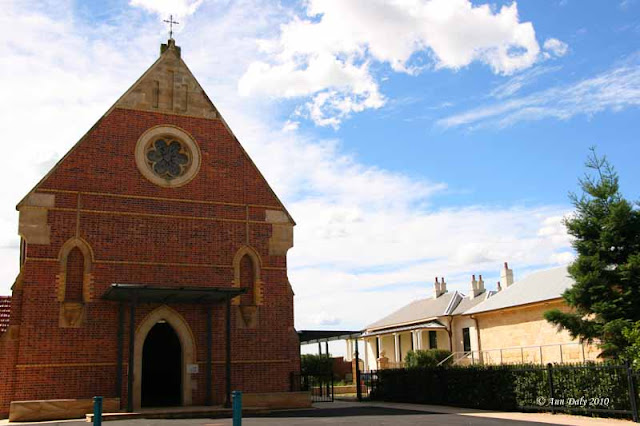
The History Listen (ABC) The Missing Magdalens Being a northern-suburbs Melbourne girl, I’ve long been aware of the Magdalen laundry at Abbotsford Convent, but the presenter of this podcast, Donna Abela, was completely unaware of the Magdalen laundry at Tempe, on the Cooks River in Sydney. Here she talks with Dr Kellie Toole from Adelaide Law School, whose M.A. thesis ‘Innocence and Penitence Hand Clasped In Hand Australian Catholic Refuges For Penitent Women, 1848-1914’ (2010) is available online. (Could be an interesting read). The pastoral station Tempe was purchased in 1885 by the Catholic Church as a refuge for ‘penitents’, located on the outskirts of the town. It only closed in 1983, although its emphasis had changed after changes to the Child Welfare legislation.
The Fall of Civilizations. I’m off to Cambodia very soon, and I don’t want my only knowledge of Cambodia to be the Killing Fields. So, I’m listing to Paul M. M. Cooper’s podcast The Kymer Empire: Fall of the God Kings It’s long, but excellent. He starts with the ‘discovery’ of Angkor Wat by Portuguese missionaries Antonia de Madalena in 1586, who although he died in a shipwreck before returning to Europe with the news, wrote about this magnificent, deserted ruin. The people might have left it in the mid-15th century, but it was never ‘lost’ as such because monks and farmers still lived there. Even then, it was more magnificent than anything that could be found in Europe. They were more advanced in other ways too, with an alphabet, and concepts of zero (something I have always struggled with, alas). There were three factors that led to the success of the Kymer empire 1. The concept of a God-King, which drew on Indianized ideas of the organization of society 2. efficient taxation, where elites competed against each other to raise taxes, some of which they kept for themselves 3. skill in water engineering, leading to the creation of two huge reservoirs. But each of these strengths was to carry the seed of failure. 1. To maintain the God-King authority, they had to maintain the Hindu religion, an Indian import, against the Buddhism of the common people. King Jayavarman VII introduced Buddhism, which was reflected in Angkor Wat where earlier Hindu iconography was replaced with Buddhist sculpture. 2. Both the people and the land were over-taxed. 3. The water system failed. This could have been prompted by the Little Ice Age in the 15th century which caused long 30 year droughts, interspersed with devastating floods. Here’s a cautionary tale for us: during the first 30 year drought- absolutely unheard of- they changed the meandering design of their canals to avoid evaporation and bring water direct to the city, but when the floods came they just rushed down, bursting the reservoirs (and we’ve seen with Libya what that means). We can’t know whether people left because the infrastructure failed, or whether the infrastructure failed because the people left it untended. Either way, by 1431 during the final siege of Angkor Wat by Thai troops, the city was abandoned. The jungle, and particularly the destructive banyan tree, soon took over the city. This was a fantastic podcast – and it whets my appetite to visit Angkor Wat (next trip, perhaps)
 The Resident Judge of Port Phillip