
If You’re Listening (ABC). Because I am learning Spanish, I take quite an interest in Latin American affairs and events. I just can’t imagine what it would be like to live in a society with 100% inflation. In The decision that saved Australia from Argentina’s 100% inflation nightmare Matt Bevan starts by looking at life in Argentina, where the monthly food bill has increased from $4000-$5000 per month five years ago to $35,000 per month today. Yet restaurants are full, because there is no point saving for anything because the value of the money will decrease so quickly- better to spend it while you have it. In 1951 Australia and Argentina were almost twin economies, and both were facing inflation on account of America’s expenditure on the Korean War. The war caused scarcity of wool, meat etc. – both of which were export staples for both countries- brought large and unexpected wealth to both countries, and both were facing inflation. In Australia, Country Party treasurer Arthur Fadden greatly increased income tax, which people screamed about, but which eventually reduced inflation. In Argentina, on the other hand, the Perons were in power, and they spent the windfall on popular policies like food subsidies, printing money to meet any shortfall. Ever since they were removed in a military coup, the Argentine economy has been like a rollercoaster, with the one constant being a high rate of inflation. The stimulus measures under COVID have triggered another disastrous bout of inflation, leading to the current situation.
Reflecting History Episode 59: The Fall of the Roman Republic Part V-The New Normal The slave rebellion led by Spartacus in 73BCE was put down by the warlords Pompey and Crassus, making Pompey the most powerful man in Rome by 71BCE. He was successful militarily, and like Putin with Prigozhin and the Wagner group today, Pompey resisted disbanding his private army but eventually did so. Crassus was very wealthy, and as for Julius Caesar, he was amiable and saw himself as heir to the populare tradition. Meanwhile, the Senate had its own personalities. Cato was old fashioned, while Cicero was a smart-arse. The Cataline conspiracy in 63BCE was an attempted coup d’etat to overthrow the consuls Marcus Tullius Cicero and Gaius Antonius Hybrida. Cato wanted to execute the conspirators, but Caesar said no, showing that the battlelines that would crystallize during the Civil War were already apparent. Meanwhile, Pompey was trying to get land reforms through, so that his veterans could be rewarded after battle, all leading to a political gridlock. Caesar was in Spain, inciting uprisings so that he could have victories that he could celebrate with a triumph back in Rome. He wanted to stand as Consul again, but that involved him physically being in Rome. In the end, Caesar Pompey and Crassus decided to form what came later to be known as the First Triumvirate as a way of getting things done now that everything had come to a standstill. It wasn’t actually a three-way form of governing: more, it was them just agreeing not to get in each other’s way while they did what they did best (make money, fight, get legislative reform etc). They were not actively looking for the end of the republic, but they did draw on popular anti-establishment feeling. Caesar got his Consulship and he read Pompey’s land reform bill sentence by sentence to the Senate, getting their assent in the particulars, and then arguing that if they agreed with each sentence, then the Senate had to agree with the whole. He then took the bill to the people, thereby by-passing the Senate. One of Caesar’s big mistakes was to not reign in Publius Clodius Pulcher, who managed to gain entry to the female-only Bona Dea religious rites, disguised as a woman, apparently with the intention of seducing Caesar’s wife Pompeia, but was discovered in the course of the evening. Pulcher then renounced his noble status so that he could stand as Tribune of the plebs- all very irregular. In the chaos that followed, Pompey became Dictator in Caesar’s absence. By this time Crassus was dead, and so was the Triumvirate. Caesar wanted yet another Consulship (again, very irregular) and by now Pompey was representing the system. We’re heading for war.
The Documentary (BBC) Heart and Soul: German, soldier, Jew. After what happened during the Holocaust, would Jewish Germans want to join the army? Yes, today there are 300 practising Jewish military personnel, and since 2021 they have had their own chaplain, the first chief rabbi in 90 years. The first Jew to join the post-war army was Michael Fürst who enlisted in 1966. He was criticized by his Jewish friends in the United States for doing so, but his family supported him. He saw himself as German first, then a Jew. However, at this time there were still World War II soldiers in the ranks, and they were very resistant to giving up the ‘hooked cross’ (i.e. swastika) iconography in their uniforms etc. The first Jewish woman enlisted in 2006. She had converted to Judaism as a teenager, and went to a Jewish school. Conscription was still in force in Germany until 2011, but Jews were exempt. Now in the German army, soldiers need no longer follow orders without question: instead they need to follow their own conscience.
Let’s Talk About Sects. Ep. 38 The Brisbane Christian Fellowship sounds so benign, but it’s not. It was the subject of a Four Corners investigation and a book by Morag Schwartz Apostles of Fear: A Church Cult Exposed. All the usual components are here: the powerful leader who creates his own family dynasty of leadership; the shunning; the threats. And all in plain view in Brisbane and Melbourne.
The Daily (NYT). Australians are familiar with bushfire, and watching the footage from Hawaii and Canada looks like a re-run of Black Saturday. But I hadn’t quite registered the horror of wildfire (I’ll go with their term as I’m talking about Hawaii) during a hurricane. How a Paradise Became a Death Trap is gripping listening, as Ydriss Nouara, a resident of Lahaina and the pool and grounds manager of a Hilton property, tells his story. The idea of having to swim amongst the huge waves whipped up by the hurricane in order to escape the fire, and of winds that literally flayed your body is just horrific.
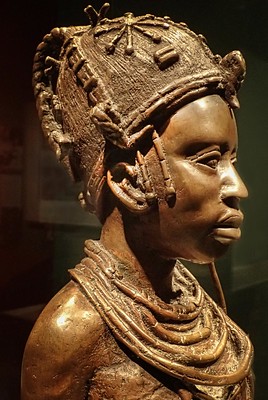
History Hour (BBC) This program compiles episodes of ‘Witness History’ into one longer podcast. Judy Garland’s Legacy and the Benin Bronzes is a bit of a hodge-podge, as you might imagine by the title. There’s a segment on the theft from the Judy Garland Museum of one of four pairs of Dorothy’s slippers from the Wizard of Oz, and then an interview with Rosalyn Wilder who was responsible for getting the ailing and broke Judy Garland on stage during her appearances at the Top of the Town. There’s an interview with Retired police officer Tim Awoyemi, whose chance encounter led to the return of two of the looted Benin Bronzes, ancient artworks which were among thousands stolen from Benin City by the British Army in 1897. Finally, there’s an interview with Matt Berger who discovered the Australopithecus sediba fossil in South Africa as a 9-year old boy, fossicking with his father in 2008. It’s rather sweet to hear his interviews at the time, and then his reflection back on the discovery now.
 The Resident Judge of Port Phillip