
Faithful Politics. I prepared a session on religious (especially Pentecostal) nationalism for my Unitarian fellowship, and it has taken me to Christian podcasts that I wouldn’t normally (ever) listen to. Seven Mountains Mandate with Katherine Stewart features Katherine Stewart, an investigative reporter who has published The Power Worshippers: Inside the Dangerous Rise of Religious Nationalism. Fortunately, only the political host Will Wright (former atheist, liberal progressive) was on this episode, because the republican conservative Pastor Josh Burtram was absent. She sees Christian nationalism as a combination of ideology and a political phenomenon that exploits religion as a quest for power. Seven Mountains dominionism is the conviction that hyperconservative Christians should rightfully dominate the main peaks of modern civilization in the United States and, ultimately, the world. It is very much a leadership driven movement, utilizing pastor networks- those same pastors that we saw circling Trump and laying hands on him. She mentions groups like the Family Values Research Centre and the New Apostolic Reformation.
The Philosopher’s Zone Gaslighting was chosen as the Merriam-Webster Word of the Year for 2022. This episode, featuring Paul-Mikhail Catapang Podosky, Lecturer in Philosopher, Macquarie University Sydney, looks at the phenomenon of gaslighting philosophically, pointing out that it is a form of testimonial and epistemic injustice. It is generally inter-personal, between people of differing power relations although he explores whether it can be structural as well- has Trump ‘gaslit’ a nation or is that he has given licence for people to gaslight others at an inter-personal level? But am I gaslighting if I think that the bar for ‘moral gaslighting’ seems very low?
The Explanation (BBC) Unspun World: What’s it like reporting on the war from inside Russia? Not just Russia- the venerable BBC reporter John Simpson speaks with foreign correspondents from Russia, Myanmar where no-one seems to be taking any notice of the civil war, Croatia where tensions are rising again and China about Covid. It seems that the fingers of the Wagner group are all over quite a few of these hotspots.
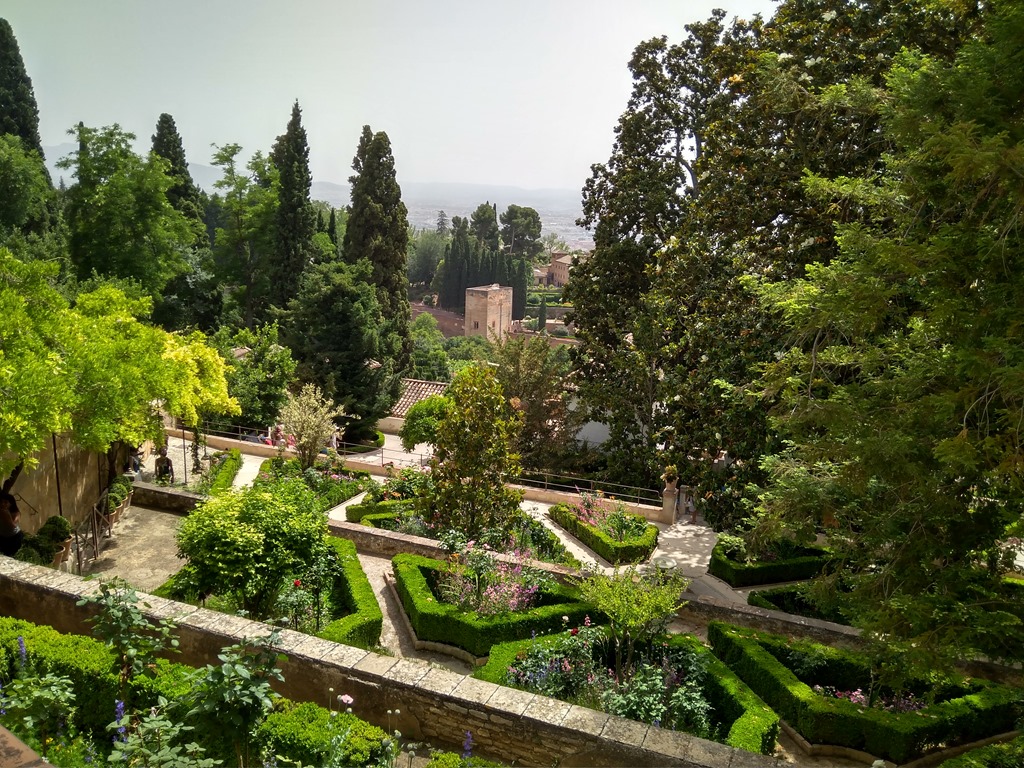
You’re Dead to Me Al Andalus features Prof Amira Bennison and comedian Fatiha El-Ghorri discussing Al Andalus between 711 and 1492. The Muslims moved in after defeating the Visigoths. Abd al-Rahman escaped to the Iberian peninsula, fleeing the Abbasids, who had overthrown his family in Damascus. He conquered Córdoba, where he proclaimed himself emir in 756, and made it an important centre of culture and learning. One of Cordoba’s most important people was Ziryab, a polymath, musician and ‘influencer’ who led changes in hair, clothing and meal etiquette by introducing the idea of courses. In 929 Abd al Rahman III declared himself Caliph. In the late 900s, there were rebellions and civil war and the Christians began moving down. In 1086 the Almoravid ruler of Morocco, Yusuf ibn Tashfin, was invited by the Muslim princes in Iberia to defend them against Alfonso VI, King of Castile and León, and he managed to hold the line for another 100 years or so. In the ‘nuance window’ section of the podcast, where the historian is given 2 minutes to be serious, Prof Amira Bennison questions the idea that the ‘Golden Age’ was marked by conviviencia, the peaceful co-existence of Muslim, Jewish and Christians within Al Andalus. She argues that this is a 20th century idea, created by General Franco’s opponents. She also highlights the continual movement of people across the strait of Gibraltar over time- it wasn’t necessarily an ‘invasion’.
Reflecting History Episode 58: The Fall of the Roman Republic Part IV-You Win or You Die. By now, violence was normalized, opening the way for Gaius Marius- the outside, new man, who once he had become consul, changed the regulations so that landless men could join the army. He had multiple terms as consul, pretending to still be on the side of the populares in terms of land reform but betraying them at the last minute. Violence and overpopulation were still problems, and there was the increasing anger of the Italian allies which led to the Social War – rather ironically, a war between Rome and its allies to unite themselves (instead of a war over independence). Marius and Sulla turned the tide, but then Rome decided to give the Allies what they wanted anyway- Roman citizenship. Sulla was able to take advantage of the war against King Mithradates to assert himself over Marius. When his troops triumphed over those of Marius, he put himself back in charge and went off to fight the war, without realizing the enormity of what he had done by spilling Roman blood on Roman land. Sulla took power and ruled as dictator, although he would have said that he was returning the republic to what it was before Marius corrupted it. He killed his enemies, proscribed them to that others would kill them, and confiscated their property. But he also introduced reforms like making equestrians part of the Senate, ensuring that tribunes could no longer by consuls, putting time limits on tenure. But when he retired in 79BC, he hadn’t really solved anything.
History This Week History’s Undelivered Speeches features speech-writer Jeff Nussbaum, author of Undelivered: The Never-Heard Speeches That Would Have Rewritten History. As speechwriter for Vice-Presidents Biden and Gore, and Senate leader Tom Daschle, he understands the role of the speechwriter, and the fact that politicians sometimes write their own speeches without any assistance. He looks at Richard Nixon’s resignation speech, which Nixon’s own speech writer Ray Price wrote on his own initiative, hoping that Nixon would use it instead of the non-resignation speech that Price also wrote. Interestingly, the two speeches (resignation and non-resignation) used the same arguments to different ends. He then discusses General Eisenhower’s alternative D-day speech in the event that the US troops were overrun and stranded. In writing it, Eisenhower edited out the passive voice, taking responsibility instead for the decisions he made. Apparently General Grant said “‘I’ am a verb”- which is an interesting thought. Finally, he looks at Hillary Clinton’s victory and concession speeches after being defeated by Trump. If she had won, she would have cited her mother’s life and the changes that had been wrought in that time; when she lost, she apologized.
 The Resident Judge of Port Phillip