
The Real Story (BBC) We have been watching the riots in France at the moment, sparked by the point-blank shooting of a teenager at a traffic stop and the initial lying by police, with a mixture of horror and fascination. Fascination that the concept of the ‘mob’ which has been so historically important in French history still has power; and horror at the thought that such destruction of public infrastructure- especially schools- is occurring without apparent deterrence. Understanding the unrest in France features Rim-Sarah Alouane, a French legal scholar and commentator at the University Toulouse-Capitole in France; Professor Philippe Marlière, Professor of French and European Politics at University College London and Laetitia Strauch-Bonart, French writer and Editor at the right-leaning French news magazine L’Express. They are joined by Natalia Pouzyreff, an MP from President Emmanuel Macron’s Renaissance party and Inès Seddiki, founder of GHETT’UP, an organisation which works with young people in France’s suburbs. The right/left split is just as obvious in French politics as it is elsewhere in the world, with Strauch-Bonart repeating the ‘pull yourself up by your bootstraps’ ideology of the right and Seddiki repeating the ‘it’s the system’ ideology of the left. There is a lot of discussion about ‘Frenchness’ and racism, and there are certainly no answers here.
Background Briefing (ABC). As far as I am concerned, if a private hospital or school takes public money, then they cannot insist on their ethos or rights of conscience to refuse public services. Full stop. I am so angry that The little-known religious code ruling many major public hospitals sees women refused legal terminations or reproductive surgery at the public hospital that covers their catchment. This episode includes an interview with Fiona Patten, who tried hard to get this changed. What a loss to politics her failure to get a seat was (I’m showing my political allegiances here).
History Extra How Did Medieval People Tell the Time? We tend to assume that medieval people couldn’t tell the time, but in fact mechanical and natural-based clocks co-existed. There were different concepts of time: linear time; religious time (the Middle Ages everyone thought that the world was about to end) and the ages/stages of man view of time. Features Gillian Adler and Paul Strohm the authors of Alle Thyng Hath Tyme: Time and Medieval Life (Reaktion, 2023).
Emperors of Rome Podcast Dr Rhiannon Evans is back! Here she pedals backwards to the 2nd century CD to present a mini-series on the Fall of the Roman Republic. Episode XCI – The Roman Constitution The Romans themselves dated their history back to 509BCE after throwing out the kings the previous year. The Athenians were doing much the same thing at the same time, but Athenian democracy was more direct and more radical. Before then, the legal system relied on precedent, and the Senate had authority but not power. There were two consuls, with a one year time limit, who could veto each other and could lead armies. Sulla put age limits of consulship, and as a result lost favour with particular families. There was not a lot of Government activity, beyond the corn dole and there wasn’t a great deal of government building. Only very wealthy, elite men were involved in government so it was an oligarchy- not monarchy, and not democracy. Voting was by college, assigned by property holdings, and it was weighted towards the oligarchy. It changed over time, with the rise and then diminution of the importance of the plebs. After the Succession of the Plebs in 495 BC, the Tribune of the Plebs had veto power, but it also skewed to vested interests over time. The role of dictator was temporary only (6 months). However, this system was beginning to face problems which would eventually lead to the fall of the Roman republic : armies became loyal to their own particular general, and land was bought up by the rich, leading to a large population of the landless poor.
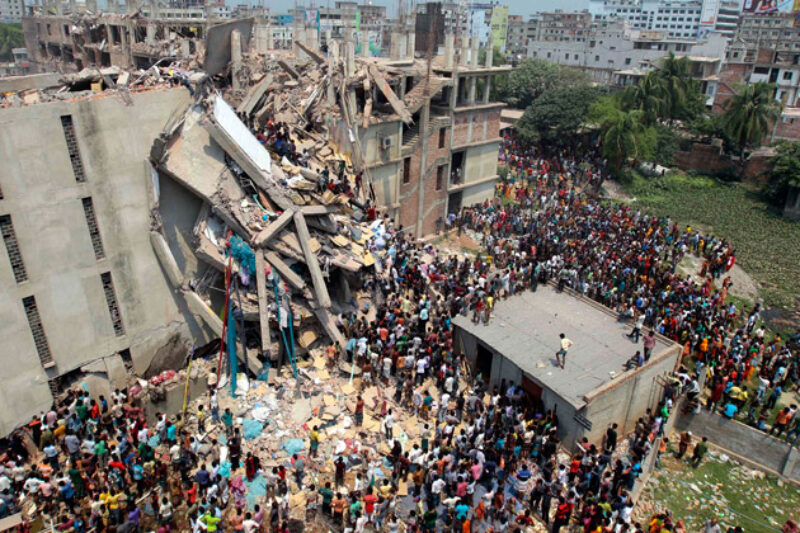
The Documentary (BBC) Bangladesh’s Clothing Conundrum Most of us only really became cognizant of the growth of Bangladesh’s clothing industry with the collapse of Rana Plaza in 2013 when 1100 of its 5000 workers died (5000 in one building!) Since then Bangladesh has tried to reinvent its image: it has brought in safer working conditions and is positioning itself as a sustainable green textile producer (e.g. changes in dyeing processes; water conservation). This has led to an increase in costs (estimated at about 15% i.e. 13 cents for a $3.00 t-shirt), but this isn’t really being handed on: instead it is at the expense of the 3.6 million workers directly employed in the clothing industry, 1/4 of whom are on the lowest wages.
 The Resident Judge of Port Phillip