
Now and Then. As The Donald keeps getting into legal trouble, Heather Cox Richardson and Joanne Freeman turn their attention to Presidential Lawyer Problems. I mean, who could forget Rudy Giuliani’s hair dye? They look at the role of the personal lawyer, who looks after the president himself and differentiates him from the lawyer for the Office of the President, the White House Lawyer. They then turn their attention to personal lawyers to Presidents in the past. They explore conservative Unionist lawyer Reverdy Johnson’s effective role in helping President Lincoln to find legal rationale for escalations in the Civil War, as someone politically opposed to him and an honest sounding board. Then they look at Nixon’s lawyer-fundraiser Herb Kalmbach, who funnelled money to the Watergate burglars and was eventually sentenced to 6 months prison, not for Watergate but for earlier dodgy fundraising schemes.
The Full Story (The Guardian) What would a second Trump term mean for Australia? My God, what a terrible thought. Bruce Wolpe, author of Trump’s Australia discusses the potential for a second Trump term to unleash a wave of vengeance for his 2020 loss. Not that Wolpe necessarily thinks that it will come to pass: he suggests a more than 50% chance that Trump will win the nomination but a less than 50% chance that he will win a second term. He predicts that Trump would give over Taiwan quite easily, but that Congress won’t let him. He suggests that Trump might agree with AUKUS, but will dismiss Albanese as a lightweight and rethink the commercial arrangements. So what should Australia do? look for other alliances in the region, e.g. France or even NATO, and make trade and business ties with Congress.
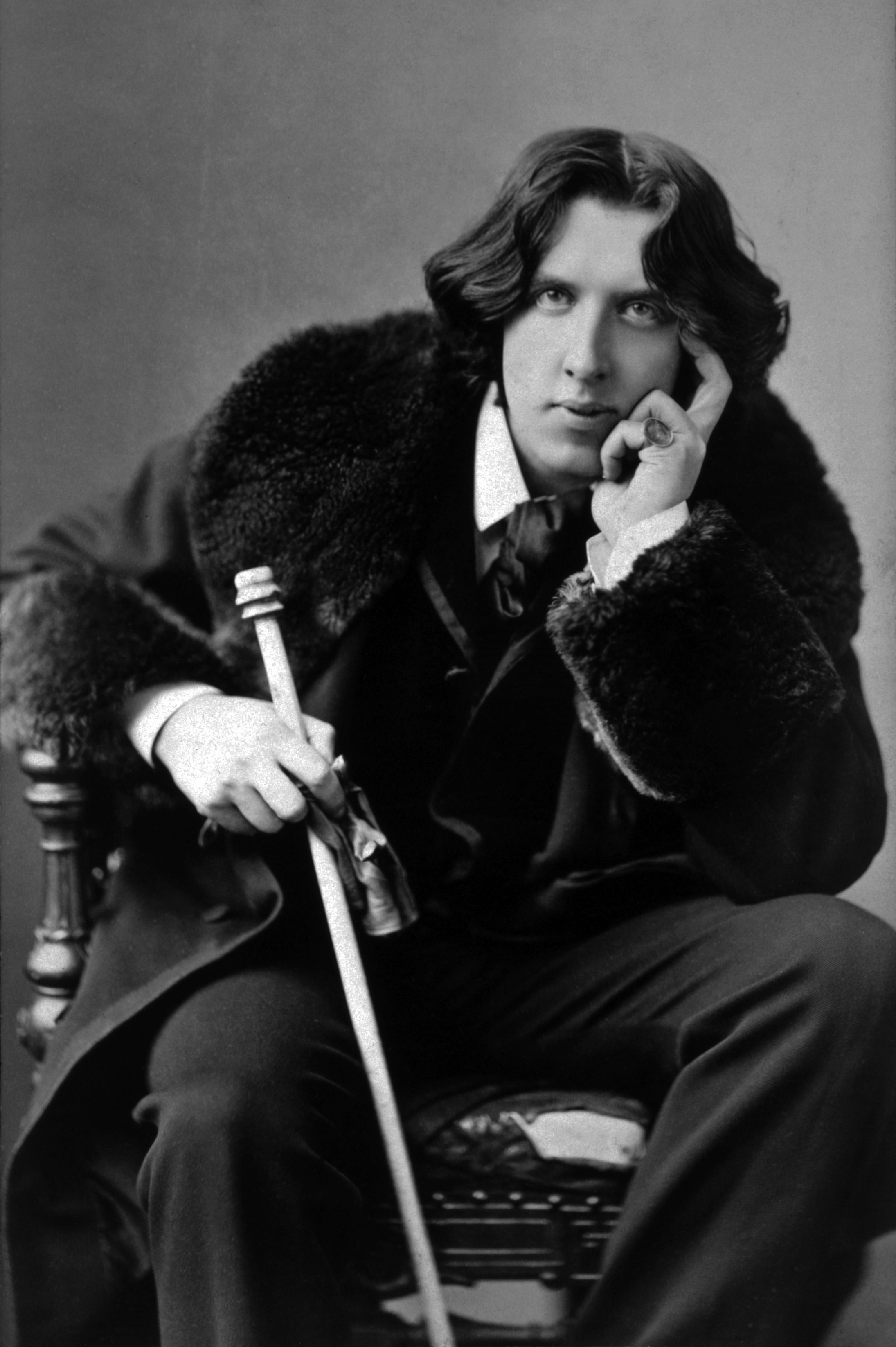
The Rest is History. This is a two-parter. Ep. 341 The Trials of Oscar Wilde: Sex and Scandal initially brought to mind the recent defamation trial of Ben Roberts-Smith. Could two men be more different? Well no, but what they had in common is that they both launched a libel/defamation trial that brought more trouble on them than the original publication had. Wilde was intellectually brilliant, a professional aesthete and an international star. Although he became a by-word for decadence, when he was younger he was actually quite prim, and Robbie Ross (who comes over as the real villain of the story) seduced him in what was a toxic relationship. In 1885 the Buggery Act, proclaimed under Henry VIII, was amended ostensibly to stop the ‘white slave’ trade, making ‘indecency’ a misdemeanour that could be punished by jail. By mounting the libel case, Wilde was hoping to draw on German research that was arguing that homosexuality should be decriminalised and to highlight the concept of uplifting Greek, classical love. Wilde lied to his lawyer, denying that there was any truth to the Marquis of Queensberry’s accusations, and when things started going south, he dropped the case but the Marquis wanted to continue. The British government, which was not unsympathetic were afraid to not prosecute him for indecency lest they be accused of a coverup (especially as there was an accusation that Prime Minister Lord Rosebery was homosexual and had had an affair with the Marquis of Queensberry’s eldest son). The magistrate in the case gave an order 15 minutes after the last train for the French ferry had left, as if he wanted Wilde to escape. Episode 342 The Trials of Oscar Wilde: Downfall and Prison points out that the “love that dare not speak its name” speech was off-the-cuff, in a trial not about Bosie, but in a trial about waiters and delivery boys. There was a strong case against him, and the public mood moved away from him. He was sent to Holloway Prison while Bosie ran away. If anything, the judge was biassed towards Wilde, and his summing-up for the jury was favourable towards Wilde, but he had just been so damned reckless. There was a hung jury, and it went to a third trial where Wilde was found guilty and sentenced to 2 years jail with hard labour (the maximum sentence). He was by now a broken man, even though he still had the support of some MPs and was sent to Reading Gaol, which was a much less onerous sentence. So, although he is now seen as a martyr, he was not particularly persecuted, and his recklessness and ego brought him undone.
Emperors of Rome Episode LXXXV – Black and White Septimius Severus is proclaimed the new Emperor of Rome, but doesn’t have time to rest on his laurels. First he has to go after the two other claimants to be emperor: Pescennius Niger and Clodius Albinus. First he went after Niger in Syria, although it took him a year to finally kill him off. But killing off your rivals wasn’t the way to get a much desired triumph: he needed an international rather than civil war victory. So he started the First Parthian war. Then he went after Albinus, who, although co-Consul must have known that it would eventually come to this, and killed him too. Within Rome itself, he demanded that Commodus (of all people) be deified and proclaimed himself to be the adopted son of Marcus Aurelius (which was bullshit). He purged the Senate of the men who had supported Niger and Albinus and raised the pay of soldiers for the first time in 100 years. So, after all this, he had got rid of all opposing forces and everyone was pretty much on board with him. Episode LXXXVI – Ascent to Greatness, However Steep and Dangerous He won the Second Parthian War then travelled the Empire, especially Egypt, accompanied by Plautianus, his praetorian Prefect, who was not popular. He returned to Rome to celebrate his 10th anniversary, but only spent a few months there. His celebrations were lavish, with 10 pieces of gold per head awarded to each Roman citizen, and many building works embarked upon so that he could put his name on them.. His eldest son married Plautianus’ daughter. In 204 CE he celebrated the Secular Games, an old Roman tradition which had fallen into disuse, with the last one held in 88CE under Domitian). By now, all his rivals were gone, he had two sons and was riding high. What could possibly go wrong? Episode LXXXVII – Severan Stories I is the first of a couple of episodes which pick out specific events and dates in Septimius Severus’ life. Episode I: Plautianus, who had been given more power than any other Prefect, headed for a fall when rumours began circulating that he was conspiring against Septimius, and he was killed in 205CE. They cut off his beard. Episode II: Septimius’ sons Antoninus and Geta were constant rivals (there was only 9 months between them), and the Emperor worried about their behaviour and indulgences during the idle days in Rome. Episode III: Septimius had a close relationship with his wife Julia Domna, and the empire respected her as the mother of the dynasty. She is remembered as having a keen political mind and being a patron of thinkers, but she wasn’t always respected in the palace.
Dan Snow’s History Hit Episode 4: Story of England: Industrial Revolution. Although Dan Snow starts this episode in Ironbridge in Shropshire, he points out that the Industrial Revolution had different manifestations in different locations, depending on natural resources provided by geology and geography. The Industrial Revolution created a change of pace, with the middle class intent on networking, while the older landed class didn’t know how to handle it. The marriage of new and old money created a dream team for industrial entrepreneurialism. It was a time of consumption- food (especially pineapples) and clothing, and the scandals of Georgian society. George I was not popular, being seen as a grumpy German, and while George II was good at PR, he wasn’t as popular once he became king. It was George III who really engaged with the British public and, ironically, the sicker and more deranged he became, the more popular he was.
 The Resident Judge of Port Phillip
