Monthly Archives: June 2023

‘Ghosts of the Orphanage’ by Christine Kenneally

This review includes references to physical and sexual violence against children.
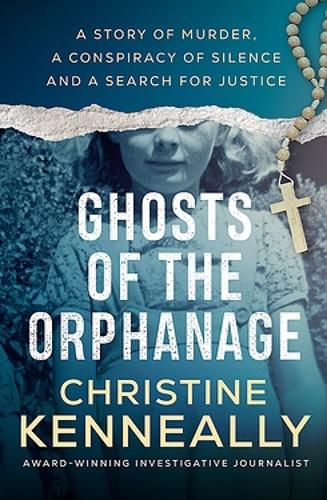
2023, 324 plus notes

I remember a conversation between two women my age, both lifelong Catholics, whose children had all attended Catholic schools and whose extended family rhythm moved along the course of baptisms, first communions, confirmations and weddings. Their sense of outrage by these revelations of predatory priests, shifted from church to church by the hierarchy and the secrecy and obstruction which had hidden it for decades, was almost palpable. There was a gender element to it as well: that ‘good women of the parish’ had been betrayed by powerful men into handing their children over to a dangerous situation, where the authority of the priest was so paramount that no questions could be asked for a long time.

One step further again, though, is the accusation that nuns, too, perpetrated acts of physical and sexual violence against the children in their care. Not the angry, strap-happy sister of the local Catholic school -and let’s face it, many State school children have memories of shrieking teachers, the ruler and the cuts too- but the constellation of nuns and chaplains who surrounded children in church-run orphanages, where there was no escape to home, family or outside influences. Yet this is what Christine Kenneally encountered, skeptically at first, when writing first about Geoff Meyer, who lived at Royleston at Rozelle Bay in Sydney (you can read her 2012 essay The Forgotten Ones from The Monthly online) which led her on a ten-year search that took her to Vermont U.S., Canada and Scotland. Looking back, she realized that she had brushed against the system herself when she as a Catholic schoolgirl, attended a theatre camp run by Father Michael Glennon, later convicted of sexually abusing 15 children in court cases that spanned 25 years, who regularly visited a boys’ orphanage called St Augustine’s, Geelong. She was not a victim: but many other traumatized adults that she found as part of her search across Western orphanages were.

This book is the story of this search, with particular attention paid to St Joseph’s Orphanage in Burlington, Vermont, an institution run by the French-Canadian Sisters of Providence that operated from 1854 to 1974 which the author, Australian-born Christine Kenneally (no, not the Canadian-born Australian ex-parliamentarian) exposed in a Buzzfeed article in 2018 We Saw Nuns Kill Children. Her report drew heavily on the account of Sally Dale, who lived at St Joseph’s between the age of 2 and 23, with a short period where she lived happily with a family until she was returned to the orphanage. She claimed that she had seen a boy die after being pushed out of an upper-story window by a nun; that she had been forced to kiss a boy in a coffin who had been electrocuted by an electric fence when trying to escape; that a little girl who was tormented by the nuns to make her cry later disappeared; and that she had seen a boy drown after being rowed out onto the lake by nuns. So many deaths- surely there’s something wrong with this woman? I found myself thinking, and although finding her a compelling witness Christine Kenneally did at time too. That was until she stitched together details from other St Joseph’s children, along with death certificates and snippets of information from depositions and courtcases that seemed to go nowhere. There is so much violence reported here by multiple children: a boy deliberately locked outside on a freezing night, a girl with her hand held over fire, an ‘electric chair’ type of contraction, locked cupboards, an attic…. it just goes on and on, and I must confess to becoming confused about who told what.

Although the book focusses on St Joseph’s, she found what she describes as “an invisible archipelago” across the Western world, marked by large, dark manor houses, most 2-4 stories in height, looming large and solitary.

…they belonged to an enormous, silent network. In fact, between St Augustine’s in Victoria, Australia and St Joseph’s in Vermont, United States, existed thousands of other institutions like them: Smyllum Park orphanage in Lanarkshire, Scotland; the Bon Secours Mother and Baby Home in Tuam, Ireland; the Mount Providence Orphanage in Montreal, Canada.

p. 13

She found that the same abusive practices recurred in a litany of pain: bed-wetters having their cold sheets draped over their heads while they were paraded among jeering classmates; beatings; imprisonment in small dark places, and being forced to eat their own vomit.

I finally began to see not just one or two or ten of these places, but an entire fantastic world, a massive network, thousands of institutions, millions of children connected to one another if not by an explicit system of transport or communication, then by the overwhelming sameness of their experiences: the same schedules, the same cruelty, the same crimes committed in the same fashion, then covered up by the same organizations.

p. 15

This is a difficult book to read, and Kenneally is honest about the doubts that she, along with some of the lawyers who prosecuted cases against the church, held at times. The number of cases is numbing and overwhelming, and I began losing track a bit until I found the excellent index at the back of the book. The book raises questions of the nature of traumatic memory, and highlights the use of such questions by the defence lawyers contracted by the Catholic Church to refute the claims. By about 3/4 of the way through the book, the whole situation seemed impossible: there were too many inconsistencies, too many dead-ends, too many failed prosecutions. But in best narrative fashion, Kenneally writes about a turning point when, after years of accumulating public records, journals, legal transcripts and interviews, she gained access to a cache of documents which in turn led to the forging of a series of links that convinced her, me, and the wider public, of truths that had been there all along. I was left feeling angry and betrayed- just like the two women with whom I started this review- that the church, “one of the – if not the-most formidable entities in the world” (p. 314) has used its money and authority to garner the obedience and loyalty of its followers to protect itself alone.

All this time, survivors have been pursuing justice, but the goal of the Catholic Church is unrelated to the causes and ideals of individuals. The goal of the church is suprahuman and is measured in centuries: it has been working to control history.

p. 315

Perhaps, finally, that control is slipping.

My rating: 9/10

Sourced from: Yarra Plenty Regional Library
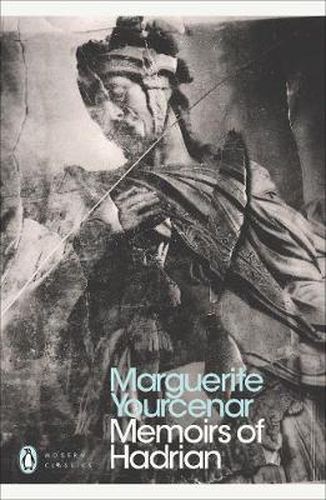
‘Memoirs of Hadrian’ by Marguerite Yourcenar

Translated from the French by Grace Frick in collaboration with the author.

2000 (original English translation 1954), 288 p

As it happens, I have read two books in a row about a real-life historical figure presented as if the subject was writing his or her memoirs. The first was Isabelle Allende’s Ines of My Soul about Ines Suarez, the conquistadora of Chile, and this second one is Marguerite Yourcenar’s Memoirs of Hadrian. Having been left somewhat disappointed by the contrived and rather clunky nature of Allende’s book (my review is here), within a few pages of the Yourcenar book I knew that I was in the hands of a master writer. Where with Suarez, I felt as if the events were shaping the narrative, with Yourcenar I felt as she was inhabiting the Emperor Hadrian from the inside out. Perhaps this was a result of the long gestation for this novel- she started writing the first (soon discarded) draft in 1924 when she was in her early twenties, and finished it in 1951 at the age of forty-eight after several false starts. The most striking thing about the book is Hadrian’s voice, and as she said in the author’s note at the back – cleverly depicted in a reflective chronology-:

Portrait of a voice. If I have chosen to write these Memoirs of Hadrian in the first person it is in order to dispense with any intermediary, in so far as possible, even were that intermediary myself. Surely Hadrian could speak more forcibly and more subtly of his life than could I.

p. 275

However, I must confess that perhaps my ease with Yourcenar’s book was that I wasn’t coming to it completely ignorant of its main character. I consciously chose not to Google Inez Suarez, but allowed the book to tell me all that I needed to know. Allende’s book certainly did that, but that was almost its weakness: it became a rather didactic, fact-driven narrative that made you suspect that Allende still had her notes beside while she was writing. Yourcenar’s project could not have been more different. Although I myself have come late to Roman History, many others have not, and most people would have heard of Hadrian’s Wall, if nothing else. For myself, I have listened to the whole Mike Duncan History of Rome podcast, and I’m enjoying the LaTrobe University Emperors of Rome podcast series. I had just finished listening to the episodes on Hadrian (Episodes Episode LII – Hadrian the Little Greek to Episode LVII – Little Soul, Little Wanderer, Little Charmer cover Hadrian’s life) before reading this book, so I was familiar with Hadrian’s life. Hadrian did in fact write a memoir, but it has been lost. This book imagines this lost memoir in the form of a letter written by the elderly Hadrian to his adoptive grandson and eventual successor “Mark” (Marcus Aurelius).

And because Hadrian could assume that his adopted grandson already knew about him, Yourcenar pretty much assumes that you know about Hadrian too. The Hadrian she depicts in this putative ‘memoir’ is not a man of facts and events, but instead of feelings. She is not out to make an argument about events in Roman history (as Robert Graves did in his depiction of Livia in the I Claudius books- it’s interesting that Graves also adopts this fake-memoir narrative frame) but instead to imbue emotions and judgements into the facts. As a result, you probably need to know the bare bones of Hadrian’s life for it to make sense, because she’s not going to tell you. For example, Hadrian neither confirms nor denies that Trajan’s wife Plotina manipulated his nomination as Trajan’s successor; we do not learn the events that led to the death of Antinous, his favourite; and the assassinations of enemies that marked the beginning and end of Hadrian’s reign are referred to obliquely. Instead, what we have are his reactions to events. We see him as a soldier sickened by the bloodshed and violence of the Sarmatian Wars, leading to his abandonment of Trajan’s policy of imperial expansion. We see a man who delights in the architecture and learning of Greece as a form of intellectual fulfilment. Unfamiliar as we are with the forms of love between men in Roman culture, we see a man who bathes the young Antinous in adoration and wonder, while remaining opaque about the sexual side of that relationship. We see a man shattered by grief, who loses all joy in the world around him after Antinous’ death, which he comes to understand as a form of sacrifice to him. We see a man increasingly ground down by illness and depression, longing only for death.

Do you need to know about Hadrian before reading this book? I think that perhaps you do, but in some ways it’s not about Emperor Hadrian at all; instead its about Hadrian the man (albeit, as an emperor, he’s not Every Man). I think that it’s a book that as a reader, you would grow into, and I think that an older reader would appreciate it more than a younger reader would. It’s certainly a book that would bear re-reading again and again. The text is rather dense, and there are no reported conversations, so in less skilled hands, it could be rather dry. But it’s not: it is beautifully written, and I think that it deserves the appellation of “masterpiece”. I loved it.

My rating: 10 out of 10

Sourced from: purchased from Readings.

I hear with my little ear: Podcasts 8-15 May 2023

Emperors of Rome. Actually, I have already listened to a lot of these episode back in December 2021 but that’s a lifetime ago and repetition does me no harm at my age. Episode LXVII – Heir and a Spare looks at Hadrian’s succession plan, with his choice of Marcus Aurelius and Lucius Verus as his adopted sons and heirs. Why two? Given that people around the emperor tended to die, perhaps he was being cautious; or maybe he intended them to rule as joint emperors- who knows. They were not actual brothers. Marcus Aurelius was vaguely related to Hadrian through the female line, and there was a Spanish connection. In fact Marcus’ grandfather, who brought him up, was a good friend of Hadrian. Marcus was close to Hadrian even before he was adopted, and he was the ancient version of a geeky student, and a bit ascetic (which Hadrian wasn’t too keen on). One way or another, he was marked out from the start. Lucius Verus was the son of Lucius Aelius Caesar, whom Hadrian had picked out to be his successor, but he inconveniently died. So Hadrian went for his son instead. He was ten years Marcus’ junior, so perhaps Hadrian thought that if Marcus died, Lucius would the next one in line. Hadrian thought that both boys were too young at this stage to be his direct heirs, so he appointed Antoninus Pius instead, on condition that he adopt the boys too, and appoint them his heirs. He no doubt thought than Antoninus would only last a few years until the boys were old enough, but then he hung on for 23 years, giving the boys a very long apprenticeship. A bit like Prince Charles. Actually, there’s another parallel with the British Royal Family too, because even though the boys were technically equal, as the older and more responsible, Marcus Aurelius was given more responsibility from the start and had more authority than his rather Playboy Brother. (Charles and Andrew? William and Harry?) Once they finally became co-emperors in CE 161, they immediately gave the soldiers a bonus equivalent to 3 years pay to keep them on-side. The arrangement worked better than might be expected, because neither wanted to pull rank on the other. Episode LXVIII – Never Underestimate the Parthians takes us right back into a war. When Marcus and Lucius inherited, the Roman Empire had been at peace for 40 years, but at the end of Antoninus’ rule, there was already trouble brewing with the Parthians. Almost immediately they flexed their muscles by invading Armenia to overthrow the client king that the Romans had installed there. The Governor of Cappadocia, Severianus got dud advice from a self-proclaimed prophet and was badly beaten by the Parthians. Lucius Verus was sent to take control of the situation, but he took the scenic route and didn’t get there for a year and then he hung around Syria with “low people” and sent Statius Priscus to the frontline instead. Priscus had an early victory and captured the Armenian capital and a new King was installed. Meanwhile, the Parthians turned their attention to Mesopotamia instead, where they were again defeated, and the Romans invaded Parthia, where Lucius was blamed for the sacking of Seleucia (although he wasn’t there) after its Greek-oriented inhabitants had welcomed the arrival of the Romans. No sooner were the Parthians taken care of than the Marcomanni started niggling up in Germania. Episode LXIX – Galen and the Antonine Plague features Dr Leanne McNamara (Classics, La Trobe University). While Lucius’ troops were sacking Parthia, it was said that they made the mistake of opening a casket in a temple to Apollo, releasing an illness that would follow the troops all the way back to Rome and beyond. There had been plagues and epidemics previously, but this was longer-lasting and with a wider reach than any other plaque before. It was transmitted by personal contact and airborne particles. There are different hypotheses for what it was – perhaps hemorrhagic smallpox? bubonic plague? measles?- but it had scabs, a rash and a cough. It is thought that about 10% of those who contracted it died. We know as much as we do about it because of the writings of Galen, a doctor who treated the emperors, who penned over 400 books in his life, of which about 20,000 pages remain.

Now and Then. During the lockdown, I listened religiously to Heather Cox Richardson, but I’ve got out of the way of it since she stopped her ‘history only’ videos/podcasts. But, having read glowing reports of Joe Biden at the White House Correspondents Dinner, I thought I’d listen to Not a Joke: Humour as Politics. Heather Cox Richardson actually attended it this year, along with 2600 other people. What a strange form of democracy: that people would mock politicians to their face. Even though Australians don’t take politics particularly seriously (or at least, we didn’t in the past), there’s nothing quite like it here, although the Federal Parliamentary Press Gallery Midwinter Ball is perhaps close. The White House Correspondents Dinner started in 1921. In terms of comedians, Heather and her colleague Joanne Freeman discuss Seba Smith (1792-1868) and his iconic Jack Downing character, Alice Duer Miller’s (1874 – 1942) poetic suffragist satire (both of which published their satire in newspapers rather than perform it on stage) and African-American Dick Gregory’s (1932-2017) truth-telling on issues of race and class which fits in more to the political stand-up comedian we’re familiar with today.

Nightlife (ABC) and The Religious and Ethics Report (ABC) I’ve just finished reading Elle Hardy’s book Beyond Belief How Pentecostal Christianity Is Taking Over the World and so I thought that I’d seek out a few interviews with her. The Nightlife episode The Rise and Rise of Pentacostalism was conducted by a presenter who obviously has little knowledge about religion generally. The Religious and Ethics Report episode Pentecostal Christianity and the Hillsong Empire, presented by Andrew West, had more teeth to it, which you might expect given the focus of the program. She was rather deferential here, acknowledging the effect of Pentecostal religion in helping people to get their lives together, and emphasizing that it is not a cult.

The Underworld Podcast also featured Elle Hardy, but she didn’t present such a glowing view here (again, reflecting the focus of this program, too). In the Episode A Brazilian Murder, Narco Evangelists and Holy Warfare: The Gangsters of the Global Pentecostal Movement, she starts off with the case of Flordelis dos Santos de Souza, politician, gospel singer and church leader, who was jailed along with several of her 55 (yes you read right) adopted children for being complicit in the murder of her husband Anderson do Carmo de Souza. She then goes on to talk about ‘Narco Evangelists’ in the favelas, and the relationship between Pentecostal religion and hard-line anti-drug policing exemplified by Rodrigo Duterte in the Phillipines.

Wikimedia

The Long Read (The Guardian) Sudan’s Outsider: how a paramilitary leader fell out with the army and plunged the country into war looks at Gen Mohamed Hamdan Dagalo (known as Hemedti), the leader of the RSF which is currently in conflict with Sudan’s army, led by Gen Abdel Fattah al-Burhan. The presenter, Nesrine Malik, was in Sudan in February this year, where the country was jittery after the shooting of a protester by an army officer. She returned to England, but by mid-March both al-Burhan and Hemedti were taking the high moral ground over this shooting, and the RSF moved first to take over the airport. She asks: How did Hemedti capture Sudan politics seemingly overnight? He was an outsider, from the western Darfur region, where he enriched himself with goldmines seized during the Civil War in Dafur sufficiently to purchase 70,000 mercenaries who he has sent to other African countries (e.g. to Yemen to support Saudi-Arabia) ad to Libya. In 2013 the RSF was institutionalized by the military dictator president Omar al-Bashir as a tool to crush dissent by rebels and protesters, giving Hemedti, as commander of the Janjaweed, a basis of power. Initially he worked alongside the army and in 2021 was involved, alongside al-Burhan, in an unsuccessful coup against Bashir’s civilian replacement. Both generals had agreed to work together on a framework agreement where they would relinquish power to a civilian government. But neither trusts the other, and so conflict has broken out between the army and the RSF. The looting sounds horrendous. The article from which this podcast is drawn is here.

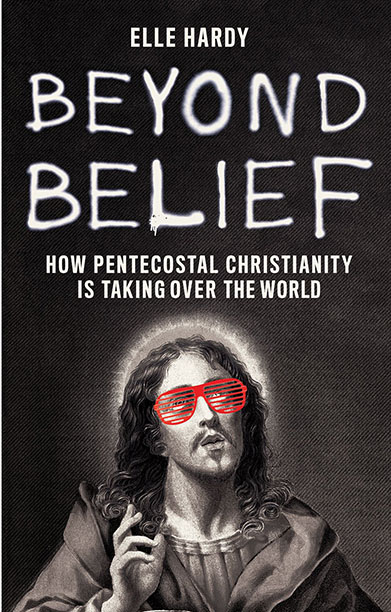
‘Beyond Belief: How Pentecostal Christianity is Taking Over the World’ by Elle Hardy

2021, 262 p & notes

It seems rather hard to believe now, at fifty years’ remove, but as a 16 year old I was ‘born again’ and converted to evangelical Christianity. The early 1970s was a time of Jesus People, Larry Norman and Hal Lindsay’s book The Late Great Planet Earth. I’m not sure whether that would have counted as ‘Pentecostal Christianity’ as Australian journalist Elle Hardy describes it in this book because, although there was an emphasis on the Holy Spirit and although I was often in the presence of people who spoke in tongues (without ever doing so myself), it was also ‘It’s Time’ for the Labor Party after twenty-three years of conservative government in Australia. The Christianity I subscribed to had little to do with the prosperity gospel of much (not necessarily all) Pentecostal religion today – in fact, it leaned more towards anti-materialism and environmentalism- and I could see no conflict at all between progressive political ideas and Christianity, indeed I think that Christianity demanded it. I don’t think that the Pentecostal religion she describes here would have room for those views today.

Hardy’s book is divided into two parts: Part I The Good News: The Unstoppable Rise of Pentecostalism, and Part II Spiritual Warfare: The Battle to Build Heaven on Earth. She traces the modern manifestation of Pentecostalism back to 19th century America, disregarding, rather short-sightedly I believe, older British and European manifestations of Pentecostalism. Instead she identifies three founding figures: Charles Fox Parham, who preached in Kansas, Texas and Oklahoma; William J. Seymour, an African-American evangelist who was encouraged by Parham to bringing this new form of Christianity to the Black Community through the Azusa Street Revivals of 1906 to roughly 1915; and Aimee and Robert Semple whose speaking in tongues as part of their baptism in the Holy Spirit encouraged them to go to China (they believed that they were speaking Chinese) where Robert died. His widow married Harold McPherson, thus becoming Aimee Semple McPherson. All three ended up being embroiled in scandals of various types- a harbinger perhaps of the scandals that have dogged and continue to dog many Pentecostal ‘celebrities’. The Pentecostalism she describes distinguishes itself from other forms of Christianity in its heavy emphasis on the Holy Spirit, and its manifestation through speaking in tongues, miracles and healing. Rather ironically, some of the major ‘brands’ of Pentecostalism have distanced themselves somewhat from the speaking in tongues element (it is a bit unnerving).

She then embarks in Part I on a world-wide tour of Pentecostalism in its various guises across the globe, reflecting the sub-title of her book. She travels to Rock House Holiness church in Alabama, an ‘old-style religion’ type church that features snake-handling, but which also reflects the origin of much of the rock music that emerged in the 1950s where singers like Rosetta Tharp, B. B. King, Elvis Presley and the Righteous Brothers (of course!) made their start from their Pentecostal churches. The emphasis on music, most particularly through the Hillsong empire, continues today and often distinguishes Pentecostal worship, with its concerts, rock bands and lighting, from other forms of Christian worship.

Chapter 3 takes her to North Korea, where the Pyongyang Revival before the 1949 Communist Revolution saw 100,000 people converted, usually by American missionaries, to the extent that Pyongyang was dubbed ‘The Jerusalem of the East’. The North/South border between the Koreas is not just political: it is also the demarcation between Christianity and non-Christianity. Across the border, in South Korea, megachurches like the Yoido Full Gospel Church with its 200,000 regular attendees describe themselves as Presbyterian, but 85% of them are actually Pentecostal. It is quite common for defectors from the North to find themselves at these churches where, if they make their way to Seoul, they find themselves overwhelmed by the noise, competitiveness and discrimination they encounter there. They find that their conversion narrative becomes a form of ‘currency’ where churches provide scholarships, free health services and donations through their congregations, in return for these stories of redemption and conversion. A similar scenario is found in in the UK, where in Chapter 6 she finds large numbers of Travellers (gypsies) converting to Pentecostalism, where being a practising Christian makes an outsider more accepted in post-Brexit Britain. In fact, there are now 17,000 Pentecostal churches in the UK (one congregation for every 2 pubs!), with branches of international Pentecostal Churches e.g. Hillsong, the Universal Church from Brazil, and West African churches, not only ministering to their diaspora, but also engaging in a form of reverse mission, pushing back against ‘liberal’ Christianity and its acceptance in particular of gay marriage.

She visits the Universal Church in Brazil, where celebrity Pentecostalist Flordelis, politician and mother of 55 children (over 50 were adopted) , achieved media-wide coverage when she was jailed for conspiring to kill her younger husband. Indeed, Brazil is the most Pentecostal nation on earth, with the percentage of Pentecostalists rising from 3% of the population in 1980 to 30% in 2020. As she points out, the prosperity gospel preached by Pentecostalist churches is not a fallacy. Once people get their lives together through conversion, often leaving behind crime and addiction, and are encouraged to branch into small businesses which are patronized by the large number of fellow-congregationalists, people do become wealthier. Likewise in African nations. In Zimbabwe, half of the population belongs to an African Pentecostal Church, eclipsing 40% in South Africa, and one third in Kenya. African Pentecostalism often combines pre-Christianity and Pentecostal beliefs, reflecting the ability of Pentecostalism to shape-shift according to the culture. These churches often combine fasting, rituals, healing and miracles.

Part II then explores how this plays out in political trends. She starts off in Chapter 7 at Bethel Redding church in California, one of the largest and best known of the Pentecostal Churches in America. Despite being in a state dominated by liberals (in the American sense of the word), this is the heartland for the Christian Dominionist Project, better known as the Seven Mountains Mandate. This arose from about 1974 when Pentecostalists moved from the idea of The Tribulation which would presage the Second Coming, to the idea that Christians themselves would have to create the conditions of Heaven on Earth before Jesus could return by moving into the Seven spheres of education, religion, family, business, government, arts and entertainment and media. Within the U.S. the Seven Mountains Mandate has led to direct involvement in government administration, as for example in Brazos County, Texas, where the Jesus Said Love movement is contracted and paid to run ‘john’ schools as an alternative to fines or incarceration for men arrested for procuring the services of a prostitute through a ‘sting’. The related ‘Unbound’ movement, which purports to be anti-trafficking, is a way of stamping out prostitution completely (rather than legalizing it, which is another approach). It’s not surprising that this has morphed, for some people, into the QAnon child-trafficking conspiracy, and into links with the 6 January 2021 uprising.

In countries like Guatemala the rise of Pentecostalism, spurred by the arrival of US missionaries in the 1960s, has led to a rejection and even persecution of Mayan priests: a different situation from the Liberation Theology of Vatican II which encouraged a form of Mayan Catholicism. Indeed, Guatemalan Catholicism itself today can largely be described as Charismatic Revival, a reflection of Pentecostalism. Likewise in Nigeria, with its Muslim North and Christian South divide, Islamic mosques are finding themselves adopting Pentecostalist-type practices both as a way of distinguishing themselves from Islamic fundamentalism (e.g. Boko Haram) and as a way of stopping the drain of their adherents to Pentecostal Christianity. Similarly, the Jews for Jesus movement, a form of ‘Messianic Judaism”, adopts Pentecostalist- practices even though it is not recognized by the major Jewish denominations. She highlights the importance of Israel to the End Times narrative of Pentecostalism, with its ardent Zionism and support of Israel, Trump’s shift of the U.S. Embassy from Tel Aviv to Jerusalem (and Australia’s craven pretense to do the same) and the popularity of package tours to Israel amongst Pentecostalists.

I had thought at first that she had over-reached in her subtitle ‘How Pentecostal Christianity is Taking Over the World’, given the numerical growth of Islam and the increased prominence of Hinduism in India. But when she lists politicians like Duterte in the Phillipines, Orban in Hungary, and the push towards Pentecostalism in both Ukraine and Russia, and describes the adoption of Pentecostalist practices in Catholicism and some forms of Islam and Judaism that are competing in the same ‘market’, perhaps there is more truth in it. I’m not sure that she actually explained why there is this political link between Pentecostalism and populist conservatism: to me, there doesn’t seem to be anything inherent in Pentecostalism that dictates that the two be aligned.

This is a broad-ranging book, truly international in its scope, written in an engaging style with enough personal vignettes to keep the human interest in what could have otherwise been a rather turgid exploration of theology. But really, it’s not about theology at all: it’s about a phenomenon that acts as an antidote to marginalization in both First World and Global South countries, and about Pentecostalism’s link with right wing politics, power and money.

My rating: 8.5

Sourced from: Yarra Plenty Regional Library, and read after hearing the author speaking on the New Books Network podcast.

Six degrees of separation: from Friendaholic to…

It’s first Saturday of the month, which means that it’s Six Degrees of Separation day. This is a meme hosted by Kate at her BooksAreMyFavouriteandBest website. Here’s how Kate describes it:

On the first Saturday of every month, a book is chosen as a starting point and linked to six other books to form a chain. Readers and bloggers are invited to join in by creating their own ‘chain’ leading from the selected book. Books can be linked in obvious ways – for example, books by the same authors, from the same era or genre, or books with similar themes or settings. Or, you may choose to link them in more personal ways…

Kate’s starting book this month is Friendaholic by Elizabeth Day which, true to form, I have not read. I’m taking the ‘similar theme’ route, revolving around the rather predictable theme of friends and friendship.

Of course, thinking about friendship immediately brings to mind My Brilliant Friend, the first book in Elena Ferrante’s Neapolitan Quartet about the friendship between Elena and Lina, two young girls growing up in a poverty-stricken section of Naples in the 1950s. Lina marries young, becomes financially successful, while Elena undertakes an academic and writing career. Told from Elena’s point of view, Lina is always smarter and more street-smart and, along with Elena, you’re never really sure whether you trust her or not. Like all long term relationships, there are periods of closeness and distance, and their fortunes ebb and flow, both emotionally and financially. (See my review of the Quartet here).

Friendships are often rooted in (and perhaps contribute to) a shared world view, and when the commonality breaks down, so does the friendship. Historian and academic Anne Applebaum talks about this in Twilight of Democracy: the Failure of Politics and the Parting of Friends. In this book, which is a mixture of memoir and political argument, Applebaum talks about her falling out with her friends, most of whom would fit into that American Enterprise Institute, Thatcheritish, conservative-leaning (but not Trumpian) Republican world of intellectuals and diplomats. They have found themselves on different sides of a political divide that runs through the right in Poland, Hungary, Spain, France Italy, and with some differences, the British right and the American right. This political divide has ruptured their personal friendships as well. (See my review here).

Helen Garner’s thinly disguised memoir The Spare Room explores the demands and limits of friendship when she is asked to host a friend from Sydney who is seeking alternative therapy for advanced cancer. Nicola’s death is not really the core of this story: instead the drama of the book is Helen’s rage and inadequacy in the face the demands of friendship, and her frustration at her friend’s relentless faith in a “cure” that Helen feels is quackery. (Short review here).

Sigrid Nunez’s book The Friend is quite short, and it left me wondering whether I understood it properly. It is addressed to an unnamed, dead friend in the second person “you” throughout, and it is a series of short paragraphs, separated by time and asterisks. The unnamed narrator is a female writer, teaching creative writing at a university as many writers tend to do. Her friend, to whom the book is addressed, was her mentor, a fellow teacher and also a writer and he had committed suicide. (Short review here).

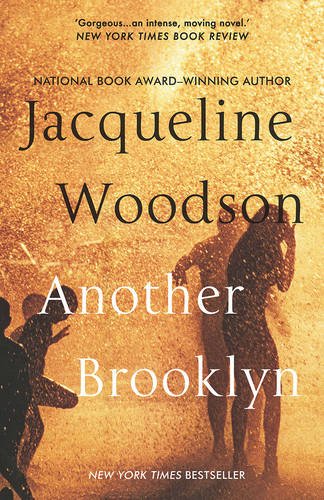
Friendship is particularly painful in adolescence, and most coming-of-age books explore it, or its absence, as part of growing up. In Another Brooklyn by Jacqueline Woodson, the main character, August, was motherless when her father shifted her from SweetGrove Tennessee to live with her younger brother in Brooklyn. Forbidden by their father from going down into the streets to play with the other children, August watches three other girls, Sylvia, Angela and Gigi as they amble the neighbourhood streets. As she and her brother gradually achieve more independence, August comes to know the three girls and is embraced into their friendship group. Over time each of the girls has to find her own way from parental demands, expectations and inadequacies. (See my review here).

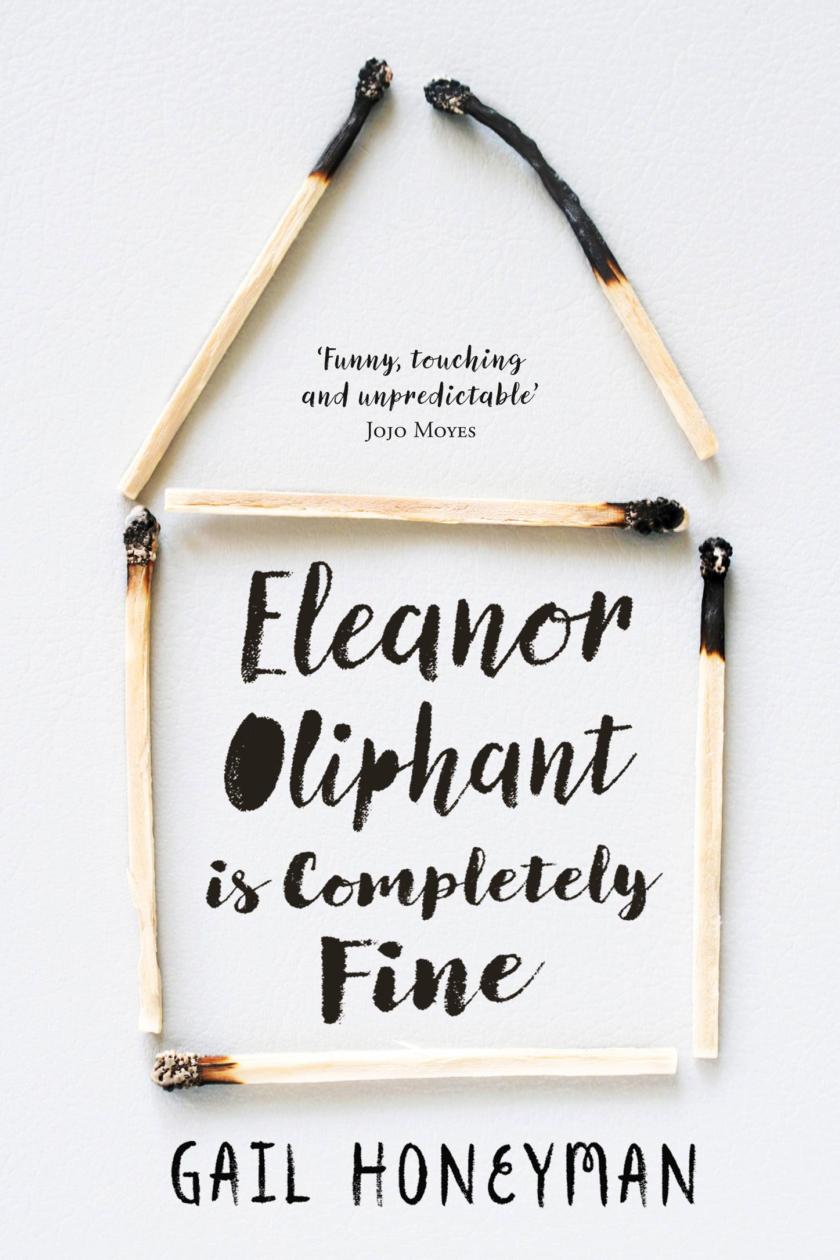
And then there is a absence of any friendship whatsoever. The eponymous main character in Gail Honeyman’s Eleanor Oliphant is Completely Fine is a lonely thirty-year old woman. Just not ‘self-contained’ or without friends, she is bone-achingly lonely. Eleanor is gradually brought into a circle of other kind people – not saints, but just ordinary people acting with everyday kindness. (Review here).

So, no great leaps of creativity or imagination in putting together my chain, but rather a linking of books which all throw their own perspective on the phenomenon of friendship.