
Conversations. Love and Loss, in Watsonia. I live very close to Watsonia (next suburb) which is probably why I loved this episode so much. A rather unprepossessing suburb, Watsonia might have bloody great electricity pylons running through it, but it seems to have spawned comedians (any connection?) like Denise Scott and, as in this podcast, Damian Callinan. His parents married during the war, and they moved to Watsonia where they had five children and became the pillars of the local Catholic church. This podcast made me think of my parents and their neighbours and friends, and their steady rhythm of life- all quite ordinary stuff until a tragedy in their old age brought its own challenges. I just loved this.
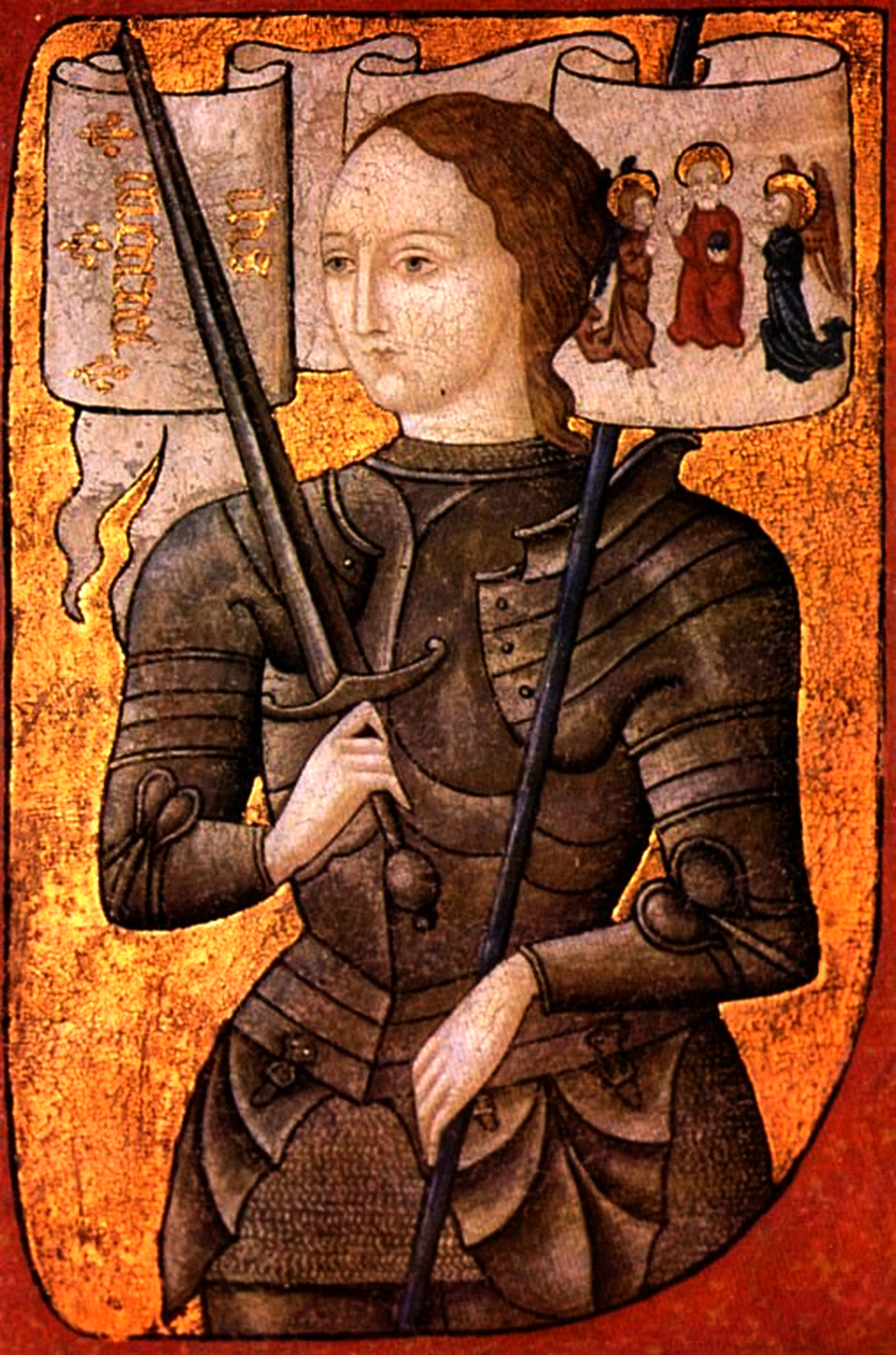
History This Week May 30 is the 592nd anniversary of the death of Joan of Arc, who features in this episode A Teenage Girl Saves France. As a 17 year old, she claimed to have had a vision that Charles of Orleans would become King, joining the Armagnac faction against the Duke of Burgundy, who also claimed the crown. This is just what he wanted to hear, so he sent her to help lift the siege of Orleans, and to other battles. Her loyalty to Charles was misplaced, because when she was captured by the Burgundians, she was ransomed to the English and Charles didn’t lift a finger to help her. She was charged with heresy and wearing men’s clothes (which seemed to be the thing that really annoyed people) and burned at the stake. Featuring Nancy Goldstone, author of The Maid and the Queen: The Secret History of Joan of Arc and Charity Urbanski, associate history professor at the University of Washington, this episode contextualizes Joan of Arc politically and underscores what an incredible story it is.
Emperors of Rome Episode LXX – The Marcomannic Wars ran from 166-7 CE through to 180CE- in effect, the whole of Marcus Aurelius’ reign. The wars were triggered when a loose confederation of Germanic people began moving south from beyond the Danube and Rhine to pursue market opportunities when they perceived the Romans to be weakened in the midst of long term malaise. The Roaman troops who had been guarding against ‘the barbarians’ were withdrawn to fight the Parthian wars, and in their absence, the Marcomanni crossed the Danube and the Vandals invaded Dacia. Marcus Aurelius and Lucius Verus both headed to the Danube, but Verus died suddenly. The Barbarians invaded Greece and the Marcomanni defeated 20,000 Romans on the Danube and moved towards Italy. In 172CE Marcus crossed the Danube (from the other direction) to take the fight to them, where he was aided by miracles of rain and lightning reflecting the return to supernatural thinking. Meanwhile, the Syrians were mounting their own challenge to Marcus Aurelius’ authority. Episode LXXI – Meditations features Dr Sonya Wurster (Honorary Fellow in the School of Historical and Philosophical Studies, University of Melbourne) talking about Marcus Aurelius’ writings that we know as the Meditations. They are written exercises in Stoicism, often starting off with a quote. The virtues he champions – courage, wisdom, self-control, justice- were all very Roman values. As emperor, Marcus was interested in the role of providence, the nature of a leader and control of emotion. It’s possible that because he was an emperor, he knew that they might be published (so perhaps they are not completely private writings) but they serve to humanize him as an emperor. Episode LXXII – On Behalf of the State In 175CE while Marcus Aurelius was away at the wars, a revolution started in Syria when it was rumoured that Marcus was about to die. The Syrian governor Avidius Cassius, a war hero, declared himself emperor, perhaps with the assistance of Marcus’ wife Faustina- although this is not certain. Avidius was killed by his own troops before Marcus could confront him, but Marcus did not take revenge on his family and associates which he was entitled to do- although his son Commodus did it for him after Marcus’ death- but he did change the rules so that you couldn’t become governor of a province in which you were born. Faustina died, and he began bringing his son Commodus into the administration, in training to become the next emperor.
History of the Inca Episodio 6: Los Wari (in Spanish) or here in English. The Wari were located in the Ayacucho region of modern day Peru. They introduced terraced farming, which because of the warming effects of the sun on the stones separating the terraces, meant that they could farm at higher altitudes. They had several administrative centres throughout the Andes, including Pikillacta in the Lucre Basin. They also had colonies, but there is an ongoing scholarly debate over whether they were an ’empire’ preceding the Inca, or whether it was more ‘soft power’ in cultural terms. After a severe drought, their society collapsed completely by 1200 CE.
Rumble Strip is a podcast series presented by Erica Heilman about life in Vermont, U.S. In What Class Are You, she drives around and asks people she knows ‘what class are you?’ Interestingly, most of them said ‘working class’ and what comes through is the anger that many of them hold, an anger that is feeding the Trump Phenomenon (even though there is little crossover between their lives and Trump’s). It is all so ordinary, with such ramifications for the rest of the world.
 The Resident Judge of Port Phillip