Monthly Archives: June 2023

I hear with my little ear: Podcasts 1-7 June 2023

History Listen (ABC) Those Bloody Vegos- a short history of vegetarianism. Even though I flirted with vegetarianism in my early 20s, I have been known to utter “bloody vegos” once or twice. I suspect that some of the vegetarians of my acquaintance would be disconcerted to learn of the connection of vegetarianism with some rather out-there religious beliefs in the late 19th/early 20th century. This episode is Australian-focused, which was good to hear.

The Ancients. During May, The Ancients are having a series of podcasts on Babylon. This first one is about Nebuchadnezzar -I can barely even say it let alone spell it. He ruled between 605-562 BCE, forty-two years at the height of the Babylonian Empire when it reached from the Mediterranean to the Persian Gulf. He was himself the son of a king, so he had an easy accession to the throne. There was a power vacuum after the decline of the Assyrian empire, and both Babylon and Egypt vied to fill it. The Egyptians were propping up the King of Judea as a way of extending their power, but in 587 BCE Nebuchadnezzar beseiged Jerusalem and installed a client king. Ten years later, he captured Jerusalem and destroyed the first Temple. We get much of our information about him from the Jewish Old Testament, where he was seen as a historical figure, but also as a vehicle of God’s punishment. The Babylonian Empire was as large as the Assyrian empire had been, but in a slightly different place. Babylon was a religious centre and a trade route, with a lot of monumental building. During the 20th century, German archaeologists were very active in excavating sites. It’s not really known exactly where the Hanging Gardens of Babylon were (all large cities had gardens), and they were perhaps more ‘terraced’ than ‘hanging’. After reaching its peak under Nebuchadnezzar, the Babylonian empire didn’t last. After his death, his son was assassinated after 2 years, then his son-in-law met the same fate after four years. The last king of Babylon was unrelated to Nebuchadnezzar and in 539BCE the empire collapsed almost overnight in the face of the expansion of the Persian Empire.

Emperors of Rome Episode LXXVI – It’s Good to be the King. All the sources available to us portray Commodus as a Very Bad Emperor, worse than Caligula, Nero and Domitian. He wanted to rename Rome after himself, as well as ALL the months of the year. He portrayed himself as Hercules, and replaced Nero’s head on Nero’s column with his own, and had it placed beside what is now the Colosseum. Indulging himself as a gladiator was completely inappropriate- a bit like the Queen going on Big Brother. Episode LXXVII – Such was the End of Commodus At the end of his reign, he embarked on a killing spree amongst the Senate and the elites, while on all sides there were uprisings against the Roman Empire in Brittanica, Germania and in Dacia. There were omens of his demise: fires in Rome, and his own smearing himself with blood. He was planning on killing two of the consuls and becoming consul himself dressed up as a gladiator, so it was no surprise that he was assassinated on New Years Eve in 192 CE. His own concubine organized the hit, first with poison (that he vomited up because he was drunk) and then strangling, which was a particularly ignoble way to die. And that was the end of Commodus and the Antonine dynasty. Episode LXXVIII – Borders of the Roman Empire features Dr Paul Burton from ANU who notes that all of the British Imperialists of the 19th century would have imbibed ideals of empire from their shared classical education, bringing it right up to our days. During the republic, wars were mainly conducted against Carthage (North Africa) and the Hellenistic leftovers of Alexander the Great’s empire. The Roman army might be highly interventionist, but it would then withdraw- it wasn’t interested in annexing territory. New territory came as the spoils of victory and in fact, some Kings of neighbouring allies bequeathed their territory to the Romans. At first governors were sent to an area for one year only, but their period of office was gradually extended, which may have contributed to the fall of the Republic as governors (like Julius Caesar) embedded their power in provincial support. When Augustus promised an end to the civil wars, there was a change in mindset about the provinces: no longer were they cash-cows, but instead they were the site of building projects where local big men contributed the funding. This led to an expansion of the provincial elite to inclusion in the Senate, and even as emperors. Citizenship was highly valued (St Paul proclaimed his Roman citizenship to avoid being flogged) and it was used as leverage for loyalty. In 212CE Caracalla extended citizenship to everyone in the empire.

Latin American History Podcast The Conquest of Peru Part 8 Pizarro was able to enter Cusco without resistance, where Manco accepted Pizarro’s authority, and indeed all the power lay with the Spaniards. Manco then joined Almagro and Hernando de Soto in pursuit of Quizquiz. Finally turning to colonization instead of conquest, Pizarro established Lima as a port city. News of Peru’s riches spread, attracting the attention of both immigrants and other conquistadors already present in South America including Pedro de Alvarado, the most bloody of the conquistadors. Eventually de Alvarado was paid off, and he sailed away, leaving the north of Peru in the hands of the Spanish colonialists.
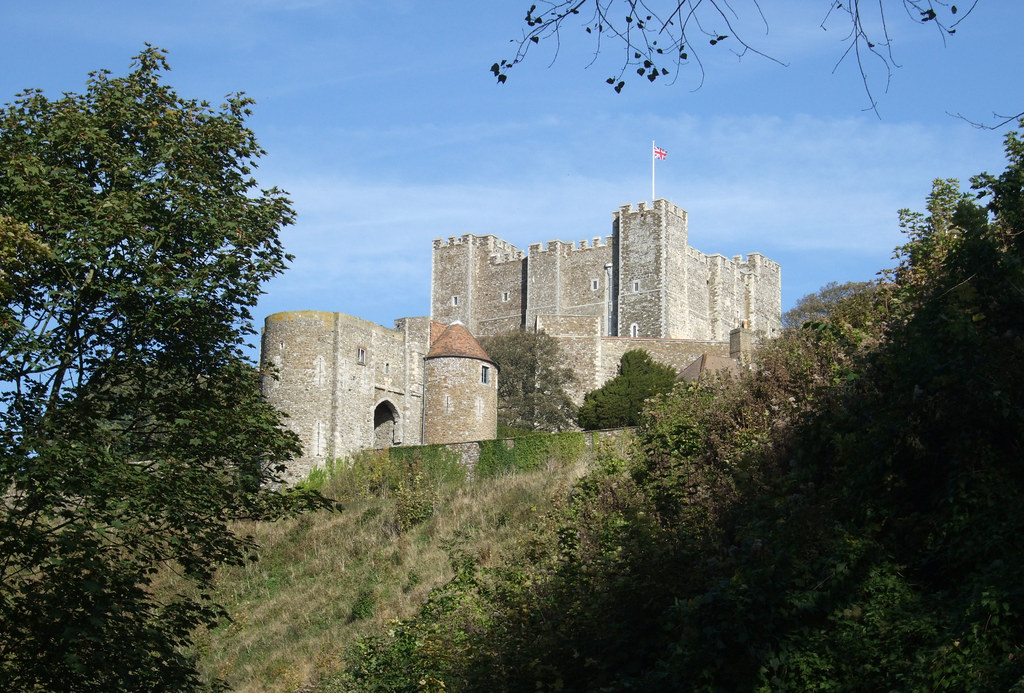
Dover Castle. Image Jim Linwood https://www.flickr.com/photos/brighton/5105158828/

Dan Snow’s History Hit Continuing on his road-trip of British history in Episode 2 of Story of England: Medieval Invaders, Snow takes us to Pevensey where William the Conqueror and his Norman Invaders landed in 1066. The Duke of Normandy was a cousin of Edward the Confessor, who had just died, and he was taking his chances when this vacancy on the throne occurred. There are actually three Medieval periods: 1. Early Medieval (which used to be called the Dark Ages) between 400-1066CE; The Central period between 1066-1300, and Late Medieval from 1300-1500. The Early period was marked by increased regionalization of the Anglo-Saxon period, which settled into a few big kingdoms. Although we don’t know if King Arthur actually existed, it is true that Ambrosius Aurelianus certainly did, and aspects of his reign were probably incorporated into the Arthurian legend. The Vikings, who arrived in the 860s gobbled up the kingdoms, although Alfred the Great made a strong stand. Dan Snow then travels to Dover Castle, which was built after the Norman invasion, on a site previously occupied during the Iron Age, and by the Romans who left a lighthouse which still stands today. All this came to a halt in 1348 when the plague arrived, killing off 25 million Europeans during 1347-1352, and leading to a labour shortage, increased labour mobility, and a change in land use.

Democracy Sausage. I usually listen to this every week, but I don’t note it because it’s usually too topical and dates too quickly. But Mark Kenny’s The Queen is Dead with Stan Grant is excellent, and well worth a listen. It was a meet-the-author type event about Grant’s new book, but they also spoke about his contribution to the panel discussion prior to the coronation that culminated in him quitting as host of Q&A.

The Rest is History. With all the pearl-clutching about the faint embers of republicanism in Australia, it’s interesting to consider that in 1649 England declared a republic! It only lasted about ten years when, unable to get themselves out of what they had done, parliamentarians turned again to Charles II to fill the king-shaped hole. Featuring Anna Keay whose book The Restless Republic I’ve ordered from the library (these podcasts are not good for my already daunting TBR pile), this episode The Republic of Britain: Life Under Cromwell goes beyond the Cromwell/Parliament activities to look at the way that people either went along with it or changed their mind. I did a subject on this -ahem- fifty years ago, and had forgotten much of it, but what a fascinating time, with radical political experiments turbocharged by radical religiosity.
Spanish Film Festival 2023: A Singular Crime

This is set in 1980 (as the film tells us several times because John Lennon has just been shot) in Rosario, Argentina. It’s during the military dictatorship, and the military has infiltrated the police force. Under the judicial system in Argentina, the judge and his clerks investigate crimes directly. In this case, which teeters on the edge of corruption, the clerks, Rivas and Torres- both with PhDs in law – find the police/military too quick to resort to torture in investigating the disappearance of a wealthy Syrian playboy-businessman. I must confess to becoming totally confused between the two law clerks, both of whom had wimpy 1980s style moustaches. The plot was of less interest to me than the political situation of uneasiness. The title in English is ‘A Singular Crime’ but the original Spanish title ‘Un Crimen Argentino’ is more appropriate because although crime is pretty much the same everywhere, the context is not.

I hear with my little ear: Podcasts 24-31 May 2023

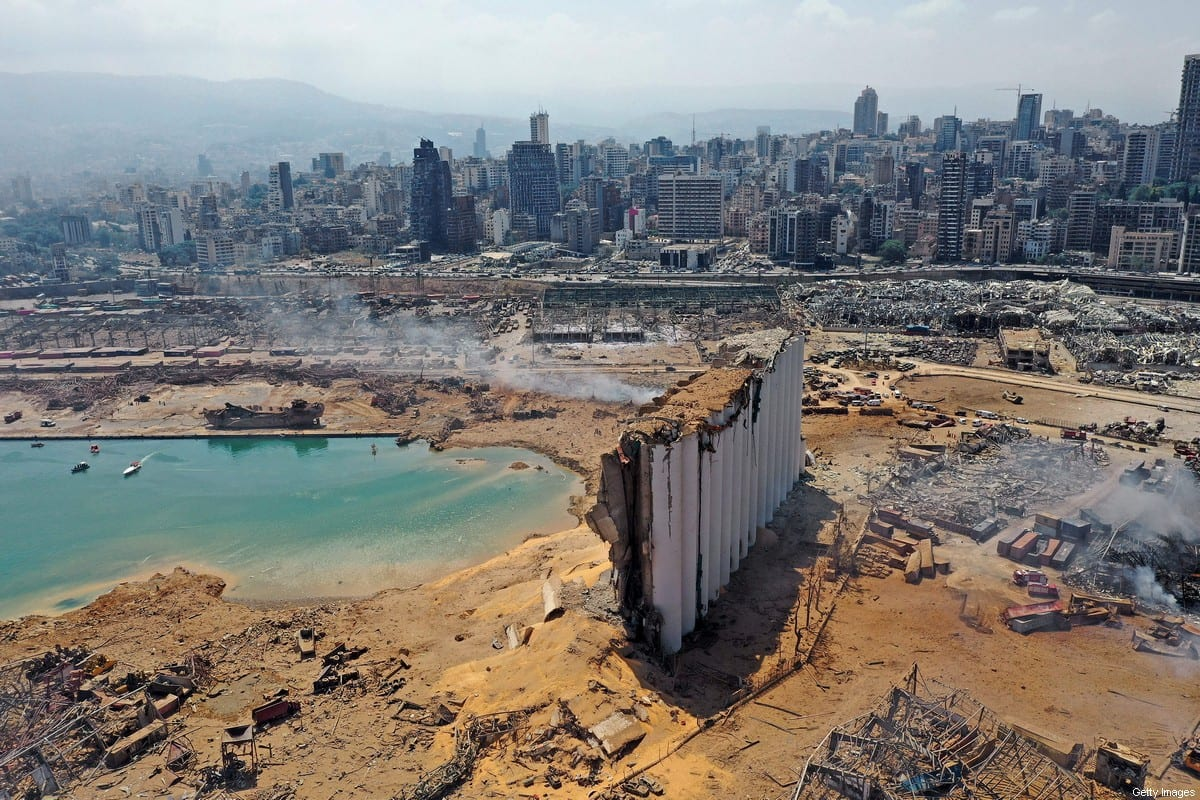
The Documentary (BBC) Beirut: Life in the Unliveable City I love my home city, Melbourne, and I just can’t imagine what it would be like to watch it collapse economically, politically and socially around me. I think of Caracas in Venezuela, Argentina in the grip of inflation, and Beirut in Lebanon. Lina Mounzer is a writer and translator living in Beirut, and here she talks with friends, family and neighbours about what it is like to live there. She lives on the 12th floor of a high-rise, and even though they pay to have a generator, they only receive 12 hours of electricity a day, on an intermittent basis. She overlooks the port and the grain silos that block her view saved her flat when other silos exploded three years ago. In explaining the political situation, she goes back to 1991 and the end of the Civil War when an amnesty froze everything, but also granted immunity to those who had committed atrocities. In 2019 there was a financial collapse, leading to massive 97% devaluation of the currency, followed by the port explosion in 2020. Now 80% of the people live in poverty, with 25% in extreme poverty. Since November 2022 there has been no president. She has seen the rise of ‘generator mafia’, a sector of the economy that owns generators and which now is bigger than the official electricity system in its heyday, so it is unlikely that the electricity situation will improve in the future.

History Hit Dan Snow has started a five-part series on the history of England. In this first episode Story of England: Stone Age to Roman Days, he starts with the footprints on the mudflats at Happisburgh, Norfolk which were made about 900,000 years ago on what was at that time the banks of the Thames. We don’t know what species of humans made the prints, because there have been at least four species of humans in England. There were at least eleven waves of migration to England, and climate plays an integral role. In warm periods there were rhinos; in cold periods there were polar bears. During the Ice Age in 25,000 BCE, human life in England ceased completely, but humans returned again in about 15,000 CE. He then moves on to Stonehenge, which was commenced c. 8000-7000 BCE, with the biggest stones erected in c2500 BCE. The largest stones were collected from about 20 miles away, but the smaller ones, called ‘bluestones’ (though not bluestone as we know it) come from Wales. The stones reflect a solar alignment, and there are acoustic properties to the bluestones. No-one every lived there: it was a ceremonial site. He then moves to Old Sarum. Julius Caesar had brought the Romans over in 54-55 BCE but it wasn’t until 43 CE that Claudius mounted a ‘proper’ conquest. Sarum was already a fort, and the Romans built a temple on it and expanded it further. It became an Anglo-Saxon centre, and when William the Conqueror invaded in 1066, he headed straight for it. This was a really well-produced episode, interesting, and giving enough context that an Antipodean could follow it easily.

Revisionist History. The Mystery of Mastery with Adam Gopnik. This was a taped interview where Gopnik (who I’ve only encountered in the New Yorker) is talking about his new book The Mystery of Mastery. Rather than talk about the book itself, they ramble on about mutual acquaintances and men that Gopnik had encountered who exhibited mastery- magicians, cooks etc. So far the only woman they discuss is one of their mothers rolling out pastry (although Gopnik’s mother is a professor, he says) and I decided I’d had enough of this dickfest.

Emperors of Rome Episode LXXIII – From a Kingdom of Gold Marcus Aurelius died at the age of 59, still with the army fighting yet another phase of the Marcomannic Wars. He probably died of plague, which was still circulating around, although some sources suggest that he received ‘help’ from doctors. He was deified and buried in Hadrian’s mausoleum. His reputation is somewhat tainted by Commodus who followed him, but it is quite clear that Marcus always wanted him as a successor. The ‘five good emperors’ were all adopted, but by pushing his (unsuitable) biological son, he broke the pattern. Marcus Aurelius was really important: he satisfied the senators and he didn’t alienate anyone. He was unfortunate to face two wars and the plague, and he probably would have been an excellent civic emperor, rather than a military one. Episode LXXIV – Iron and Rust In his book, The Decline and Fall of the Roman Empire, Gibbons starts off with Commodus, and anyone who has seen Gladiator will agree. The Roman Empire did begin to lose power at this time, which was perceived as being caused by Commodus’ own immorality. Well, this is what Cassius Dio says, who was an eyewitness and participant- so who knows how objective and reliable he is. Some of his most egregious actions were only picking up on similar actions in the past, but in Commodus’ case, he was actively trashing the Roman Empire. He quickly contracted truces in the Marcomannic Wars which kicked the problem further down the road, and then turned up in Rome for his triumph, along with his boyfriend. He had inherited a good, happy Senate but started executing them, and reverted to treason trials and confiscations as a way of replenishing the coffers. There was an assassination attempt led by his sister Lucilla, so he purged the Senate and the upper classes and put his own men in. Episode LXXV – Flying Too Close to the Sun looks at men who stepped forward to fill the administrative and leadership vacancy while Commodus was off indulging in “orgiastic abandonment” as Cassius Dio puts it. Sextus Tigidius Perenni was the Praetorian Prefect. He lasted a couple of years but was brought undone when 1500 javelin men arrived from Britain, dissatisfied with the Roman government, and Commodus took their side. He was replaced by Cleander, who had facilitated the arrival of the British contingent so that he could get rid of Perenni. He enriched himself (and Commodus) by selling off public office, leading the situation where there were 24 consuls each year- 25 if you count Commodus. But there was a grain shortage and a crowd protest at the races against Cleander and Commodus meant that Commodus had Cleander executed and threw his head to the crowd.

The Rest is History. My grandfather was a Freemason. He died before I was born, but his lodge briefcase was in the garage. Even though my father was not at all interested in Freemasonry, he became very angry when we dressed up in the apron and regalia to parade around the backyard. I’ve visited our local Masonic temple, but I really do not understand it one little bit. So I was interested in this episode The Freemasons: History’s Greatest Conspiracy Theory features John Dickie, whose book The Craft I have reserved at the library. He refutes the lore that Freemasonry started with King Solomon, identifying instead the court of James VI of Scotland (later James I of England) who introduced the stonemasons to the concept of the ‘memory palace’ as a way of remembering the material for entry to the craft. Then in 1717 four lodges formed the Grand Lodge, severing the connection to real-life stonemasonry, and created the 1723 Rule Book. It was associated with Whiggery, and fear of the French Revolution; its ideas influenced the American Revolution, and it did the hard work of the British Empire in providing a web of support for men sent to the colonies, and forming a meeting ground of sorts with the local elite, especially in India. Franco hated them, and they were involved in the Vatican Banker scandal of the 1970s in Italy. I’m looking forward to the book.

Spanish Film Festival 2023- In the Company of Women

Sorry- another trailer video in Spanish (I can’t find a subtitled one)

I really enjoyed this movie. Set in 1976, as Spain is making its transition to democracy after Franco’s death, sixteen year old Bea joins a collective of young feminist women working to secure women’s rights to an abortion. She lives with her mother, who works as a cleaner/housekeeper for a wealthy family, and when she accompanies her mother to assist her, she meets Maider, the granddaughter of the family, who is somewhat older than Bea, and with problems of her own. She falls in love with her and plans to go away with her, but she is torn by her love for her mother, who will be left alone if she leaves. There are so many layers to this film: Bea’s growing realization of her attraction to women; the political situation of the late 1970s in Spain; the struggle for legal abortion and its effects on women who cannot access one; courage; and the mother-daughter relationship.

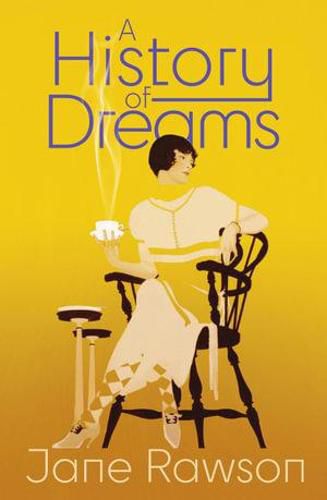
‘A History of Dreams’ by Jane Rawson

2022,294 p.

A book can have interesting characters, an intriguing setting and a thought-provoking premise, but if you just don’t buy into a major point in the plot, none of these other things matter.

For me, this was the case with Jane Rawson’s A History of Dreams. Set in 1930s Adelaide, the book is based on the counterfactual of Australia aligning with Germany during WWI, rather than throwing itself behind the Commonwealth and the US. It is the story of four young women, sisters Margaret and Esther Beasley, Phyllis O’Donnell and their communist school mate Audrey Macquarie, who decide to resist the closing-in of women’s opportunities as Nazi sympathizers take control of the government and align Adelaide with Germany during World War II. It felt a bit like a Mallory Towers or a jolly-hockey-sticks girls’ school novel, blended with The Handmaid’s Tale, although without its complexity. What brought me undone was the introduction of witchcraft which manipulated people’s dreams while they slept at night, in a way that was never really explained,.

I almost gave up after about fifty pages, and I probably should have. I just couldn’t get past the witchcraft.

My rating: 6/10

Sourced from: Yarra Plenty Regional Library.

Congratulations Nathan!

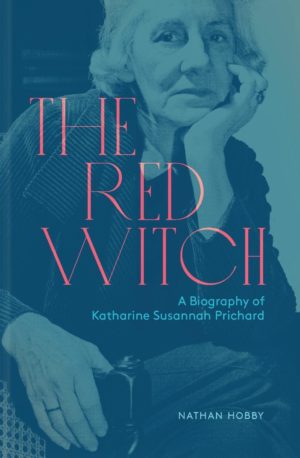
I’m delighted to learn that Nathan Hobby won the W.A. Premier’s Prize for the Book of the Year for his biography of Katharine Susannah Prichard. You can read his response to the award in his blog here.

I reviewed his book here and hopefully receiving the award will give his sales another little nudge.

Spanish Film Festival 2023: Alcarràs

This film is set in Alcarràs, Catalonia where an extended family is evicted from their farm because the owner wants to install solar panels. The use of the farm and its harvest had been promised back in the Spanish Civil War, when the farming family saved the life of the landowner, but now that his grandson is in charge, the promise is broken. They are allowed to have one last summer harvest, and this is the story of that harvest. The ultimatum splinters the family, some of whom take on jobs installing the panels, while others protest the takeover of rich agricultural land. It was beautifully filmed, but a bit slow. Interestingly, none of the actors had been in films previously, which resulted in a very natural, but rather stilted movie.

Spanish Film Festival 2023 ‘Hoy Se Arregla El Mundo’

(Sorry about the lack of English subtitles in this video)

It’s late June, and so it’s time for the Spanish Film Festival again. This was the first film I have seen in the 2023 season, and I loved it. It’s called ‘Today We Fix the World’ and it’s about a man who finds out the child he has been raising for 9 years might not be his son after all. They then set out to find the real biological father. It was very well acted, funny without being corny, and very satisfying. I saw it with English subtitles. I think that it might be on Netflix.

I hear with my little ear: Podcasts 16-23 May 2023

Conversations. Love and Loss, in Watsonia. I live very close to Watsonia (next suburb) which is probably why I loved this episode so much. A rather unprepossessing suburb, Watsonia might have bloody great electricity pylons running through it, but it seems to have spawned comedians (any connection?) like Denise Scott and, as in this podcast, Damian Callinan. His parents married during the war, and they moved to Watsonia where they had five children and became the pillars of the local Catholic church. This podcast made me think of my parents and their neighbours and friends, and their steady rhythm of life- all quite ordinary stuff until a tragedy in their old age brought its own challenges. I just loved this.

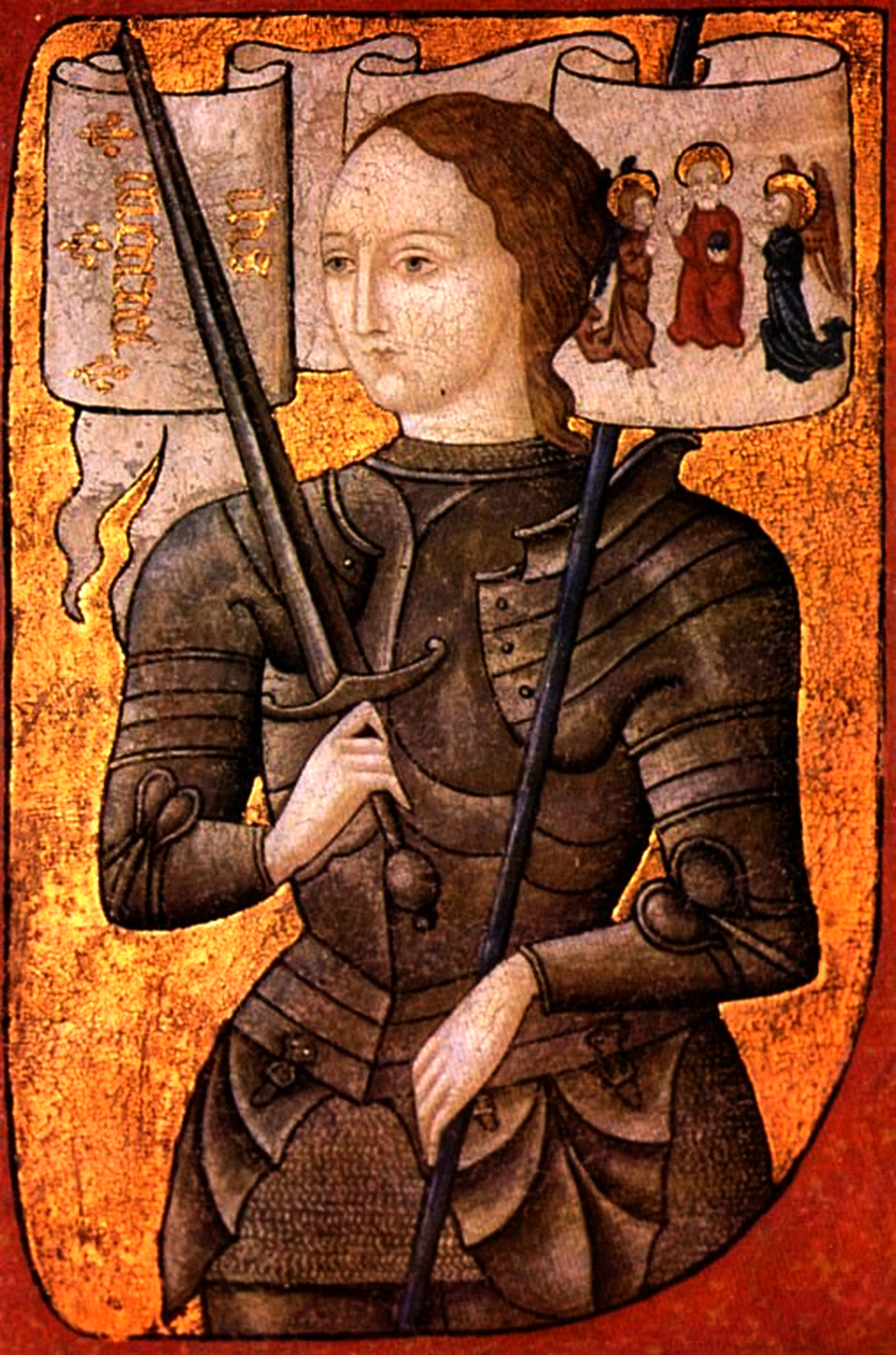
History This Week May 30 is the 592nd anniversary of the death of Joan of Arc, who features in this episode A Teenage Girl Saves France. As a 17 year old, she claimed to have had a vision that Charles of Orleans would become King, joining the Armagnac faction against the Duke of Burgundy, who also claimed the crown. This is just what he wanted to hear, so he sent her to help lift the siege of Orleans, and to other battles. Her loyalty to Charles was misplaced, because when she was captured by the Burgundians, she was ransomed to the English and Charles didn’t lift a finger to help her. She was charged with heresy and wearing men’s clothes (which seemed to be the thing that really annoyed people) and burned at the stake. Featuring Nancy Goldstone, author of The Maid and the Queen: The Secret History of Joan of Arc and Charity Urbanski, associate history professor at the University of Washington, this episode contextualizes Joan of Arc politically and underscores what an incredible story it is.

Emperors of Rome Episode LXX – The Marcomannic Wars ran from 166-7 CE through to 180CE- in effect, the whole of Marcus Aurelius’ reign. The wars were triggered when a loose confederation of Germanic people began moving south from beyond the Danube and Rhine to pursue market opportunities when they perceived the Romans to be weakened in the midst of long term malaise. The Roaman troops who had been guarding against ‘the barbarians’ were withdrawn to fight the Parthian wars, and in their absence, the Marcomanni crossed the Danube and the Vandals invaded Dacia. Marcus Aurelius and Lucius Verus both headed to the Danube, but Verus died suddenly. The Barbarians invaded Greece and the Marcomanni defeated 20,000 Romans on the Danube and moved towards Italy. In 172CE Marcus crossed the Danube (from the other direction) to take the fight to them, where he was aided by miracles of rain and lightning reflecting the return to supernatural thinking. Meanwhile, the Syrians were mounting their own challenge to Marcus Aurelius’ authority. Episode LXXI – Meditations features Dr Sonya Wurster (Honorary Fellow in the School of Historical and Philosophical Studies, University of Melbourne) talking about Marcus Aurelius’ writings that we know as the Meditations. They are written exercises in Stoicism, often starting off with a quote. The virtues he champions – courage, wisdom, self-control, justice- were all very Roman values. As emperor, Marcus was interested in the role of providence, the nature of a leader and control of emotion. It’s possible that because he was an emperor, he knew that they might be published (so perhaps they are not completely private writings) but they serve to humanize him as an emperor. Episode LXXII – On Behalf of the State In 175CE while Marcus Aurelius was away at the wars, a revolution started in Syria when it was rumoured that Marcus was about to die. The Syrian governor Avidius Cassius, a war hero, declared himself emperor, perhaps with the assistance of Marcus’ wife Faustina- although this is not certain. Avidius was killed by his own troops before Marcus could confront him, but Marcus did not take revenge on his family and associates which he was entitled to do- although his son Commodus did it for him after Marcus’ death- but he did change the rules so that you couldn’t become governor of a province in which you were born. Faustina died, and he began bringing his son Commodus into the administration, in training to become the next emperor.

History of the Inca Episodio 6: Los Wari (in Spanish) or here in English. The Wari were located in the Ayacucho region of modern day Peru. They introduced terraced farming, which because of the warming effects of the sun on the stones separating the terraces, meant that they could farm at higher altitudes. They had several administrative centres throughout the Andes, including Pikillacta in the Lucre Basin. They also had colonies, but there is an ongoing scholarly debate over whether they were an ’empire’ preceding the Inca, or whether it was more ‘soft power’ in cultural terms. After a severe drought, their society collapsed completely by 1200 CE.

Rumble Strip is a podcast series presented by Erica Heilman about life in Vermont, U.S. In What Class Are You, she drives around and asks people she knows ‘what class are you?’ Interestingly, most of them said ‘working class’ and what comes through is the anger that many of them hold, an anger that is feeding the Trump Phenomenon (even though there is little crossover between their lives and Trump’s). It is all so ordinary, with such ramifications for the rest of the world.

Movie: John Farnham – Finding the Voice

This documentary goes right to my adolescence – watching Happening 70, reading Go-Set, screaming at the Masters Apprentices- so of course I was going to love it. It’s a pretty straight documentary, with talking heads and voice-overs, but it’s also the story of Australia’s pop music scene of the 1960s and 70s, fame and its loss and recovery, and loyalty. Its focus is John Farnham, but it is also a tribute to his manager, Glenn Wheatley (ex- Masters Apprentices) who died from complications of COVID just weeks before filming had finished – a timely reminder of those early months of the pandemic when no-one knew much about the virus except that it was completely new. As a result, Gaynor Wheatley receives more screen time than she would have otherwise, but that’s a strength because being narrated largely at third-hand gives the documentary a level of abstraction that lifts it above hagiography. John’s current health problems give it an added level of poignancy. I loved it.

Four and a half stars.