
Daily Archives: December 27, 2022

Prize-winning histories 2022

I notice that a few book bloggers have done us a great service by compiling a list of the books that won various literary awards during the year. Doing the same for histories is a little more complex because some awards are for historians rather than histories (e.g. the History Council of South Australia, History Council of Western Australia), while others include histories alongside biographies as part of non-fiction generally. Some awards are for essays, articles, chapters and historical interpretations, with less emphasis on published books. However, here is what I have found for published full-length history books during 2022 (and I know I have probably missed some) :

Ernest Scott Prize – the most distinguished contribution to the history of Australia or New Zealand or to the history of colonisation published in the previous year. Administered through University of Melbourne

Dr. Lucy Mackintosh Shifting Grounds: Deep Histories of Tāmaki Makaurau Auckland

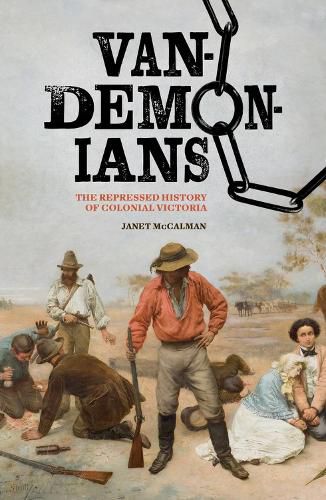
Emeritus Professor Janet McCalman for Vandemonians: The Repressed History of Colonial Victorians

W.K.Hancock Prize -for first book, awarded biennially

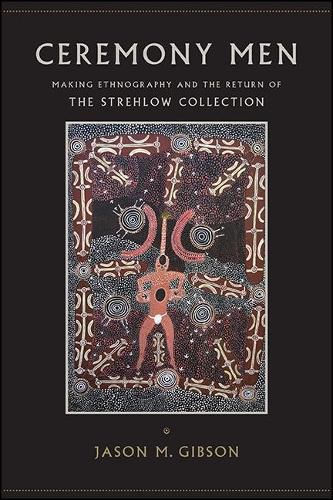
Jason Gibson, Ceremony Men: Making Ethnography and the Return of the Strehlow Collection (exorbitantly expensive! Go for the e-book)

Chief Minister’s Northern Territory History Book Award – most significant historical book about the Northern Territory (NT) published in the last 12 months.

Mark McKenna Return to Uluru (my review here)

NSW Premiers History Awards

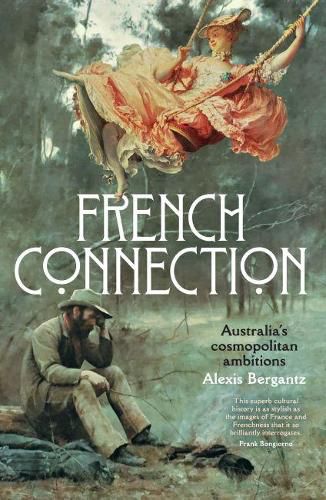
Australian History Prize: Alexis Bergantz French Connection: Australia’s Cosmopolitan Ambitions

General History Prize (International) Mina Roces The Filipino Migration Experience: Global Agents of Change

Young People’s History Award Aunty Shaa Smith, Neeyan Smith, Uncle Bud Marshall with Yandaarra including Sarah Wright, Lara Daley and Paul Hodge The Dunggiirr Brothers and the Caring Song of the Whale

Kay Daniels Award – biennial award recognising outstanding original research with a bearing on Australian convict history and heritage including in its international context.

Bill Bell, Crusoe’s Books: Readers in the Empire of Print 1800-1918

Prime Ministers Literary Awards

Australian History Christine Helliwell Semut: The Untold Story of a Secret Australian Operation in WWII Borneo

Non-Fiction Mark Willacy Rogue Forces: An Explosive Insiders’ Account of Australian SAS War Crimes in Afghanistan

Queensland Premiers Literary Awards

Queensland Premiers Award for a Work of State Significance Quentin Beresford Wounded Country: The Murray-Darling Basin a Contested History

University of Queensland Non Fiction Award Claire G. Coleman Lies, Damned Lies: A Personal Exploration of the Impact of Colonisation   

The Courier-Mail People’s Choice Queensland Book of the Year Award Chelsea Watego Another Day in the Colony 

Victorian Community History Awards

Winner Janet McCalman Vandemonians: The Repressed History of Colonial Victoria

Judges’ Special Prize David Rowe About Corayo: A Thematic History of Greater Geelong

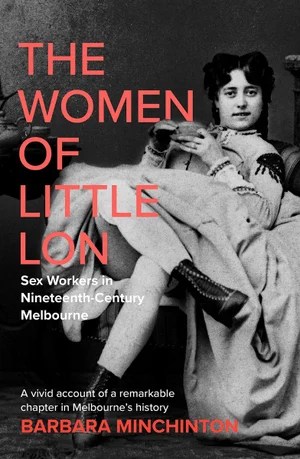
History Publication Award Barbara Minchinton The Women of Little Lon (my review here)

Community Diversity Award Alexandra Dellios Heritage Making and Migrant Subjects in the Deindustrialising Region of the Latrobe Valley
‘Caleb’s Crossing’ by Geraldine Brooks

2012, 432 p.

I read somewhere that when considering a film that claims to be “based on historical facts”, you should look for the most momentous, the most memorable part – and that will be the bit that was made up. I’m not sure whether this applies to historical fiction as well (it may) but I didn’t have that sense in reading Geraldine Brooks’ Caleb’s Crossing. She has kept herself strictly within established historical and biographical boundaries, which means that there is no momentous, memorable part, and that flights of fictional fancy are strictly curtailed. But I am full of admiration for the research that has gone into this book that rests so lightly in the background, and for the fidelity that such restraint lends to the story.

The book is arranged in three parts. The first two parts take place over a two year period in 1660 and 1661 while the third part is ostensibly written some 50 years later in 1715. The eponymous Caleb is a historical figure: Caleb Cheeshahteaumuck, the first Native American to graduate from Harvard College, which was then a small, struggling educational institution with more pretension than finance. A Wampanoag man, his father was sacham of his tribe. Caleb and a classmate attended school at Martha’s Vineyard, where he was born, then attended Grammar School in Cambridge, before enrolling and graduating from Harvard. He died from tuberculosis a year after graduation. These, then, are the biographical facts that Brooks needs to write around.

But she is left considerable space to invent her own character, and this is what she does in Berthia Mayfield whom we meet as a young teenager in Great Harbour where her father is a missionary to the Wampanoag. Her family has been at Noepe since her grandfather purchased land – however that purchase was understood at the time- from the Wampanoag. A bright young girl, she finds her future become increasingly circumscribed by the inevitability of her marriage and her mother, aware of this, allows her a short-lived freedom to roam the island. It is on one of these forays that she observes, and becomes fascinated by Caleb – a fascination that he reciprocates. However, when tragedy strikes the family, she blames herself and submits to a plan whereby she will be indentured to the grammar school master to enable her brother, Makepeace, to attend Harvard College. Caleb, and his friend Iacoomes who have been taken under the wing of her father, are to attend Harvard as well.

We follow her to Cambridge in 1661 in Part II. Her formal education has been sacrificed for that of her brother, but here she can secretly listen to the instruction given to the students. She observes the subtle prejudice directed towards Caleb and Iacoomes and witnesses the sexual abuse of a young Native American girl Anne by the Governor’s son. Once again, men are making decisions about her marriage. There is an unspoken attraction between Berthia and Caleb, but from the outside it appears that she has submitted to the wishes of her employer by marrying his son- only we, as readers, know that Berthia had more agency than it appears. The final part of the book is set in 1751, when Berthia is dying back in her childhood home in Great Harbour. She recalls the deaths of Iacoomes and Caleb, and the tragedy of the King Philip’s Wars as the uneasy wariness and compromises of early contact harden into violence and warfare.

Brooks has adopted an archaic, 17th century language in giving Berthia voice, and she sustains it wonderfully throughout the book. Perhaps there is an anachronistic 21st century feminism seeping through the book, but is framed within a deep religiosity. Brooks knows the line between fact and fiction and she respects it in her writing. So much research must have gone into this book, but it never feels laboured. Instead, through the narrative voice that Brooks has fashioned for Berthia, we feel as if we have been immersed into a 17th century world and worldview.

My rating: 9/10

Sourced from: CAE bookgroup