Monthly Archives: October 2022

‘Twilight Empress: A Novel of Imperial Rome’ by Faith L. Justice

2017, 392 p.

This review contains spoilers.

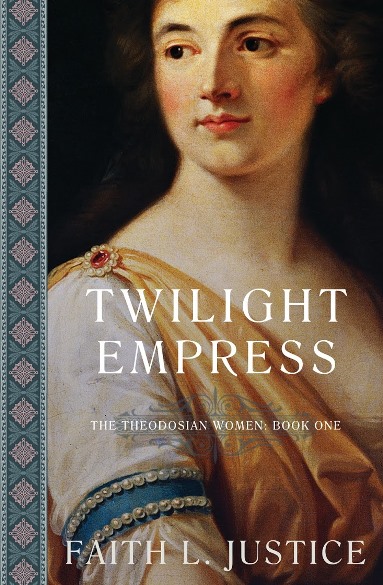
I have just finished listening to Mike Duncan’s very lengthy podcast series on A History of Rome. The last decades of the Empire were such a mess, but my attention was arrested by the prominence of two women, Placidia and Pulcheria, who despite their differences, became powerful in their own right in the Western and Eastern Roman Empires around the turn of the 5th century C.E. In his podcast, Mike Duncan suggested that someone should write a joint biography of these two contemporaneous women. I’m not sure if anyone has written a biography as such, but Faith L. Justice has embarked upon a fictional telling of the lives of three Theodosian Women – Placidia, Pulcheria and Athenais.

I’m a historian of Australian history, but I don’t often read historical fiction based on real, historical figures. Histories from the viewpoint of an invented character, yes; invented characters based on real ones, yes; histories told from the viewpoint on an onlooker, yes; but less often fiction focussing on and fleshing out real characters, using real events and timelines. In fact, I just abandoned reading Annie Garthwaite’s Cecily, about Cecily Neville, the wife of Richard, Duke of York and the mother of Edward IV and Richard III because I just didn’t know enough Plantagenet history to make sense of it, and I wasn’t prepared to put in the hard yards. One notable exception to this is Hilary Mantel’s work, especially her Wolf Hall Trilogy, and her excellent A Place of Greater Safety about the French Revolution, which no-one ever seems to mention. But even with Mantel’s work, I started each book feeling paralysed by my lack of knowledge until I took a deep breath and trusted that, with her emphasis on character, the events would fall into place.

This is the dilemma for a historical novelist, I suppose: knowing the context and events backwards as author, but writing in such a way that you bring a reader who does not know them along with you. In this, Faith L. Justice (surely not her real name!) gives as much support as she can, with a family tree and a list of characters as they appear chronologically in the book, with helpful italicizing of the names of those she invented.

So who was Galla Placidia? This entry from Justice’s blog gives the background to Placidia’s childhood and upbringing. Born in 388-89 or 39293 CE (how wonderful that she has a 5 year age range!), she was the daughter of the Roman emperor Theodosius I and the paternal half-sister of emperors Arcadius and Honorius. She became empress consort to emperor Constantius II and was the mother and powerful advisor of emperor Valentinian III. So, definitely, completely entwined in imperial politics.

But the book Twilight Empress starts with her being taken hostage by Alaric, the king of the Goths, prior to the fall of Rome. She was taken to Gaul, where after 5 years she married Alaric’s son Ataulf, with whom she had genuinely fallen in love. However, her half-brother Honorius rebuffed their appeals to recognize the marriage, and sent his trusted general, Constantius to bring her home. He did so, and married her himself, having been in love with her for many years, although she did not reciprocate. She had two surviving children to Constantius (having lost her earlier child that she had with Ataulf) before Constantius died. She then threw herself into the lives of her children, forming a separate power base behind her rather insipid son Valentinian, and acting as an intermediary between the Eastern and Western Emperors. The author did well here, showing her as an active and intelligent political operator, but always within circumscribed limits. Meanwhile, her daughter Justa Grata Honoria (known as Honoria – one of the many Honorias) was misbehaving, much to her mother and brother’s embarrassment. The author has fun with Honoria, inventing an ending for her in the vacuum of information about what really happened to her.

I wonder if I would have gleaned all this from the book alone, had I not known some of it from other sources? I’m not sure. My awareness of the emotional resonances of Placidia’s story came solely from this book because the other sources do not provide them, and because there is space for a fictional author to explore the emotional realm. But I don’t think that I would have detected the broader factual events of her life from this book alone, something that could have been remedied with a timeline of major events, perhaps, and a few maps.

Of course, the emotional realm is where an author can exercise their imagination, but the historiographical field of ‘History of the Emotions’ signals to us that emotions are not constant across time and societies. Some emotional responses will always be impenetrable to us as 21st century readers and this would be even more true of classical times. So the ‘romantic’ scenes in the book, which had a decidedly modern tenor, did not sit well with me, veering at times into Mills and Boon territory.

However, one of my motivations for reading this book was to reinforce what I have learned about Ancient Rome recently in a less weighty form, and in that, the book succeeded well. Faith L. Justice gave Placidia agency, -albeit limited- both in her emotional life and in her political behaviour, providing a good counter to all those histories of battles and betrayals amongst the men of Rome.

My rating: 6.5

Sourced from: purchased e-book
Movie: Clean

Finally, I am venturing back into picture theatres! (In fact, in October 2022 I have finally had to make a category for ‘Movies 2022). This documentary ‘Clean’ did very well at the Melbourne International Film Festival, and it is on limited release here in Melbourne. It is about Sandra Pankhurst, who featured in Sarah Krasnostein’s book The Trauma Cleaner (click link for my review), but this documentary is not associated with the book. It picks up on Sandra after the book has been published, with its attendant publicity, and as her health deteriorates. Sandra’s terrible childhood was alluded to, but not really explored in as much detail as in the book. How little we know about other people’s lives.

I hear with my little ear: Podcasts 1-8 October 2022

The Ancients. The Rise and Fall of Roman London. This episode features Professor Dominic Perring, Director of the UCL Centre for Applied Archaeology, who discusses what the archaeology studies conducted as part of the constant rebuilding of London have told us about the Roman phase of London’s History. I had listened and read to histories of London before (e.g. Peter Ackroyd’s London) but I tended to skip over the Roman bit to get to the 16th century parts. Now having finished my History of Rome podcasts, I have much more context to understand the ebb and flow of Roman London, and how it meshed with developments in the Roman Empire more generally. He starts off in AD43 as the first fort was constructed. Emperor Claudius came along for a 16 day trip, but did not linger in London but instead marched to Colchester. With the Boudiccan revolt of 60-61CE , London was burnt to the ground, but Vespasian embarked on a big rebuilding program as a way of asserting his legitimacy. However, there were fires in 125-6 CE, and possibly plague in 165-180 CE, which led to London growing and contracting. By the 3rd century, when the whole Roman Empire was in crisis, Britain became a good source of rebellious emperors e.g. Constantine. By the 5th century when the Roman Empire ‘fell’, London was smaller and less active because of the loss of trade and people, while other towns prospered. In effect, London had been invented by Rome and discarded by Rome

History This Week. This week in 1788, William Brodie was hanged in Edinburgh. He was the source material for R.L. Stevenson’s Strange Case of Dr. Jekyll and Mr. Hyde and this episode The Hanging of Jekyll and Hyde goes through the story of this outwardly respectable church member and cabinet maker, who led a gang of thieves who became increasingly brazen.

Duolingo I don’t very often include my Spanish podcasts in these lists, but I do make an exception for Duolingo, which uses both Spanish and English in their episodes. You would be able to follow the podcast, even if you don’t speak Spanish. In Mexico City- Tenochtitlan, un ciudad oculta we are taken on a tour of the remains of the Aztec city that is covered over by the modern Mexico City. In the podcast, we travel to the Zocalo, and to ruins that were uncovered while constructing the Metro. I would LOVE to go to Mexico City.

History Hit The Energy Crisis: 2022 vs 1973 compares the mining strikes and Arab-Israeli was that led to energy shortages in 1973, compared with the crisis that is facing Britain and Europe this coming winter. In 1973, it was not so much prices that were the problem as a worldwide scarcity of oil, exacerbated in England by coal strike action. It would seem that in 2022, governments are cautious of telling people what to do anymore (burnt, no doubt, by COVID) and there is less sense of communal struggle and national unity. The episode features historian Alwyn Turner, who has a new book about crises in the 1970s called Crisis, What Crisis?

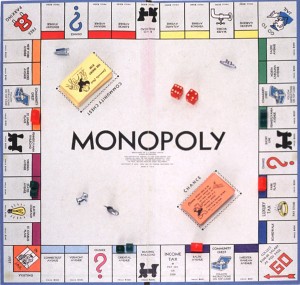
Now and Then features historians Heather Cox Richardson and Joanne Freeman. In the episode From Monopoly to Mystery Date they’re feeling a bit summery (they are from America after all), so they are looking at board games- in particular those where you throw and dice and move back and forward. I hadn’t heard of them all, but the story of Monopoly was fascinating. It was invented by a woman who wanted to demonstrate the principles of Henry George’s Single Tax theory, whereby the value of land was not intrinsic, but only a reflection of the social value ascribed to it and the status of the people who lived nearby. It wasn’t called Monopoly, but instead The Landlord’s Game. She was fairly badly ripped off (how ironic) and the game lost its political commentary in the Parker Bros. version. Then there was ‘Chutzpah’, a Jewish Monopoly game, which 50 years later looks very racist, and Mystery Date, an appallingly sexist and demeaning dating game.

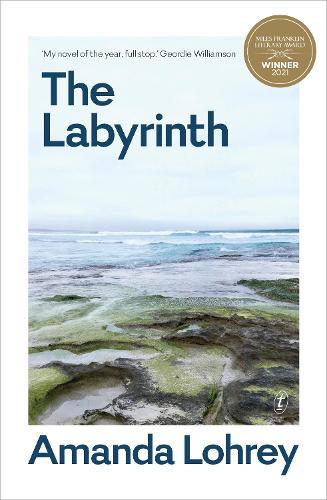
‘The Labyrinth’ by Amanda Lohrey

2020, 246 p.

SPOILER ALERT

I must confess that, had it not been the September selection for the Ivanhoe Reading Circle, I would not have read this book. Not even winning the Miles Franklin Literary Award in 2021 would have tempted me. I’ve read a few of Amanda Lohrey’s books before, but after at first being beguiled into their Garnersque Melbourne settings, I have become increasingly wearied by the philosophical and spiritual baggage that she burdens her books with – most particularly in The Philosopher’s Doll (my review here) and even more so in A Short History of Richard Kline (my review here). So, eyeing off the title The Labyrinth with its sacred and meditative connotations, I was not inclined to read the book.

In its classical (as distinct from religious) origins the labyrinth was an elaborate structure built by the craftsman Daedalus for King Minos of Crete, in order to contain the monster Minotaur. The young Theseus, later to be the mythical King of Athens, had joined a group of youths and maidens slated to be sacrificed to the Minotaur. He entered the labyrinth with a ball of string which he used to keep track of his progress through the maze, killed the Minotaur, then followed the string to get out of the labyrinth again.

All this seems a long way from Garra Nalla, a small farming community on the New South Wales coast, which is close enough to the prison in Brockwood, where Erica’s only child is serving a sentence for murder. On the way up the coast she revisits her childhood home, Melton Park, a former asylum which has been converted into a tourist venue. Her father had been the chief medical officer, and she and her brother grew up ranging freely over the gardens and wards of the asylum. Her father, who had stayed on at the asylum with his two children Erica and Axel after their mother had left them, engaged the children on building a labyrinth in the gardens of the asylum, complete with the measuring and designing that such a project entailed.

The labyrinth at her childhood home had long disappeared by the time that Erica visited it, but when she moves into a ramshackle house near the ocean, after a particularly vivid dream she decides to build a labyrinth on the flat space beside her own home. She researches various designs of labyrinths (leading to more exposition than I cared for) and obsesses over the form, shape and construction of her labyrinth. She needs the expertise and muscle of others, and this leads her to befriend Jurko, former stoneworker and an undocumented migrant from the Balkans, who is sleeping rough in the national parks nearby.

If there is a monster in her labyrinth, it is her son Daniel. Always an intense child, he was an artist and art becomes the one connection she has with her son as she visits him in the stark, soul-destroying visitors’ room at the jail. He is spiky and unlikeable (although I think that, from a plot point of view, Lohrey lost courage in choosing the rather ambiguous crime that led to Daniel’s imprisonment). He is probably mentally ill, although this is not reflected in the sentence that he received. But Daniel is Erica’s punishment: she feels the guilt for his crime (even if Daniel does not); she is compelled to keep visiting him because she is the only one who does; and she is reluctant to tell other people about her son in the small seaside hamlet where she is carving out her new life.

Mental illness and loss runs through this book. Growing up in an asylum, she had much childhood exposure to mental illness, although her father taught her not to fear it, assuring her that we are all lunatics at some stage. Her mother feared it, though, and she left her husband, 10 year old Erica and her younger brother Alex after a dispute with her husband over a particularly violent inmate who had been admitted to the asylum and who, she felt, was under insufficient supervision. Although her mother died two years later, their father never told them: a rather inexplicable act by a doctor, and a source of grievance between father and children when they discovered the truth. Her mother was right: her father was killed by a patient.

Moving into adulthood Erica embarked on a series of violent, unsuitable and unsuccessful relationships, becoming homeless and camping up and down the coast at one stage with her son Daniel who, like her, mourned and kept searching for his lost parent. She feels guilt over her parenting, and when Daniel commits the crime that led to his imprisonment, she takes on herself the guilt for the innocent victims- a guilt that Daniel does not feel. Erica herself is emotionally untethered, but she is not alone. Ray, her next door neighbour, is a morose and belligerent misogynist; young Lexie who she employs rather unnecessarily to help around the house is withdrawn and ‘strange’; and self-assured neighbours turn out to have their own family crises. But, as her father said, we’re all affected by the moon.

Her father had believed in the power of making things as a form of healing. The epigraph to the book “The cure for many ills, noted Jung, is to build something”, and after her mother Irene left, her father built Erica a doll’s house in his own workshop at the back of the house

…after Irene disappeared, he made me a doll’s house with a circular staircase that I could never gaze on without a sense of the mystery of my own being. I would imagine that somewhere in the attic of the doll’s house, my mother had left behind a part of herself and that one day she would return for it.

p. 8

It’s no surprise, then, that Erica embarks upon building her labyrinth as a cure for her own sickness at heart. The project draws in other people, particularly Jurko and even the pugnacious Ray, and although it is not completed, the labyrinth acts as a healing force for Erica, and a metaphor for working one’s way through challenge. In the closing pages of the book, Erica feels that the labyrinth is her mother’s.

Much of the book is fairly quotidian: her gradual acceptance of and by her neighbours, unpacking her possessions and destroying those of her son (under his instructions) in her new home, and choosing designs and rocks for the labyrinth. But it is heavily laden with descriptions of dreams (something that Lohrey does in her other books as well) and fairly didactic information about labyrinths. She writes landscape well, and you can almost see her weather-beaten shack against the sand dunes. She captures the small scale of Garra Nulla, and explores the flawed characters of her neighbours, more visible in a small town. Lohrey’s exploration of the emotional situation of the parent of an imprisoned (adult) child is well done, without the shrillness of Lionel Shriver’s We Have to Talk about Kevin. But in spite of the things that Lohrey did well in this book, I just found the philosophizing and dream sequences stultifying and offputting. Even though obviously many other readers feel differently (including those at the Ivanhoe Reading Circle meeting) the ‘Miles Franklin Winner’ didn’t rescue this book for me.

My rating: 7/10 (It would have been lower, but the discussion nudged me higher)

Sourced from: Yarra Plenty Regional Library. Read for the September meeting of the Ivanhoe Reading Circle.

I hear with my little ear: Podcasts 25-30 September 2022

Now and Then During the first lockdown, Heather Cox Richardson was one of my mainstays. I really enjoyed her American history podcast series, but they became increasingly specialized for her American audience, and more directed towards current events. She started a new series Now and Then with fellow historian Joanne Freeman, where they talk about current events and popular culture, and link them with historical events. In the episode Nostalgia and Political Power they discuss the role of nostalgia in American political history, from Puritan Jeremiads, to the 1913 Gettysburg and Fort Wagner reunions, to the emergence in the 1970s of a cultural obsession with the 1950s. All of these ostensibly ‘nostalgic’ events were very much framed in the politics of the moment.

Flightless Bird. After the first episode on Religion, I wasn’t sure if I was going to persist with this series, but I decided to lighten up and listen to the episode on Toilets. I must admit that I can’t remember this, but the water in American toilets is much higher than in other places in the world, largely because the system works by suction, and because of delicacy over ‘skid marks’. Germans prefer to be able to inspect their productions, so they use a little shelf in the toilet. America is remarkable for its lack of public toilets, running level with Botswana. The presenters then wade (verbally, thankfully) into the issue of male and female toilets. Not surprisingly, the (male) toilet architect they spoke to wants gender-free toilets, something that I ever hear few women agitating for.

Sydney Writers Festival. Having sat through the Queen’s funeral, and its unapologetic linking of Church and State in a highly ritualized and very polished performance of state power, it seemed an appropriate time to listen to the 2022 Sydney Writers Festival presentation on Church & State. Hosted by Tom Tilley, whose recent book looked at his escape from Pentecostalism, he was joined by interfaith minister Stephanie Dowrick and Elle Hardy, the author of Beyond Belief:How Pentecostalism is Taking Over the World. Dowrick was rather uncontrollable as a participant, and rather amusingly was intent on packing up and finishing up, after rambling on for the first part of the panel. She is in no doubt of the dangers of the pointy end of any religion.

The History Listen (ABC) One of the pleasures of my lockdown years has been playing the ukulele: such a happy, silly little instrument that cannot take itself seriously. In Play Your Way to Happiness, my favourite podcast historian Robyn Annear looks at the Hawaiian Steel Guitar which, like the ukulele, promised quick results and instant popularity! The Hawaiian Steel Guitar has a darker history. Invented in the 1880s in Hawaii, after American annexation music was the only way in which the indigenous Hawaiian language could be spoken and passed on. It spread across the world, coming to Australia in 1911, spurred by the highly entrepreneurial advertising and activity of Hawaiian Clubs, established throughout Australia (and the world).

History Extra. The Napoleon of Fleet Street is about Lord Northcliffe, the press baron who came from an impoverished background to dominate the British media of the early 20th century. Capitalizing on the literacy engendered by the 1870s education acts, he introduced snappy headlines and short paragraphs that revolutionized newspapers. He had very definite views on the way that England waged its First World War and meddled in politics. Sound familiar? Yes, because Keith Murdoch (Rupert’s father) was one of Northcliffe’s proteges. Features Andrew Roberts, who recently released The Chief: The Life of Lord Northcliffe, Britain’s Greatest Press Baron

Emperors of Rome. I’m missing my dose of Rome, so I’ve turned back to the very first episode of Emperors of Rome, produced by my alma mater La Trobe University. The series starts off with Julius Caesar. Episode 1 The Early Years of Caesar goes through the little that we know about his childhood. Unfortunately the first chapters of the two biographies of Caesar are missing, so it’s not much. But he was born into an elite family and given an elite education. Episode 2 Caesar the Politician sees him move into a political role, forming the First Triumvirate with Crassus (who was bankrolling him) and Pompey (to whom JC married his daughter, making Caesar Pompey’s father-in-law). Then he became Consul for his statutory year, then moved to Gaul as Pro-Consul. Gaul at that time consisted of Provence, a little bit of northern Italy and a small bit of Croatia. Episode 3 Caesar and Gaul looks at Caesar’s more expansive view of Gaul, which encompassed all of France, the Netherlands and Belgium, and eventually people took on this view as well. Vercingetorix tried, but failed, to unite the Gauls against Caesar, so he just marched on through and then turned to Britain as well. As far as Britain was concerned, the conquest of the sea in getting there was more important than the actual conquest itself. Episode 4 Caesar’s Triumph was really interesting, pointing out that a Triumph was actually a religious ritual to thank Jupiter for the victory, and difficult to achieve because it was the one moment when an emperor displayed both civil and religious power at the same time. Caesar extended his triumphs out over time, as a form of propaganda over his tussle with Pompey.

‘The Diaries of Jane Somers’ by Doris Lessing

501 p. 1984

I was going to say that I hadn’t read any of Lessing’s work because I saw her as an outdated writer from the 1960s in a tweed skirt and pudding-basin haircut. I now realize that I had her mixed up with Iris Murdoch, and that she actually lived until 2013, writing until the early 21st century. And consulting my reading journals from before starting this blog, I found that I had read a Lessing before – The Good Terrorist, a book I loathed. So it’s just as well that I was pushed into reading this book by my CAE bookgroup, because I would never have read it by myself (if I could even find it because it’s not widely available any more).

It has an interesting publishing history. It was published as two separate novels ‘The Diary of a Good Neighbour’ (1983) and ‘If the Old Could…’ (1984) under the pseudonym of ‘Jane Somers’. Lessing explains in the preface to this 1984 volume that she sought to publish the books under another name to test out the publishing industry’s willingness to take on an unknown author, and the effect of a known ‘name’ in achieving publication. She was right to be sceptical about the industry: her main publishers of her many previous works both rejected it. When it was picked up by Michael Joseph (later Penguin), they said that The Diary of a Good Neighbour reminded them of Doris Lessing. Her French publisher made a similar observation. Unlike her other books, it was mainly reviewed by women journalists in women’s magazines, highlighting for her the difficulty in bringing books to the attention of readers (I’m not sure that this is such a problem now, is it? Although you only have to look at the piles of remaindered books to realize just how much writing becomes literally junked because it has missed its wave).

Spoiler alert

Set contemporaneously in the early 1980s (which is when they were published) the books are written in the form of undated diary entries, a format which becomes increasingly implausible with the increasing use of direct speech and which leads to one continuous screed of writing. Jane, or as she calls herself, ‘Janna’ is an editor at Lilith, an upmarket glossy women’s magazine that includes several ‘serious’ sociological pieces on birth control, sex, health, social problems generally, often gleaned and barely disguised from New Scientist and other publications, as well as a heavy photographic emphasis on clothes, food, wine and decor. Janna was smart, fastidious about her own grooming and presentation, with a stylish home but a circumscribed social life beyond work. She had started working at Lilith in 1947, straight from school, and she was still there some 35 years later, although the magazine itself had changed its focus and structure over time. She had married in 1963, but her husband Freddie died with cancer. Several years later her mother died, after living with her briefly when her married sister Georgie said that she could no longer cope with her, as she had four children of her own. By her own admission, and increasingly, Janna realizes that she had been repulsed by, and emotionally absent for, both these deaths.

It is strange, then, that in The Diary of a Good Neighbour this chic and self-contained woman should befriend Maudie Fowler, whom she met in the chemist’s shop and accompanied back to her home. More than ‘befriend’ in a bureaucratic sense: she became a mainstay, a ‘carer’ (before than was a thing) and intimately involved with Maudie’s increasingly frail body in a way that she never could would have done with her husband and mother. This is part of Janna’s own growth as she reaches middle-age and looks back on her earlier life with an appalled guilt and regret that she had not really engaged with mortality, even when it affected those closest to her. Lessing captures well the despair felt at the betrayal by the body in old age, the mutual love/hate relationship between the aging person and their carers, and the bureaucratization of ‘care’ contracted out as part of a financial arrangement. Although set in the 1980s, the old women that Lessing describes live in squalor, with no internal bathrooms and inadequate heating. It’s pretty bleak.

If the Old Could’ picks up after Maudie’s death as Janna falls unexpectedly in love with Richard, a married man. It seemed light and airy after the oppressive sadness of the first book, although as time goes on the one-sidedness of the relationship becomes increasingly apparent. It is clear that Richard is not going to leave his wife; neither Richard nor Janna can bring themselves to actually make love with each other; Richard has Janna’s phone number but she has no way of contacting him; they spend a lot of time moving from pub to coffee shop and walking the suburbs of London. Janna’s caring responsibilities have, if anything increased, as her moody and indolent niece Kate moves in with her and Janna becomes a frequent visitor to Annie, an old, complaining woman who stays immured in her stuffy rooms. Kate is clearly mentally ill – her other niece Jill and Janna’s co-workers at Lilith can see it- but Janna is largely passive in the face of Kate’s slovenliness and her half-hearted involvement with a group of squatters who trash Janna’s immaculate apartment and take advantage of her generosity (shades of The Good Terrorist here). Janna herself is likewise passive in the face of the theft and cheating of the carers employed to look after Annie, perhaps through a misplaced sense of solidarity at the poor treatment of women working for the elderly. If Janna didn’t give enough to her mother or her first husband Freddie, she is surely compensating here, from a sense of guilt and lost opportunities. But the last part of her relationship with Richard and his family, particularly his son, is puzzling and strains credulity.

Moreover, I was never really convinced by Lessing’s selection of career for Janna. We are told repeatedly that she is very busy, but I couldn’t really work out what Janna did at Lilith. She seems to spend a lot of time worrying about her former co-worker and friend Joyce, who leaves for America to save her marriage, and she can drop everything for lunches and walks with Richard when he deigns to call. Janna’s focus on clothes and presentation (both for herself and in judging others) is an important part of her personality, but these could be woven into any professional job. I suspect that Lessing knew little about the high-end magazine industry.

Taken together, this is a lengthy two-part book. Particularly at the start, I seemed to read and read without making progress, and I despaired at ever reaching beyond the first quarter of the book. The writing is dense and wordy. The lack of chapters gives the book a feeling of relentlessness, especially in the dark sections with the increasing oppressiveness of Maudie’s frailty.

However, Lessing is very good at depicting the contradictions and compromises of women’s lives. Although written in Janna’s voice, she leaves space for the reader to make their own judgments of Janna’s actions and priorities. Despite my qualms about Lessing’s choice of high-end journalism for Janna’s work, the book itself has an emotional authenticity that is best appreciated, I suspect, by older readers. Readers who have watched their elderly parents die, have made mistakes and feel regrets, and have lived more than one life. In fact, I can’t imagine younger readers persisting with this book at all but, as an older reader myself, I appreciated watching a woman re-evaluating her life, finding her younger self a puzzling creature, and facing her own mortality head on.

My rating: Hard to judge. 8??

Sourced from: CAE Booksgroups (The Ladies Who Say Oooh)

Six degrees of separation: from ‘Notes on a Scandal’ to…

For the first time in ages, I have actually read the starting book in the Six Degrees of Separation meme. To see more about this meme, check out Kate’s Books Are My Favourite and Best but, in summary, she thinks of the starting book and then you think of six other titles related in some way- no matter how tangential- to the starting book.

The starting book this month is Zoe Heller’s Notes on a Scandal. Actually, I think that the version I read was under its alternative title What Was She Thinking, but I’ll go with Notes on a Scandal because that was the name for the film based on the book. Besides, ‘scandal’ takes you to more places…

First stop is Kirsten McKenzie’s A Swindler’s Progress. This book looks at the putative Viscount Lascelles – in reality, the implausibly but actually named John Dow- a convict who served out his time in Van Diemen’s land after being transported for swindling using yet another false identity. On the expiry of his sentence, he traversed the NSW interior, claiming that he had been commissioned by the Secretary of State to inquire into the proper treatment of assigned convicts. He claimed that he was the eldest son of the second Earl of Harewood- a claim haughtily denied by the Earl back in England whose eldest son, in fact had been disinherited after making a series of disastrous liaisons. The book emphasizes the ease by which people could slip into new identities by travelling to various parts of the empire. She is a master storyteller who uses the human to enliven the theoretical, and the insights of the scholar enrich her narrative of lives lived with contingency, imperfection and incomplete endings. (see my review here)

In their anxiety about ‘respectability’, colonies could be even more stifling than Mother England. A Life of Propriety by Katherine M.J. McKenna is an academic history of Anna Murray Powell, one of the matriarchs of Upper Canada society in the late 18th century. I very much doubt that you’ll be able to find this book anywhere. She was the wife of Chief Justice William Dummer Powell, of the Kings Bench Upper Canada. It has stuck in my memory because her daughter became very publicly infatuated with John Beverley Robinson, the future attorney-general, much to the mortification of her family. It showed that parent/child (and particularly mother/daughter) relationships could be just as fraught two hundred years ago. Although the expectations and language of her parents in their treatment of their daughter might not sit well with us today, the experience of parenting, loving, and losing transcends these differences. (My review here)

Another real-life story that reads like fiction is Wendy Moore’s Wedlock. If you’ve seen the movie ‘Barry Lyndon’ or read the book, you will have come across this story which Thackeray based on the real life kidnapping of Mary Eleanor Bowes-Lyon, the wealthiest heiress in England. If that name sounds familiar, there is a family link with the Queen Mother. This is rattling good narrative history, all the better for being a true story. (My review here)

The heiress kidnapping has become a bit of a narrative trope, but I don’t think that anyone could trump Wilkie Collins’ The Woman in White. It’s very long but absolutely gripping. It is a type of epistolary novel, with various characters handing the narrative on to the next character- a very modern technique for a book written in 1859-60. It has been described as a melodrama, but I prefer to think of it as a thriller, with mounting suspense and a sense of dread, ratcheted-up as the story proceeds. There’s nothing hard-boiled about it at all: instead, it is intricate, verbose, lush, formal – and a damned good read. Even at over 600 pages. (See my review here)

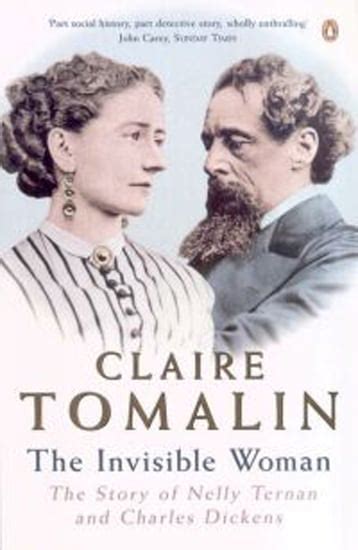
Wilkie Collins was a good friend of Charles Dickens, who had scandals of his own. The Invisible Woman: The Story of Nelly Tiernan and Charles Dickens is written by one of my favourite literary biographers, Claire Tomalin. Operating with rather sparse sources, she divides her book into three sections: first, Nelly Tiernan’s childhood and upbringing as part of a theatrical family; second, her hidden affair with Charles Dickens; and finally, her re-creation and rehabilitation of herself as a respectable school-teacher’s wife. Tomalin has written this biography with the bones showing – as she does with all her biographies- but in this case, the paucity of sources makes it hard to breathe life into this shadowy figure.

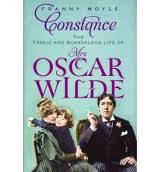
Writers seem to have made rather a habit of treating their wives badly, and biographers often struggle to bring their subjects out from the notoriety of their husbands. With Franny Moyle’s Constance: The Tragic and Scandalous Life of Mrs Oscar Wilde, she deals with the most notorious of husbands- Oscar Wilde- and his relationship with his wife Constance. When she married Oscar, they formed what we would now call a celebrity couple, noted for their radical aesthetic tastes and pre-Raphaelite sensibilities. Constance was a striking beauty. She too wrote stories, and she was well-known for her adherence to the principles of the bohemian Rational Dress Society. Moyle’s sympathies are very much with Constance, who despite changing her own and her children’s surname to “Holland” continued to love Oscar after his conviction, visited him in jail, and was equivocal about divorcing him although she gained a judicial separation from him eventually. (My review here)

So, here we are at the end. Even though Zoe Heller’s Notes on a Scandal is set in the present day, I see to have been wading around in the 18th and 19th centuries (my favourite stamping ground, I must confess). And I’m always attracted to a scandal….