
Monthly Archives: July 2022

Six degrees of separation: from ‘Wintering’ to…

It’s first Saturday of the month (already!) and so it’s time for the Six Degrees of Separation meme, hosted by Kate at Booksaremyfavouriteandbest. The idea is that she chooses the starting book, and then off you go on a riff of your own choosing, linking to six other books for whatever reason you decide.
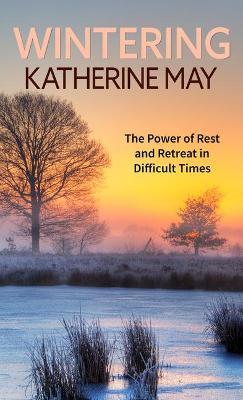
This month the starting book is ‘Wintering’ by Katherine May which, although published in 2020, I haven’t even heard of. Nonetheless, where is it going to take me?
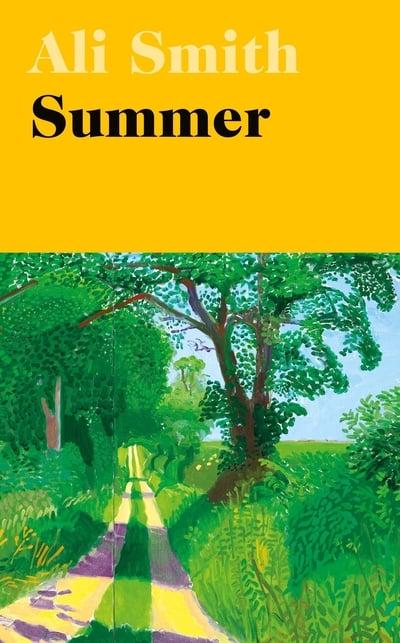
Naturally enough, if one thinks of ‘winter’, the mind leaps immediately to ‘summer’. I’ll go even further, thinking of all four of the seasons in Ali Smith’s Seasonal Quartet. Ali Smith wrote and released each book in successive years, starting with Autumn, and they were written in real time (i.e. each set in the year in which it was written). I really wanted to enjoy this quartet, but I found myself a bit disappointed in it. You can read my review of Summer, the final book in the quartet here.
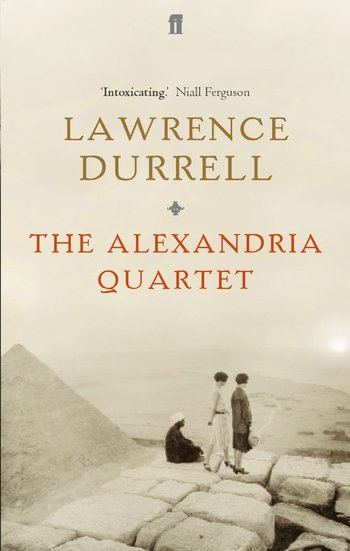
Have I read any other quartets? I don’t think I have. If fact, the only quartet I can think of is Lawrence Durrell’s Alexandria Quartet, published between 1957 and 1960. I haven’t read it/them but am tempted to do so, especially after the soft Saturday night viewing of ‘The Durrells’ where Josh O’ Connor plays Lawrence Durrell- (and hasn’t he done well?) Even though he seems a rather pretentious prat in ‘The Durrells’, his writing has survived his younger brother’s skewering of him.
But I have read Naguib Mafouz’s Cairo Trilogy, which was written just a little earlier than Durrell’s books (i.e. 1956, 1957), but not translated into English until the 1990s. I really loved its perspective on traditional Egyptian life and the repercussions of the political upheaval in Egypt in 1919.
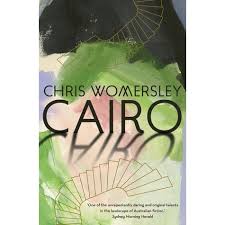
And thinking of Cairo, let’s jump to 1980s Melbourne with Chris Womersley’s Cairo, which refers not to the Egyptian city, but to the Cairo Flats that still stand opposite the Exhibition Buildings in Melbourne. We had a friend who lived there! (See my review here) I see that Womersley has recently released a followup, The Diplomat, which follows on from the very Melbourne story of the theft of Picasso’s ‘Weeping Woman’ from the National Gallery of Victoria.
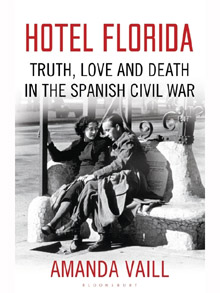
Picasso is best known for his painting ‘Guernica’ which brought the Spanish Civil War to world consciousness. It was a war that drew writers and intellectuals from the world over. Amanda Vaill’s Hotel Florida describes itself as a ‘narrative, not an academic analysis’ of six real-life characters: writer Ernest Hemingway and journalist Martha Gellhorn, war photographer Robert Capa and Gerda Taro, and press officers/censors/propagandists Arturo Barea and Isla Kulscar. All six stayed at the once-deluxe Hotel Florida in Madrid. (See my review here).
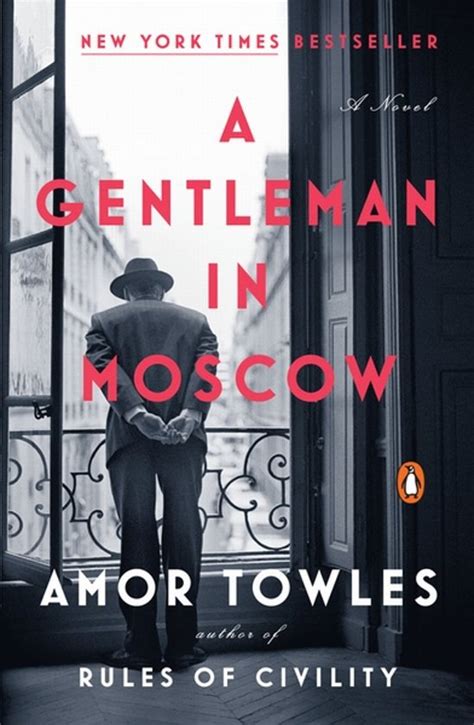
Another famous literary hotel is the Hotel Metropole in Amor Towles’ A Gentleman in Moscow. Like the Hotel California of the Eagles’ song, this was a hotel where “you could check in any time you like, but you can never leave”- if you’re Count Alexander Ilyich Rostov. As the vast history of twentieth-century Russia unfolds outside the walls of the hotel, he is under a form of house-arrest which means that he cannot leave the hotel and his world becomes encapsulated in the varying fortunes of the people who live and work there. (See my review here).

Well, I seem to have travelled quite some distance – UK, Alexandria, Cairo, Melbourne (!), Madrid and Moscow. Not quite ‘Rest and Retreat in Difficult Times’, eh?
I hear with my little ear: Podcasts 16-23 June 2022

History of Rome Podcast Episode 150 The Perils of Mismanagement. After the shock of the British uprising, Valentinian wanted to reaffirm Roman power. He started with the Allamani, near Heidelberg. He tried to get another tribe, the Burgundians to fight the Allamani but that didn’t work, so he sent Theodosius Snr. (again) to sort it out. Then there was Africa where Romanus, the Roman appointee was busy extorting taxes and threatening the citizens that he would set the Moors on them. In 372 a Berber Numidian prince named Firmus led an uprising, and Theodosius again was sent to sort this mess out. Even though Firmus was justified in leading a rebellion against the venal Romanus, he suicided after being betrayed. As part of his plan to reaffirm Roman power, Valentinian ordered that Roman military bases be established in Quadi lands on the upper Danube. They were not happy, so Marcellianus was sent to calm things down, but instead he killed their King. The Quadi were so enraged that they chased the Romans back over the Danube. Valentinian launched a punitive expedition in response, but eventually there was a peace treaty contracted with the Goths.

Episode 151 Bursting a Blood Vessel. Over in the east, the Goths had allied themselves with Procopius (Julian’s cousin) in Constantinople. Valens wanted to teach them a lesson, so that if he needed to leave Constantinople, he needed not fear an uprising in his absence. Meanwhile, Sharpoor was causing trouble in Armenia again, so the Romans appointed Prince Pap (what a name!). Unfortunately he was a bit of a dud so Valens arrested him, which brought Sharpoor back into Armenia. Meanwhile, Valentinian died of a stroke while was berating the Quadi ambassador. He had ruled over a transitional period, and although sort of successful in suppressing uprisings, there would never again be a powerful emperor.

Episode 152 The Storm before the Storm When Valentinian died, the troops anointed his 4 year old second son Valentinian as emperor. The older son, Gratian, who was 16, did not fight it, as he was no soldier. That meant that there were now three emperors: Valens, Gratian and Valentinian II. Meanwhile, there was a huge influx of Goths into the empire, who were fleeing the Huns who had come down from the Central Eurasian Steppe on their horses, with their powerful composite bows. The massing Goths on the border were treated badly by the Romans who rounded them up into refugee camps, where they were forced to sell their children into slavery, their leaders were arrested and the people were starved.

Things Fell Apart This is the final episode and ironically, Jon Ronson himself becomes part of the culture wars that he has been describing when parents starting protesting against his book ‘So You’ve Been Publicly Shamed’. Episode 8 A Mock Slave Auction looks at a social media racial pile-on at a majority-white secondary school in Michigan which prompted the school to pass a policy that they were going to address the issue. This became hugely contentious, and the resultant public meetings dragged up many of the things that Ronson has discussed: child pornography, gender identity, abortion and now the question of structural racism and unconscious bias. He interviews Robin DiAngelo, the author of ‘White Fragility: Why It Is So Hard for White People to Talk About Racism’. Wow- she is very confronting.

The Comb (BBC) I usually hear this advertised in the middle of the night while I’m listening to BBC World when I can’t sleep. Escaping the City looks at the phenomenon of admittedly middle-class, educated Kenyans moving out of Nairobi after lockdown. I was interested to hear the interviewee, Mugambi, talking about the changes in Nairobi during the 1980s and 1990s which saw it become ‘Nai-robbery’ and the resultant construction of glass-topped security walls and frisking on entry to any public building. This is the Nairobi that I knew when I visited my son over there, and it was interesting to hear that it hadn’t always been like that.

Soul Search (ABC) A friend told me about this interview with Joan Chittister on renewing community in a changing world. She is a Benedictine sister, and a feminist. She talks about her life, her spirituality and community, and her views on feminism.

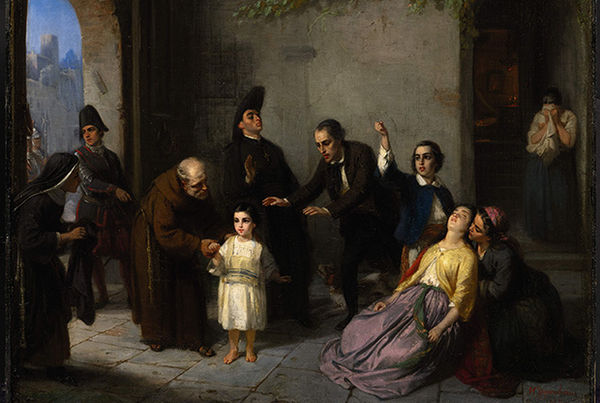
The highly inaccurate depiction of the ‘rescue’ (abduction) of Edgardo Mortara by Moritz Daniel Oppenheim, 1862 Source: Wikimedia

History This Week The Church Kidnaps Edgardo Mortara tells the story of a six year old Jewish boy, Edgardo Mortara, who is kidnapped by the papal police in 1858, on the grounds that he has been secretly baptised and thus must be removed from the corrupting influence of his parents. His parents fight back, challenging the claim and attracting international attention. It doesn’t look good for Pope Pius IX, who is fighting for his own authority in the heaving political scene of the Risorgimento, the political movement that led to the creation of the Kingdom of Italy. Even though the Pope’s power as a secular ruler was eroded, at a personal level, you’d have to say that the church won, as Edgardo ended up a Christian priest.