Monthly Archives: December 2021

I hear with my little ear: Podcasts 24-30 November 2021

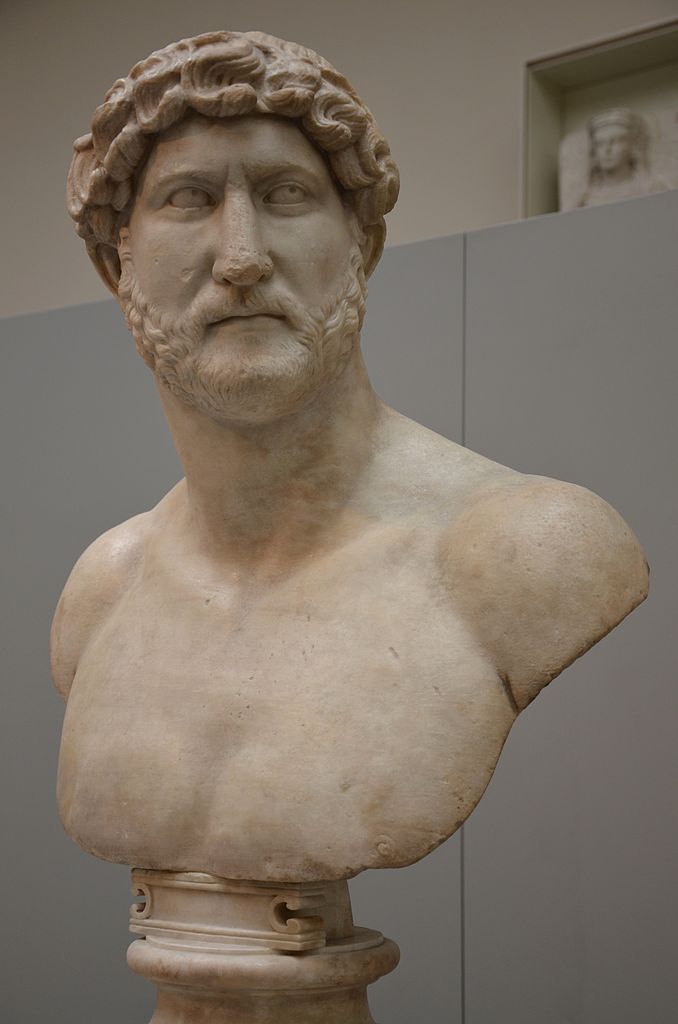
Wikimedia Commons

History of Rome Podcast Episode 81 The Greekling introduces us to Trajan’s younger cousin, Hadrian. He had been adopted by and brought up in Trajan’s house after his father died when Hadrian was 10. Even though Trajan didn’t push him forward as a successor, Trajan’s wife Pompeia Plotina was very ambitious for him and may have even manipulated the news of Trajan’s death to present his accession as a fait accompli. He was Governor of Syria when Trajan died, and he immediately ordered the withdrawal of troops from the recently acquired territory in the east- a very unpopular decision. But this ‘highly aggressive defence’ of the empire by withdrawing from contested and unruly territories marked his rein, and really annoyed the Senate who took pride in ‘Big Empire’. Episode 82 Hadrian’s Walls – The Romans had a god called Terminus, the god who protected boundary markers, and Hadrian today is best known for his boundaries- especially Hadrian’s wall (which was originally white-washed with a very different appearance to today) and also in North Africa, although in both cases the walls were as much for population control as anything else.. Hadrian’s reign started off with him putting down the Second Judean War, where the rather anti-semitic sources depict the Jews as being the main aggressors. After putting it down and securing Judea, he decided to reign in the Eastern boundaries and even made a settlement with the Parthians- a very unpopular policy given that the Empire had reached its widest extent under Trajan. He got off to a bad start with the senate with a string of assassinations of four ex-consuls who were accused of conspiracy against him, and the senators feared a second Domitian. However, he worked hard to appease the senate, and instituted popular acts like debt forgiveness and lots of games to win over the populace. Unlike Trajan, he micromanaged the provinces, spending a lot of his reign travelling around checking on his governors. Episode 83 May His Bones Be Crushed deals with Hadrian’s homosexuality. In many ways Hadrian was not a “roman” Roman. He loved Greek culture, he was Spanish, and he had a beard. Two things that were immediately dispensed with on his death were: 1 the amalgamation of the 17 provinces into just 4, making Rome just another province 2. The Pan-Hellenic League, a project to support the Greek city states coming together to make a powerful state. He fell in love with Antinous, a young boy (14?), who became his constant companion. But Antinous drowned in Egypt, and the grieving Hadrian deified him (which really annoyed the Senate) and started a cult of Antinous which almost rivalled the cult of Jesus. In 132 there was the second Jewish-Roman war led by Simon bar Kokhba, who claimed the independence of Judea. Hadrian crushed the revolt, in an act of cultural genocide, burning the Torah, banning circumcision and renaming it Syria Palaestina. Every time his name was mentioned, Jewish people would add “May his bones be crushed”. Episode 84 Longing for Death sees off Hadrian, dying of congestive heart failure. He had been obsessed with security and peace during his reign, and now he had to choose a successor. He overlooked his great-nephew Fuscus, fearing that he would be another Nero. He really wanted Marcus Aurelius, but he was too young. So he chose sickly, nondescript Lucius instead who died before Hadrian did. Then he chose the fairly unambitious Antoninus Pius, on condition that he adopt Marcus Aurelius and Lucius Verus. He did indeed long for death, and died aged 62, after ruling for 21 years.

Democracy Sausage with Mark Kenny. Lies, damned lies, and election campaigns addresses the question of civility, cynicism and truthfulness in politics. With a very good panel of Judith Brett (emeritus professor La Trobe University), Bernard Keene (Crikey) and regular podleague Dr Marija Taflaga, they come to the conclusion that things went downhill with Tony Abbott, both as opposition leader and then Prime Minister. An interesting episode.

Stuff the British Stole (ABC) It’s a living thing this time, but it was stolen anyway. Best.Named.Dog.Ever. is about the Pekingese owned by Queen Victoria, who was given a dog stolen as part of the sacking of the Old Summer Palace in Beijing in retaliation for the imprisonment and torture of diplomats in the wake of the Second Opium War in 1860. Check out the Old Summer Palace – it’s incredible, and is now more a tourist destination for Chinese people than western tourists because it has been incorporated into the Chinese ‘Century of Humiliation’ story. And what did Queen Victoria call her dog? You’ll have to listen yourself.

Boyer Lectures (ABC) Lecture 2: Soul of the Age- Order vs Chaos looks at Shakespeare’s ideas about power. Bell reminds us that Shakespeare was writing during tumultuous political times, with Mary Queen of Scots challenging Queen Elizabeth, and the Guy Fawkes terrorist plot. Shakespeare has ideas about Kingship (with Henry V his go-to guy), populism and order that he often had to drape in the clothes of past or distant civilizations. A better lecture than the first one- more specific, with better supported examples.

History This Week (History Channel) Here in Australia we always think that we are so important, and it’s always rather amusing to see how little we matter to the rest of the world. Freedom Rides Down Under looks at the Freedom Rides, based on the American example, that took off from the University of Sydney in late 1964/5 to visit outback towns in NSW. Anne Curthoys and Peter Read are featured, and there is sound footage from the time, capturing the anger in Walgett and Moree (rather oddly pronounced by the American host) when the embedded racism of the towns was publicized.

‘The Sweetness of Water’ by Nathan Harris

2021, 356 P.

SPOILER ALERT

I can remember when I was young, I sometimes deliberately stretched out the ending of a book because I feared that it was going to end badly for the characters. If I just left them there, suspended, the bad thing wouldn’t happen to them. Magical thinking, I know, but that’s very much the way that I felt when I only had about 50 pages of this book left to go. I would make excuses that my reading circumstances weren’t good enough- I was too tired, the light was poor, I’d enjoy it better tomorrow – but I know that it was because I feared the ending.

Over the last 18 months or so, I have been remediating my dearth of knowledge about American history by listening to Heather Cox Richardson’s history videos on Facebook. I really knew very little about the Reconstruction era: that 13 year period between 1863 and 1877 immediately following the American Civil War. The whole concept of a civil war chills me, with the contortions of morality and identity that must take place in order to be able to fight someone who shares language, place, experience. And then when it stops- what then? How do you step back from that?

Old Ox is a small town in Georgia, staunchly Confederate during the war, and resentful and broken afterwards. Emancipation has seen formerly enslaved people suddenly free, but without resources, money or plans. Many of them stay in Old Ox, some still living and working for their former owners, others building shanties under the eaves and in the alley-ways of the buildings in the town. Landry and Prentiss are hiding out in the woods where they are discovered by George Walker, a small-scale white farmer. They agree to work on George’s farm, planting peanuts, in return for shelter in the barn, food and a wage. They had been enslaved on a nearby plantation, and the cruelty of the owner, Ted Morton, had stripped Landry of speech. The brothers dream of finding their mother, who had been sold, and now that they can earn some money, they have a chance of doing so.

George’s sudden plan to plant peanuts is triggered by his need to turn his hand to something. He and his wife Isabelle are mute in their grief for their son, lost in the war. Never particularly close, now Isabelle in particular is engulfed by mourning, and largely oblivious to the two men in the barn, and George’s absence working the land by day.

Suddenly their son Caleb returns. He has sustained facial injuries, which we learn are not a battle injury, but instead meted out for desertion. His childhood friend- indeed, more than a friend- August had visited Caleb’s parents earlier to inform them of their son’s supposed death, and their secret sexual relationship starts up again. When they are discovered, a whole cascade of events is triggered, leading to George, Caleb and Prentiss fleeing north.

This is a beautifully told book. It has a slightly formal, 19th century lilt to the language and it’s hard to believe that the author is only 29. The characters have complexity, although George’s confidante, the prostitute Clementine, is less well drawn. It captures well this liminal time, when the gaping newness had not yet solidified into inevitability. It was long-listed for the Booker Prize, but it didn’t make the cut. It did make it as an Oprah Book Club read, for what it’s worth.

I really enjoyed it – once I had the courage to finish it.

Sourced from: Yarra Plenty Regional Library

My rating: 9/10

I hear with my little ear: Podcasts 17-23 November 2021

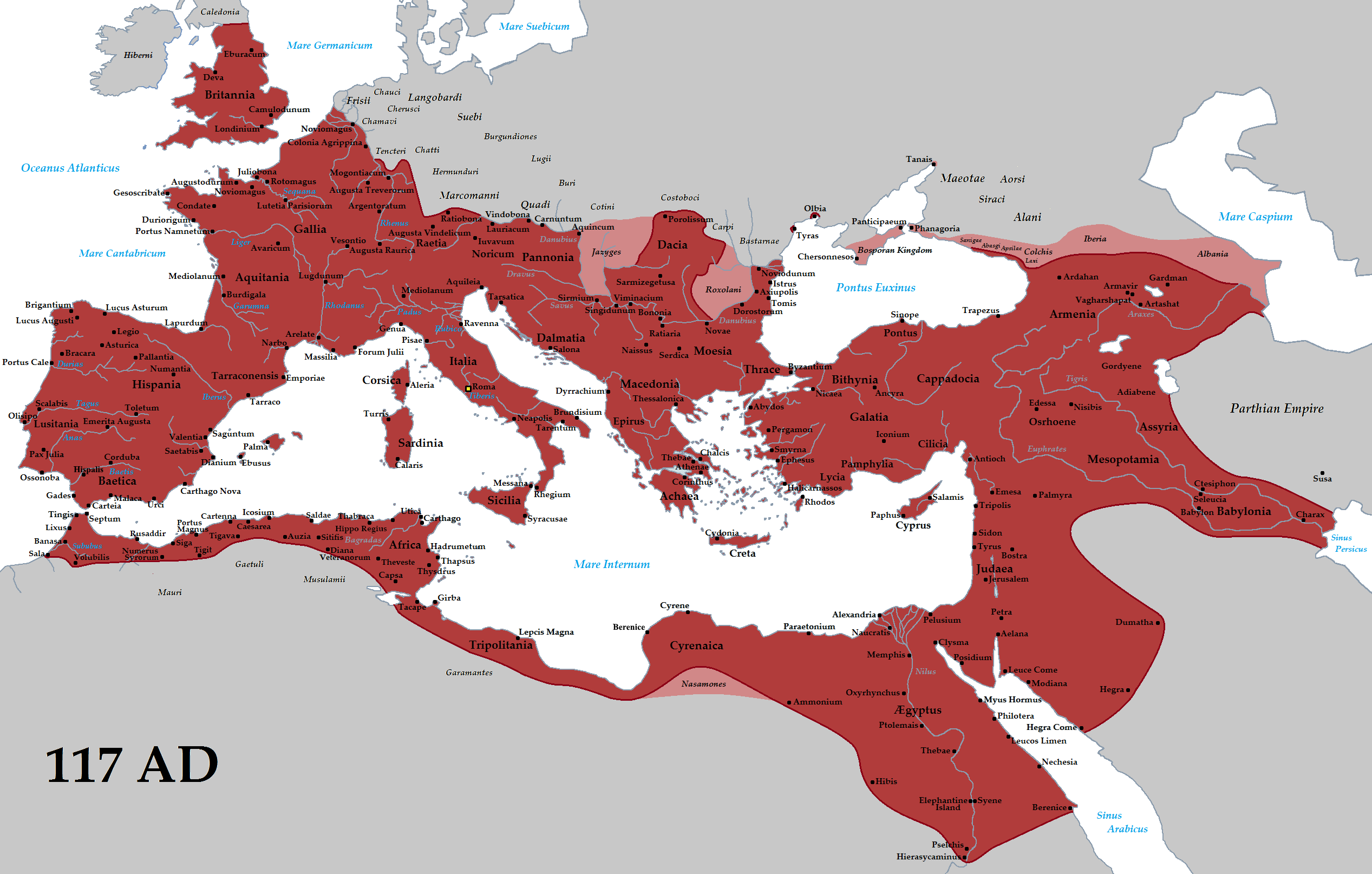
The History of Rome Podcast Episode 77 What Time Is It? follows through on Domitian, who after a rising in Germany led by Governor Saturninus in 89 AD, became even more paranoid and dictatorial than he was before. As a result, there was an explosion of edicts against him by the Senate, although the rank and file of the Praetorian Guard and the Legions remained loyal to him. He had been warned by a soothsayer that he would die at noon, and each day asked “What time is it?” and heaved a sigh of relief when noon had passed. In the end he was assassinated by court officials, who lied about the time. He was 45 years old, and had ruled for 15 years. Like Augustus, he was broad in his approach but he never had Augustus’ gravitas, and as soon as he was killed there was a concerted campaign to impugn his reputation. In Episode 78 Imperial Stopgap, the Senate now had to decide who to have as emperor, because Domitian had no sons. What the Senators really wanted was a childless old man who might choose one of their sons to be his successor. They settled on Nerva, who fitted the bill, but was never accepted by the troops of the Praetorian Guard or the troops of the Legions, with whom he had a strained relationship. He was a populist, with policies like low taxes and giving people stuff, but the economy faltered. He melted down statues and cancelled the games. The best thing he did was choose Trajan as his successor (and for this he is known as the first of the Five Good Emperors) and at least he died of natural causes, after 15 months. And hooray! We’ve reached the 2nd century A. D. (or C.E) Episode 79 The Dacian Wars sees Trajan biding his time while Nerva was still alive, and not appearing to be too eager when taking power. He was actually born in Spain, not Rome and was the second of the Five Good Emperors and officially acclaimed by the senate as optimus princeps (“best ruler”). He was an army man, but he knew that armies need good infrastructure, and this is what he is best known for building the Trajan Forum, the Trajan Market and the Trajan Column (which still stands). He defeated the Dacians (present day Transylvania) and incorporated it into the empire as an imperial province in 106CE. Episode 80 Optimus Trajan goes through the many good things that Trajan did: infrastructure, keeping the peace, and supporting the provincial governors to use their own initiative as long as it was for the common good. He was a friend of Pliny the Younger, and much that we know of him comes from the letters between them. He advised Pliny to give the troublesome Christians (who seemed to be spreading) an opportunity to recant without penalty, but if they refused, then to execute them. He launched another war against the Parthians, prompted by conflict over Armenia, and reduced it to client kingdom status. He reportedly said that he wished he was younger, so he could keep going to India, like Alexander the Great had done. But he wasn’t young, and he got sick and died at the age of 63 after a reign of nearly twenty years.

By Tataryn – Own work, CC BY-SA 3.0, https://commons.wikimedia.org/w/index.php?curid=19625326

Emperors of Rome Is it very naughty of me to cheat on Mike Duncan by listening to another podcast about Rome at the same time that I’m listening to his? I confess to feeling a bit apprehensive that all this Roman history is just washing over me- especially as all these emperors seem to have variations on about five names- and so I’d really like some of this information to ‘stick’. I had seen the Emperors of Rome podcast on my podcast feed, but I wasn’t expecting it to be Australian! And, even better, from ‘my’ university just up the road, La Trobe University. It’s presented by Dr Rhiannon Evans and Matt Smith, which means that there’s a nice interaction between them as presenters. You can really tell that Evans has academic chops compared with Mike Duncan, because she is very concerned with sources and documentation, whereas Duncan’s is more of a chronological, survey approach. Given that I’m up to Trajan with Mike Duncan, I launched right in to episode XLV In Trajan We Trust where I learned that Trajan is one of the emperors where most of our information comes from material ruins, rather than written sources. Episode XLVI – Trajan vs Dacia explained that Dacia is where Romania is today. Episode XLVII Pliny the Younger sidetracks a bit to go into the life of Pliny the Younger, the nephew of Pliny the Elder, who gave us probably the best account of the eruption at Pompeii. Episode XLVIII – Trajan: Optimus Princeps sums up Trajan’s life, and gives him a pretty good score. I’m delighted to have found this series. Even though these episodes were recorded in May 2016, the podcast is still going! They have a Facebook page with all their episodes too.

Australia vs the Climate (The Guardian) Part 4: Fossil Fuels looks at the influence of the fossil fuel lobby on the Morrison government- although it has been a potent force in Australian politics for decades. Most insidious is its inclusion in government climate change policy announcements- and sure enough, who is sponsoring Australia’s stand at Glasgow but Santos.

Conversations (ABC) The frequency of cleft lip or palate in Australia is 1:800 births. I’m often mystified: why don’t you see prominent people with them? As a person with a cleft lip and palate myself, I notice instantly when I meet someone else who has one (and I bet they notice mine too). But why aren’t they in Parliament, or on television, or writers at Writers Festivals? Good on you, Wendy Harmer, for being right out there. In The Trailblazer: Wendy Harmer Richard Fidler, a fellow comedian, talks with Wendy about her childhood, her surgeries, her career and her success.

Lit Hub The very scratchy Lit Century podcast looks at Freud’s 1930 book Civilization and its Discontents in the episode How Has Freud Changed the Way We Tell Our Stories. I haven’t read this book, and I don’t know if I particularly want to after listening to this podcast which made it sound Damned Hard Work. The podcast features Jessica Gross, the author of the novel Hysteria about a young woman’s relationship with Freud. They note the irony of Freud’s contention that with aggression curtailed, it turns inward- just as the world was to embark on another aggressive world war. Basically, they argue that Freud encourages us to ask why we, or a character in a story, are the way we are. Freud takes an idea which, self-deprecatingly he says is nothing new, then turns it upside down or pushes it out of shape. Both Jessica and the interviewer Catherine Nichols observed that they would be exhilarated and challenged by new ideas, but on shutting the book would be hardpressed to explain the idea to anyone else. But I really do wish they’d buy a proper microphone.

Six degrees of separation: from Ethan Frome to…

It’s the first Saturday of the month again, and so it’s time for Six Degrees of Separation, a meme hosted by Kate at Booksaremyfavouriteandbest. She chooses the starting book- in this case, Edith Wharton’s Etham Frome – and you think of six books linked in some way in your own mind: by the title, by the content, by theme, place of publication – whatever you want. It is a rare month when I have read the starting book and this month is no different: I have heard of it, but have not read it. But I do gather that it’s about a man called Ethan Frome, and so I’ll search through my reviews for fiction books with a man’s name as the title. I’ll stick to fiction, because biographies would be too easy.

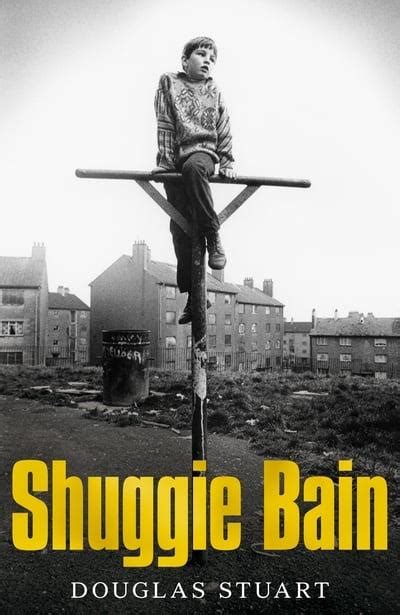
Shuggie Bain by Douglas Stuart won the Booker Prize in 2020. The book is a thinly disguised autobiography. Shuggie Bain is the youngest of three children, always fastidious and conscious of appearance. The woman whose appearance meant most to him was his mother, Agnes, whose attention to her dress, hair and makeup masked increasingly futile attempts to disguise her alcoholism. The book is set in a Glasgow ravaged by Thatcher’s economic policies. It tells a narrative well, its use of dialogue is good, the emotional tenor of Shuggie’s bond with his mother is nuanced, and Stuart imagines himself sensitively into Agnes’ befuddled mind. It is all of these things, but for me it didn’t have the literary heft that I would want a Booker Prize winner to have. (My review here).

It’s not really likely that you have heard of Bogle Corbet, written by land and emigration entrepreneur John Galt in 1833. It is a product of its time and taste, and rather forgettable. It comes as a three-volume edition, available through the Internet Archive and, dear me, if ever a format encouraged verbosity it must have been the three-volume novel. It is a thinly-disguised immigrant tract, aimed at the gentleman settler market encouraging them to emigrate to Canada, and although the fictional young Bogle travelled far from his Scottish origins- London, West Indies, back to Scotland, then Canada- not much seems to happen in this book. I had a particular academic reason for reading it, but unless you do too, it is probably best left languishing on the Internet Archive. (My review is here)

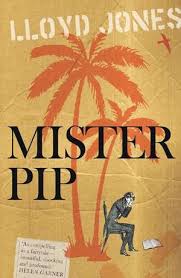
Mister Pip is actually the Pip of Charles Dickens’ ‘Great Expectations’ in Lloyd Jones’ book. (Come to think of it, Charles Dickens was rather fond of the male-name title- David Copperfield, Martin Chuzzlewit etc) The character of Pip was rather incongruously brought to a village in Bougainville by Mr Watts, (nicknamed Pop-eye), the last remaining white man on Bougainville after the implementation of the blockade by Papua New Guinea in 1990 and the descent into civil war between the ‘rambos’ (village boys who joined the rebel insurgency) and the ‘redskins’ (PNG soldiers). Mr Watts was always an outsider. He was quite frankly eccentric, pushing his demented village wife around the village in a shopping trolley. But somehow he managed to interweave the experience of Pip and his great expectations into the shared knowledge of this small Pacific village. (My review is here)

Jasper Jones by Craig Silvey is set in 1965 Charlie Bucktin, the bookish, nerdy, teacher’s son is startled by a knock at the louvres of his sleep-out when Jasper Jones, the town ‘bad boy’, calls him out into the backyard. Somehow or other Jasper Jones cajoles him into assisting with the disposal of the body of a young school acquaintance that Jasper found hanging from a tree in his special place in the bush. This young girl was Jasper’s secret girlfriend and Jasper is terrified that he will be blamed for her murder. Even though this book has garnered much praise, and found its way onto myriad secondary school reading lists, I wasn’t that impressed. There is a self-indulgence in lengthy digressions and internal dialogues, and an indulgence too in the number of themes the author crams into the book: first love, friendship, bullying, police brutality, racial prejudice, marriage breakup, incest, youth suicide, social exclusion. But perhaps you love it? Many people do… (My snarky review here)

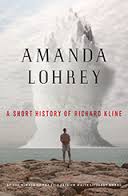
The title of Amanda Lohrey’s A Short History of Richard Kline is a bit longer than just the name, but I’ll count it anyway. The blurb on the back of this book describes it as “a pilgrim’s progress for the here and now”. I can see the likenesses: Pilgrim’s Progress has Christian, its everyman character not unlike the eponymous Richard Kline in this book; Christian and Richard are both on a spiritual journey and quite frankly, just as with Bunyan’s book, not everyone is going to want to go along the path with Richard Kline either. I wasn’t enthusiastic about this book either and you can find yet another of my snarky reviews here.

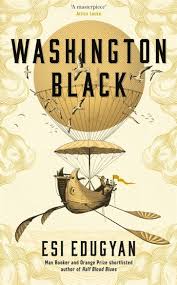
Oh dear, there’s a lot of books here that I didn’t care much for, and I’m coming over as a bit of a moaner. I’d better close with a book that I did enjoy whole-heartedly. I really enjoyed Washington Black by Esi Edugyan where a young enslaved boy from the canefields of Barbados end up in places as diverse as the Arctic, Nova Scotia, England and Morocco. This book works on a big canvas, reminding me oddly of a Dickens novel in its scope. It crosses the globe, and it has big characters. It is at heart a quest novel, although shot through with yearning, injustice and beautiful description. (My very positive review is here).

‘The Pastor’s Wife’ by Elizabeth von Arnim

Originally published 1914, 492 p.

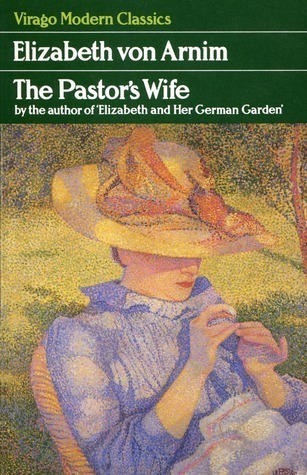
Where has Elizabeth von Arnim been all this time? Or rather, where have I been? – because she was here all along, even though I had never heard of her until I read Joyce Morgan’s The Countess from Kirrabilli (review here) and Gabrielle Carey’s Only Happiness Here (review here) It was Carey’s book that finally nudged me to actually read one of her books, instead of just reading about them, and I’m so glad that I did!

Ingebord was the daughter of a bishop, and had been brought up to be his clerical assistant, as her mother had taken to the couch “ill” and her sister was busy on the marriage market. No-one in the family expected that Ingebord would be anything other than a clerical assistant until one day, sent into the city to visit the dentist for what was assumed would be a week-long procedure, she found herself free after just one day and standing outside a travel agent with money in her purse. On the spur of the moment, she bought a ticket to Lucerne. On her trip she met Robert Dremmel, a Lutheran pastor, and very shortly married him. But after traumatic childbirth experiences and the deaths of several children, she resisted Robert’s pressure to have more children. Angry at her intransigence, he plunged himself even further into his agricultural hobbies, and deliberately withdrew both emotionally and physically from her. When an English artist, Ingram, came to stay in their small village, she was swept up into an unwitting courtship that led to her accompanying Ingram to Italy. There she had to decide whether to follow her besotted but feckless lover, or to return to a stable but loveless marriage.

Ingebord is a frustratingly fey, innocent character. She is largely moulded by the people around her, and passively drifts into other people’s plans for her- until all of a sudden she breaks out for one of her abrupt, life-changing decisions. But she also hungers for beauty and happiness, and opens herself up to new people and experiences where-ever she can find them – quite difficult in a small German village, where she does not speak the language and is largely ignored.

This book was written in 1914, and it certainly has that slight archness of ‘old-fashioned’ writing. It is very wordy: rather ironically, it reminded me quite a bit of the more recent writing of Jonathan Franzen and Philip Roth in its panopticon vision of the thoughts and motivations of different characters, which are explained at some length. But it also has a Jane-Austen-esque wit, as if the author is winking at you. It’s a pleasure to read complex sentences that are so well-constructed, and which flow so smoothly. I often found myself chuckling away (more, in fact, than I did with Miriam Margolyes’ book).

Yet, although it might be styled as a ‘comedy’, there is a great deal of truth about human nature in this book. Von Armin captures so well the draining nausea and fatigue of early pregnancy; she writes sensitively about the sharp pain caused by another’s indifference, and as Gabrielle Carey notes, von Armin luxuriates in the glow that happiness brings. The Pastor’s Wife was far more perspicacious and witty than I expected it to be – thank you Gabrielle Carey for sharing your pleasure in her work with me!

Rating: 9/10

Sourced from: an omnibus e-book that still has lots of other Elizabeth von Armin stories to enjoy

AHA Conference Day 3: 2 December 2021

A bit of a disrupted day today, because I had a Spanish conversation class at 9.30, then a book group lunch. So I just caught what I could.

I started with the ‘Lets Talk about things: Sydney region Aboriginal objects in overseas museums, for instance’ session. This seemed to be in a panel format, with the presentations referencing each other, and delivered one after the other with questions (I assume) at the end. Maria Nugent started off by talking about the Gweagal shield, which came to Australians’ awareness with the NMA ‘Encounters’ exhibition in 2016. Maria explained, in keeping with her argument in her Australian Historical Studies article of 2018 ‘A Shield Loaded with History: Encounters, Objects and Exhibitions’, there is doubt about whether the shield really was associated with Cook at all. But it has given rise to a project to find and return cultural material from museums across the world. Eleanor Foster then took over, talking about her project to locate and contextualize objects found in the Hunter Valley between 1826-1839. Regionally-focused object-directed research places importance on the context and relationships behind objects, rather than the qualities of the object or the collector. She spoke about metal fish-hooks which had previously been thought to come from Tahiti, but which documentary evidence suggested had been part of the exchange on Threlkeld’s mission (where they were swapped in exchange for information) or Dawson’s mission at Port Stephens (where they were swapped in exchange for other types of fish hooks). Then there were the fishing spears that Lady Perry wrote about in letters – she had real trouble in tracking any down to send ‘home’, perhaps because there were fewer produced, or were more tightly held by their indigenous makers. Then Paul Irish, who coined the term ‘affiliated coastal zone’ to describe the Hunter Valley region, spoke about the importance of the work being done by Gaye Sculthorpe and Danny Simpson in tracking down objects in different museums internationally. Objects often have no documentary links at all, and often the museum itself wants to know about the object as well. Finding similar objects in different repositories (often on different continents) means that they can be compared.

Entonces era la hora de mi clase de español

Spanish class over, I returned to catch the 11.00- 12.15 session ‘Defending White Australia’. I knew that I would have to leave this early too, as I was due to leave for lunch at 11.45. But the two papers I heard were excellent. Deirdre O’Connell (who has recently published Harlem Nights) spoke about Billy Hughes’ years on the backbench, after resigning as Prime Minister in February 1923 in her paper ‘This Bit of the World Belongs to Us: Billy Hughes, vigilante enforcement and the White Australia Policy’. In 1924 he embarked on an American tour, at the invitation of the English Speaking Union, arriving just as the U.S. government hammered out the Johnson Reed Act (also known as the Immigration Act) of 1924 which banned non-Nordic immigration. In March he was in Dallas, where the Ku Klux Klan hosted its Kolossal Karnival. While it is impossible that he would have been oblivious to the KKK’s presence, there is no evidence that he met with them. On his return, after a period of quietude, he hooked on to the arrival of Italians, and the deportation of Sonny Clay’s Negro Minstrels (hence Deirdre’s interest) and made a fiery speech at the National Party’s conference, advocating vigilantism. Joseph Parro‘s paper ‘Unfinished revolutions: unfinished examination: Australian fascism after the Second World War’ saw 1945 as a turning point, with the execution of Mussolini and with the Third Reich in its death throes. He focused on Tom Graham, who had arrived in Australia from Britain in 1936. He was jailed for pamphlets he had written, then interned. For him, the revolution was unfinished and called for nuclear weapons to wipe out ‘the Rabble’. Although he has been dismissed as a ‘crank’, we need to look at the heterogenous, adaptable, network-focussed, international nature of fascism, especially in view of the contemporary extreme right.

Lunchtime at the pub!

Finally, I caught the roundtable on ‘Unsettled Domesticities’. The chair, Victoria Haskins, reminded us that we were zooming in from our homes, but we were all living on unceded aboriginal lands, and the implications of that for an indigenous sense of ‘home’. Penny Russell gave a personal reflection on the exhumation in 2019 and recent reburial of the bones of her great-great-great (I lost count of the greats) grandfather, whose remains were exposed by rail works. The large plate on his coffin indicated who he was, but the family history that Penny has uncovered reveals him as an insular, authoritative man who emigrated to Australia in his 50’s, bringing with him his middle class, evangelical, entrepreneurial domesticity which he planted on the other side of the world. Katrina Dernelly‘s paper ‘Mrs Morland and Isabella Murrell: a husband’s cruelty on the Victorian goldfields’ told of the murder of Isabella Murrell by her husband William who literally beat her to death. He argued that he was trying to ‘reform’ her and that it was a crime of ‘passion’ (still a defence in UK) so that the charges could be reduced to manslaughter. Here, home was no refuge. Andrew Gorman-Murray who is a cultural geographer spoke of domesticity as a spatial concept. The ‘home’ is imagined as a heteronormative space, which has implications for queer home-making. He pointed out that for many homosexual men, privacy could only be found in public, and suggested that domesticity was a privilege. Perhaps ‘anti-domesticity’ is when an imagined home cannot be put into practice. Finally, Karen Agutter looked at displaced persons arriving in Australia post WWII and their accommodation in reception centres. Men were expected to work as labourers and women as domestics, no matter what their career had been previously. Families were often separated, and meals were held communally (although the ‘family meal’ was rather an English concept). It was difficult for families to get out of the reception centres because of high rents both for the hostel accommodation itself and ‘outside’ in the open rental market.

And so that was the end of the AHA Conference 2021. I’m looking forward to catching up on some of the sessions that I missed, because they will be available for a short time afterwards for attendees. That’s always one of the bugbears of a conference- wanting to be in two places at once. So, perhaps Zoom is not all bad. In fact, it’s not even half bad – think how hard things would have been over the last two years without it. But I still crave the morning tea muffin, and a club sandwich and a nametag. I’ll just have to make sure I get them in 2022 at some conference somewhere.

AHA Conference Day 2: 1 December 2021

For the 9.00 -10. 15 session, I attended the ‘Language, Identity and Class’ stream. Amanda Laugeson started the session with her presentation ‘Finding an ‘Australian Voice’? Constructing Australian English 1940-1960′. It always strikes me when I listen to a newsreel from the 1950s and 1960s how different the narrator sounds from today. The shift to an Australian rather than British accent has generally been seen as a mark of burgeoning nationalism. Amanda’s paper looks at the role of A. G. Mitchell whose 1941 book The Pronunciation of English in Australia distinguished between ‘educated’ and ‘broad’ Australian English (and during the 1960s he added ‘general’ Australian English’). He saw accent as a unifying feature. Unlike those who deplored the ‘lazy’ and ‘nasal’ Australian accent, Mitchell claimed that there was nothing to be ashamed of, and that it reflected education rather than class (a rather circular argument). Mitchell was a member of the ABC board during the 1950s and held up Robert Menzies (!!) as the ideal. Caitlyn Adams’ paper ‘What happened to class? The language of social hierarchy’ went back nearly 200 years to look at the language that was used in petitions for clemency generated by prisoners in both England and New South Wales in 1810 and 1825. She distinguished between ‘Elite and middling’ and ‘plebian’ petitioners in both settings. Both groups used the language of status (‘respectability’, ‘poor’, ‘humble’,) but colonial society was more likely to see the colony as a place to regain their respectability where petitioners from the metropole referred more to referees who could attest to their respectability (probably because prisoners sent to NSW had lost all of the contacts who could have spoken for them ‘back home’.) She is using NVivo to create both a qualitative and quantitative analysis. Finally in ‘The Unfinished Nation: Contesting Symbols of Australia’ Richard White (who struggled with low bandwidth) spoke about his 2010 book Symbols of Australia which is currently undergoing revision for a new edition. In a largely visual presentation, he pointed out that both the first and last Holdens are now museum items; that the Southern Cross used to be the most popular tattoo and now it is the most commonly lasered-off tattoo; that the wattle and the waratah vie as floral symbols (and the meaning changed after the Bali bombings); that the place of Uluru has changed with the ban on climbing the rock and the Uluru Statement, and that our Prime Minister wears baseball caps instead of Akubras. Even things that we view as being fixed symbols are subject to change: the flag and the coat of arms have changed subtly over the years, and the red ensign has been taken up as ‘the people’s flag’ in the anti-vax protests.

And then I stopped for a Pilates class. Life does go on.

Between 11.00 and 12.15, I attended the ‘Colonial Violence’ stream. In Naomi Parry’s paper ‘Looking into Shadows: Musquito and Black Jack and a Death Mask made of country’, she talked about the way that her biographical project of writing about the life of Musquito, the indigenous bushranger, has changed over time. Musquito was born in Port Jackson, was exiled to Norfolk Island and then moved to Van Diemen’s Land in 1814 as a tracker. In 1823 he was arrested for killing stock-keepers on the east coast, and hanged in 1825. Six white bushrangers, and another indigenous young man Black Jack, were executed together. Her attention had been totally on Musquito, and the different ways that he has been conceptualized – murderer or warrior – but on seeing the death mask of Black Jack, she realized that there was another, broader story to be told too. Ryan Stewart‘s paper ‘Henry Kendall- An Outsider Reporting Violence and Massacre on the Australian Frontier’ picks up on Lyndall Ryan’s observation that it took about 40-50 years before local people would start talking about a massacre. The poet Henry Kendall came to Darkinjung country (near Wyong and Terrigal) in 1873 in a state of despair. He heard talk of massacres that occurred in the 1830s, (thus fitting into Lyndall Ryans 40-50 year timeline) and wrote about them in 1875 and 1879 drawing on the stories of settlers and their descendants. As an ‘outsider’, Kendall was able to write about things that locals could not. Finally, in ‘Revisiting the Bathurst War 1822-24’ Stephen Gapps highlights the war around Bathurst (Gudyarra) that has generally been overshadowed by the Sydney War. Martial law was declared because cattle-killing and the abandonment of convict stations, but unlike the Sydney War, it was not the military who “quelled” the resistance, but settlers themselves who later reassured themselves that the Aboriginal people had “disappeared”. Once again, there was a long gap between events (in this case in 1822-4) and ‘old timers’ talking and writing in the 1880s – and Stephen is still hoping to find more information amongst family letters and through historical societies.

After lunch, I attended another Australian Womens History Network stream, this time on ‘The Business of Women’s Bodies II’. Jane Carey‘s ‘Population, Reproduction and British Settler Colonialism in the Early Twentieth Century’ started off with an image from a 1915 textbook that represented UK, Canada, Australia, South Africa, and New Zealand on a scale according to their white population (i.e. UK with its white population of 45 millions was much bigger than Australia with 4.5 million). There was alarm across the empire that the white population in the settler colonies was not increasing quickly enough, and reflecting Foucault’s conceptualization of population as an economic and political problem, there was an emphasis on birthrate, age at marriage, precocity and frequency of sexual relations- things that could be counted. Alison Downham Moore spoke of her work as part of an interdisciplinary project on the history of medicine with her paper ‘The Unfinished Business of the Dark Side of Gynaecology’. In particular she looked at non-consenting experimental surgery with the targetting of disadvantaged, rural, older (i.e. late 40s and 50s) women for hysterectomies between 1830 and 1898. In particular, she looked at Jule Peán from St Louis Hospital in Paris, who conducted surgeries for public viewing. Reproductive surgery was very popular because the organs could be removed without compromising the health of the individual (if they survived the surgery, which was certainly not guaranteed). It was a surgery that was rarely carried out on wealthier women, or the wives of colleagues. And for something completely different, Kirra Minton presented on Dolly Doctor, in her paper ‘With frankness, with knowledge, but most of all, with sincerity’. Dolly magazine, Australia’s first Australian exclusively teen girl magazine, had a ‘Dolly Doctor’ segment, right from its first edition in November 1970. Initially it was written by a male doctor, but later doctors were all women, with Melissa Kang fulfilling the role for 23 years . Dolly took sex education seriously, engaged its readers and outsourced the provision of information to professionals, leading to a 100% accuracy rating when studied in 2016, compared with 26% accuracy in Women’s Health magazine. Yet, for it’s first decade, the messages that were being conveyed in Dolly Doctor were completely at odds with the emphasis on whiteness, thinness and heteronormative sexuality being promoted in the rest of the magazine.

It’s December. I’m allowed to have a mince pie for afternoon tea.

My final session for the day was the ‘Trajectories of the Right in Australia after 1968: When the personal became reactionary’. Just an observation, but this session had more male participants in it than any other session I had attended. Tim Jones spoke about his work on the new Christian Right and its expression through Creation Science and the Anti-Gay Movement. These movements were interdenominational, and even interfaith. Creation Science has its origins in Joh Bjelke-Peterson’s Queensland, but it is now an international movement, based in U.S. The Anti-Gay religious movement started in the 1970s when psychiatry stopped treating homosexuality as pathological, and local Australian groups became subsumed under Exodus Asia Pacific. It has now formally disappeared because there is Australian legislation against it. This was followed by Clare Monagle‘s paper ‘B. A. Santamaria as Culture Warrior’. B.A. Santamaria was for many years synonymous with Catholicism, but when the sectarian division was abandoned (largely over the shared concern for government funding of independent schools), different denominations came together to lobby against the cultural revolution of the late 1960s. Santamaria’s National Civic Council changed its emphasis on placing conservatives inside the unions and Labor Party to look instead to the ‘alienated avant guard’ in universities and other institutions. Santamaria, a political operator, explicitly moved to culture – and we can see the fruits of his labour today.

And thus Day 2 ends. Other commitments call me tomorrow, so I don’t know how much of Day 3 I will be able to attend.