
History of Rome Podcast. We left Julius Caesar with his one legion, banned from returning to Rome until he stood down his men. In Episode 43 Insert Well Known Idiom Here, Caesar feared that if the Senate found him guilty of bribery, then his political life would be over. (Everyone bribed everyone else, but they were more subtle about it). So he crossed the Rubicon (a small river) to invade Italy. But the Senate and Pompey had already decamped for Capua so it was a bit of a fizzer. In Episode 44 Caesar Triumphant he pursued Pompey and the Senate over to Brundisium and then to Greece, leaving Mark Antony in charge of Rome (big mistake). Pompey escaped to Egypt, but the Egyptians, hoping to curry favour with Caesar, killed Pompey when he got into the small boat to convey him to land. Caesar was furious (Pompey was, after all, part of the First Triumvirate) so Caesar supported Cleopatra, who had been tricked out of her claim to the Ptolemy throne. They became lovers, and when Caesar sailed back to Rome he left Egypt as a client state (rather than a colony) with Cleopatra in charge. Episode 45 The End of the War sees Caesar taking the overland route back from Egypt back to Rome and along the way pacifying what little resistance he came across. After a brief stay in Italy he sailed for North Africa where he defeated the regrouped Republican army (after a rather inglorious stumble onto the beach- he claimed he was ‘hugging’ Africa. I must remember to do that if I fall.) Having emerged from the Civil War triumphant he returned to Rome and began his ambitious reform programs. Although Cicero acquiesced, Cato killed himself. The conservatives were becoming uneasy at Caesar’s self-aggrandizement. Episode 46 Sec Semper Tyrannis Caesar was trying to get his internal reforms passed but he had to go to Spain to fight the Sons of Pompey who had raised an opposition force. He also planned a Parthian campaign to avenge Crassus’ death in the east, and to circle round and take Germania while he was at it. He had himself declared Dictator for ten consecutive terms, but went one further by having himself declared Dictator for Life. After all these centuries, people were still wary of Kings, and there were rumours that he wanted to become King. His enemies began conspiring and planned (and carried out his assassination on 15 March- the Ides of March). He probably didn’t say ‘et tu Brutus’ and Brutus didn’t say ‘Sec Semper Tyrannis’ either. So there, John Wilkes Booth (Lincoln’s assassin- he claimed to have said it as he attacked Lincoln). Episode 47 Octavius- Octavian. The now-dead Caesar had a little surprise for Mark Antony, who fully expected to be named Caesar’s heir in his will. No, instead it was his 19 year old great nephew Gaius Octavius. Caesar adopted him posthumously (can you do that?) and he changed his name to ‘Octavian’ to denote that he was adopted (he would later change it again to Augustus). Both Mark Antony and Octavian vied for the loyalty of the legions. Even though he was no great fan of either man, Cicero spoken out against Mark Antony who was trying to usurp Octavian’s popularity. In Episode 48 The Second Triumvirate, Marc Antony, Octavian and Marcus Lepidus formed the Second Triumvirate in 43 BC. After using the tried and true method of proscriptions to raise funds through land and wealth confiscations and as a way of purging their enemies, the Triumvirs headed east, where they defeated Brutus and Cassius at Philippi. Then Mark Antony headed off to Parthia, where he was hoping to reinforce his authority by beating them, and then he wouldn’t have to work about this pesky Second Triumvirate any more. Episode 49 Apollo and Dionysus sees Mark Antony and Octavian circling round each other warily. After winning the Battle of Philippi Antony and Octavian divided the empire into two halves. Antony took control of the east where he formed an alliance with Cleopatra (who was in need of powerful patrons now that Caesar was dead), while Octavian commanded the west. They extended the Triumvirate for a further term, but neither trusted the other.
Nothing on TV Enough Rome. I want to hear something Australian, and nothing sounds more Australian than Robyn Annear! In What is Really Real, Robyn has been given some more recent REAL crinkly newspapers instead of having to scroll through on Trove. She starts off talking about the moon landing and ends up talking about girdles- as you do. She then looks at the Advertiser, the forerunner to the Leader newspaper group, from the 1930s. I was excited about this, because the Advertiser (formerly the Evelyn Observer) covered the Shires of Eltham and Whittlesea and the City of Heidelberg- why, it’s my home turf. This episode differs from her other ones, because there is no over-arching theme, but it was good fun and especially being local (to me!)
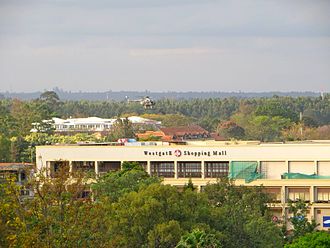
The History Hour (BBC) My son was in Nairobi in September 2013, and I remember the fear I felt on hearing of the Westgate Mall attack. On my later trips, I didn’t ever visit Westgate, but I visited enough other shopping malls to be able to imagine what this must have been like (hint- they are very much the same as shopping centres in Melbourne). This episode Kenya: Westgate Mall Attack also has a story about a 1990s ‘miracle water’ craze just outside of Mexico City, and the poisoning of Alexander Litvinenko. Plus the amazing story of how a journalist revealed the secret romance between Aristotle Onassis and Jackie Kennedy, and, with the launch of the new James Bond movie, a segment on how James Bond has changed since Ian Fleming first created him in 1953! God, he’s older than I am.
Blindspot: The Road to 9/11 Episode 2 The Mole features Emad Salem, an ex-soldier from the Egyptian Army, who had migrated to America. He maintained his hatred for Omar Abdel-Rahman — known as The Blind Sheikh– for orchestrating the assassination of the Egyptian president Anwar el-Sadat. When he is approached by NYPD Detective Louis Napoli and FBI Special Agent John Anticev who ask him to infiltrate the Brooklyn mosque led by the Blind Sheikh, he accepts. But then Napoli and Anticev are forced to pull him from the job, even though the members of the mosque were clearly plotting something. Meanwhile, you find yourself shaking your head at how these terrorists managed to get into America.


 The Resident Judge of Port Phillip
