Monthly Archives: January 2021

I hear with my little ear: Podcasts 24-31 December 2020

Heather Cox Richardson I’m back listening to her history podcasts on Thursdays her time. Her podcast of 10 December starts with the assassination of Abraham Lincoln and the takeover of power by Andrew Johnson, a Southern Democrat vice-president, who “fixed up” Reconstruction in a few months before Congress returned, by returning power to the southern Confederates. What an ****hole. No wonder many historians consider him the worst president in American history ( I wonder if DJT will knock him from No.1?)

Latin American History Podcasts I’m on a bit of a Mexican History quest at the moment, having enjoyed the SBS series Hernán and re-read Anna Lanyon’s Malinche’s Conquest. Max Serjeant is a travel writer and journalist, currently based in Western Australia. His podcasts are nothing flash technologically, but the narrative is well written. I’ve started off (as you might expect) with The Conquest of Mexico Part I.

It’s a Wonderful Lie We don’t seem to receive those Christmas yearly updates sent to family and friends any more. Perhaps because people like Ashley Flowers, Holly Laurent and Greg Hess make podcasts like Its a Wonderful Lie where they read between the lines and out-and-out make up stuff about these lives that are being put out there for everyone to read. There’s 12 of them, each self-contained and each going for about 20 minutes. They provide a little window into middle-class American life, and the CCPVC episode is particularly interesting. So mean. So funny. I listened to them all, laughing my head off, as I walked around the park.
Six Degrees of Separation: from Hamnet to….

The Six Degrees of Separation meme is described at Booksaremyfavouriteandbest . There is a starting book (for January 2021 it’s Maggie O’Farrell’s Hamnet), then you think of other books that you have read that are somehow and usually tenuously connected. In this case, I start off with Shakespeare’s son and end up with Dante Rossetti’s muse. As is often the case, I haven’t read the starting book but I have downloaded it, which is half-way to reading it (isn’t it?).

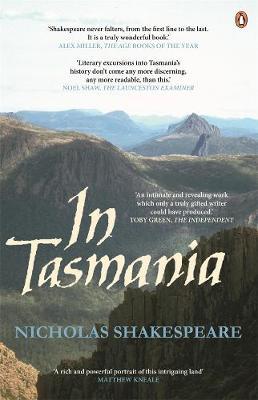
Shakespeare- such a famous surname for a writer- and so I jump to Nicholas Shakespeare, a recent immigrant to Australia, who writes about his search for two ancestors from his family tree in his book In Tasmania (2004). One was the army officer and merchant Anthony Fenn Kemp, and the other Petre Hordern, an alcoholic from a wealthy family who drags his family into poverty.

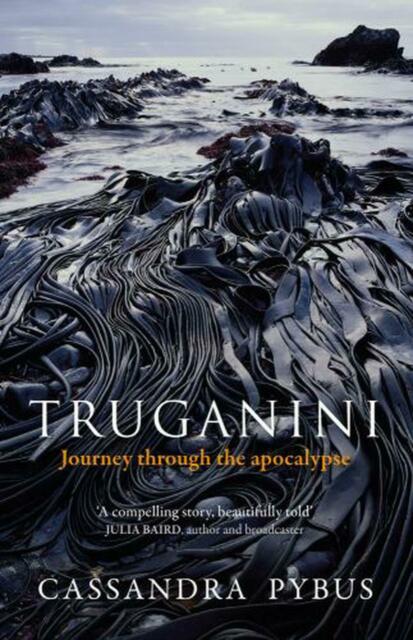
As part of his search for Kemp descendants, he visits a newly-found Kemp cousin who brings out a shell necklace supposedly owned by Truganini, supposedly “the last full-blood Aborigine” (or so we were told at school back in the 1960s). Cassandra Pybus gives a much more rounded view of Truganini, and her agency across the British colonies of Van Diemens Land and the Port Phillip District of New South Wales in Truganini: Journey through the Apocalypse. (2020)

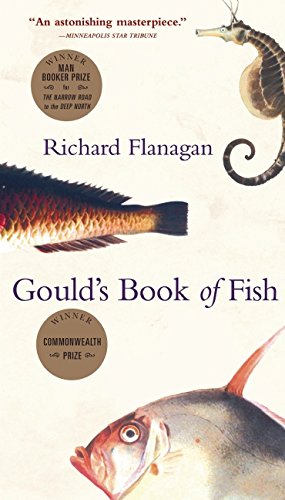
One of my favourite books about Tasmania -indeed, one of my favourite Australian books full stop – is Richard Flanagan’s Gould’s Book of Fish (2001) , a beautifully illustrated and imaginative, magical realist book, based on the life of convict artist William Buelow Gould but going far beyond the historical character. I read this book before I started blogging. Flanagan has written many wonderful books since, but this is my favourite.

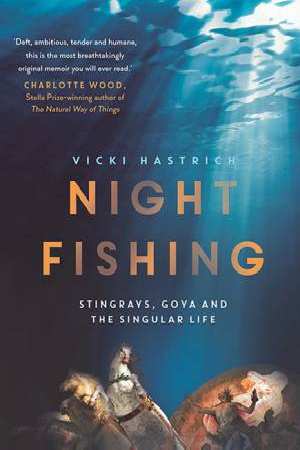
Speaking of fishing, Vicki Hastrich spends quite a bit of time messing about in boats in her Night Fishing (2019), a collection of essay-length memoir pieces tied together with the theme of boats and fishing, but with reflections on other things as well.

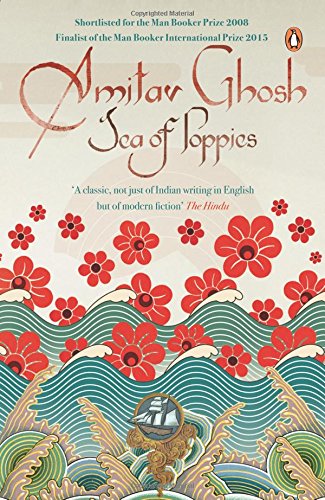
A boat – or rather a merchant schooner called ‘The Ibis’ runs through Amitov Ghosh’s Ibis Trilogy starting with Sea of Poppies (2008). Within the 468 pages of this book, first we have the arrival of a boat, its provisioning and then its slow movement down the river towards the open sea, collecting characters along the way. There’s no sign of it here, but the trilogy is going to end up embroiled in the Opium Wars as part of the economic model underpinning British imperialism.

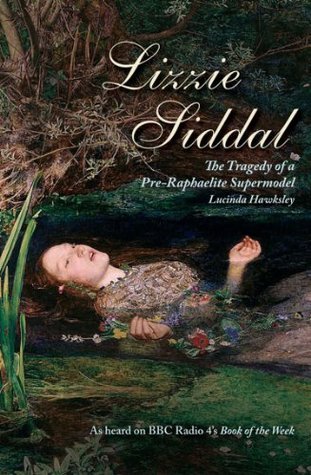
At the other end of the opium trade were the British users, although in this case the opium was marketed as laudanum. Elizabeth Siddal, model for artists from the Pre Raphaelite Brotherhood and lover of Dante Rossetti, eventually succumbed to her laudanum addiction in Lucinda Hawksley’s Lizzie Siddal: The Tragedy of a Pre-Raphaelite Supermodel (2004).

Well, that turned rather dark, didn’t it?- both the title characters, loved by famous writers, end up dead. On a lighter note, I’m pleased that I’ve been able to include some ‘older’ back-catalogue books, with a good sprinkling of Australian authors.