
Monthly Archives: April 2009

‘The Judicial Bench in England 1727-1875’ by Daniel Duman

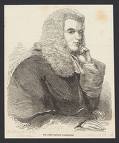
coleridge

This book is a prosopographical study of the 208 men who ascended to the judicial bench in England  between 1727-1875.  “Prosopographical??” I hear you ask.   My Concise Oxford dictionary defines prosopography as

Description of person’s appearance, personality, social and family connections and career; study of such descriptions.

This is the second prosopographical work I have read, and I really quite enjoy it.  (I just want to show off that I can use such a word- I have no idea how to pronounce it, so I’ll just have to write it. )  The first was a book about the Colonial Office and the governors sent to the various colonies (Cell, 1970). Prosopography is not  so much descriptions of individuals, as a compilation of multiple biographies to develop a broad sketch of a particular career group.   The methodology uses biographies, memoirs, diaries, letters and personal papers to compile statistics about particular life events- birth place, birth order, schooling, occupation, place of residence, income, marital status etc.   From this emerges a picture of the “typical” judge or colonial governor which, although of course a generalization, helps to highlight the exceptional and anomolous.

Duman categorizes his judges into five separate time-spans of about 25-30 years which reflect social and professional changes occuring in Britain at the time.  He argues that, instead of being a ladder to success for men of lowly means, the law was always the preserve of upper middle-class and middle class men.  Landed gentry were not particularly attracted to it as a profession because, unlike the army or church, patronage was of limited use if you were incompetent.  There were more certain ways of maintaining one’s status without entering into the lottery of the law.  Likewise,  lowly families would not have been able to financially support their sons over the decade of insecure and poorly paid idleness, waiting until the briefs started to come in.

Although in the second half of the 19th century the law became more accessible to the sons of merchants and proprietors,  the ‘great public schools’ remained the educational nurseries, and Oxford and Cambridge (and later Dublin) remained the main universities attended.   The men on the bench may not have been so enmeshed in the landed gentry as they had been in the past, but they were just as much imbued with a belief in the sanctity of private property.

There is barely a mention of the colonial judiciary in this book: instead, these judges are the ones who succeeded ‘at home’.  Nonetheless, for colonial judges, the experience of the colonies and the nascent law administrations they encountered was laid over the formative, common experience of the bar back in Britain.

I find this broad-brush depiction of a designated profession in this book quite fascinating.  The statistics and generalizations are interspersed with particular case studies,  fleshed out with letters and diary entries.  The intent is to develop a profile of a class as a whole, which could be a reductionist, disembodying act, but the re-introduction of individuals back into this meta-biography returns it to the realm of the personal again.

References

John W Cell, British Colonial Administration in the Mid-Nineteenth Century: The Policy Making Process, 1970

Daniel Duman The Judicial Bench in England 1725-1875: The Reshaping of a Professional Elite, 1982.
The Elizabeth Street Creek

Melbourne has experienced two earthquakes in recent weeks.  They tell us that it’s due to geological activity around Korumburra, but don’t believe a word of it.  It’s not an earthquake: instead, it’s the sound of the Port Phillip fathers turning in their graves as they hear of a proposal to return Elizabeth Street in Melbourne to a creek bed.

The Age on Saturday invited a number of Melbourne worthies to respond to the question “What would you do for this city if you could?” releasing them from those pesky considerations of economic and political constraints.  Gilbert Rochecouste, described as a “planning mastermind” (who has escaped my radar completely, but apparently he’s the man who led the rejuvenation of Melbourne’s laneways), suggested opening up the concrete on Elizabeth Street and letting Williams Creek underneath flow free.

Actually, I hadn’t heard it referred to as “Williams Creek” before, but William Westgarth’s recollections confirm that it was previously known by this name.  The people of early Melbourne had other names for it too- “a jungly chasm” is particularly evocative.   The corner of Collins and Elizabeth Street seems to have been particularly treacherous.  Thomas Strode the newspaperman recalled in 1868

At almost every hour of the day may be viewed the interesting spectacle of drays being bogged in the muddy depths of Collins-street…We remember on [one] occasion a dray of bullocks were so hopelessly imbedded in a hole in Elizabeth-street, that the animals were allowed to stifle in the mud, and its being nobody’s duty to remove the nuisance, their remains with that of the dray, lie buried in that extemporary graveyard to the present day.  (cited in Annear p. 41)

Perhaps the reclamation of “Williams Creek” may uncover them!  It was obviously a pretty boggy area. Apart from Williams Creek, two other tributaries  ran  into Yarra.  “River Townend” which ran from the corner of Collins and Elizabeth Streets  was named after Michael Townend, the ‘fat, comfortable-looking grocer’ on the south-west corner. “River Enscoe” ran from the north-west corner of William and Flinders street, and was named for the merchant John Enscoe who very nearly drowned in it.

Each winter “Lake Cashmore” would form on the doorstep of Michael Cashmore the draper who owned the shop on the northeast “Block” corner of Collins and Elizabeth Streets, described by Garryowen as “a large pool of stagnant water, not sufficiently deep to drown a man, but quite sufficient to half do it. ” (Garryowen p. 457)

During downpours of rain,  litter from the surrounding streets would pour into Elizabeth Street gully:

Pieces of timber, wisps of straw, waste paper, and corks, as they are borne past and beyond carpenter’s shops, stable yards, printing offices, or hotels, sufficiently indicate the character of the neighbourhoods from which they have been carried; corks come down into the main stream from every side.  From all the ‘rights-of-way’ they pour in crowds.  They rush out of the lower slums of Little Bourke Street, and from both ends of every street in the town, until they collect in a dense mass in the wide space between Collins Street and Flinders Lane, where they form a closely-packed army of bobbing bedouins… (cited Brown-May, p. 75)

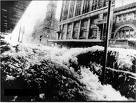
Somehow the ‘bobbing bedouins’  of wine and champagne corks is a quainter image than a congealed mass of Big Mac wrappers.  Melburnians of a certain age will remember when Elizabeth Street flooded in 1972:  looking back, it seems remarkable that no-one drowned given the number of basement shops and subways there.

elizabethflood

When the ravine was in full flood during the early years, the only safe place to cross it was at Lonsdale Street.  In 1880s Elizabeth Street became one of the first stormwater drains, carrying water from Carlton down to the river.   In the Stork Hotel at the top of Elizabeth Street (much loved for the late Dennis Prior’s dramatizations of the Greek myths), there used to be a series of photographs on the wall showing the raising of Elizabeth Street so that what had previously been the street-level bar became the basement.

All that engineering; all that technology!  What would the city fathers say?

Well, actually, one of them thought of it first. William Westgarth in his Personal Recollections of Early Melbourne wrote in 1888:

Melbourne missed a great chance in filling up with a street this troublesome, and as a street, unhealthy hollow… A reservation of the natural grass and gum-trees between Queen and Swanston street would have redeemed Melbourne up to the first rank of urban scenic effect and the riotous Williams might, with entire usefulness, have subsided into a succession of ornamental lakes and fish ponds.

Maybe all this earthquake activity is not the city fathers turning in their graves; perhaps it’s old Willie Westgarth slapping his knees and roaring with laughter that it has taken us 121 years to embrace his vision.

References:

Robyn Annear, Bearbrass: Imagining Early Melbourne, 1995

Andew Brown-May Melbourne Street Life 1998

Garryowen Chronicles of Early Melbourne

Kirsten Otto Yarra: A Diverting History of Melbourne’s Murky River,  2005

William Westgarth Personal Recollections of Early Melbourne (e-text)

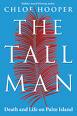
‘The Tall Man’ by Chloe Hooper

hooper

2008, 269 p

Chloe Hooper is obviously strongly drawn to this story.  It started as an essay “The Tall Man”  in The Monthly ; she returned to it in November 2006 with another essay “Who Let the Dogs Out?”. She revisited it more recently through a book review of Thea Astley’s ‘Multiple Effects of Rainshadow’ in  Sept 2008, and  again in a tangentially related story “Boxing for Palm Island” in the February 2009 edition of The Monthly.

Her book and related essays use the motif of the mythical figure of  The Tall Man to frame the story of the death in custody of Mulrunji, who died in police custody on Palm Island in 2004.  His death sparked inquests,  a riot, a court case and a re-opened inquest over a five year period. The story is not finished: nor do I think it ever will be.

Palm Island has had  a troubled history. It has been an Aboriginal mission station and viewed by its inhabitants as a penal settlement; it was used as a naval base during WW 2;  and a nearby island was set aside for sexually transmitted disease, then as a leper colony.   An early white administrator Robert Curry went berserk there in the 1930s, shooting his children after the death of his wife, a tragedy compounded by the arrest of the young aboriginal boy deputized by the white staff to kill Currey in order to protect the other inhabitants.  Fortunately, after six months remand, the young man was found not guilty.

As was Chris Hurley, the police officer accused of the death in custody of Mulrunji in 2004.  Drunk and abusive, Mulrunji was  arrested for causing a public nuisance.  An hour later he was dead in his police cell.  Death was found at autopsy to be caused by “an intra-abdominal haemorrhage caused by a ruptured liver and portal vein”.

This was the first trial of a police officer for a death in custody. Hooper spoke with Mulrunji’s family, sat with them at the trial and shared an umbrella with them in a tropical downpour.  She makes no secret of where her sympathies lie.   On the other hand, though, she is clear-sighted about the violence, drunkenness, poverty and hopelessness of life on Palm Island.  She could not get access to Chris Hurley, and in an attempt to understand him better, she travelled to where he had been posted earlier-  the ironically-named Doomadgee, and Burketown.

The inhabitants of Burketown, and the Queensland and Northern Territory police who closed ranks around Chris Hurley are dismissive of  ‘southerners’ with their caffe lattes and liberal ideas.  They’re right in one thing: people ‘down south’ don’t understand.  It churns up all the ambivalence that ‘southerners’ feel about John Howard’s intervention (continued by the ALP); our discomfort with the group of aborigines drinking under a shady tree on a naturestrip in a country town, or even here in St Kilda, Melbourne; our  conflicted feelings about David Gulpilil.  The world she describes here evokes Kurtz in Heart of Darkness, Maycombe County  in To Kill a Mockingbird.  Somehow it’s easier to slot it into a literary genre, rather than own it as part of your own country.

This is a gritty and challenging book.  It evokes Helen Garner’s work, where the author is right there in the story: questioning, weighing, judging.   As with Garner, as a reader you are always aware that the author is framing the narrative for you, and directing you to “look here”, “listen to this”.   Like Garner, Hooper declares her loyalties and feels angry and bemused.  I suspect that she will keep writing it, on and on, because the story itself goes on and on and on.

Not the Tim Tam surely…

timtam

Say it is isn’t so.   The Sydney Lord Mayor, it seems, has banned Tim Tams in case the chocolate is produced using child labour.  Not only Tim Tams, but also bottled water, fat-rich cakes, dairy desserts and “bad” fish species.  That’s it- no more Sydney Town Council functions for me.

But where to get a good nosh-up at a function these days?  Some ten years ago, in a dual-sector university where I worked, Arnott’s Cream Assorted were loftily derided by higher-ed staff as “TAFE biscuits”.  Nothing but danish pastries and blueberry mini muffins would do. Now we all  pounce avidly upon the Monte Carlo and- even better still- the Kingston with servile gratitude at such bounty.

Mind you, in my day ANY sort of chocolate biscuit was luxury, child labour or not.  I come from good home-cooking stock and can rustle up  chocolate chip biscuits, chocolate brownies, date loaf and my special lemon slice with nary a thought.  In fact, I am becoming increasingly aware, faced with tables of ‘bring a plate’ suppers all bearing their Coles labels, that home cooked biscuits and cakes are becoming quite endangered.

I have breathed Melbourne air for over fifty years and have never yet done a Tim Tam dunk.

At my age, I think it would be rather undignified.

‘Crime in the Port Phillip District 1835-51’ by Paul R Mullaly

You can get all excited about the latest, contentious, revisionist contribution to those ‘big’ historical questions (those questions that somehow fail to capture the public interest!).  My wordy, I know I do!  But there’s something quite humbling about the labour-of-love, extended type of research that provides the building block foundations for this other more controversial, more debated but somehow more ephemeral work.  I’m thinking about the edited series of documents, the painstaking deciphering of a diaries, the compilation of administrivia into a logical process after it has been distributed across multiple bureaucracies.  There’s a danger, of course, that it can descend into mere list-making, and the hunt become more seductive than the actual capture.  But thank you to those historians who share the nuts and bolts of their research with others.

In relation to my own research, I’m thinking of A.G.L. Shaw’s Gipps-La Trobe Correspondence with its wide-ranging footnotes that make me realize I’m following a well-trodden path.  I’m thinking of Ian D Clark’s persistence in deciphering George Augustus Robinson’s diaries- ye gods: that handwriting! I’m thinking of Paul de Serville’s typography of Port Phillip ‘gentlemen’ before and after the gold rushes. And now, too, I’m thinking of Judge Paul R Mullaly’s book Crime in the Port Phillip District 1835-51.

This is a big book- 763 pages- so big in fact that the subject and names index has to be downloaded from the publisher’s website separately-  a costly compromise when dealing with such an exhaustive work.  The author, a judge and Q. C. with a long history of involvement in the Supreme Court of Victoria, undertook this huge endeavour in his retirement, drawing on material at the Public Records Office of Victoria, newspapers, and both Redmond Barry’s and Judge Willis’ own case books.  Here is where his experience comes into its own.  For the non-lawyer, many of these documents are fragmentary and utilitarian, and all too often opaque.  But  Mullaly can cast his legal eye over them, piece them together into a narrative and contextualize them into a standardized legal process.

The book is divided into three themes, although the table of contents doesn’t reflect this.  He starts with a snapshot of Port Phillip itself and its legal system, with an emphasis particularly on the status of Aborigines under colonial law.  He then moves to a step-by-step description of the legal process, from arrest through to sentence, highlighting along the way where practices differ from those today. Finally- and this is the largest section of the book- he analyses different types of offences e.g. those against the person, against property, against justice, miscellaneous and sectarian offences,  with a selection of chronologically-presented vignettes of particular cases.  The regularity of his structure was helpful.  I was concentrating on judgments between 1841-3, and the chronological presentation made it easy to locate the material I wanted.

There is not an argument as such in this book,  beyond his long-held belief expressed in his introduction that “the elite in society tended to be far too ignorant of the realities of much criminal activity and were much too judgmental in attributing a high degree of moral culpability to many offenders” (p. vii).  This is, instead,  a descriptive work, focussing on the administration of the criminal law, which he hoped would “help the present community understand many aspects of our present culture and give many citizens an insight into the community in which their ancestors lived.” (p.viii).  Perhaps because of its descriptive intent, the ending of the book felt a little abrupt.  I found myself wishing that he’d made an overall assessment of crime at that particular time- was it any more or less violent then? did the nature of crime change? was society well served by its criminal justice system?  I really enjoyed the parts where he tried to explain some anomaly that he had detected, or fill in the gaps that had been left in the documentary record.

There’s just so much that can be done with the material he has assembled here.  I’ve been frustrated by the elusiveness of women in my study of Port Phillip but here they are- not just as victims but also as witnesses, neighbours, people just going about their lives.  There’s a fascinating study of childhood glimpsed in these cases; there’s a geography of the streets and pasttimes.   There’s another economy here- not that of the Blue Books or Select Committees into Monetary Confusion, but the economy of buying and selling and just getting by.

This book provides well-dug, solid foundations. Thank you.