Category Archives: Book reviews

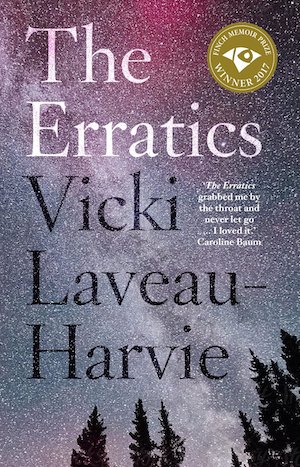
‘The Erratics’ by Vicki Laveau-Harvie

2019, 224 p.

I confess that I started this book warily. “Mad as a Meat Axe” write two daughters on their mother’s medical chart at the end of the bed, sniggering at the thought that the initials MMA might prompt some medical profession to treat their mother for MMA and kill her. The two daughters, who are never named, are visiting their mother in rehab for a broken hip, even though their mother denies their existence, and has had nothing to do with them for eighteen years. I would not want these daughters.

Obviously much has gone on in this family, but we are never told. Our narrator tells us that, for her:

My past is not merely faded, or camouflaged under the dust of years. It’s not there, and I know a blessing in disguise when I see one. I have managed to shake free and flee to far-flung places where I feel reasonably safe because I do not carry a lot of my past. (p.140)

And yet, after 18 years, this Canadian academic returns home to see her father, whom her mother has announced “doesn’t have long”, and her mother whose hip has disintegrated. Along with her sister, who has remained in Canada despite the 18 long years of estrangement from her parents, they arrange (conspire?) for their mother to be moved into some form of care, so that their father can escape from her clutches. Her mother has long since given power of attorney to someone else, and she announces that her daughters are only after her money. Are they? Who is mad as a meat axe here?

It took a while for me to shake my suspicion of the narrator. I wonder if this book is some sort of Rorschach test: I have been the child left (albeit in a completely different situation) and so perhaps I read it differently. As older sister, the narrator has fled to Australia and established a marriage and career there, while her younger sister, just by virtue of being in Canada, carries the memories, the hurt and responsibility. The narrator knows this, but this does not change her actions:

…However different we are and however badly she judges me, whatever gulf already separates us, she is my sister. I do not want the gulf to fill with the seething resentment she will feel because she is doing it all, but I know this will happen. I am telling her that I know this will happen. I know she will feel violent annoyance with me when I suggest something because I’m not there and I don’t know, and I’m not the one doing it and I, on my far away island continent, will sit quietly, gnawed by guilt. (p. 157)

We never learn what has happened in this marriage and family. We have little back-story for her parents, beyond the fact that her father made money through the oil industry and that he fought in WWII. We have no images of a courtship, a marriage or a family life with young children. Everything is refracted through the narrator’s rage- which oddly enough, she deflects onto her sister.

No, I see rage here. A rage expressed by staying on the other side of the world, and by allowing her younger sister to carry this burden. A justified rage, from the snippets that we received, but rage nonetheless, despite protestations of guilt.

This is a memoir, and as such the author has ultimate freedom and responsibility to shape the narrative however she wishes. The memoir starts with a preface, describing the Erratics, huge boulders deposited by the Cordilleran Ice Sheet as it moved through Alberta and Montana. The Erratic that sits in the Canadian town of Okotoks, where the memoir is set, has cracked and fallen in on itself, posing danger to anyone approaching it. On the final pages, we revisit this image of the Okotoks Erratic with the spirit of her mother sitting atop it, beside Napi the Trickster.

To be honest, I’m still not sure who the Erratic is here: mother or daughter. But either way, it feels as if there is some sort of space here for release.

My rating: 8/10

Sourced from: purchased e-book
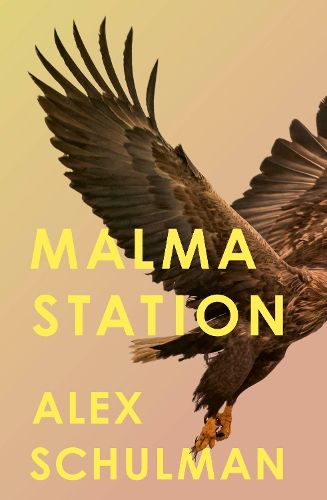
‘Malma Station’ by Alex Schulman

2024, 263 p.

Translated from the Swedish by Rachel Willson-Broyles

Spoiler alert

I can’t really talk about this book without revealing what I learned about it by the end of it, and I suspect that the confusion the reader is experiences is completely intentional on the part of the author. Told as a narrative in three alternating parts, named for their protagonists Harriet, Oskar and Yana, I found myself having to flip back to clearly distinguish the stories of the three characters because events and references kept recurring. I was starting to think that perhaps the problem was me, but having worked out what was going on by the end, I’m reassured that I understood more of it than I thought I did while reading.

There are three journeys, all heading towards Malma Station. (Any such place? I had heard of Malmo, but not Malma). It is a small station, surrounded by forest, with a lake. Our three travellers Harriet, Oskar and Yana are actually all related, but the journeys they are taking are all decades apart. Harriet, a young girl, is travelling with her father to bury her pet rabbit by the lakeside. Her mother and sister live in Malma, but Harriet has not seen them in a long time after the family fractured and the children were divided between the parents. Oskar is Harriet’s husband, decades later, and he is returning to Malma with Harriet who wants to revisit her earlier trip to Malma with her father. Oskar is frustrated by Harriet’s evasions, flightiness and infidelity, and their marriage is in tatters. Yana (whose name we later learn is an acronym for ‘You Are Not Alone’) is the daughter of Harriet and Oskar, and like her mother she too is the child of a broken relationship and she, too, lost her mother. She is travelling with a photo album that she has inherited after her father’s death, and she too is undertaking a pilgrimage to recover lost times. There is a sense of foreboding which pervades the novel as the train makes its way to Malma, but this dread is not always justified. In fact, I found the ending rather an anti-climax, albeit a disturbing one.

The circularity of the book is intentional. Mistakes and misjudgments are repeated across the generations, as children hear adult conversations that they shouldn’t, and are shuffled around like chess pieces. The book is steeped in unhappiness and families are opaque, with an edge of danger.

My library has decided that this book is a ‘saga’ on the label on the side. Even though it’s about three generations, it is not a ‘saga’ in the usual sense of the word. It’s far more intense than that, as these three generations do not so much move on and keep revolving around a hard knot of hurt and betrayal.

My rating: 7/10

Sourced from: Yarra Plenty Regional Library

Read because: I think I must have read a review of it somewhere, although I can’t find where.

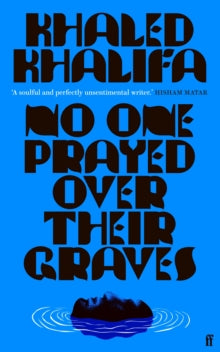
‘No-one Prayed Over Their Graves’ by Khaled Khalifa

2023 (original Arabic 2019), 399 p.

Translated by Leri Price

Sitting in the warmth, with the red leaves of the ornamental grapevine filtering the late-autumn sunlight, I finished this book feeling as if I had been on a very long journey to a strange land. It is a strange land to me: set mainly in Aleppo, Syria, this book has been translated from the Arabic and I felt the whole way through as if I was listening to a story-telling mode that is unfamiliar to me.

The book opens with a sudden, devastating flood in the village of Hosh Hannah in January 1907. Two women cling to a tree as bodies, wreckage and furniture stream past them in one of those red torrents that we are seeing all too often on the news today. One of the women, Shaha Sheikh Musa is the wife of Zakariya Bayazidi, who is absent from the village that day with his friend and adopted brother Hanna Gregoros as they are off visiting their brothel/casino ‘The Citadel’. She clutches her dead son as the water swirls around them. The other woman is Mariana Nassar, the local teacher. She sees the bodies of Hanna’s wife Josephine and her son being swept past, and those of her family, neighbours, students and family friends from other villages. As Zakariya and Hanna return to the ruined village, the flood marks for them a ‘before’ and an ‘after’, and they carry it with them for the rest of their lives. They bury the bodies, heedless of the distinction between Muslim, Christian and Jew, but they live on for decades later yearning for death to complete the cycle for them.

Just as we saw in Syria over a century later, when the country again ripped itself apart in the latest manifestation of its Civil War, Aleppo and the village of Hosh Hanna were religiously complex communities, with interpersonal links between religious groupings overlaid by deep enmity at a broader political level. Hanna had been brought into Zakariya Bayazidi’s Muslim family after his Christian family was massacred by the Ottoman Turks, and the interconnections between the families of the two men (sisters, nieces, nephews, grandchildren) continued across the novel in a series of lost chances, feuds and unconsummated love. As the twentieth century progresses and religious faultlines harden, politics and history make it harder for breaches to be healed.

I must confess that I found this book very difficult. The text is almost relentless, with only ten chapters in nearly 400 pages and no white space at all to separate one paragraph from the next. The chapters are not headed and so they feel as if they are stretching on interminably. I know little about Syrian history and the book is strangely devoid of descriptions which could help you gain a sense of place. Middle-eastern names are unfamiliar to me, and I kept getting confused between characters. The narrative moves between 1881,1903,1907, 1908, 1915, 1948 and 1951 but not strictly chronologically.

Nor is the book written in a way to help the reader. Paragraphs slip back and forward in time without warning, and the author introduces new characters almost at will and with little rationale. Big events happen abruptly. Some chapters are written in a third-person, detached tone, interspersed with italicized segments of Hanna’s autobiography, and then a story-within-a-story written by a minor character. If ever a book cried out for a family tree, it’s this one.

But, if you’re willing to persevere, the book repays the effort. Its closing pages close the circle, enclosing myriad regrets and lost opportunities. But be warned: you’ll have to work hard as a reader with this one.

My rating: 7/10

Sourced from: Yarra Plenty Regional Library

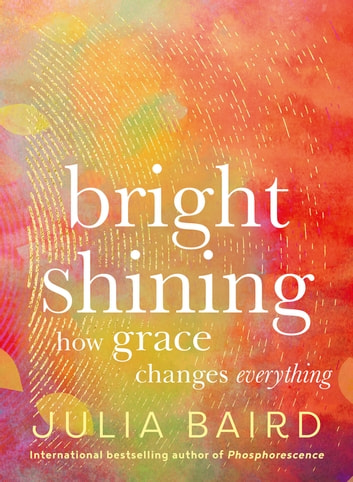
‘Bright Shining: How Grace Changes Everything’ by Julia Baird

2023, 279 p.

The first thought that comes into my mind if you say the word “grace” is the physical sense of poise, dignity and a quiet confidence. The other meanings of “grace” seem to me to have been co-opted by religion – particularly Christianity- and I’m rather less comfortable with that. In this book, Julia Baird explores the concept of “grace” in ever-widening circles: Our Souls, Ourselves in Part I; Our Circles in Part II, Our Strangers in Part III, Our Sins in Part IV and Our Senses in Part V. I think that even this structural skeleton of the book highlights its major weakness: trying to stretch the concept to cover too much. It is a digressive book, interweaving research, commentary and her own personal struggle with cancer, and I’m not sure that she completely succeeds here.

As it says on the front cover:

Grace is both mysterious and hard to define. It can be found when we create ways to find meaning and dignity in connection with each other, building on our shared humanity, being kinder, bigger, better with each other. If, in its crudest interpretation, karma is getting what you deserve, then grace is the opposite: forgiving the unforgivable, favouring the undeserving, loving the unlovable.

Which all sounds rather gooey and do-goody to me.

In Part I she does try to define “grace”, noting that it is wrapped in the everyday but still extraordinary (p. 8). Her definition which remains nebulous, comprises three elements:

  1. to be fully, thrillingly alive
  2. something undeserved
  3. the ability to see good in the other and to recognize their humanity

Part I Our Souls comprises two chapters. Chapter 1 ‘2.3 Grams’ considers the 1907 experiment of weighing a soul: the difference in weight between when someone is still alive, and when they have died. Chapter 2: Anonymous Samaritans explores the phenomenon of blood donations, and why people might do something altruistic for people they will never meet.

Part II Our Circles has four chapters, two of which are largely autobiographical. In Chapter 3 ‘Grace Inherited’ she writes of her mother, who visited women in prison, most particularly Katherine Knight who was jailed for life without parole for the horrific murder of her boyfriend. Yet her mother spoke of Knight’s gentleness. This chapter is bookended by Baird’s response to her mother’s death, sitting vigil as she died, and then the grace of a friend afterwards. Chapter 4 ‘Icarus Flew’ continues the theme of grief as she talks about the death of an ex-boyfriend in a Garuda aircrash, and the difficulty of finding a place for grief as a former girlfriend in the hierarchy of grief. Chapters 5 (‘Inhale the World’: An Ode to the Fire of Teenage Girls) and Chapter 6 (‘On Being Decent Men’) are particularly apposite as the spotlight on domestic violence has turned to changing attitudes amongst men and boys – an approach that I find rather insufficient, personally.

Part III Our Strangers is again a bit of a grab-bag. Chapter 7 ‘Other People’s Lives’ points out that we see only a sliver of other people’s reality, and that grace would extend our lens further to see the whole person. Chapter 8 ‘The Comfort of Strangers’ talks about kindness of others, especially during travelling when through unfamiliarity and language problems, we are often at the mercy of people unknown to us. Grace? or just human decency and empathy? Chapter 9 ‘The Discomfort of Estrangers’ looks at the obverse: the harassment of online warriors liberated by anonymity. In Chapter 10 ‘Restlaufzeit: In the Time We Have Left We Must Dance’ she returns to the theme of illness and the precariousness and preciousness of life, both for herself and for others.

Part IV Our Sins is the longest section of the book, and while I found this the most interesting part of the book, Chapter 11 ‘Napoleon’s Penis: What We Choose to Remember’ does not seem to fit into the other chapters, which deal more with forgiveness and justice. In Chapter 11 she discusses public memory, the role of the historian, and what we choose to remember in public figures. Moving then to forgiveness and justice, in Chapter 12 she looks at ‘When You Can’t Forgive’; the expectation that women in particular should forgive, and the potential for weaponization of forgiveness by imposing it on the victim. This is picked up again in Chapter 13 ‘The Stolen Generations: What Does Forgiveness Mean?’ where she reminds us of Scott Morrison’s exhortation that forgiveness be displayed the part of Aboriginal people. This completely ham-fisted ‘suggestion’ was brusquely rejected by indigenous people who bridled at the inappropriateness of placing an expectation of forgiveness onto another person. In Chapter 14 ‘We Will Wear You Down with Our Love’ she turns to truth-telling, and the treatment of Stan Grant by the ABC and other media commentators, especially those from the right-wing press. Chapter 15 ‘The Callus: On Restorative Justice’ refers to the callus, the fibre that knits bones together, and she looks at Restorative Justice schemes as a way of knitting together after injury, starting with the story of Debbie McGrath, who participated in one such scheme eleven years after her brother was killed by his best friend. In Chapter 16 ‘A Broken Place: People Who Have Forgiven’ she explores examples of forgiveness rooted in faith, whether it be Christianity, Islam or Judaism. While I found these interesting, I think that they would have been better framed in a discussion of forgiveness in its own right, rather than trying to squeeze them into a ‘grace’ framework.

Part V ‘Our Senses’ is only short. Chapter 17 ‘Fever Dreams’ again refers to her experience of cancer, and her determination to be “fully, thrillingly alive”. In Chapter 18, the last of the book, she returns to the idea of ‘grace’, referencing the hymn Amazing Grace, from which she has taken the title.

As you can see, this book wanders off down a number of different pathways, all of which are enjoyable enough to follow, but which do not cohere into a rounded whole. Which is ironic really, as one of the definitions of ‘grace’ that she cites in the book is that given by Marilynne Robinson who described grace as an ethical “understanding of the wholeness of a situation”. This is the definition which most resonated with me, and the one to which I (unsuccessfully, I’m afraid) aspire.

My rating: 7.5/10

Read because: It was on the shelf.

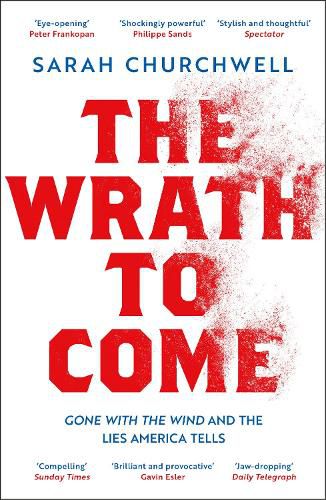
‘The Wrath to Come’ by Sarah Churchwell

2023, 464 p.(including notes)

Sometimes, a good essay is more forceful than a book, I reckon. This is what I kept thinking when reading this book, and although the pace picked up and the book ranged more widely once Part I was out of the way, I just felt as if I had been hit over the head with a mallet as the same argument was repeated again and again. I wish it had been a good long-form essay New Yorker-style rather than a 389 page book.

Churchwell’s argument, which she spells out succinctly in her prologue, is that there is a connection between Gone With the Wind, the instant bestseller of 1936 and the later movie adaptation which became the most successful of its time, and the events of January 6 2021 as the crowd, fortified by defeated-President Trump’s support (“So we’re going to, we’re going to walk down Pennsylvania Avenue. I love Pennsylvania Avenue. And we’re going to the Capitol…”) crashed its way into the US Capitol. It is not so much about the history, but about the book and the film as paired phenomena:

‘Gone with the Wind’ provides a kind of skeleton key, unlocking America’s illusions about itself. When we understand the dark truths of American experience that have been veiled by one of the nation’s favourite fantasies, we can see how the country travelled from the start of the Civil War in 1861 to parading the flag of the side that lost that war through the US Capitol in 2021. That journey was erratic and unpremeditated, but America ended up there all the same. (p. 8)

The book Gone With the Wind appeared in 1936, and sold a million copies in less than six months, won the Pulitzer Prize in 1937, was translated into at least 27 languages and became within a few years the best selling American novel of all time. The film Gone With the Wind was released in 1939 and smashed all records, and adjusted for inflation, is still the highest-grossing film of all time.

The book, which Churchwell has obviously read closely (and which I have not read at all), is more overtly racist than the film. David Selznick’s film consciously eliminated the novel’s many casually racist slurs, as a result of the lobbying from the film’s Black stars. However, the racism continued in the manifestation of the film as a phenomenon: the Black actors were not invited to the film’s premiere, and when Hattie McDaniel became the first Afro-American to win an Oscar for her portrayal of Mammy, she was sitting at a separate table to the rest of the cast, after Selznick had managed to overturn the Cocoanut Grove nightclub ban on black patrons.

Churchwell’s book follows the narrative of the book and film, starting off with ante-bellum Georgia and the rumblings of war. As Churchwell tells us over and over, Mitchell’s portrayal of plantation life (especially in the book) was gratuitously racist and infantalizing. I was relieved to move onto the post-war section of Churchwell’s book, even though I think I remember feeling (it was a very long time ago) that the film had lost impetus once Scarlett returned to Tara. But in Churchwell’s analysis, it is in the return to Tara that the book takes up its major purpose to reify the Lost Cause into American identity. Scarlett O’Hara is not the heroine of Gone With the Wind, instead the real heroine is Melanie, and it is not a love story, but a story of revenge. It is profoundly anti-democratic and consistent with fascism. And this, Churchwell argues, is what fuelled January 6.

I am not at all well-read in Reconstruction and Jim Crow legislation, many hours of listening to Heather Cox Richardson notwithstanding. I saw Gone With the Wind decades ago and have no particular wish to re-watch it, and I have never read the book and am not likely to do so. This book was too detailed for me, although admittedly I’m sure that it was not written for an Australian audience. I was deeply affected, though, by the sheer and graphic violence meted out by the Klan and other vigilante groups: I had not read this before.

Overwhelmingly, this is an angry book, which is ironic given that anger was the predominant driver of January 6 too. I felt that it was too repetitive in its critique, and would have been much punchier as a long-form essay. It felt a very long , and I was pleased to have reached the end of it so that I could move onto something else.

My rating: 7/10

Read because: I heard about it on a podcast, I think.

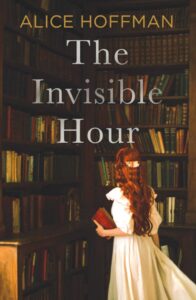
‘The Invisible Hour’ by Alice Hoffman

2023, 252p.

Spoiler alert

I’ve done it again. I borrow books by Alice Hoffman, thinking that it’s Alice Walker… and it’s not. I did that with Practical Magic and I’ve done it again with The Invisible Hour. I thought from the blurb that I was borrowing a book about a young woman and her daughter breaking away from a cult, only to find that I was reading a time travel book about Nathaniel Hawthorne, author of The Scarlet Letter. Now, I’m not opposed to time travel books, but I do feel that they are a bit of a guilty pleasure and that there’s something almost adolescent about them. For me, they are plots built on a rickety foundation that can collapse quickly if I start thinking about them too much. [Having said that, I’m really enjoying Life after Life on ABCTV- more than the book, in fact].

Ivy, a sixteen-year old girl from Boston, is estranged from her family who cannot accept her pregnancy. She runs away and joins a cult in rural Massachusetts, and the leader of the cult, Joel, takes her as his wife and, although theoretically all children belong to the community, takes a particular interest in her daughter Mia. Born into the community, Mia knows no other life than this one, controlled by Joel and his rules and punishments, where members work on the apple orchards that fund the commune and are kept in ignorance of the outside world. Ivy, yearning for the world that she has left behind but too frightened to leave the community, encourages her daughter to go to the town library, located in an old building, and staffed by conscientious and sensitive librarians who, aware of the rarity of a community child coming to a library, turn a blind eye to Mia’s theft of books. There Mia comes across The Scarlet Letter by Nathaniel Hawthorne which, curiously, has an inscription to her– Mia- in the frontispiece. She steals this book too, and becomes enamoured of its author, who died in 1864. This book, and the death of her mother Ivy, emboldens her to run away and to seek the help of the librarians. She is stalked by Joel, determined to bring her back to the community and to find a paper which he believes she has stolen.

Somehow, and don’t ask me how, this book transports her back to the 1830s where she meets Nathaniel Hawthorne and falls in love with him. He has not yet written The Scarlet Letter, and she knows that Hawthorne will marry Sophia Peabody and have children, and that although suffering writer’s block at the moment, he will become a famous author. Meanwhile, she is stalked by Joel, who manages to travel through the same time portal that she does. She is aware that she needs to distance himself from Hawthorne in order for him to fulfill the life that he does have, and the menace represented by Joel insinuates itself into both her 1830s and present-day lives.

As I said, it doesn’t bear to think too hard about the logistics of all this. In many ways, the book is a paean to the power of books and reading, and parts of it are beautifully written. I haven’t travelled much in America, but I did travel to Boston and (for my sins) Salem, and I enjoyed her descriptions of them both. It’s the sort of book that would make a good, if rather lightweight film and it’s the sort of book that might attract a ‘Womens Weekly Good Read’ sticker if such things still exist.

My rating: 7/10

Sourced from: Yarra Plenty Regional Library

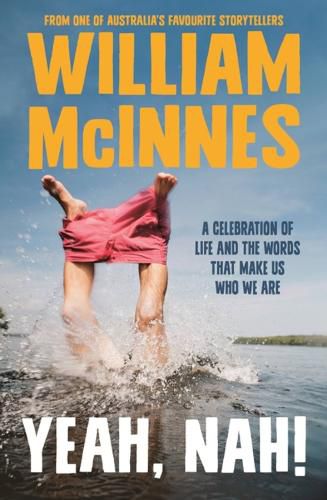
‘Yeah Nah’ by William McInnes

2023, 320 p

Well named, because this is exactly how I felt about this book. Yeah, I like to listen to William McInnes, who tells anecdotes so well in his mellow, very Australian voice. I could listen to him for hours, but when I think about it, it’s the sort of listening you do in the car, or when working around the house, when you’re not particularly paying attention. 

And so Nah, my reading time is so limited, I’m not going to live forever, and there are so many other books that I could be reading instead. I gave it 100 pages, and then decided Yeah Nah. It was too much like listening to someone rabbitting on without getting anywhere. Might be worth looking for an audiobook version, if he was narrating it.

My rating: Did not finish

Sourced from: Yarra Plenty Regional Library

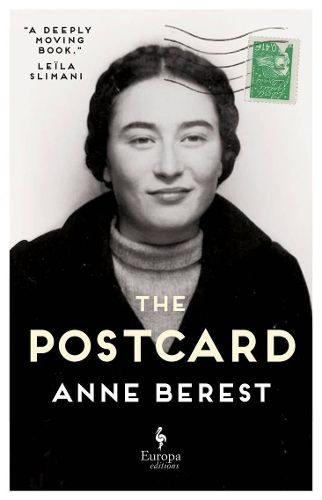
‘The Postcard’ by Anne Berest

Translated from the French by Tina Kover

2023, 480 p.

This book is an autofictional telling of the virtual extermination of a Jewish family by the Vichy regime. It stands almost as a companion piece to Irene Nemirovsky’s Suite Francaise and indeed, Nemirovsky appears as a shadow character in this book. For me, it is a strong story betrayed by some lacklustre telling of the frame story.

Expectant mother, Anne, is fascinated by a postcard that is delivered to her mother’s family home in Paris in 2003. On the front is a photo of the Opera Garnier in Paris. On the back written in an awkward hand are the names of the author’s great-grandparents and their children, all of whom had died in concentration camps. Given that court cases were underway over reparations for Nazi confiscations, was this an anti-Semitic taunt? Was there someone who knew more of the family history than the family did itself? Why was it sent?

And so, framed as some sort of detective story/ researcher-as-hero search, Anne turns to her mother who has herself been undertaking her family history research for years before the arrival of this postcard. Her mother co-operates to a point, but then withdraws once it gets close to her own part of the family history, leaving Anne to continue the search alone.

The novel (at least, it describes itself as ‘fiction’ on the copyright page) alternates between the current-day search and the findings of that search. I have no problem at all with Berest’s telling of her great-grandparents’ and grandparents’ story. She captures particularly well the gradual tightening of the Nuremberg Laws and stripping away of rights, wealth and independence described so well in Saul Friedlander’s Nazi Germany and the Jews. Ephraim and Emma, Anna’s great-grandparents had already fled once, from Moscow to Latvia, and then had moved briefly to join Ephraim’s parents in Palestine, before returning to Paris where Ephraim sought ceaselessly to obtain French citizenship for himself and his family. He did not succeed, but in any event it would not have saved the family: although at first directed against ‘foreign Jews’ the racial laws against Jews would have trumped any citizenship claims anyway. Living away from Paris, the family seems to be existing in a summer bubble, until all of a sudden the Nuremberg laws come right to their door. The family is separated, with two children sent off on the pretext that they were going to work, the parents left to desperately search for them, and one married daughter, Myriam, sent away by her father to avoid deportation as well. The story follows Myriam, who is the only one to survive as she lives in isolated places and joins the resistance. But this is not a ‘derring-do’ resistance type story: her activities are spasmodic and often in abeyance. Her marriage, which in many ways was her salvation, takes her to strange places and experiences that she would never have anticipated. It is Myriam who haunts the Hotel Lutetia, where prisoners released from the camps are sent, searching for the family that she will never find.

So strong was the Myriam story that the frame story seemed insipid and banal in comparison. Heavily conversation-based, I found myself resenting when it intruded on the main narrative, and I wished that the narrator and her mother would just get out of the way. One part that was interesting was the modern-day Jewish parents’ outraged response to anti-antisemitism experienced by the narrator’s daughter at school, and the discussion of inter-generational trauma. But for me, this just distracted from the main story. After all, does the world really need another family history as quest novel? I ask myself. It has been done over and over and over again.

So, I have mixed feelings about the book. The story of Miriam and the loss of her family was excellent: the frame story (which may well have been true) less so.

My rating: 8/10 (high because of my regard for Miriam’s story)

Sourced from: Yarra Plenty Regional Library

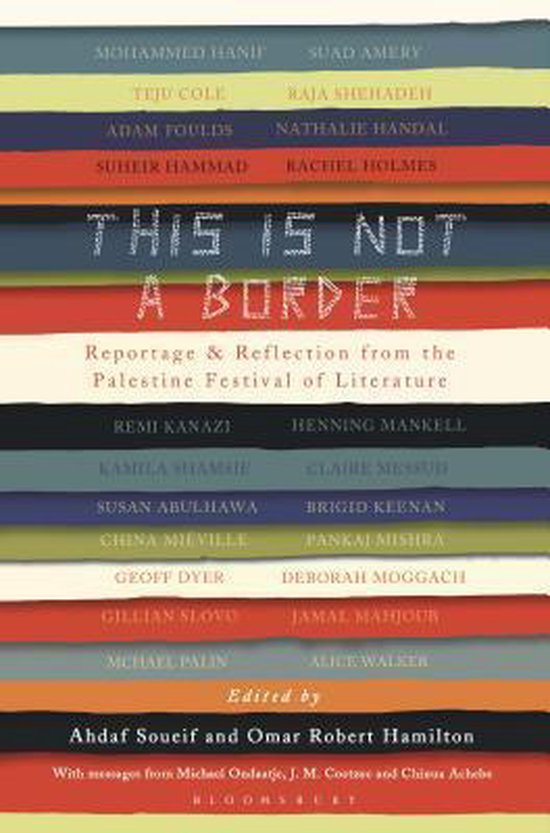
‘This is Not a Border’ ed. Ahdaf Soueif & Omar Robert Hamilton

2017, 328 p.

The first Palestinian Festival of Literature was conducted in 2008, and this volume of writing was produced to celebrate its tenth anniversary. We in Australia take for granted that if we want to go to a writing festival in our own city, or regional area, or interstate for that matter, then there is nothing to stop us. That isn’t the case for the residents of the Gaza Strip (especially now) or the West Bank, who face checkpoints and turnstiles and outright prohibitions against travelling from one place to another. So the founders decided that if people couldn’t go to the festival, then the festival would come to them. Attracting noted Western authors, the presenters were bussed from region to region, intentionally exposing them to what the Israeli government does not want outside visitors to see, with the hope and expectation that these authors would return home and use their words – their tools of trade- to expose what is happening.

So who are some of these authors? Among others: J. M. Coetzee, Geoff Dyers, Alice Walker, Deborah Moggach, Henning Mankell, Michael Ondaatje, Michael Palin, Chinua Achebe, and China Mieville, and many other Middle Eastern writers I am not so familiar with.

Most of the contributions are only about 4 pages in length, or else single-page poems, and I must confess to feeling a bit as if I were reading a lot of “What I Did on my Trip” responses. As you might expect from writers of this calibre, they are all well written, but the length constraint (and perhaps the task itself) imposed a sameness and almost a banality in most of the short chapters. In spite of this, certain images repeated: the Allenby Bridge and Qualandia checkpoints where unseen young Israelis surveil the waiting lines through CCTV; the wire netting constructed over markets where settlers in high rise buildings throw their rubbish, urine and faeces onto the street below; the incessant tunnelling conducted by Jewish settlers (facilitated by the Israeli government) under Palestinian homes and mosques, with the risk (expectation?) that the honeycombed land will collapse completely. For me, the power of a book can be measured by how much I tell other people about it, and I have been bailing up anyone who will listen with “Hey, there’s this book I’m reading and did you know….?”

The most powerful pieces in the book for me where when the author was able to exceed the word limit, particularly China Mieville’s piece that was actually illustrated with photographs of the checkpoints, even though photography at checkpoints is prohibited. It was followed by a longer chapter by one of the current trustees of the festival, Omar Robert Hamilton who speaks of the importance of J. M. Coetzee’s short half-page contribution where, after resisting attempts to urge him to name the situation ‘apartheid’, he defines South African apartheid then describes Palestine in exactly the same words and invites us to “draw your own conclusions” (p. 35). Hamilton highlights the importance of words in describing what is happening in Palestine, resisting the neutrality of language that we use for fear of being labelled ‘anti-Semitic’.

I’m struck by the injustice and the sheer vindictiveness of small power plays against the Palestinian people, carried out over and over again, day after day. This book was published years before October 7, but it’s all of a piece. I’m so far trying to resist seeing what is happening in Gaza in binary terms, but it’s becoming harder to do so, and this book has largely contributed to this.

My rating: Hard to say. As individual stories, perhaps an 8/10 but taken as a whole, and in terms of impact on me, 9.5/10

Sourced from: Yarra Plenty Regional Library

Read because: of my distress about what is happening in Gaza

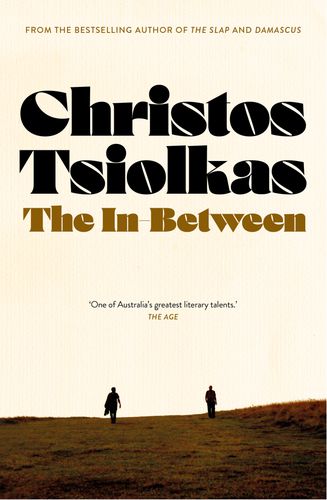
‘The In-Between’ by Christos Tsiolkas

2023, 400 p.

Whenever I read a Christos Tsiolkas novel, I come away wondering whether it’s him or me. Does everybody else think constantly of sex, appraising every random interaction as a possible liaison? Are everyone else’s eyes drawn immediately to groins or other sexual parts? Or is it me? Do I lack that whole sexual lens through which to view the world? Or am I too old? Have I forgotten? Was I ever like this? It’s as if the entrance price to a Tsiolkas novel is forced viewing of scenes that would certainly be designated for mature audiences only.

Yet, I think that there is a shift here as Tsiolkas himself, now in his late 50s, is ‘in between’ the shock value of his earlier novels, and something more mature (older) and reflective. The two main characters in The In-Between are middle-aged too, and embarking on a new relationship after both being burnt by previous relationships. Perry’s relationship in Europe with the urbane, educated Gerard ended when Gerard, largely because of his daughter, decided to commit himself exclusively to a heterosexual marriage with his wife, with whom he had a strained relationship. Back in Australia, Ivan’s relationship with Joe had more a suburban tenor, as the landscape gardener is ‘taken to the cleaners’ financially by Joe, much to his ex-wife’s fury. Both men are starting again, nervously and warily.

The book is told in five long chapters. Chapter 1 starts with Perry, 53 years old, catching a tram to their first date. Their restaurant meal leads to lovemaking at Parry’s inner-northern suburbs apartment. Chapter 2 focusses on Ivan, who is househunting in Frankston with his daughter Kat, who is planning her own daughter’s birthday. She wants Ivan to invite Perry, but her mother Dana, still furious about the financial shakedown by Joe, does not want Perry to attend. We follow Ivan to two of his landscaping jobs: one to an elderly Greek woman being bullied by her son, and the other to Clarissa and Simon in their Californian Bungalow, who make him feel dismissed and put down. Chapter 3 returns to Perry, and a dinner party held by lesbian friends Cora and Yasmin. This egg-shells dinner party, pure Tsiolkas in its incisiveness, sees Ivan being appraised by Perry’s friends, and the presence of straight couple Jed and Evelyn leads to too much drink, loose words and a confession. Chapter 4 has the most graphic and rather gratuitous sex in the book, I thought. Ivan breaks up with Troy, a long term male prostitute who he has been seeing for many years. Chapter 5 mirrors the previous chapter’s letting go of the past as Perry and Ivan travel to Europe to meet with Gerard’s daughter Lena. Lena has found a letter that Gerard wrote to Perry, but never sent but, receiving it years later, Perry decides not to read it.

When you’re in-between, things need to shift, and this book captures well the process of making space for a new person. It involves re-evaluating friendships, changing priorities and establishing new priorities. As Tsiolkas does so well, he captures Melbourne life crisply, with its suburbs and class distinctions played out through language, politics, interests and location. But there is also the element of age and maturity which, I think, is less often addressed in books with men (as distinct from women) as main characters – and often from an end-of-life backwards reflection rather than from this in-between stage. [ However, as I write this, a whole lot of other examples spring up: George Johnson’s books? Phillip Roth? ] In keeping with the title, this book looks both backwards and forwards; to letting go and building. It’s not just the sex: this is a book for grown-ups.

Rating: 9/10

Sourced from: Yarra Plenty Regional Library.