Rear Vision (ABC)2014 and Ukraine’s relationship with Russia. This is a replay of an episode from 2014, just as Russia had invaded Crimea. It all seems rather prophetic now. Ukraine was the largest republic of the former USSR, and it withdrew from USSR in 1991. With hindsight, they were dudded by the Bucharest Memorandum of 1994 whereby they gave up their nuclear arms for a security ‘assurance’ – not a guarantee- of territorial integrity from their guarantors including Russia (something that Bill Clinton now regrets). In the wake of huge inflation and very low wages, the Orange Revolution took place in 2004 ending with the election of Viktor Yushchenko. At the time of recording (2014) Crimea had just been invaded by Russia. Crimea had been settled with many Russians who had been encouraged to move there by Stalin, but many of the original Tartars had since returned, and in 2014 comprised about 35% of the Crimean population. Interesting, in he light of current events.
In the Shadows of UtopiaEpisode 11 Mao’s Great Proletarian Cultural Revolution I listened to this just after reading Linda Jaivn’s book Bombard the Headquarters (my review here), and this makes a really good companion listen. In fact, well done young Lachlan, because this episode hangs together really well. He points out that the Cultural Revolution, as well as changing China, also acted as a test of loyalty of Mao’s officials. He draws some parallels with different phases of the French Revolution, and sees the dispersal of young people into the provinces as a way of reining the revolution back in. He reminds us of the Sino/Soviet conflicts, and suggests that China’s rapprochement with the US was an example of ‘the enemy of my enemy is my friend’ in action.
99% InvisibleAll About That Bass I’ve started playing bass ukulele- yes, there is such a thing- so this episode really interested me. It’s about the Roland 808 drum machine, which apparently is ubiquitous- even (drummer) Phil Collins used one on ‘One More Night’. When the Roland 808 was released in 1980 it cost $1200 (about $4600 in today’s currency), and was intended to replace drummers. It was when they realized that they could use the ‘decay’ function to replicate the bass and kick drum sound that the Roland 808 gave the bass the prominence that it now has in hip-hop and R&B.
The Human Subject(BBC)The Boy with an Ice Pick in His Brain. Actually, despite all the warnings about gruesome details that preface this episode, I didn’t find it particularly disturbing. It’s about Dr Walter Freeman, who championed the lobotomy process throughout the US, even by psychiatrists whose surgical skills must be questionable. The Boy with the Ice Pick in his brain was 12 year old Howard Dully whose step-mother arranged to have a lobotomy for ‘childhood schizophrenia’ (which sounded just like 12 year old cussedness to me). It was Freeman who operated on Rosemary Kennedy as a 23 year old, who never recovered from the surgery.
Since the Orange One has launched his mayhem on the world – did this second presidency really only start in January?- China and Xi Jinping are presenting themselves as a calm, considered and stable presence on the world stage in comparison. It’s a seductive thought, but after reading this small book, I came away convinced that there is a fundamental difference between China and Western democracies in terms of both means and ends that we ignore at our peril.
Many historians mark 16 May 1966 as the start of the Cultural Revolution, when Jiang Quing (Mao’s fourth wife) and Mao circulated a document amongst the Party members which warned of ‘counter-revolutionary revisionists’ who had infiltrated the Party, the government, the army and cultural circles. This document was only made public a year later, but it was popularized in August 1966 by “Bombard the Headquarters”, a short text in written by Mao Zedong himself and published widely. It was a call to the students, who were already confronting their teachers and university lecturers, exhorting them that ‘to rebel is justified’. Yet the headquarters he was urging them to target were the headquarters of his government; of his party. Within three months there would be 15 to 20 million Red Guards, some already in university, others as young as ten. They were urged to ‘smash the Four Olds (old ideas, culture customs and habits) to make was for the creation of a new revolutionary culture. Mao did not explicitly call for the formation of the Red Guards, but he harnessed them as an alternative source of power to the government and, at first, beyond the control of the army until it also joined in the Cultural Revolution in January of 1967.
With Khruschev’s denunciation of the cult of Stalin, Mao felt that Russia had betrayed the revolution and that China needed to return to the dictatorship of the proletariat. Even though 1966 is seen by many as the starting point, Mao had been moving towards this point for several years, moving against the deputy mayor of Beijing and historian Wu Han, removing the People’s Liberation Army chief of staff and premier Luo Ruiquing, and splitting with the Japanese Communist Party because it failed to call out Soviet revisionism.
Some of his party colleagues, most especially Liu Shaoqui, Deng Xioping and Zhou Enlai, held qualms about Mao’s call for continuous revolution led by the Red Army. And well they might have, because quite a few of Mao’s judgment calls – The Great Leap Forward and the Hundred Flowers Campaign- brought unseen (to him) consequences, and the schemes ended up being abandoned. But despite any reservations his colleagues may have held, the Great Proletarian Cultural Revolution went forward, with the Red Guards murdering 1800 people in Beijing alone in Red August 1966. The Red Guards were joined by the workers in late 1966, and the Army in January 1967.
At a dinner to celebrate Mao’s 73rd birthday on 26 December 1966, he proposed a toast to “all-out civil war and next year’s victory”. He got his civil war. Children denounced parents; both the Red and the conventional army split into factions. The targets of the Cultural Revolution were the Five Bad Categories- landlords, rich peasants, counter-revolutionaries, bad elements and ‘rightists’. Temples, churches and mosques were trashed; libraries set alight, hair salons and dressmakers’ shops attacked, and even the skeletons of a Wanli emperor and his two empresses were attacked and burned. The verb ‘to struggle’ came to have a new meaning as ‘enemies’ were “struggled” into the airplane position, forced to bend at the waist at 90 degrees with their arms straight behind, with heavy placards hung around their necks and hefty dunce caps on their heads. Teachers, academics, musicians, writers, local officials were all ‘struggled’, with day-long interrogations that ended with instructions to return the next day for more after being allowed to go home overnight. No wonder so many people committed suicide.
By September 1968, the civil war was declared over, with ‘the whole nation turning Red’. However, with the deteriorating economic situation, and with a perception that people living in the cities were not pulling their weight, Mao decided that ‘educated youth’ needed to receive re-education by the poor and middle-class peasantry (p. 68). In 1969 as many as 2.6 million ‘educated youth’ -including present-day president Xi Jinping- left the cities for the country side. Some did not have to go too far from home, but others were exiled to the brutal winters of the Great Northeast Wilderness, or the tropical jungles of Yunnan in the south-west. Some villagers were ambivalent about these ‘soft’ teenagers, although they welcomed the goods and knowledge that they brought with them. The young people were often shocked by the poverty and deprivation in the villages, which contrasted starkly with the propaganda of the happy prosperous countryside they had accepted.
The Cultural Revolution had morphed in its shape, with the 9th Party congress declaring that the Cultural Revolution was over in April1969, and Mao criticizing his wife Jiang Quing and her radical associates in the ‘Gang of Four’ in May 1975. The outside world was changing too. A border war with USSR in March 1969 provoked fears of nuclear war, and the United Nations recognized the People’s Republic of China over Taiwan. President Nixon visited China in February 1972 (Australia’s Gough Whitlam, then opposition leader, had visited in July 1971) and Mao died in September 1976, eight months after the death of Zhou Enlai. In 1981 the Party declared that the Cultural Revolution had been a mistake, and that Mao had been misled by ‘counter-revolutionary cliques’. All at the cost of at least 4.2 million people being detained and investigated, and 1.7 million killed. Some 71,200 families were destroyed entirely. It has been estimated that more people were killed in the Cultural Revolution than the total number of British, American and French soldiers and citizens killed in World War II (p. 106)
The Cultural Revolution may seem an event of the 20th century it’s not that far away. Xi Jinping and his family were caught up in the Cultural Revolution, and tales of him toiling alongside the peasants in the countryside is part of his own political mythology. We here in the West are well aware of the Tienanmen Square protests of 1989, but there is no discussion of them in China. When Xi Jinping took power in 2012, discussion of the Cultural Revolution, the Great Leap Forward and the resulting famine, were all increasingly censored. Xi Jinping abolished the two-term limit to presidential office in 2018, making it possible for him to be President for life. New generations of nationalist fanatics have arisen, likened (for good or bad) to the Red Guards.
This is only a short book, running to just 107 pages of text. In its formatting and intent, it is of a pair with Sheila Fitzpatrick’s The Death of Stalin (reviewed here), and both books deal with hinge-points that, although taking place some 50 years ago, resonate today with even more depth. As with Fitzpatrick’s book, Bombard the Headquarters opens with a timeline and a cast of characters, but I found the brevity of Jaivin’s character list made it harder to establish the various protagonists in my mind, exacerbated further by unfamiliar names. What I really did like was the way that she interwove the stories and experiences of individuals alongside the ‘massed’ nature of this revolution. When we see the huge crowds of people in Tiananmen Square, and the chilling precision of the Chinese army at the parades that dictators are so fond of, it is hard to find the individual, but she has worked hard to keep our attention on the people who lived through, suffered, and did not always survive such a huge experiment in social engineering.
My rating: 8/10
Sourced from: Review copy from Black Inc. books, with thanks.
The Rest is HistoryEpisode 261: The Tupumaros I’m doing a presentation on Jose Mujica, the recently deceased ex-president of Uruguay, who was a guerilla fighter with the Tupamaros in his youth. This episode made me realize how anglo-centric ‘The Rest is History’ is because obviously Tom and Dominic (I’m on first name basis with them now) knew little about Uruguay or the Tupamaros until they did the research for this episode. They point out that Uruguay was a small, progressive country known as the Switzerland of South America, but after WW2 the prices of wool and meat declined and inflation and unemployment rose. Raul Sendic, the founder of the Tupamaros, was the bright boy of a peasant family. In 1963 the Tupamaros began a series of bank robberies and kidnappings, most of which ended with the hostage being released after about 10 weeks, before moving on to international figures like the British ambassador and then US advisor Dan Mitrioni. This sparked off mass arrests, and they give a figure of 1 in 5 Uruguayans being arrested (a figure I haven’t found elsewhere). Democracy was suspended between 1973 and 1985 and all the Tupamaros were arrested or exiled. Jose (Pepe) Mujica was one of these prisoners, kept in a horse trough for 2 years, with no toilet, and he was driven half-mad before his release in 1985. On the day that Mujica was elected president, Uruguayans confirmed by referendum that the amnesty for both prisoners and human-rights abusers should remain. After his presidency Mujica retired in 2015 to his farm, where he grows chrysanthemums. (He died recently, hence my interest in him).
Guardian Long ReadsOperation Condor: the Cold War conspiracy that terrorized South America. This podcast by Giles Tremlett was originally broadcast in 2020. During the 1970s and 80s, eight US-backed military dictatorships jointly plotted the cross-border kidnap, torture, rape and murder of hundreds of their political opponents. Now some of the perpetrators are finally facing justice. I like Giles Tremlett, whose book Ghosts of Spain I very much enjoyed. I had heard of Operation Condor, but thought that it was a spy novel about CIA agents! Instead, it was an agreement between right-wing governments in South America to allow friendly dictatorships to cross national borders to arrest their citizens who had fled into exile. Most South American countries passed Amnesty Laws as a compromise for the return of democracy, so few court cases against human rights abuse have been mounted in South American countries (although I note that recently Sydney nanny Adriana Rivas has lost her appeal as part of avoiding extradition to Chile for her role in Pinochet’s regime). Instead, it is European courts who are opening up cases against officials in dictatorships because they are not bound by the amnesty laws. It’s an interesting and rather chilling thought that Western countries were considering getting advice from South American Operation Condor officials, in order to introduce a similar system in Europe during the IRA and the Baader-Meinhof group terrorist campaigns.
I’ve been thinking recently of public displays of grief after a leader has died. Some weeks ago, the ex-President of Uruguay Jose Mujica died, and I was struck by the spontaneous and heartfelt applause that accompanied the journey of his casket from the presidential palace to the National Assembly.
In contrast, I remembered the extravagant hysteria after the death of Kim Jong-il some thirteen years ago.
I’ve been thinking about the deaths of leaders while reading Sheila Fitzpatrick’s The Death of Stalin. Fitzpatrick is an eminent Australian historian of Soviet history, but this small book is written for a general audience.
The title echoes the Armando Iannucci movie of the same name, which Fitzpatrick admires:
In his The Death of Stalin, the British film director Armando Iannucci memorably depicted the death scene as black comedy, with Stalin’s potential successors united only by ambition and relief, milling around distractedly at his deathbed. That is indeed how the main eye-witness accounts describe it, although to be sure these were eye-witnesses with their own agendas. There is black comedy in this [i.e. Fitzpatrick’s] book too, not just in connection with Stalin’s death but also with the fate of his corporeal remains (buried, dug up, reburied) and the subsequent persistent apparitions of his ghost. But not everything about Stalin’s death is comic. It had serious implications for his country and the world in the twentieth century and beyond; this book sets out to unravel them. (p.2)
Chapter 1 starts with a biographical sketch of Stalin. Under the chapter title is a police photograph of Stalin taken in the early 1900s, showing a quite handsome, chiselled young man – quite unlike the pudgy, square man he became in later life. He was involved in the Russian revolution from the start, in fact he made it back to Petrograd before Lenin did after the February Revolution of 1917. Although a member of the Politburo since its inception in August 1917, he became the quintessential backroom man, a role formalized with his appointment as general secretary of the party in April 1922. Despite Lenin adding a postscript to a document that came to be known as ‘Lenin’s Testament’, warning that Stalin’s rudeness rendered him unsuitable as party secretary, Stalin and the Central Committee saw off an opposing faction and he became leader after Lenin’s death. His ascendancy was welcomed by Western observers, who saw him as a centrist. He mounted a program of mass collectivization and industrialization guided by a Five Year Plan. By 1934 he announced a new phase of relaxation, and he introduced the new Soviet Constitution. But he changed direction again at the end of 1934 when his friend Sergei Kirov was assassinated by what turned out to be a lone-wolf actor. Mass terror was released, directed initially against members of the party itself, then to the broader population. He startled the Soviet public and the West by signing a Non-Aggression Pact with Hitler in 1939, which was broken in June 1941 when Germany launched an invasion of the Soviet Union. Despite the huge cost in infrastructure, military and population loss, Stalin emerged from WW2 with enormously enhanced prestige at home and internationally. Within a few years, unfounded fears of Soviet communism (unfounded because Stalin knew that Russia was in no state to launch WW3) settled into the Cold War, fueled by mutual hostility and suspicion, but tempered by the nuclear threat and the use of proxies. By 1949 the cult of Stalin reached a peak as Stalin’s 70th birthday was celebrated.
By early 1953, Stalin would be dead. In Chapter 2 ‘Stalin’s Death’ we see Stalin as a lonely, isolated, paranoiac man who insisted on the attendance of his Politburo colleagues at film nights at the Kremlin, and crude, men-only dinners at his dacha. The day to day running of the business of government was carried out by the Politburo, with sudden interventions by Stalin, and shifts against his erstwhile colleagues. One of these initiatives was the arrest of a number of physicians from the Kremlin hospital, known as the ‘Doctors Plot’. As we know from the film ‘The Death of Stalin’, this backfired somewhat when there was no one to treat him in the dacha when he had what appeared to be a stroke. Actually, Iannucci didn’t have to embellish much in his depiction of Stalin’s death: the fear of finding him dead; him not actually being dead; sending in the housekeeper; having to find a doctor because they had all been arrested; the arrival of his daughter and drunk son. However, unlike in the film, they quickly set up an efficient government, calling themselves ‘the collective leadership’ (p. 37)- a fact that might have undermined Iannucci’s black comedy somewhat. His body lay in state in the Hall of Columns in Moscow for three days and was buried in the Mausoleum, with his name emblazoned under that of Lenin.
Chapter Three examines reactions at home, noting the recorded responses of writers and members of the public, before then moving on to the immediate, radical policy changes that were set in train. First was the announcement of a mass amnesty for non-political prisoners in the Gulag, then the withdrawal of charges against the doctors. There was a change in direction on the nationalities policy and an abrupt halt to the Stalin cult. The first six months of 1953 was described as a ‘cultural thaw’, but this was not necessarily welcomed by the Soviet public. Beria was ousted and put on trial and swiftly executed. This made it possible to put all the blame for the Stalinist terror onto Beria’s shoulders.
Reactions Abroad are dealt with in Chapter 4. The rest of the world wasn’t really sure what would happen when Stalin died. Western intelligence was at a low ebb between the end of the war and Stalin’s death, and so the West missed the signals that the ‘collective leadership’ might be willing to deal. Eisenhower appointed John Foster Dulles, one of the most virulent anti-Communists on the US political scene (p. 65). He and his brother Allen, who headed the CIA, favoured undermining the Soviet Union by making trouble in the satellite-states, rather than provoking a head-on confrontation. It was, as A.J.P. Taylor said, a turning point that failed to turn (p. 71). It was only in 1956, with Krushchev’s partial denunciation of Stalin that there was Western recognition of the thaw.
The closing Chapter 5 ‘Stalin’s Ghost’ looks at his legacy. For the first years after Stalin’s death the terror of the 1930s was the great unmentionable. This was broken in 1956 with Krushchev’s ‘Secret Speech’ to the Congress in Moscow which denounced Stalin, the cult of personality and the Purges and terror under his government. Although writers embraced openness about Stalin’s reign, the reactions of ordinary people varied. Some simply did not believe it, and there was public protest in Georgia, where the speech was seen as an insult. In some of the Soviet satellites, the Soviet Thaw encouraged local Communist parties, including in Hungary, to remove unpopular Stalinist leaders and put in Communists with a reform agenda. The Soviet Thaw didn’t extend that far: Soviet tanks were sent in to Hungary, and reformer leaders were arrested. Krushchev was ousted in 1964, in the wake of the Cuban Missile Crisis, and replaced by Brezhnev who oversaw a replay of Hungary 1956 in the Soviet invasion of Czechoslovakia in 1968. Even though a breach opened up between Brezhnev and the intelligentsia, Stalin was not rehabilitated. That had to wait for Vladimir Putin. The book ends on a rather chilling note.
There is a lot in this small book, which is presented so clearly that it can engage readers who are not particularly familiar with Russian history. The book provides a timeline spanning 1879 to 2000, and a full ten-page ‘cast of characters’ including not only Russian political and cultural personalities, but also Mao Tse Tung (Zedong), Winston Churchill, Franklin D. Roosevelt and Harry S. Truman. The book has endnotes, but they are not footnoted throughout the text.It is liberally illustrated, albeit in black and white (although that echoes the theme of the book quite well), and by bringing it right up to the present day and referencing the Iannucci film it has a contemporary edge. It’s a good read.
Background Briefing (ABC)Long Reads: The church’s disappearing women This episode, written and read by Julia Baird looks at the lack of progress in increasing the number of women in leadership in the Anglican Church, after 30 years. It’s all rather depressing, and it doesn’t really ring true with what I’ve observed, where nearly all the ministers (both Anglican and Uniting) in the churches in my suburbs are women. Nonetheless, there is a real ‘blokeification’ (my word, not hers) of churches going on where now 39% of men vs. 28% of women in Australia identify as Christian. Among Gen Z, 37% of men vs 17% of women agree with the statement that ‘Christianity is good for society’. This is the first time this has happened: in the past, more women than men identified as Christian. I don’t think that these numbers are a good thing: I wonder if it’s part of the Andrew Tate phenomenon and whether it reflects increased patriarchy in society expressed through the church.
The Agency Accused of Paying Bribes for Babies looks at the history of adoption of South Korean children by Australian families. 3500 children were adopted in Australia, most of them sourced from the Eastern Society Welfare Society Adoption Agency. Adoptions reached a peak in 1985, when 24 children would be approved in a single day. There was competition between South Korean adoption agency intake teams, and financial arrangements were instituted between agencies and hospitals. In More to the Story: Meeting your Mum as an Adult, Anna, who was adopted as a child, travels to South Korea to meet her birth mother.
Rear Vision (ABC)Donald Trump and the wrecking ball: The End of the World as We Know It. This episode asks whether the liberal international rules-based order that has underpinned international relations for the past 80 years, is about to collapse. Personally I’m a bit wary of this term ‘rules-based order’, as America, Israel and Russia have never signed up to it, so it seems that only some follow the rules. Borders and agreements existed before 1945, but the Hague Conventions at the end of the 19th and early 20th century codified them into law. After WWI, Woodrow Wilson could not get the League of Nations through Congress, and there was not enough willpower between WWI and WW2 to get anything done. Post WW2 the United Nations was formed, but the Cold War spawned a group of other ‘rules-based’ organizations like NATO, Bretton Woods, IMF- all Western based. Meanwhile the Soviet Union created its own bloc, and there was a group of non-aligned states. With the collapse of the Soviet Union, there were new attempts at universal rules, but this was all brought undone by 9/11. The expansion of globalism during the end part of last century and the first decades of 21st century weakened the global order, and many were left feeling sidelined and ignored, leading eventually to Trump.
History ExtraHow the English Took Manhattan. One of the history books that very much influenced me when I returned to university as a (very) mature aged student was Donna Merwick’s Death of a Notary (see my review here). Until I read that book, I had never really thought about the change of ownership of New York from Dutch to English hands, and the effect on people living through such changes. The Dutch possessed New Netherland for 40 years, until the British took over in 1664. The re-establishment of the Stuarts meant that Puritans were still seen as the enemy, so Britain began looking at New Amsterdam again. Neither the British nor the Dutch wanted to actually fight, so they settled on a deal, or a merger, whereby the British took effective control, although many Dutch people and businesses continued. A 17th century Trump would pride himself on such a deal.
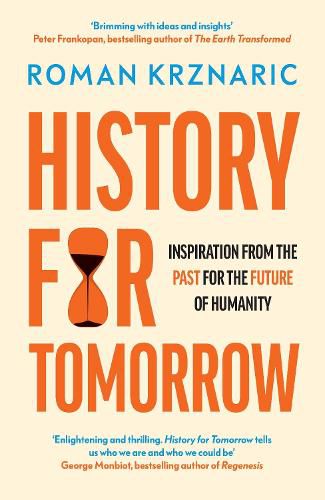
Just recently I listened to an interview by the New York Times with Curtis Yarvin, who has been name-checked by a lot of Trump’s acolytes. He talks quickly and rather disjointedly, and is fond of throwing out historical references to defend his views and give them the sheen of academe. People are quick to bring out the old saw “Those who cannot remember the past are condemned to repeat it” and there’s a danger of cherry-picking when computer engineers (in Yarvin’s case) and social philosophers (in Krznaric’s case) look back to history to bolster a present day argument. But that is unfair to Krznaric: unlike Yarvin, he admits that he is not a historian, and he acknowledges that he is very much standing on their shoulders while surveying present-day society. His book has footnotes, references and an index, and he includes in his footnotes references that make a different argument to the one that he is making. And unlike Yarvin, this is a quiet, considered, optimistic (too optimistic, I fear) book that piques your interest rather than bludgeoning you into silence with names and dates that you have no way of challenging.
Krznaric acknowledges the dangers of cherry-picking but argues that:
All writing of history is selective- requiring choices about topics, time periods, relevant actors, the importance of race and gender, the role of culture and technology, the use of quantitative data and other methodological issues. What matters is being clear about the approach. From the myriad of historical contexts, I have consciously selected events and stories that offer inspiration for tackling the ten major crises facing humanity in the twenty-first century, and actively focus on the collective struggles and initiatives of everyday people, since this is the realm in which we have the greatest potential agency. (p.7)
So what are these ten major crises, and what historical events does he use to discuss them? His opening chapter ‘Breaking the Fossil Fuel Addiction’ draws parallels between the vested interests supporting the continuation of slavery in Britain in the early 19th century, and the fossil fuel interests that are undercutting action on climate change. I’ve though about this connection previously, and the distasteful thought that, as with slavery, it may be necessary to ‘buy out’ fossil fuel interests, in the same way that the compensation for slavery went not to the enslaved, but to their enslavers. As well as emphasizing the importance of creating coalitions across party lines and the potency of the ‘radical flank’ to make the comparatively moderate thinkable, he also notes the place of violence. The Captain Swing civil disobedience led to the 1832 Reform Act, which diluted the power of the slavers and their lobbyists in British Parliament; while the Caribbean slave revolts made continued enslavement unattainable. I think that this chapter was the strongest in the book, and it stands alone well.
Question Two involves the nurturing of tolerance. He starts off with his own family story, with his father arriving in Melbourne from Poland in 1951 as part of Australia’s post-war migration, a story which seems from the distance of 70 years to have been successful but which may not have felt so rose-tinted at the time. He looks back to the Islamic kingdom of Al-Andalus, where Muslims, Jews and Christians co-existed, although the backlash of the Reconquista is a salutary warning, I think. He looks to the early years of Chinese immigration when, as Marilyn Lake and Henry Reynolds note, Australia led the world in ‘drawing the global colour line’ at the turn of the 20th century (a reference that he should have referenced, but did not). He also looks at Ghana and the post-independence leader Kwame Nkrumah, who came to power in 1957 and embarked on a series of policies and programs to create a unifying Ghanaian national identity. He talks about the importance of city design in nurturing tolerance, looking at Singapore’s public housing which even today has a quota system where each estate must reflect the national percentage of Singapore’s main racial groups.
The third question is that of over-consumption in ‘Kicking the Consumer Habit’ where he turns to the Edo period of Japan between 1603 and 1868, which ran on a circular economy where almost everything was reused, repaired, repurposes or eventually recycled. Rationing during WWII prompted similar behaviour.
Chapter 4 ‘Taming Social Media’ looks back to the printing revolution and the rise of the coffee house culture in Georgian times as examples of disruptive technologies that drove political change. He notes that the development of print formed the ‘typographic brain’ that is linear, sequential and rationalist; and suggests that the digital age could prompt changes in the way we connect ideas and organize information.
Chapter 5 ‘Securing Water for All’ is subtitled ‘Water Wars and the Genius of the Commons’, and it’s an important chapter, warning in its opening sentence that “we are a civilisation heading towards aquacide”. He looks back to China’s Qing dynasty in the mid-18th century where Chen Hongmou, a government official, managed the building of irrigation and drainage systems. He championed the construction of water wheels and ensured regular repair work on ditches, dams and wells (p. 109). But his work could not survive the Opium Wars, the Taiping Rebellion, and the El Nino of 1876-8. He looks to Valencia’s Tribunal of Waters, which meets every Wednesday outside the Cathedral to resolve water conflicts as it has since the fifteenth century. However, water can be used as a tool of war, like the Cochabamba Water War in Bolivia in 2000 which led to civil unrest when the water services were privatized in 1999 under pressure from the World Bank and the IMF. Israel has long used water as a tool against Palestinians in the territories that they occupy, but he looks to initiatives like the Good Water Neighbours Program in the Lower Jordan Valley as cause for hope (although I wonder how it’s holding up now) and the International Commission for the Protections of the Danube River. However, seeing the debacle that our own Murray River scheme in Australia has become, I am not hopeful.
Chapter 6 ‘Reviving Faith in Democracy’ involves rediscovering the communal democracy of the past, and he goes way back to Djenné in West Africa between 250 BCE and 1400 CE, a complex trading centre which at its height was home to 40,000 people. He points out that the modern ideal of representative government was designed to prevent democratic politics, not enable it. He goes back to Athenian democracy and the Rhaetian Free State which emerged between 1524 and 1799 in what is now Switzerland, and even Kurdish confederations and the Rojava Revolution in Syria- although I’m not sure what the status is since the fall of Al-Assad. I see that their jailed revolutionary leader Abdullah Ocalan has declared a ceasefire of the PKK against Turkey- one of the problems with writing a topical book!
‘Managing the Genetic Revolution’ looks back to medieval alchemy, in essence returned as genetic engineering. He sees the genetic revolution as one of the rare turning points in history that fundamentally changes the trajectory of the human journey (p. 153). He turns to the past for warnings, looking first at the Eugenics movement and the Better Babies Contest, and Nazi Germany’s adoption of eugenics as the basis for its race-based state in Germany. Rather more hopefully, he looks at the March of Dimes and the crusade against polio where medical innovation was directed towards the common good. He warns of the ‘enclosure movement’ related to biodata, and the Wild West commercialization of the US biotech sector.
‘Bridging the Inequality Gap’ starts with the Black Death, which brought about such huge economic changes. But as he notes, the idea that substantive reductions in wealth inequality can only be brought about by warfare, state failure and pandemics is depressing and disempowering, because it suggests that all well-intentioned peaceful attempts to tackle inequality are unlikely to change the status quo. He looks to the Indian state of Kerala which was a global pioneer of mass education in the 19th century, with women at the forefront. Its government has alternated between a Communist Party and a Congress Party generally supportive of social democracy. In the Global North, the spotlight usually falls on Scandinavia, and especially Finland, which has also been at the forefront of women’s education and egalitarianism.
Chapter 9 ‘Keeping the Machines Under Control’ looks at the rise of capitalism and the extraordinary capabilities of AI- two phenomena that have deep connections. He looks to financial capitalism with the Dutch East India Company, Scottish financier John Law and his schemes under King Louis XIV of France. He argues that both financial capitalism and AI develop into a vast, complex supersystem, with the risk of contagion where any problem in one area spills over into other areas, especially with fake information, mass technological unemployment, and the potential for military use. The final similarity is that both are non-sentient human creations. He looks to the early distributed ownership models like the co-operative movement and mutual aid societies, although he admits the difficulty of breaking the ownership model of the AI industry- even worse since Trump came to power.
His final chapter ‘Averting Civilizational Breakdown’ ( a rather gloomy title) tells us that we face the Great Simplification, where too many ecological limits have been breached. Will society bend or break? He admits that we are currently facing the break scenario. He reminds us that
No civilization lasts forever: empires and dynasties are born, they flower and then die, sometimes abruptly but usually over decades or centuries. (p. 223)
He suggests that there are three broad features that are likely to give a civilization the ability to adopt and transform over time. The first is asabiya, or the power of collective solidarity, which was described in 1375 by an Arab scholar Ibn Khaldun. We see this in the wake of natural disasters (when every country proclaims that the united action of its citizens reflects that specific nationality and its ‘spirit’). It thrives on competition between states, but the problem is that the ecological emergency does not have an external enemy that we can act in solidarity against. The second is biophilia where we develop a sense of ecological stewardship for the whole web of life (or as the 7th principle of Unitarian Universalism puts it “respect for the interdependent web of all existence”). He looks back to the mass planting that took place after the publication of John Evelyn’s book Sylva in 1664 and the vestiges of pagan traditions of nature worship, as well as indigenous worldviews of intimacy and independence between humankind, the land and the living world (p. 230). The third feature is crisis response, when we think historically about the meaning of ‘crisis’ itself, popularized by Malcolm Gladwell’s popularization of the idea of a ‘tipping point’. He looks to radical change undertaken during war (e.g. WW2 industralization), in the wake of disasters (the Dutch government response to the floods in 1953), and in the context of revolution (Chinese land reform- not a good example; the Cuban National Literacy Campaign).
Krznaric makes no secret of his politics or his priorities. He has been personally involved in Extinction Rebellion, which he characterizes as the ‘radical flank’ of the environmental movement, and he himself was involved in citizens’ assemblies on Biodiversity Loss, even though he ended up being rather disenchanted with them. He calls for ‘radical hope’ because
Disruptive movements can change the system (e.g. slavery, the women’s movement)
‘We’ can prevail over ‘me’ (e.g. Valencia’s Tribunal of Waters, al-Andalus, soup kitchens in the wake of the San Francisco earthquake)
There are alternatives to capitalism (e.g. Edo Japan, the ‘entrepreneurial state’)
Humans are social innovators
Other futures are possible (classical Athens, the West African city of Djenné-Djeno, and the Raetian Free State in Switzerland.
At a personal level, history can do much more than help us realise that there is hope for transformative change: it can also spur us to become one of the changemakers ourselves. Whether in our communities, or workplaces, or anywhere else where we may want to make a difference, we can look to the past as an array of possibilities. From joining a protest movement or setting up a cooperative enterprise to taking part in a citizens’ assembly, history reminds us that we are part of the great traditions of active citizenship that stretch back into the past. (p. 253)
I wish that I shared his ‘radical hope’. While I acknowledge that the past does give examples of alternatives, using them as templates is fraught with contradictions and impossibilities. They can only be shards of hope, and the fact that so many of his examples are drawn from societies than no longer exist is not encouraging. As he admits, no civilization lasts forever, and I’m very much aware that our epoch of industrialization, democracy, and post WW2 peace is just a fleeting smudge on the timeline of human existence. I’m reading this in early March 2025, when the world is becoming a darker place, and at the moment those forces of untrammeled power wielded by strongmen, tech bros and lobbyists seem too strong for ‘radical hope’.
My rating: 8/10
Sourced from: Yarra Plenty Regional Library
A personal aside: Krznaric grew up in Sydney and Hong Kong, and he’s a player of real tennis. My brother’s family is very involved in real tennis too. I wonder how the real tennis fraternity deal with this colonial’s radical views?
History HitWhy Isn’t Canada the 51st State? Trump thinks it should be, and in this episode Dan Snow goes through the various attempts that have been made in the past to achieve this end. When the 13 colonies rebelled, they hoped that the French colonists in North America would join them and rise up against the British. But the Catholic French were not keen to align themselves with these land-hungry Puritans and so they stuck with the devil they knew. In 1775 the first US military action was an attempt to annex Canada, and in 1812 with Britain at a low ebb after the Napoleonic Wars, they tried again. The 1812 War ended with the boundaries remaining much as they were when the war started. In 1844 President Polk, the successor and protege to Trump’s hero Andrew Jackson, wanted to take all the west coast up to Alaska as part of America’s ‘manifest destiny’. During the Civil War, the British in Canada were friendly towards the Confederates and after the Civil War Charles Sumner demanded the whole of Canada in reparations payments. Instead, the US settled for 15 million pounds and an apology. In 1911 Canadians wanted lower tariffs but big business wanted Protection, and when the Conservatives won, they wanted higher tariffs against US goods. In 1948 Newfoundland had a referendum about self government or integration with Canada, but joining the USA was not one of the options. So, although Trump’s rhetoric about making Canada the 51st state is not new, he is drawing on older sentiments like small government, tariffs and manifest destiny. I hope that Canada stands strong.
The Rest Is HistoryEpisode 230 Portugal: Football, Fado and Fascism? (Part 4) By the 1820s, Portugal had lost Brazil, and although it still had a few enclaves throughout the world, it called itself a ‘pluri-continental nation’ rather than an empire. There was a sense of stagnation and nostalgia, exemplified by saudade , a sense of longing for something that will never come again, and expressed through Fado music. There was a Republic in Portugal during WWI, but it was a disaster. Portugal supported Britain and France during WWI but it was a time of tension between the Liberals and devout Catholics. It was the time of Our Lady of Fatima, who prophesied the Russian Revolution (and gave 2 other prophesies as well, which are in the keeping of the Vatican). In 1926 after years of chaos under the Republic, there was an army coup and they called on Salazar, a professor of economics to fix their problems. A deeply conservative man who disliked modernity, he only lasted 5 days, so to keep him, the army generals kept giving him more power. By 1932 he was Prime Minister, but interestingly, never President. He did sort out the economy, and was seen as an important and useful tool by the army, landowners, the church and the conservative forces in Portuguese society. Although he copied much of the iconography of Fascism, he doesn’t fit neatly into the category of Fascist. He always served at the pleasure of the President, and although he had secret police and political prisoners, only about 50-100 prisoners died as the result of torture or assassination- bad enough, but nothing compared with the other Fascist leaders of the time. He hated both Franco and the Communists, and was benign towards the Nazis and flew the flag at half-mast when Hitler died. However, Britain was more important as a long-time ally, and so Portugal remained neutral during WWII, although its diplomats did provide visas for Jews to escape Hitler. He was a founding member of NATO as part of his anti-Communist stance, and he knew the importance of popular events and so championed football (soccer) with Portugal winning several World Cups. But he was becoming increasingly politically isolated, eventually having links only with South Africa and Rhodesia at a time when no-one else was talking to them. In 1968 he suffered a stroke from which he was not expected to recover, and so the President dismissed him and appointed another academic technocrats. But no-one told Salazar, who believed that he was still Prime Minister. He is an unsettling, ambiguous figure: not a clear ‘baddie’ but backward looking and deeply conservative in a world that had changed.
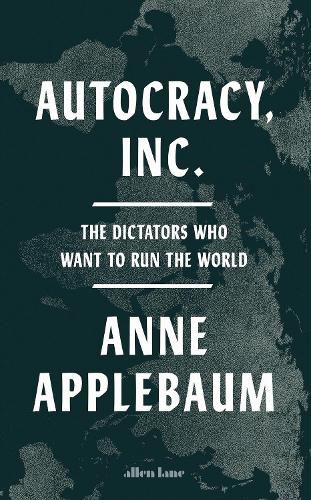
I’ve had this book reserved at the library for some time, and when I finally received it I was disappointed that it seemed to be a rehash of the excellent podcast series that I mentioned back in November 2024, before this whole Trump 2.0 nightmare began. But it isn’t. Her podcast was called ‘Autocracy in America’, and in the podcast she applies the principles that she spells out in this book Autocracy Inc to the American context, with much prescience, I’m afraid.
She notes that the old cartoon image of the ‘bad man’ autocrat is outdated.
Nowadays, autocracies are run not by one bad guy but by sophisticated networks relying on kleptocratic financial structures, a complex of security services- military, paramilitary, police- and technological experts who provide surveillance, propaganda, and disinformation. The members of these networks are connected not only to one another within a given autocracy, but also to networks in other autocratic countries, and sometimes in democracies too. Corrupt, state-controlled companies in one dictatorship do business with corrupt, state-controlled companies in another. The police in one country may arm, equip, and train the police in many others. The propagandists share resources- the troll farms and media networks that promote one dictator’s propaganda can also be used to promote another’s- as well as themes: the degeneracy of democracy, the stability of autocracy, the evil of America. (p.2)
In this book, she sweeps her searchlight onto the strongmen who lead Russia, China, Iran, North Korea, Venezuela, Nicaragua, Angola, Myanmar, Cuba, Syria (possibly outdated), Zimbabwe, Mali, Belarus, Sudan, Azerbaijan in particular- although she mentions some three dozen others. What a depressingly large list! Autocracy Inc, as she calls them, collaborate to keep their members in power by ignoring multiple international agencies, buoyed by a conviction that the outside world cannot touch them.
Her opening chapter ‘The Greed That Binds’ looks particularly at Putin, and the schemes he established to enrich oligarchs in the breakup of the Soviet Union. These oligarchs have invested in America and Britain.
Her second chapter ‘Kleptocracy Metastasizes’ turns to Chavez’s Venezuela, where Autocracy Inc. stepped in after Chavez’s death in 2013, where Russian and Chinese money poured into the country to enable Chavez and then Maduro to postpone any kind of financial reckoning as they destroyed the economy. Cuba joined with Venezuela in an anti-American agenda, and Maduro and Turkey’s Recep Tayyip Erdogan share a dislike of democracy and anti corruption movements in their own countries. Improbably, Venezuela and Iran, despite their many differences, relate on the basis of shared grievance, with Iranians buying Venezuelan gold, and sending food and gasoline in return and assisting with the repair of Venezuelan oil refineries. She looks at Uebert Angel, an evangelical pastor and British-Zimbabwean businessman who is involved in gold-smuggling schemes, some associated with Zimbabwe’s ruling party and its president Emmerson Mnangagwa. The ruling party has a long standing relationship with the Chinese Community Party and Putin’s Russia.
Chapter 3, ‘Controlling the Narrative’ looks at cybersecurity and firewalls as a way of rewriting history, as for example, in China with Tiananmen Square. Spyware and surveillance is a way of autocracies justifying their abuse of electronic technologies. Domestic propaganda in Russian state television devotes huge slabs of time to America’s culture wars. China has made an enormous investment in international media, which makes possible the spread of misinformation internationally, and RT (Russia Today) has sites which writes material, is translated into other languages, and published on ‘native’ sites to make them seem local. Yala News, run by a Syrian businessman for example, has taken material from Russian state media and spread it through Arabic news sites. As we know, websites and videos can be fake.
Chapter 4 ‘Changing the Operating System’ looks at the ‘rules-based order’ (something that powerful countries feel themselves exempt from) and the removal of language that constrains Autocracy Inc from the international arena altogether. Instead of ‘human rights’, China wants to prioritize the ‘right to development’. The term ‘sovereignty’ is used in different ways. ‘Multipolarity’, a word preferred by the Russian information networks, is meant to be fair and equitable, but is now the basis of a whole campaign systematically spread on Russia Today in English, French, Spanish and Arabic, and repeated by information-laundering sites such as Yala News. Alternative institutions in a ‘multipolar’ world agree to recognize each other’s ‘sovereignty’, not to criticize each others’ autocratic behaviour and not to intervene in each other’s internal politics. Not every member of BRICS and the Shanghai Cooperation Organization is an autocrat, but she asserts that
…if the old system was designed to inculcate the “rule of law”, these new institutions are meant to promote “rule by law”- the belief that “law” is whatever the current autocrat or ruling party leader says it is, whether inside Iran, Cuba, or anywhere else in the world. (p. 107)
She looks particularly at the Syrian Civil War and the Russian-led campaign against the White Helmets, and the involvement of the Wagner Group.
Chapter 5 ‘Smearing the Democrats’ looks at ways that the people have fought back in Poland, Venezuela, Burma and Hong Kong- although this is a very discouraging list (except for Poland). The response of autocratic government to challenge is to mount smear campaigns and make accusations of foreign interference. More sophisticated autocracies have moved beyond just killing their opponents, and now prepare legal and propaganda campaigns in advance, designed to catch democracy activists before they gain credibility or popularity.
Applebaum’s book is dedicated “for the optimists” but it’s hard to find much cause for optimism here. Her epilogue ‘Democrats United’ brings the book even more up to date by looking at Ukraine and Israel. She emphasizes that in no sense is the modern competition between autocratic and democratic ideas and practices a direct replica of the 20th century cold war. Many countries do not fit neatly into the category of either democracy or autocracy and divisions run inside countries as well. She urges a reconceptualization of the struggle for freedom as not against specific states or countries, but against autocratic behaviours, where-ever they are found- in Russia, China, Europe and the United States. She spells out a number of steps
Put an end to transnational kleptocracy through ending the whole financial system that makes it possible e.g. in real estate transactions and money-laundering and through an international anti-kleptocracy network.
Don’t Fight the Information War- Undermine it by challenging the information systems at a government level (fat chance, with Musk in power) and joining forces to make Reuters, the Associated Press and other reliable outlets the standard source of global news instead of Zinhua (China) and R.T. (Russia)
Decouple, De-risk and Rebuild – ensure that countries do not remain dependent on other autocracies
She finishes by noting that:
There is no liberal world order any more, and the aspiration to create one no longer seems real. But there are liberal societies, open and free countries that offer a better chance for people to live useful lives than closed dictatorships do. They are hardly perfect. Those that exist have deep flaws, profound divisions, and terrible historical scars. But that’s all the more reason to defend and protect them….They can be destroyed from the outside and from the inside,too, by division and demagogues. Or they can be saved. But only if those of us who live in them are willing to make the effort to save them (p. 176)
I feel as if much of this book has been superseded by recent events in America, which is really demonstrating where these links between autocracies are operating. There is one serious omission. Until the afterword, she is largely silent on Israel (I think that she herself is of reform Jewish heritage) and its provision of surveillance and military technologies to autocracies, that was described in Antony Loewenstein’s The Palestine Laboratory (which I see is now a documentary). There are other chapters earlier in the book when she could have looked at Israel earlier.
However, particularly since Trump’s inauguration, her articles in The Atlantic, bring her analysis to current events at both the American and international level, and she is an active and articulate participant in current political commentary. This book ranges over a huge number of countries and their leaders, and she told us quite clearly how Trump fits into the Autocracy Inc. model in her recent podcast. Americans can’t say that they weren’t warned, and the whole word is bearing the consequences.
Rear Vision (ABC) For about a fortnight after Trump’s victory, I couldn’t bear to listen to any news about America at all. I’m glad that I didn’t realize the inauguration was even happening so I missed that completely. But now, even though I’m horrified, I can bear to listen, watch and read again. Rear Vision replayed an episode from 2015, before Trump won his first term. It’s called A Tsunami of Trumpness, and the little wave then is nothing to what we have seen now. Trump’s grandfather arrived in 1885 – an immigrant, eh? – and made his money from North West mining. His father Fred built the family wealth further by taking advantage of the New Deal to become a builder and mortgage guarantor. Donald made his money from real estate and casinos, starting by refurbishing a hotel with his trademark glitz, using the political connections and credit from his father. He wasn’t particularly successful, but he knows the power of his own celebrity to gain free publicity because he is too big to fail.
The Rest is HistoryThe Nazis: Hitler’s Triumph (Part 3) This episode starts off with Horst Wessel. I’d heard of the song, but nothing about who Horst Wessel was. He was a streetfighter and member of the the SA, the original paramilitary wing of the Nazi Party. He was shot by 2 communists in 1930 and virtually deified by Goebels. The German economy was crippled by the withdrawal of US banking from Europe, something that happened gradually but inexorably. It was estimated that 1/4 of the population was living in a house with unemployment (actually, I think that the figure in Australia was even worse at 1/3 unemployment). Both the Communist and Nazi parties were increasing their members. The Weimar Republic virtually committed suicide as the governing coalition collapsed and, spurred by their fear of communism, Hindenburg and the army decided to rule by decree. Chancellor Heinrich Bruning cut spending and worked on evoking deflation and the first of a string of elections was held. This was the Nazi’s big moment, going from 12 seats to 107. They weren’t fringe any more. The violence of the streets and language was brought into mainstream politics. Electors had to hold their nose to vote for Hindenburg, who was the mainstream candidate. He won 53% of the vote, while Hitler won 37%. The very conservative Von Papen became Chancellor, and he called another election. This time the Storm Troopers were not banned, and the Nazis won 230 seats, against the 89 held by the Communists. Hindenburg refused to make Hitler Chancellor because of his violence. Von Papen wanted to dissolve Parliament and rule by decree but Von Papen lost a vote of no-confidence and so they had yet another election. This time both the Communist and Social Democrat parties improved their share of the vote, but they refused to work together. On 30 January 1933, Hindenburg appointed Hitler as Chancellor to head a coalition government with Von Papen as Vice-Chancellor.
The Rest is Politics (US edition).Trump’s Insurrection: The Fall of the Capitol I listened transfixed on the radio while driving down to the beach, unable to believe what I was hearing. I saw the photographs in this most widely-photographed event. Anthony Scaramucci and Katty Kay go through the day, hour by hour, discussing what Trump was doing, what the politicians in Congress were doing, what the crowds outside were doing. For me, the most telling phrase was Trump saying “Now, it is up to Congress to confront this egregious assault on our democracy. And after this, we’re going to walk down, and I’ll be there with you, we’re going to walk down, we’re going to walk down.” (see transcript of Jan 6 speech) For me, the WE is fundamental. Anthony and Katty speculate about what the rioters thought they were doing, and what I think they were doing is they were supporting Trump, who was going to march down there with them. It’s really important that we don’t forget the shock of this day, no matter how much Trump wants to rebrand it a “day of love”. We saw it, we heard it.
The Daily (NYT) The episode today is a long read from the NYT magazine: Opioids Ravaged a Kentucky Town. Then Rehab Became Its Business. The former coal-mining town of Louisa, Kentucky was at the heart of the opioid crisis, but then a Christian-based rehabilitation service Addiction Recovery Care moved into town. It was able to access Medicaid for rehabilitation services, and it formed a whole network of services and enterprises for recovering addicts including coffee shops, schools, panel beaters, aged care. This, of course, attracted more addicts which has changed the profile of the town. Many of the recovering addicts are ambivalent about Tim Robinson, the CEO and himself a recovering alcoholic, and his power, while at the same time acknowledging that he has changed their life. The story traces through two women working as aged care nurses who share a trailerhome, and it highlights the precariousness of addiction recovery.
History Extra How Roman Roads Transformed Europe. You know, I don’t think that I’ve ever been on a Roman road, although would I have recognized it if I was? (I haven’t travelled much in Europe, just in England and a bit in the south of Spain). Catherine Fletcher, author of The Roads To Rome: A History notes that there were eight main roads heading out of Rome itself during Roman times, and that they weren’t always straight if there was a big geographical problem in front of it. Romans could travel 30 miles a day on a Roman road, and they were later used in the Crusades as a way of quick army deployment. Napoleon dreamt of a road to Moscow, and Fascists were rather attracted to them too.
The Coming StormSeason 2: Episode 5 The Photocopier. Somehow or other Gabriel Gatehouse gets an invitation of a meeting of a start-up called Praxis that is full of all the tech-bros who are planning to start up a new state, with no bureaucracy but governed by block chain. Praxis, and other groups like it, draw on the book The Sovereign Individual by William Rees-Mogg in the 1990s which predicts the fall of the nation-state and the rise of the cybereconomy. (Yes, the father of the politician Jacob Rees-Mogg). There’s a connection with Jeff Giesea (former Trump supporter but no longer) and Peter Thiele, both tech entrepreneurs- this is all rather scary stuff.
The Rest is History Episode 295 The Rise of the Nazis: The Beer Hall Putsch Nazi Germany haunts all popular leaders in a democracy. Hitler didn’t win outright- he was given power because he was the biggest party in a systerm of horse-trading. How far back do we have to go to find the origins of Nazism? Historian Richard Evans looks to Bismarck in 1871, who built force, violence and the army into the German constitution. There was the theory of ‘germandom’ where Germans had the right to be united under the one Reich although Germany was a late-comer to imperialism. A sense of pan-Germanism arose, expressed through a ‘Band of Brothers’, Boy Scout sort of mentality. The Social Democrats were the biggest party but were never really trusted. During the 1880s and 1890s Darwinism had emphasized life as struggle and weakness, and this fed into a disdain for weakness. Judaism came to be seen as a racial rather than religious category, and antisemitism increased. The Germans didn’t think that they had started WWI. and they didn’t believe that they were defeated as such, even though they had lost the war. In 1919 Hitler was still in the army and started giving lectures for the National Socialist Workers Party, which he was good at, and he became their star speaker. In particular he used medical imagery for his anti-semitism (e.g. poisoning the blood etc). The Weimar republic at that time was headed by a monarchist but the fear of revolution, heightened by the Spartacist Uprising, helped to unite a society that might otherwise fractured. Germany had borrowed heavily to fight the war, because they assumed that they would win, and when they defaulted on their French loans, the French govt took over the Ruhr. All groups in German society, both left and right, had their own militias, and there was a general anti-government sentiment. At the Beer Hall riot, Ludendorf was influential but Hitler, who did not at this stage see himself as a leader, took the rap. The court case was manipulated in that Hitler had a choice of location and judge, and it provided an opportunity for Hitler to give a four-hour speech. At this stage there was a capitulation of all of the forces that should have been guardrails against Hitler. The President died, and there were elections at which the Nazi party received 3% of the vote. It started to work on increasing its presence amongst farmers and northerners but no one really thought that the Nazi Party could take power unless there was an unforeseen calamity. And then the Depression hit.
Rear VisionHow to end conflict- the art of peacemaking Peacemaking is front of mind in Gaza and Ukraine (neither of which I have high hopes for). The current day UN and United States definition is that peace = not fighting, however, in many other traditions peace is seen as a way of living together so that each has dignity. In medieval times, war was a way of settling rights, and it always ended in negotiation and compromise- but without blame between Christian nations. This changed with Versailles, when the idea of war guilt was introduced (which arguably, led to WW2). After WW2 there was the creation of the United Nations, and the idea of mediation between warring parties either through the UN or a sponsor nation. This doesn’t always work, especially as it tends to involve the imposition of democratic structures prematurely e.g. Rwanda. South Africa and Ireland are examples where good leadership was able to bring about peace, where it was recognized that you are negotiating with your enemy (not your friend) and that risk and compromise is inevitable. Some of the speakers spoke about the need to include people who have been designated ‘terrorists’ into the peace negotiations, otherwise they will just act as spoilers.
In the Shadow of Utopia In rounding out his first season after THREE YEARS of broadcasting- what a long-term commitment!- Lachlan Peters gives a roughly one-hour summary of everything that has gone before, both as a form of revision for those who have been listening to the whole series, and as a quick catch-up for those who are joining it here. Season One Recap: Cambodian history from Angkor to Independence is a really good episode, although I do wonder whether it moved too quickly for those who weren’t familiar with it. He has been talking throughout about the concept of a ‘hurricane’ leading to Pol Pot, with pressure coming from foreign pressures, combining with internal patterns. In going through his quick chronology, which he does very well, there are three underlying themes (i) geography with Vietnam on one side and what would become Thailand on the other (ii) the style of leadership stemming from God Kings and patronage and (iii) external factors like the Enlightenment in shaping French colonialism, Marxism and the Cold War. Well worth listening to.



 The Resident Judge of Port Phillip