Tag Archives: Reading

Six Degrees of Separation: from ‘We Have Always Lived in the Castle’ to…

It’s literally the first Saturday of the month, which makes it Six Degrees of Separation day. This meme, hosted by Kate at Books Are My Favourite and Best involves Kate nominating a book I have rarely read (in this case, We Have Always Lived in the Castle by Shirley Jackson) and then nominating six other titles of books that spring to mind.

  1. With ‘castle’ in the title of the starting book, what else could I go for but I Capture the Castle by Dodie Smith? In Grade 7 and 8, I just loved this book and kept reborrowing it from the school library. I saw the film, but it didn’t have the magic for me now that it had as a young girl. I have a copy on my shelves, but I don’t know if I want to re-read it or not. Perhaps some books are best left as memories.
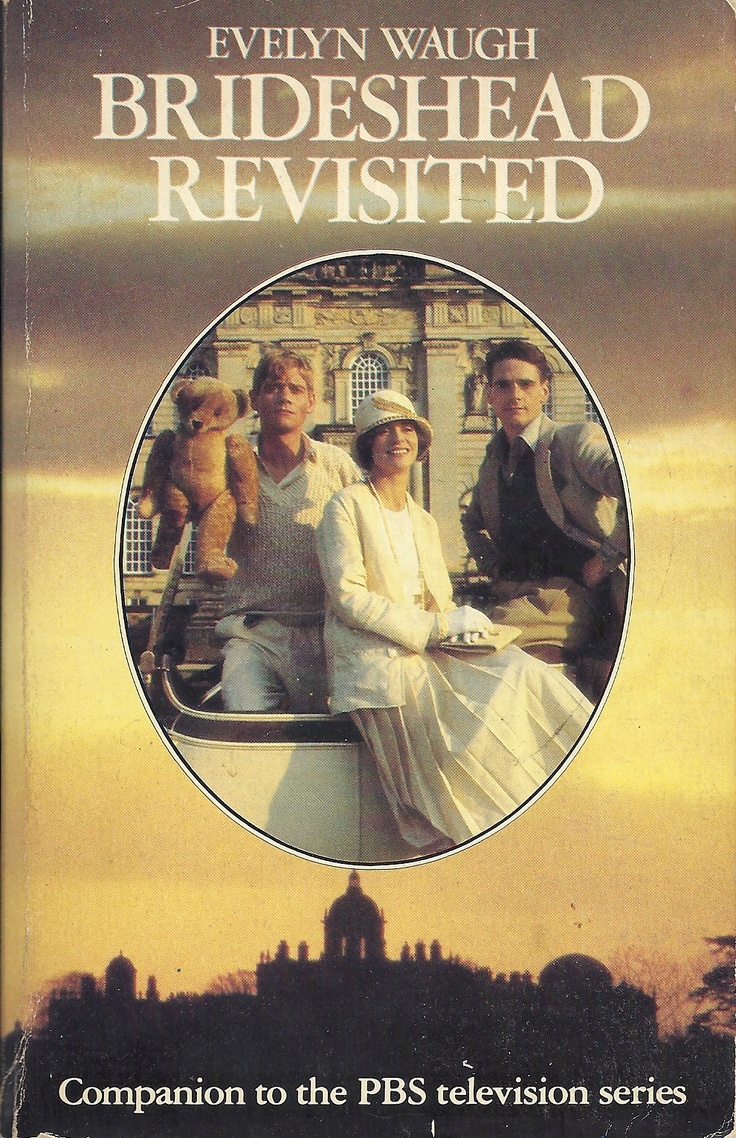
  2. Brideshead Revisited had a castle in it too. I loved the series with Jeremy Irons. I know that I read the book too, while I was at university.
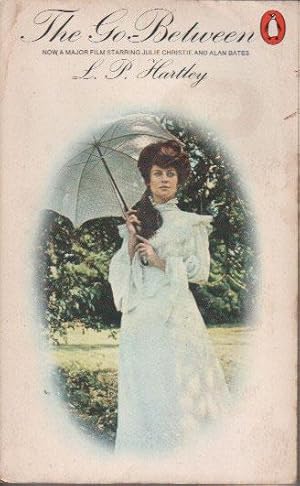
  3. L.P. Hartley’s The Go-Between was set in a big house as well, told from the perspective of a visitor from a lower class who doesn’t know the ‘rules’ of the gentry. We read it in Matric (yes, I’m that old), and I think that it has one of the best starting lines in literature: “The past is a foreign country. They do things differently there.”
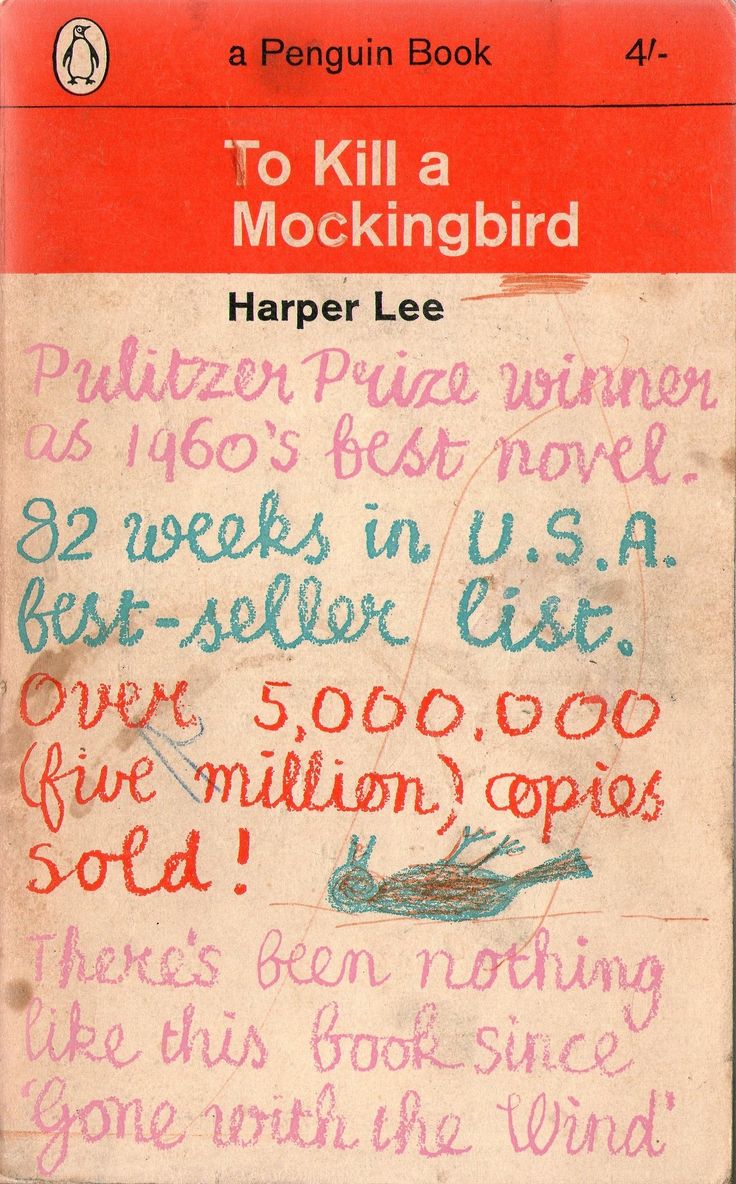
  4. Like everyone else in the world, we read To Kill a Mockingbird at school too. I have re-read this one, many times, and every time I hear the music to the absolutely perfect movie, my eyes fill with tears. To me, this book is emblematic of the Deep South
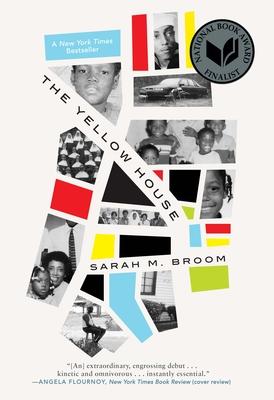
  5. Another book set in the South- New Orleans this time- is The Yellow House by Sarah M.Broom (my review here). The youngest of twelve children in a working class family, she tells the story of her family home in New Orleans, interweaving national and local history, family stories and her own story of place and identity.
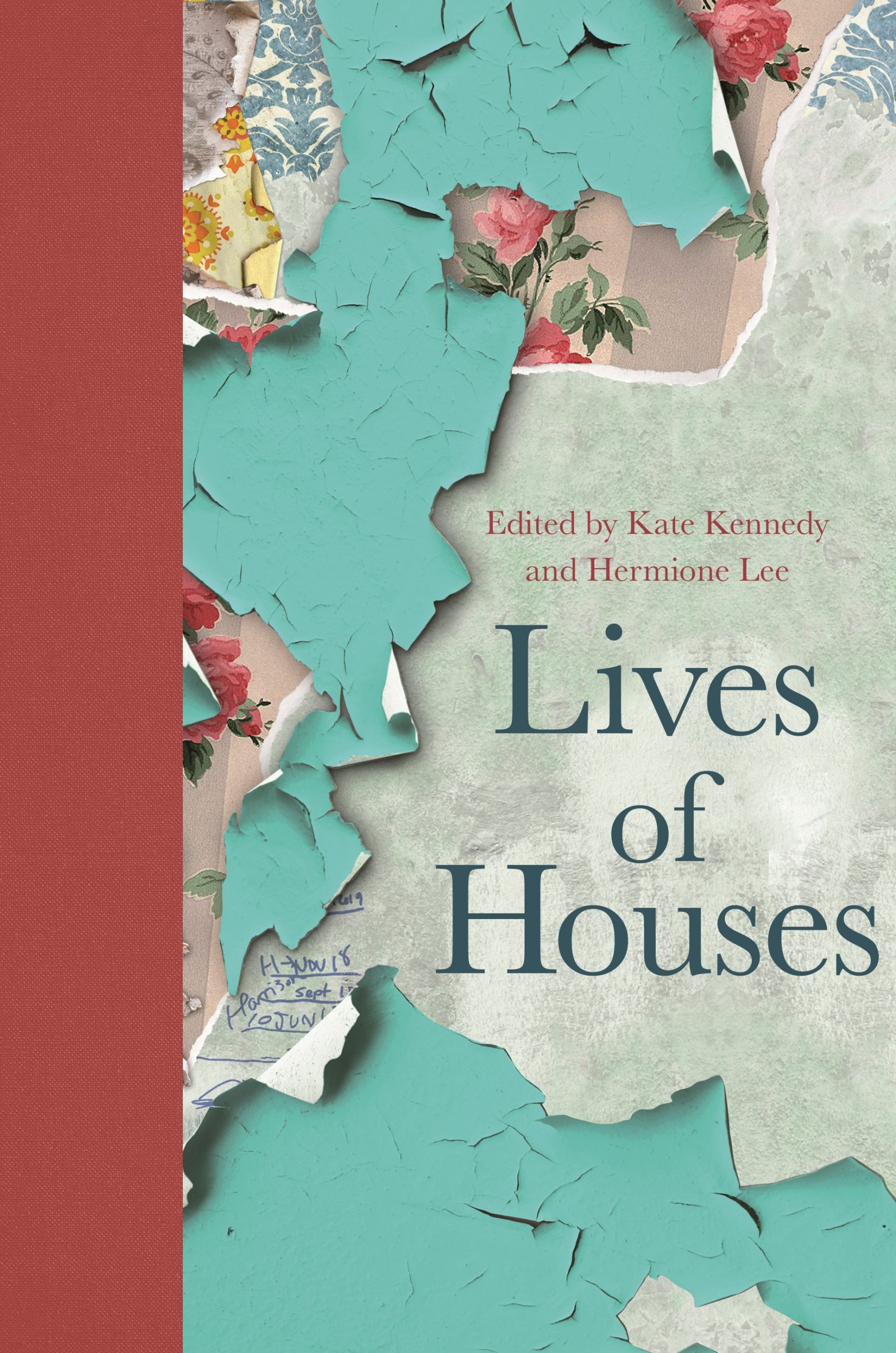
  6. The Lives of Houses, edited by Kate Kennedy and Hermione Lee is a collection of essays that emerged from a 2017 conference titled ‘The Lives of Houses’ held at the Oxford Centre for Life-Writing at Wolfson College, Oxford. This conference brought together scholars from different disciplines and professions, with an emphasis on British, Irish, American and European houses. The ‘big’ names include Hermione Lee, Margaret Macmillan, David Cannadine, Jenny Uglow, Julian Barnes, and it focuses on 19th century British writers and a peculiarly British form of being ‘the writer’ in a mixture of eccentricity and domesticity. (My review here)

So somehow or other I started off with a castle and ended up in a house.

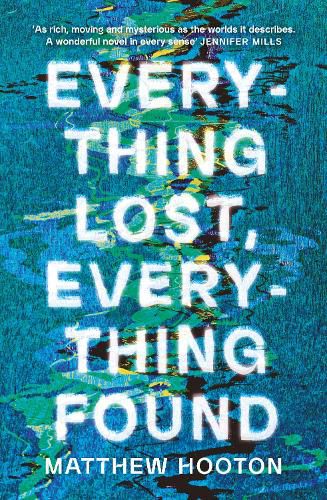
‘Everything lost, everything found’ by Matthew Hooton

2025, 304 p.

Are there more books being published about the slide into dementia and confusion, or it just that I perceive it that way because of my own fears? Writer and academic Matthew Hooton is rather too young to be facing this situation himself, but he captures well the slipperiness of memory in this beautifully written book. If you’re looking up ‘Matthew Hooton’ to find out more about him, you’ll find that unfortunately for him, he shares his name with a former National Party politician from New Zealand. But there’s a certain irony in that because Jack, the narrator of Everything lost, Everything found also shares a name with another Jack in Henry Ford’s rubber plantation in the Brazilian Amazon, where he travelled with his parents in 1929.

There are two threads to this book. One is Jack’s memories of Fordlandia in Brazil, a cookie-cutter American suburb transplanted into the Brazilian jungle, under the control of the morality agents charged with carrying out Henry Ford’s vision for a colonial outpost to establish rubber plantations in the jungle, while gradually easing out reliance on native rubber-gatherers. The second thread is that of Jack’s life in Michigan, in what is now a deserted Ford Factory town, as his wife Gracie is sliding into dementia and a slow death with cancer.

The descriptions of the jungle are just gorgeous, and the jungle itself seems to take on a personality. But it is a malevolent personality: taking Jack’s mother’s life in a caiman attack on the river, and driving Jack’s father into his own madness in searching for his wife’s body in the jungle. A man half-dead from exposure and the jungle’s flesh-eating insects staggers into Fordlandia, and Jack himself is not sure whether it is his father or not. Young Jack himself is forced into a battle with the jungle as he and Soo, a young Korean girl who had worked in the sanatorium laundry, try to escape the morality agents who have shopped her to the Japanese.

I read this book because I had recently read Hooton’s Typhoon Kingdom (review here) and at first I was struck by the difference in setting between his earlier book and this one. But Korea (where Hooton lived and worked for some time) works its way into this book as well, when Soo explains that she is Korean royalty has escaped the Japanese in their takeover of Korea early in the 20th century. I’m not sure whether this strains credulity or not.

But there is no difficulty at all in watching the older Jack, seventy years later, defiantly trying to stay in his family home as his life revolves around visiting his wife in the nursing home. Jack’s relationship with his divorced daughter Jess is strained, and his grandson Nick is a mixture of solicitous and off-hand adolescence as he is trying to negotiate his own relationship with his father.

In fact, one of the things that really impresses me about Hooton’s writing is the way that he is able to emotionally inhabit someone that he clearly is not: a Korean comfort woman in Typhoon Kingdom and an old man here. His characters have an authenticity and layers of complexity, and their dialogue and tone is distinctive and convincing.

The two story lines become increasingly intertwined, as Jack himself becomes more addled, and as the past colonizes the present, not unlike the colonization attempt of Fordlandia. Jack’s narrative voice is comfortable and engaging, and as a reader you want things to be better for him.

I really enjoyed this book. In one of those little twists of coincidence, I read a review from 1925 of Henry Ford’s rather burnished autobiography, which was written before the establishment of Fordlandia and some of the more unsavoury aspects of Ford’s politics. Moreover, I had only recently read Hooton’s earlier Typhoid Kingdom, and so the Korean aspect was familiar to me as well. But quite apart from that, I just enjoyed the beauty of the descriptions, the poignancy of loss and grief, and the sheer humanness of it all.

My rating: 9/10

Read because: I enjoyed Typhoon Kingdom and I saw that he had a new book out

Sourced from: Yarra Plenty Regional Library

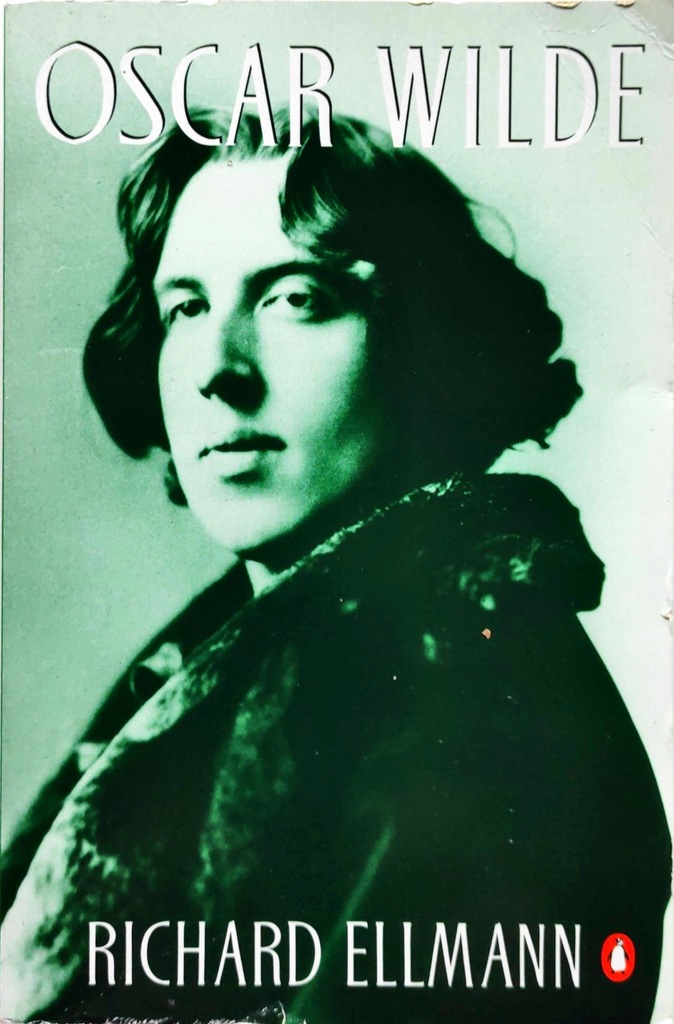
‘Oscar Wilde’ by Richard Ellman

1988, 554 p & notes

I can hardly believe that I have read this enormous tome not once, but twice. The first time was in 2002, when I read it for an online Literary Biography book group, and this second time was for my former-CAE bookgroup (which I nicknamed ‘The Ladies Who Say Oooh’, which is what my daughter used to call us). The CAE has disbanded its bookgroups and farmed out its book collections to groups, no doubt to save themselves the hassle of getting rid of thousands of books. None of us actually chose this book, but we were happy to read it. That was before the group members realized how long it was, and how small the font was. I think that I was the only one to actually finish it, largely because I knew that I enjoyed it the first time. But I think that I was more impatient with it this time.

Richard Ellman’s biography of Wilde won both the National Book Critics Circle Award and the Pulitzer Prize. It has been described as the ‘definitive’ biography, and I certainly don’t think that another Wildean fact could possibly to be dredged up that hasn’t been included in this exhaustive and exhausting book.

The first time I read it, I was largely unaware of Wilde and his story. I knew that he wrote plays, that he wrote ‘The Happy Prince’, that he was homosexual and that he ended up in jail. Perhaps my enjoyment of the book the first time was that it was all new to me then, although I have since watched Stephen Fry’s wonderful performance in the movie ‘Wilde’, seen an excellent local performance of David Hare’s The Judas Kiss and read Fanny Moyles’ Constance: The Tragic and Scandalous Life of Mrs Oscar Wilde.

Ellmann certainly leaves no stone unturned, starting right back with Wilde’s birth and and going through to rather graphic details of his death. He draws parallels between Wilde’s writing and his own life, and then (as now), I found myself regretting that I have never read The Picture of Dorian Gray. The courtcase that led to his downfall does not appear until about 4/5 of the way through the book, so there is plenty of time for Ellmann to establish Wilde’s large circle of artistic friends – including even Australia’s Charles Conder and Dame Nellie Melba- and Wilde’s conscious creation of ‘aestheticism’ as a cultural movement. In the late 1880s-early 1890s, he seemed to be everywhere: in print, on the stage, amongst the wealthy, the glittering and the cognoscenti. Ellman’s sympathies are clearly with Wilde, although he shows us his fecklessness (especially in relation to his wife Constance), his recklessness and his odd mixture of weakness and doggedness.

This second reading, however, found me impatient at the denseness of the prose and overwhelmed by the minuscule level of detail. It is as if he could not bear to leave a single fact out, and if he couldn’t squeeze it into the text, then he would carry it on in the lengthy footnotes at the bottom of the page. (That said, I was grateful that he included translations of the French in the footnotes as well). I read now that Ellman completed the book just before his death with Motor Neurone Disease in 1987, and that he was not able to revise it or correct errors which have since been corrected by another writer. Perhaps, had he had more time, he might have stripped the book back a bit, which would not have harmed it in any way and indeed may have enhanced it. As it is, Ellmann has covered Wilde’s life so exhaustively that any further biographers could not compete in thoroughness, only in incisiveness.

My rating: First time 8.5. This time round 7.5?

Sourced from: ex-CAE bookgroup stock

Read because: book group selection.

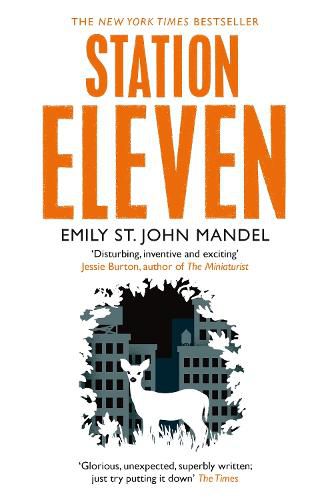
‘Station Eleven’ by Emily St John Mandel

2015, 384 p.

I had heard about this book during the COVID pandemic, and no wonder. Published in 2014, some six years before the world locked down, it describes a world where 21st century Western industrialization has collapsed in the wake of a virulent influenza that has wiped out 90% of the population. What cheering reading during a pandemic!

However, reading it ten years later and with those COVID years behind us, does Station Eleven stand on its own two feet? I think it does. Right from its opening chapter, which starts with a Shakespearean actor, Arthur Leander playing King Lear, collapsing on stage, I was hooked.

As Arthur falls to the floor, a member of the audience, Jeevan Chaudhary, a trainee paramedic rushes to give him CPR, watched by a little girl Kirsten Raymonde who stands in the wings. Returning home, he takes a phonecall from a friend who is a doctor, who warns him that the Georgia flu is rampant, and to take his girlfriend Laura and his brother, and to get out of town.

The narrative then jumps ahead twenty years and takes up again with Kirsten, now an adult, with only scattered memories of that night at the theatre, before everything changed. She is now part of the Travelling Symphony, a rag-tag group of actors and musicians, who move from settlement to settlement to perform music and plays. Electricity, gasoline, the internet and all the things enabled by these had ceased, and in the first years after the pandemic, life had reverted to a light-governed, subsistence struggle against other frightened groups, who were themselves fighting for existence. After twenty years, things had stabilized, albeit at a stagnant level, but a level of menace had been recently introduced by the rise of the Prophet, drawing on a mixture of messianic religion and violence to consolidate his power.

If this sounds at bit like Cormac McCarthy’s The Road, it is. I certainly had the same feeling of dread in the pit of my stomach as I read. But unlike The Road, there is not the same relentless hopelessness. This is a world that is trying to hold onto the best in music and literature, and trying to collect as many artefacts from the old world as possible so that the ‘before’ world is not completely lost. The world still looks for beauty. The book’s ending, while ambiguous, is hopeful.

It is beautifully written with strong control of the narrative, as Mandel slips back and forward between the ‘before’ and ‘after’ worlds, moving from one character to another. How prescient she was, and how chilling it must have been to pick up this book in the early days of COVID. But as a piece of writing, it doesn’t need the experience of the last few years to give it strength: it’s a very human, well-crafted book that celebrates creativity and the best of being human, giving hope without sentimentality.

My rating: 9/10

Sourced from: the op-shop.

Six degrees of separation: from ‘The Great Fire’ to…

This month the Six Degrees of Separation meme run by Kate at BooksAreMyFavouriteandBest is a bit different. Instead of her choosing the starting book, she has invited us to start with a book that we have just finished, or read in the last month.

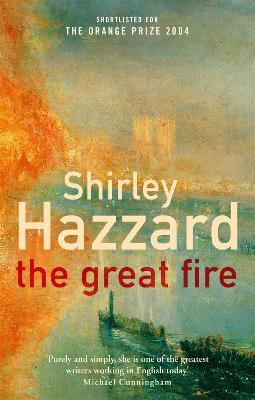
Well, the last book I read was Shirley Hazzard’s The Great Fire and even though I know that some people love it and have read it multiple times, I wasn’t particularly impressed. But I haven’t posted my review yet, so you’ll just have to wait to find out why.

But, my disappointment in the book notwithstanding, where did it take me?

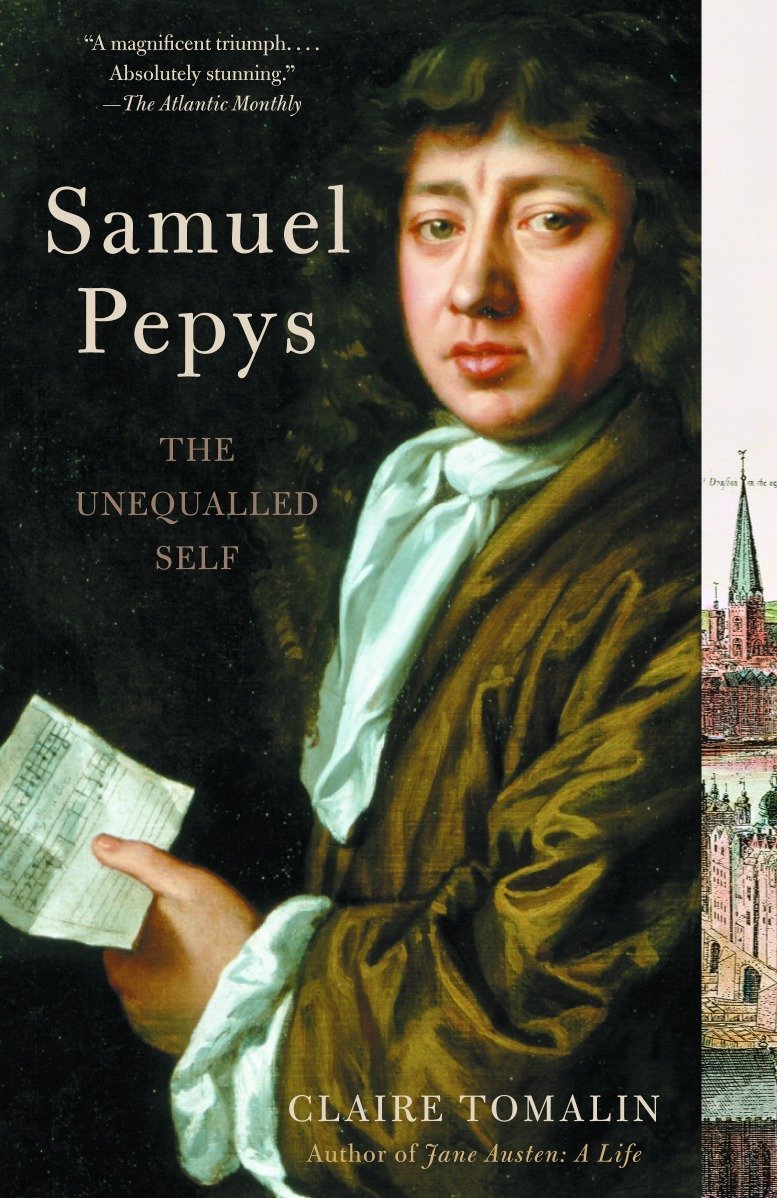
Despite the title, Hazzard’s book is not about the Great Fire of London at all- instead it’s set in Japan, Hong Kong and China in 1947 as the victorious Western powers occupy the territory. But Claire Tomalin’s Samuel Pepys: the Unequalled Self does deal the Great Fire of London because diarist Samuel Pepys wrote about it. In her biography, Tomalin gives us a rounded view of this 17th century Londoner and although many others have written about Pepys, I don’t think that anyone else could do it better than she has. My review is here.

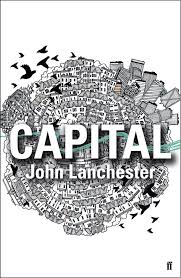
John Lanchester’s Capital is set in Pepys Road South London in December 2007, just before the Global Financial Crisis. The book follows the little dramas of the inhabitants of Pepys Road in short chapters of just a couple of pages each. Somehow Lanchester filled over 500 pages largely about ordinary lives where nothing much happens and yet left me wanting more. I just loved it, and my review is here.

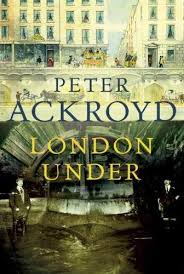
While we we’re in London, who else should we turn to but Peter Ackroyd, who has written several books about the city. London Under is atmospheric and erudite, steeped in literature and popular culture, especially that of the nineteenth century as he explores the river systems and infrastructure existing like a network under London Streets. The language flows seductively and smoothly in a very easy, beguiling read. My review is here.

Colum McCann’s This Side of Brightness is set underground as well, but this time amongst the men tunneling under the Hudson River for the subway system in 1919. I read it before I start blogging, but I really enjoyed it.

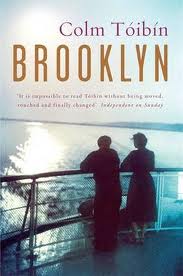
And thinking about New York leads me to Colm Toibin’s Brooklyn. I enjoyed the book enough the first time, but I absolutely loved the movie, and I went back and enjoyed the novel much more on a second reading. There is no back story; small events are told simply and in detail; every little act is described by a narrator who seems to be hovering up in the corner of the room, watching everything. It’s about a young girl who emigrates from Ireland to Brooklyn, and I felt that he described homesickness so well . My review is here.

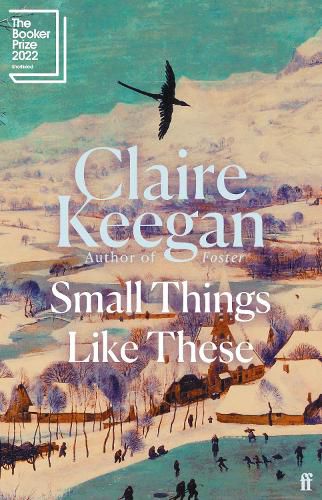
The main character in Brooklyn left Ireland, while Claire Keegan’s books are firmly set there. They are only short- they’re novellas really- but they’re so beautifully crafted. She wrote the short-story, expanded into a novella that became The Quiet Girl movie which I howled the whole way through. Small Things Like These is set in 1985 as Bill Furlong, a fuel merchant with five children who has lived in his small village all his life, becomes aware of the convent and its power over the children in its ‘care’ and the complicity of the village in turning a blind eye. My review is here.

So, although I might have been less than enamoured with The Great Fire, it has certainly taken me all around the globe!