September 8, 2021 4:36 am
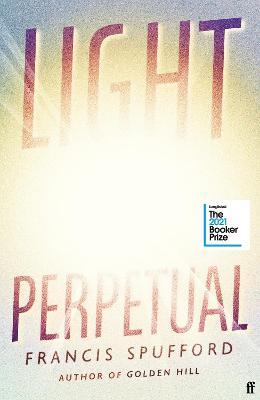
One of the big existential questions that we all grapple with at some stage is ‘Why am I here?’ An associated, and equally fascinating question is ‘What if I wasn’t?’ Light Perpetual takes this question, starting off with the real-life death of 168 people who died in the New Cross Road branch of Woolworths in November 1944 in a V-2 attack on a Saturday lunchtime, with the shop crowded with shoppers. Fifteen of those 168 were aged under 11. Spufford fictionalizes five of these children: sisters Jo and Valerie, Alec, Ben and Vernon. A different book might have gone backwards, tracing who the children were and how they came to be there, but Spufford takes a different approach. Instead, he drops the bomb in the first pages, then jumps forward as if the five children were not killed. In fact, they were not even in the store. Instead, they lived lives untouched by that November 1944 attack.
The book is told in chunks of time, dated from when the bomb fell (but not on them). So we have five years on in 1949; twenty years on in 1964 (Beatles time); thirty-five years to 1979 (Thatcher time); fifty years to 1994 (Cool Brittania); sixty five years on in 2009 (post-GFC). Each of these chunks features the five children separately. Rather neat, really: five times five. It’s like a ‘Seven-up’ series on the page, with less regular check-ins and a smaller number of subjects. As such, it deals mental illness, promiscuity, wealth-acquisition, marriages, divorces, Right and Left wing politics, success, education, physical illness and decline…. all the sorts of things raised during the Seven-Up series. Nothing happens as such, although each life (for good or ill) is lived either as a series of transformations, or by putting one foot in front of the other. Decisions are made or not made, options open up or shrivel away.
I must confess that it took me more than half the book to get the characters established securely in my mind. I had to go back to the previous section to find the character there to refresh my memory before launching into the next time frame, and in this regard a table of contents at the start would have been really useful to locate the time shifts in the book.
The treatment of time and chance reminded me a lot of Kate Atkinson’s work, a writer I really enjoy. My library, which persists in labelling books by genre, has designated it as Science Fiction but it’s a far more human book than that.
It is the writing, particularly at the start and the finish of the book that lifts it above the rather quotidian, eventually inconsequential events of human life that it describes. The scene where the bomb drops is like a freeze-frame, minutely examined- really excellent, challenging writing. The middle sections, like their subject matter, are more human and less complex. The final section of the book, as our subjects face their own mortality, becomes more abstract again in its reflection on permanence and change, although this time it is infused with familiarity and even affection.
My rating: 8.5/10
Read because: It has been long-listed for the 2021 Booker Prize
Sourced from: Yarra Plenty Regional Library
Posted by residentjudge
Categories: Book reviews, Booker Prize Nomination
Tags:
Mobile Site | Full Site
Get a free blog at WordPress.com Theme: WordPress Mobile Edition by Alex King.
TBH I was surprised to see it nominated for the Booker, because I wasn’t overly impressed. So I read your review with interest because obviously I missed something about it that you and the judges recognise.
It would be a dull old world if we all liked the same books.
By Lisa Hill on September 8, 2021 at 8:13 am
Far more human than SF! Harrumph.
By wadholloway on September 9, 2021 at 12:56 pm
[…] Well, life is a bit of a lottery I suppose, full of ‘what ifs’ and sliding door moments. Francis Spufford’s Light Perpetual takes the historical fact of fifteen children who died when a Woolworths store was bombed in a V-2 attack in London during November 1944. But instead of killing them off in the opening pages, he fictionalizes five of these children and lets them live- in fact, they weren’t even in the store- then follows them throughout their very ordinary lives. It’s a bit like the Seven-Up series but instead of dealing with real people, it’s all imagination. (My review here). […]
By Six Degrees of Separation: from ‘The Lottery’ to… | The Resident Judge of Port Phillip on October 2, 2021 at 6:07 am
[…] what if you didn’t die when you really did? In Light Perpetual, Francis Spufford takes the real-life death of 168 people who died in the New Cross Road branch of […]
By Six degrees of separation: from ‘Passages’ to.. a swamp | The Resident Judge of Port Phillip on March 4, 2023 at 6:56 am
[…] Another book that shifts through time, with a starting point during World War II is Francis Spufford’s Light Perpetual. It starts with the real-life death of 168 people who died in the New Cross Road branch of Woolworths in November 1944 in a V-2 attack on a Saturday lunchtime, with the shop crowded with shoppers. Fifteen of those 168 were aged under 11. Spufford fictionalizes five of these children: sisters Jo and Valerie, Alec, Ben and Vernon and then jumps forward as if the five children were not killed. In fact, they were not even in the store. Instead, they lived lives untouched by that November 1944 attack. He tells their counterfactual lives at ever-increasing chunks of time. It’s like a ‘Seven-up’ series on the page. (My review here) […]
By Six Degrees of Separation: From Time Shelter to… | The Resident Judge of Port Phillip on July 1, 2023 at 9:48 am
Interesting, but I don’t much care for alternative history stories.
By Davida Chazan on July 1, 2023 at 11:25 am
[…] A similar book is Francis Spufford’s Light Perpetual but this book takes the real-life tragedy of 168 people being killed at a Woolworths store in New Cross Road in a V-2 attack during WWII. Fifteen of those 168 were aged under 11. Spufford fictionalizes five of these children: sisters Jo and Valerie, Alec, Ben and Vernon. Spufford drops the bomb in the first pages, then jumps forward as if the five children were not killed. In fact, they were not even in the store. Instead, they lived lives untouched by that November 1944 attack- and this is the story of their lives. (My review here). […]
By Six degrees of separation: from Dangerous Liaisons to…. | The Resident Judge of Port Phillip on February 1, 2025 at 10:09 am